Your living room can look tidy in the morning, then somehow end up covered with blankets, toys, books, remotes, and chargers by evening.
The problem is not always that you need more furniture; sometimes you just need to use the space you already have much better.
A smart storage setup can hide everyday clutter, free up walking space, and keep the room feeling comfortable instead of crowded.
In this article, you’ll find practical living room storage ideas that make better use of walls, corners, and furniture.
Let’s jump in!
How Do You Add Storage to Your Living Room?
Start by looking at what actually creates clutter, such as blankets, toys, books, remotes, chargers, or things that never have a proper place.
Before buying another cabinet, check the empty spaces you already have, including corners, walls, alcoves, areas under windows, and behind the sofa.
Use closed storage for messy everyday items, while keeping open shelves for books, plants, photos, and decor you actually want to display.
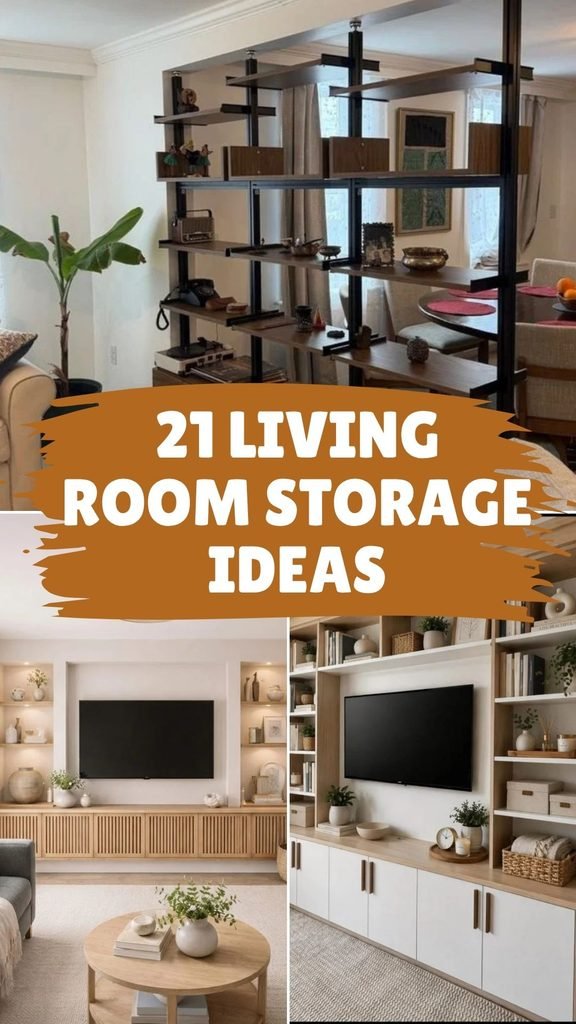
When floor space is limited, go upward with tall cabinets, floating shelves, or wall-mounted units instead of adding wide furniture that crowds walkways.
Furniture that does two jobs also helps, so consider storage ottomans, benches, coffee tables with drawers, or sofas with hidden compartments.
The best setup keeps frequently used items easy to reach while hiding visual clutter, so the room stays practical without feeling packed with storage.
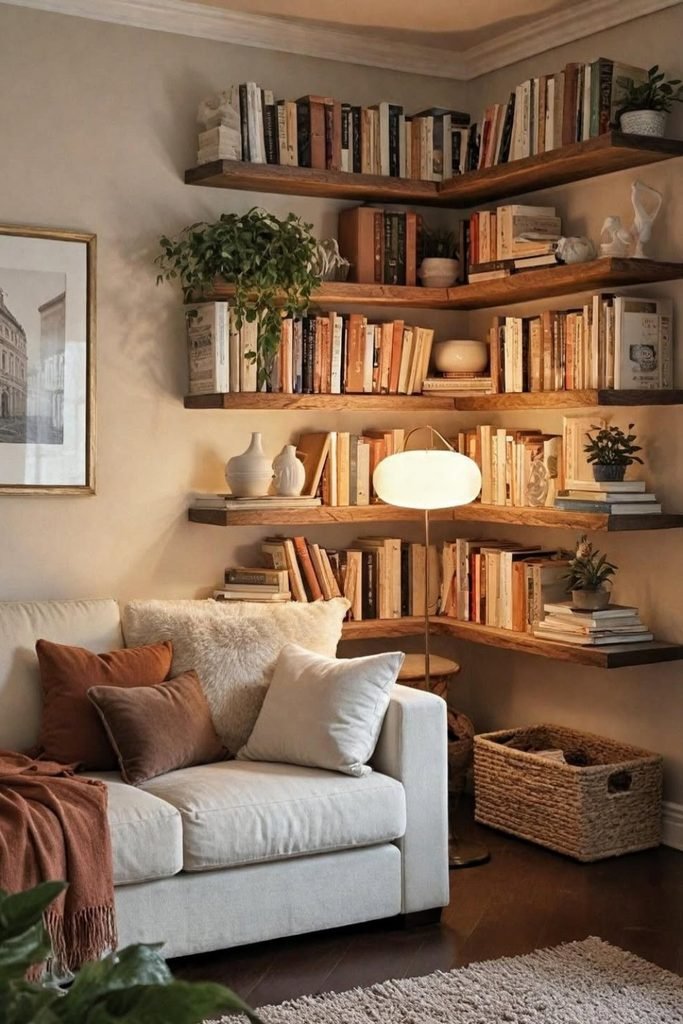
Corner Shelving
Turn an empty living room corner into useful storage by wrapping floating shelves around both walls instead of adding another floor cabinet.
Keep books within easy reach, then break up long rows with a few plants or objects so the shelves stay relaxed.
This setup works especially well beside a sofa, where wall space is available but you still want the floor clear.

Storage Divider
An open shelving divider can give an open-plan living room extra storage while separating the seating area without blocking light or sightlines.
Choose closed cabinets along the bottom for games, cables, and household clutter, then keep the upper shelves for books and decor.
It works best between connected rooms, because the storage creates a boundary while the open sections keep both spaces feeling connected.
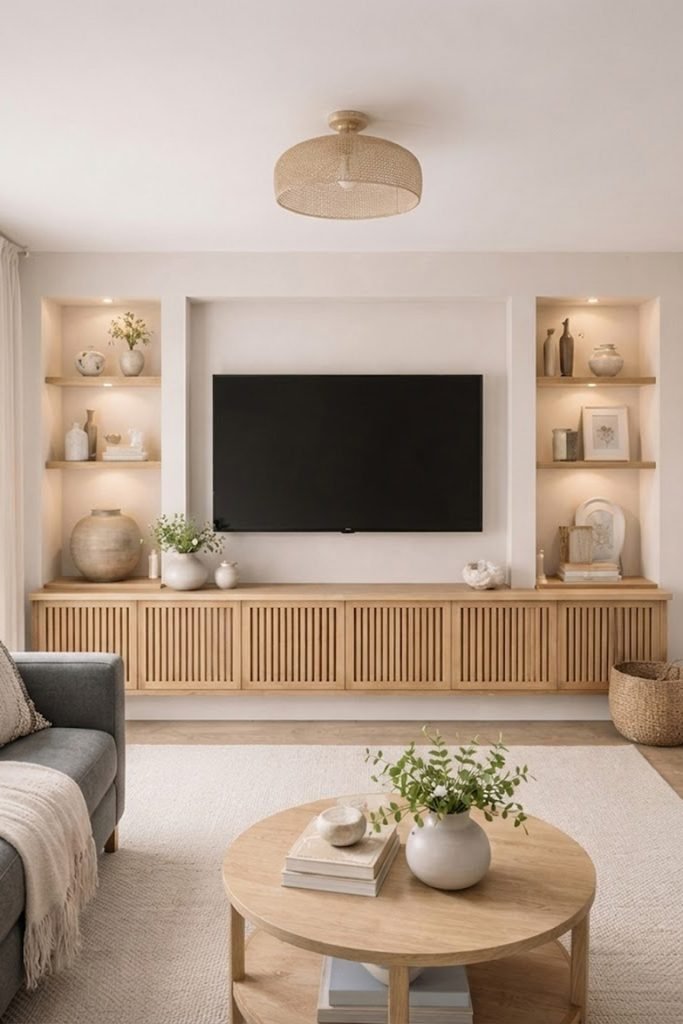
Media Storage
Give the TV wall more purpose with a long run of closed cabinets that can hide controllers, cables, games, and everyday clutter.
Mount shallow shelves above the counter for books and decor, leaving enough breathing room around the screen so the wall feels balanced.
This built-in approach suits longer living rooms especially well, because one wall handles storage, display, and media without scattering furniture around.

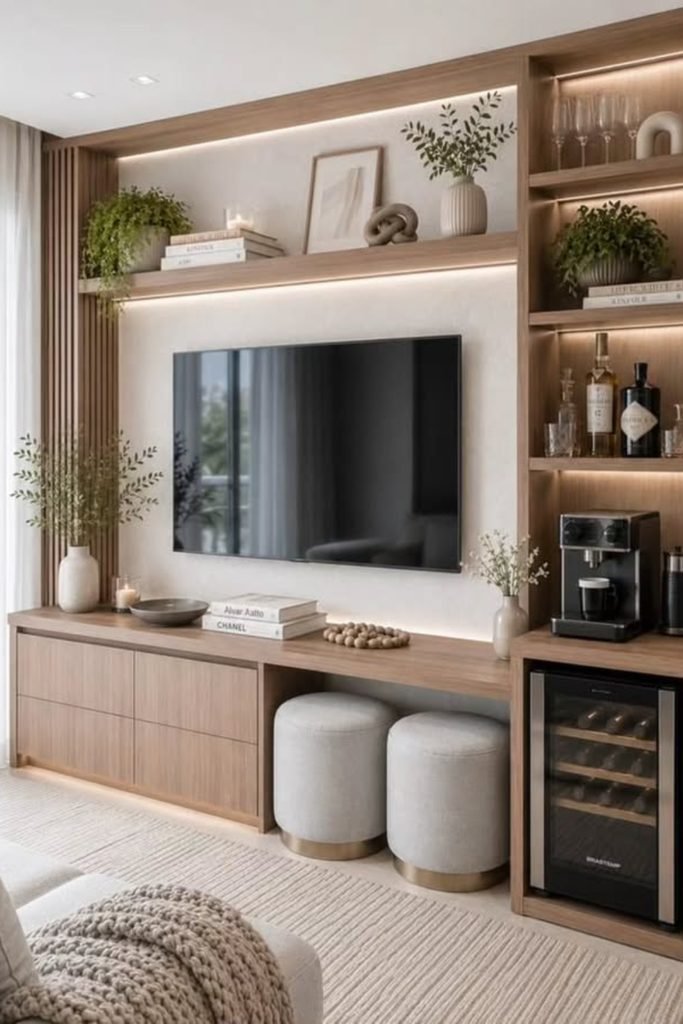
Entertaining Storage
When your living room also handles entertaining, build storage around the TV so drinks, glassware, coffee supplies, and electronics share one wall.
Keep the lower cabinets closed for less attractive items, then reserve lit upper niches for pieces you reach for or enjoy displaying.
A recessed spot for stools adds flexible seating without taking over the room, making this layout useful in compact multifunctional spaces.
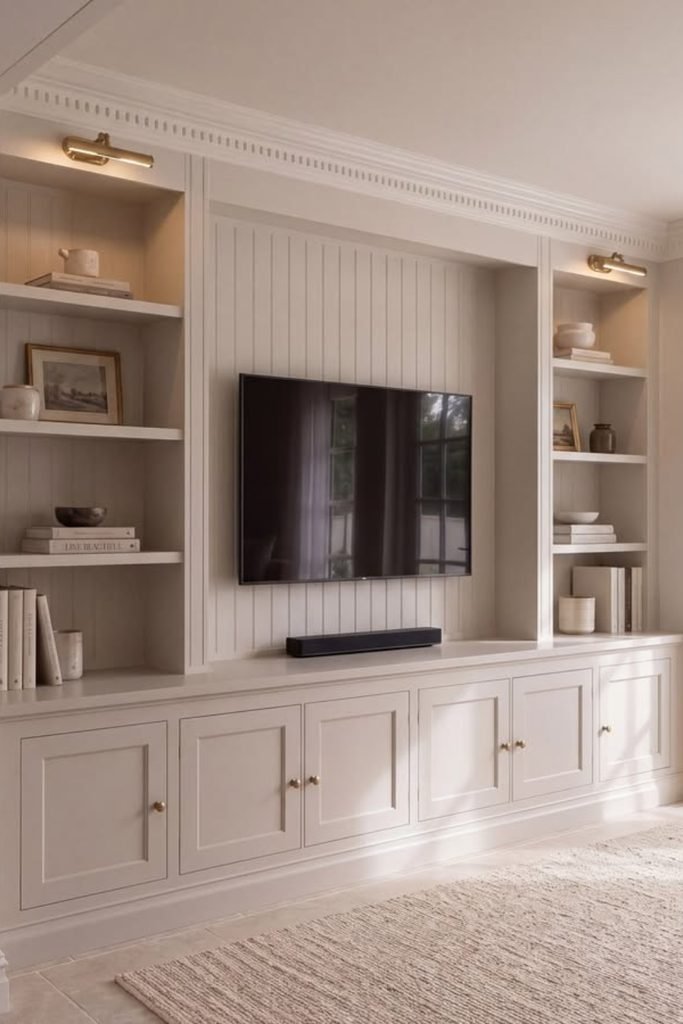
Floating Media
Keep the floor feeling open by mounting a long media cabinet below the TV, giving electronics and everyday clutter one clean home.
Use closed drawers for controllers, cables, and games, then let the side shelves handle books, plants, and a few display pieces.
This works best on a wide blank wall, where one fitted unit can replace several smaller pieces and keep traffic moving easily.

Wall Shelving
When the sofa wall has no room for another cabinet, shallow shelves can turn that unused height into practical storage and display.
Space the shelves evenly, keep heavier books near the ends, and leave gaps between objects so the wall never feels overloaded.
This idea suits narrow living rooms especially well because it adds useful storage above seating without stealing a single inch of floor.

Corner Tower
A forgotten corner can hold far more than you expect when a slim vertical shelf uses height instead of spreading across the room.
Choose curved or triangular shelves that fit the angle, then mix books with one basket to keep smaller items from looking messy.
This works nicely between two seating pieces, where the corner stays useful without blocking the walkway or making the layout feel cramped.

Hidden Media
Give a busy TV wall some breathing room by hiding most storage behind low doors and keeping only a few niches open.
Store consoles, cables, games, and spare remotes inside the base cabinets, then use the side shelves for decor worth seeing.
Building the unit wall to wall works especially well in family rooms because everything has a place without surrounding the TV with clutter.

Sofa Library
Let the back of a floating sofa work harder by wrapping it with low shelving for books, albums, and everyday reading.
Keep the unit close to sofa height so it creates useful storage without building a visual wall through the living room.
This setup suits larger rooms especially well, where the sofa sits centrally and unused floor space behind it would otherwise stay empty.
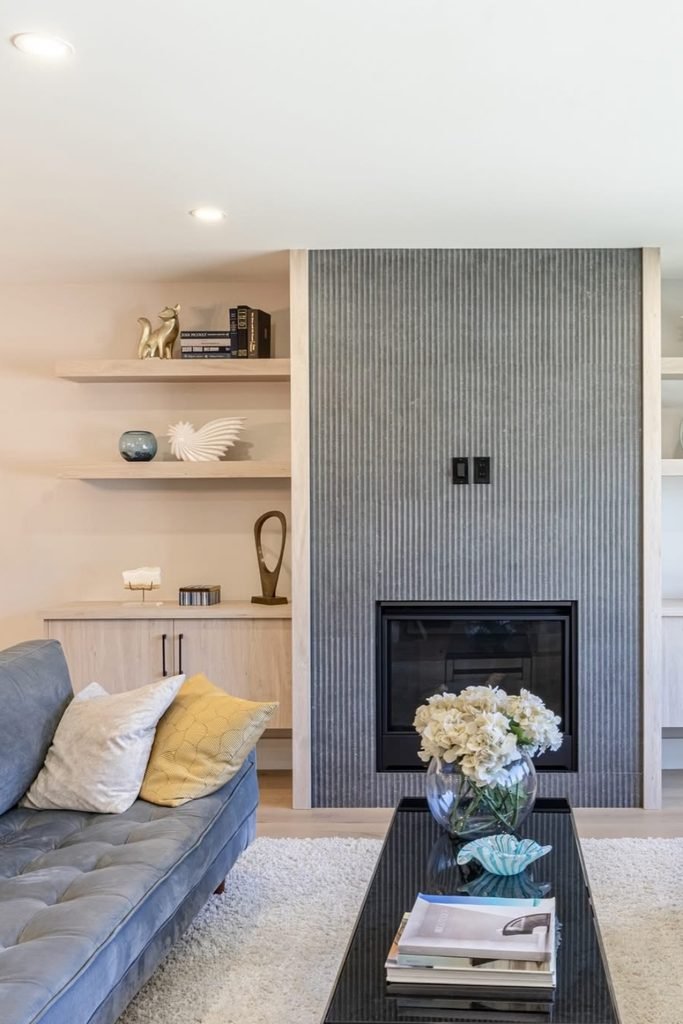
Honeycomb Shelves
Small wall shelves can store books and favorite objects above the sofa without forcing another cabinet into an already furnished living room.
Mix enclosed geometric cubbies with simple ledges, then leave a few sections empty so the arrangement stays useful rather than visually crowded.
This approach works best for lighter items you enjoy seeing, while heavier clutter should stay in lower cabinets or baskets elsewhere.

Storage Wall
Turn one long wall into the main storage zone by combining the television, books, display niches, and closed cabinets in one built-in.
Keep everyday electronics and games behind the lower doors, then place books higher and reserve lit shelves for objects worth displaying.
This arrangement works especially well in formal living rooms, because storage stays generous while the furniture layout remains simple and uncluttered.

Basket Shelving
Open shelving becomes much easier to live with when lower sections hold large baskets for blankets, toys, magazines, or other loose items.
Pair those baskets with closed cabinets beneath the television, then keep upper shelves lightly styled so practical storage does not dominate the room.
This mixed setup suits family living rooms because frequently used things stay easy to grab while messier items disappear at cleanup time.
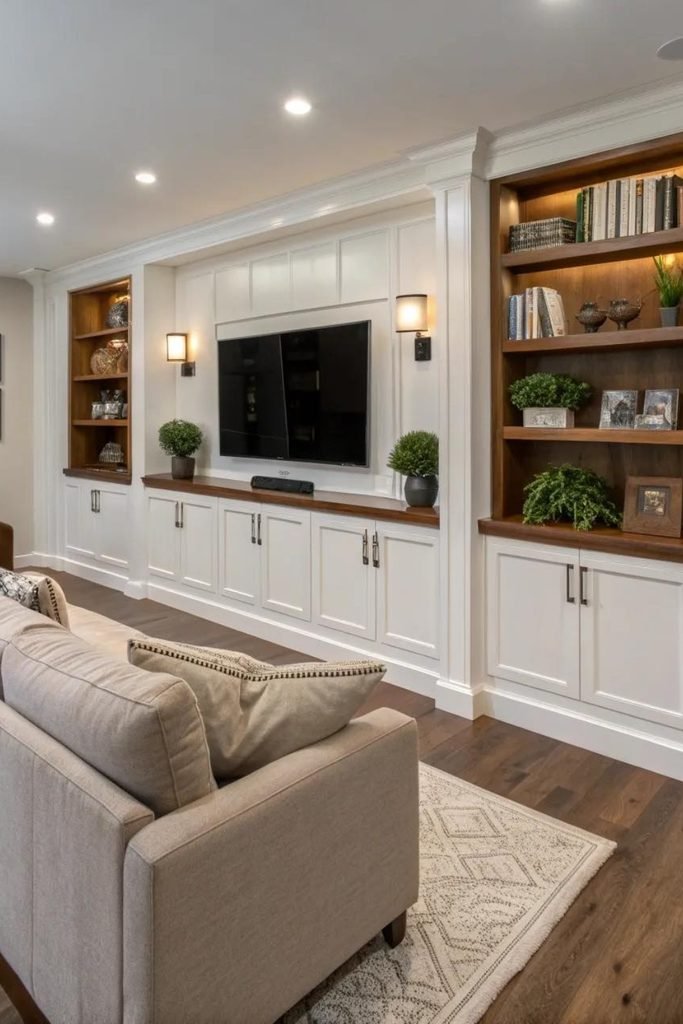
Sofa Storage
A long console behind the sofa turns unused floor space into book storage while giving the seating area a finished edge.
Keep open cubbies for books you reach often, then use deeper lower sections for albums, games, or baskets holding smaller clutter.
This idea works best with a floating sofa because the storage fills the dead zone without pushing extra furniture against walls.

Ceiling Cabinets
Take storage all the way to the ceiling when a living room has one blank wall and very little spare floor space.
Use the highest cabinets for seasonal items, paperwork, or things you rarely need, while lower cupboards handle everyday electronics and clutter.
Leaving a few open shelves around the television keeps the wall from feeling too heavy and gives favorite objects somewhere to breathe.
Window Cabinetry
A wall beside a large window can carry built-in storage without darkening the room, especially when the shelves stay fairly shallow.
Hide cables, games, and less attractive pieces in the lower cabinets, then keep books and decor on shelves closest to eye level.
Warm wood works particularly well here because it frames the storage as furniture, while the nearby daylight stops the unit feeling bulky.

Fireside Storage
The space beside a fireplace is ideal for fitted storage because it uses an awkward recess without competing with the mantel itself.
Keep closed cupboards at the bottom for games, cables, and household extras, then reserve the upper shelves for books and meaningful pieces.
Painting the built-in close to the wall color helps it settle into the architecture instead of looking like another separate cabinet.

Modular Library
Make a tall book collection feel lighter by breaking one wall into staggered cubbies instead of using one heavy, solid bookcase.
Group books by section, leave a few compartments partly empty, and keep decorative pieces minimal so the wall still feels calm.
This works beautifully in larger living rooms, where full-height shelving can hold serious storage without crowding the seating area below.
Floating Storage
A slim run of floating shelves can turn a plain wall into storage while the closed cabinet below handles less attractive clutter.
Keep books and framed pieces on the open levels, then use the base cabinet for chargers, games, paperwork, or spare accessories.
This setup suits narrower rooms because the wall does most of the work while the floor stays visually open around the furniture.

Library Wall
When books are the main storage problem, dedicate one full wall to shelving instead of scattering smaller bookcases around the room.
Mix vertical and horizontal book stacks, tuck baskets into lower sections, and leave a few shelves open so everything remains readable.
This approach works best in reading-heavy living rooms, where one organized library wall keeps collections accessible without taking over every corner.

Media Builtins
Let a media wall handle both display and hidden storage by pairing open shelves above with deep closed cabinets across the bottom.
Store cables, games, electronics, and spare remotes behind the doors, then keep baskets nearby for smaller items you grab often.
This layout is especially useful in family rooms because cleanup stays quick while the TV wall still looks balanced and lived-in.

Alcove Shelves
Frame a central fireplace with shelving on both sides when those shallow alcoves are too narrow for freestanding cabinets or bookcases.
Keep books and display pieces on the open shelves, then hide games, cables, and everyday clutter inside the lower cabinets.
Matching the shelving to the wall keeps the built-ins quiet, so the fireplace remains the focal point instead of the storage.

FAQs
What Should You Store in a Living Room?
Keep the things you use there most often, such as blankets, remotes, books, games, chargers, and a few everyday accessories.
Items used only occasionally can go in higher cabinets, while daily essentials should stay inside easy-to-reach drawers, baskets, or lower shelves.
Try not to store unrelated household overflow here, because that quickly turns useful living room storage into another cluttered dumping zone.
Is Open or Closed Storage Better?
Open shelves work best for books, plants, photos, and decor you actually enjoy seeing, but they need regular editing to stay tidy.
Closed cabinets are better for toys, cables, paperwork, games, and other everyday items that can make the room look busy.
Most living rooms benefit from both, because you can display attractive pieces while hiding the things you still need close by.