You can have the right sofa, a beautiful rug, and a living room you genuinely love, yet one big blank wall can still make the whole space feel unfinished.
One oversized painting might look perfect, while a gallery wall could work better in another room.
Get the size or placement wrong, though, and even beautiful art can look lost above your furniture.
That’s why these living room wall art ideas go beyond simply showing you pretty walls.
In this article, you’ll find different ways to fill large and small spaces, choose art that works with your furniture.
Let’s jump in!
What Art Should I Hang in My Living Room?
Start with your wall and furniture, not the artwork. A long sofa usually needs one large piece or a wider group of frames, while a narrow wall works better with vertical art.
If the artwork is too small, it can make an already empty wall look even more awkward.

You also don’t need to match your art exactly with your sofa or rug.
Pick something that shares a color, mood, or material with the room, then let it bring its own personality.
Abstract paintings work well in modern spaces, while landscapes, vintage prints, photography, or collected pieces can make a room feel more personal.
Collected Art Gallery
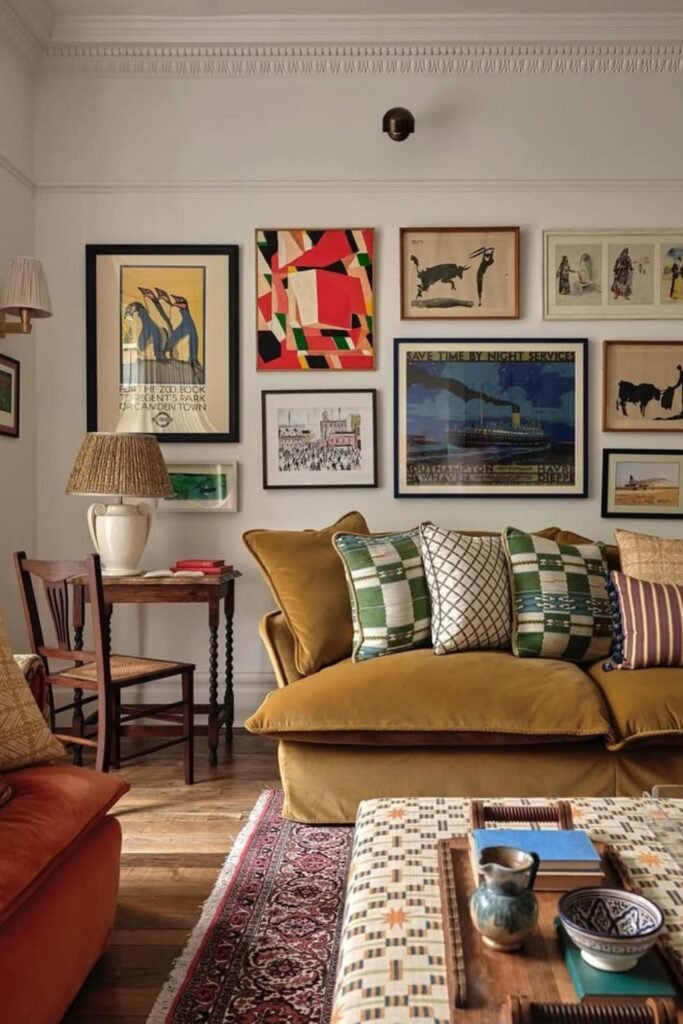
A gallery wall looks better when it feels collected rather than bought as one matching set.
Mix paintings, illustrations, photography, and different frame sizes, but repeat a few colors to keep everything connected.
Here, warm reds, greens, creams, and darker frames work naturally with the mustard sofa and patterned textiles.
Try this approach above a wide sofa when one piece of art would feel too simple for the room.
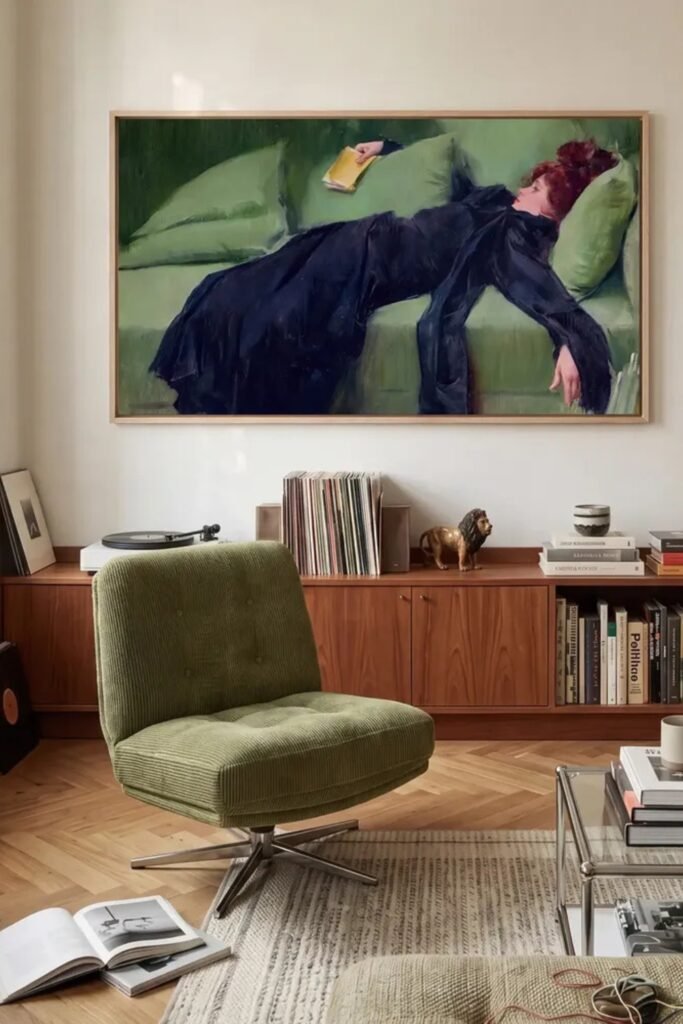
Oversized Figurative Art
When you want one piece to carry the whole wall, go big enough that it feels intentional.
A wide figurative painting works especially well above a long console because both pieces follow the same horizontal line.
You can also pull one dominant color from the artwork into nearby furniture, as the green chair does here.
Keep the rest of the wall fairly quiet so the artwork gets the attention instead of competing with smaller decorations.
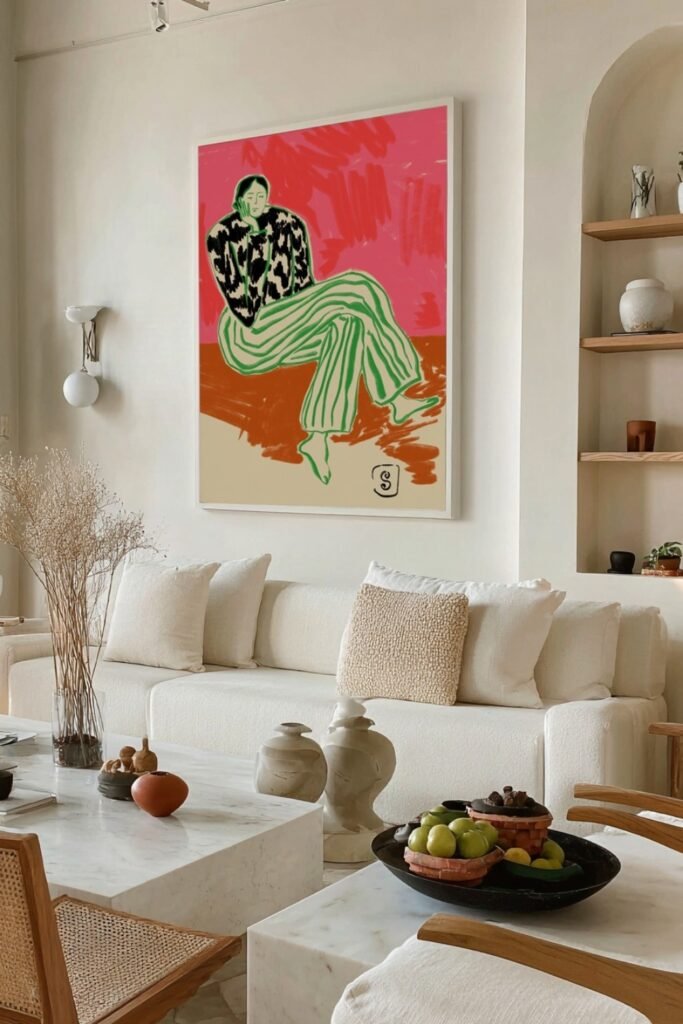
Bold Portrait Statement
A neutral living room gives you room to be fearless with your art.
Choose one oversized piece with strong colors and let it become the main attraction instead of adding several smaller frames.
The bright pink, green, and orange here stand out because the sofa, walls, and surrounding decor stay soft and understated.
Try this when your cream or beige living room feels a little too safe and needs one confident burst of personality.
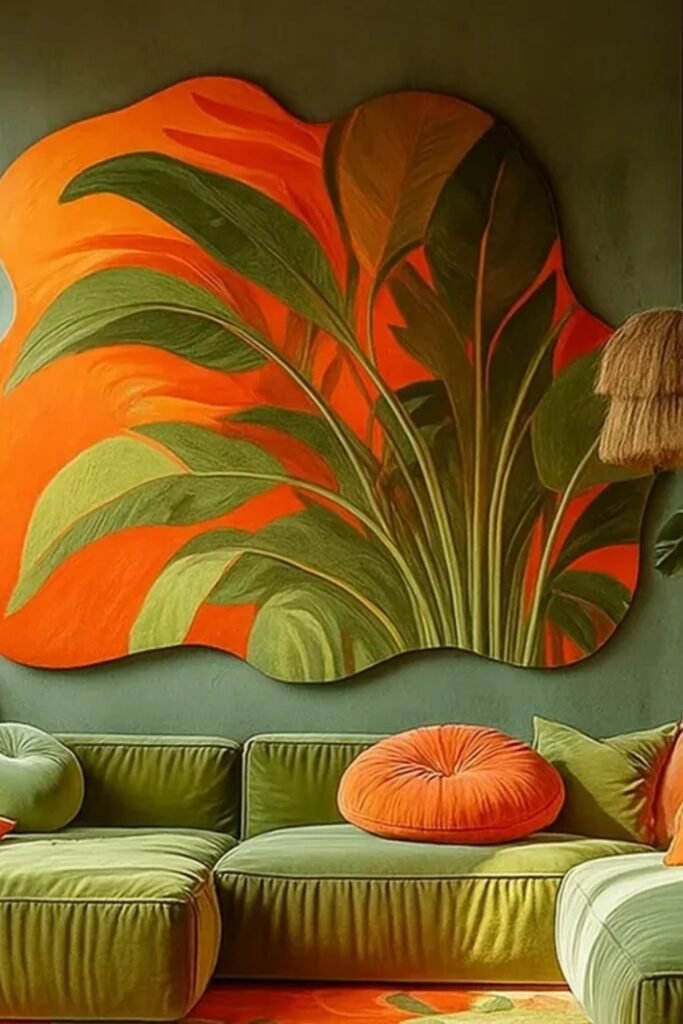
Sculptural Botanical Art
Skip the standard rectangular frame when you want the wall itself to feel more playful.
An oversized, irregular-shaped botanical piece fills a broad wall while its curved edges soften all the straight lines of a sectional sofa.
Pulling the same greens and oranges into cushions makes the artwork feel connected without copying it exactly.
This approach works especially well in bold, eclectic living rooms where conventional framed art might feel too restrained.
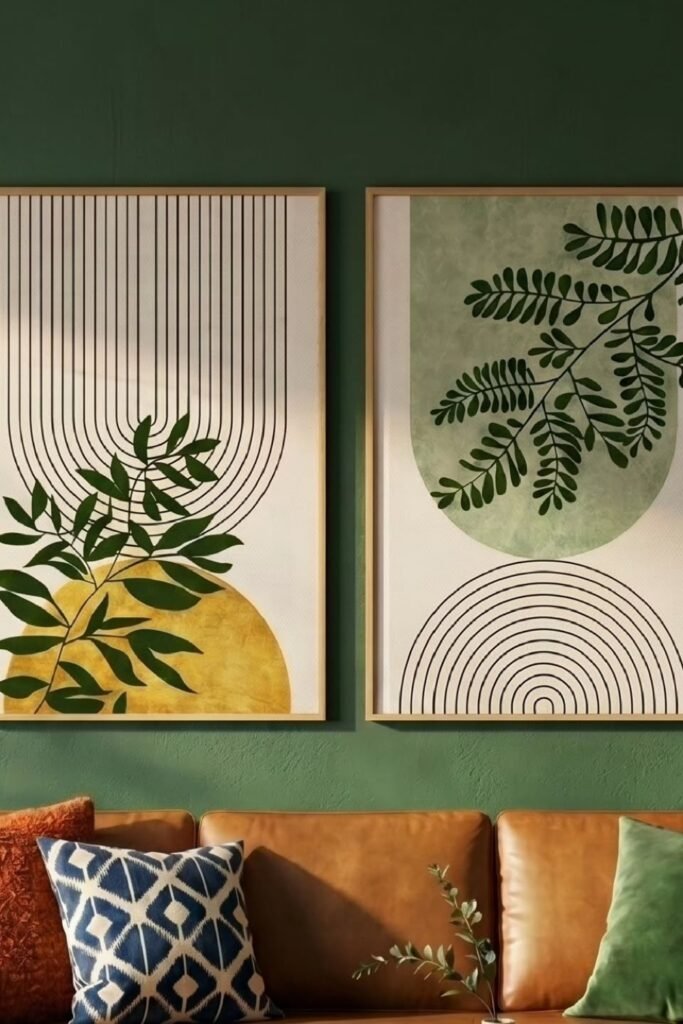
Paired Botanical Prints
Two large prints can fill a wide sofa wall without the planning that comes with a full gallery arrangement.
Choose pieces from the same collection or repeat one subject, such as these leafy botanicals, so they read as a pair.
Keep the frames, dimensions, and gap between them consistent for a cleaner look.
This setup works especially well when your wall already has a strong color and you want the art to complement it rather than compete with it.
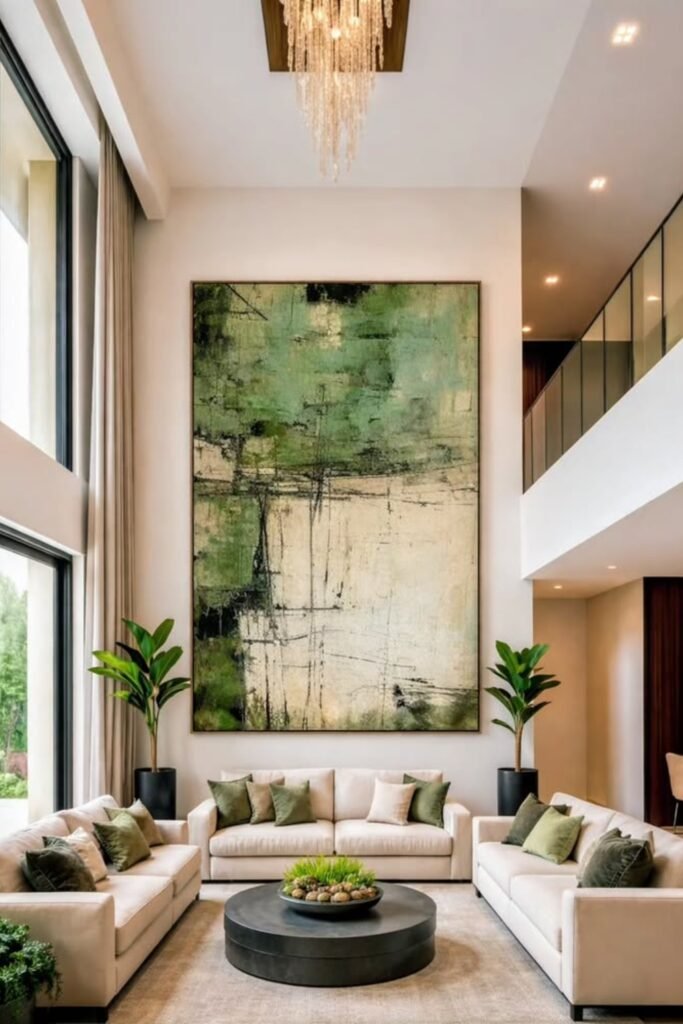
Towering Abstract Canvas
Tall ceilings can make normal-sized artwork look tiny, so use the height instead of fighting it.
A large vertical canvas pulls your eye upward and gives that empty wall enough weight to match the room’s proportions.
Keep the artwork centered over the main sofa, then repeat a few of its colors through cushions or greenery.
This works especially well in double-height living rooms where a gallery of smaller frames could easily feel scattered.
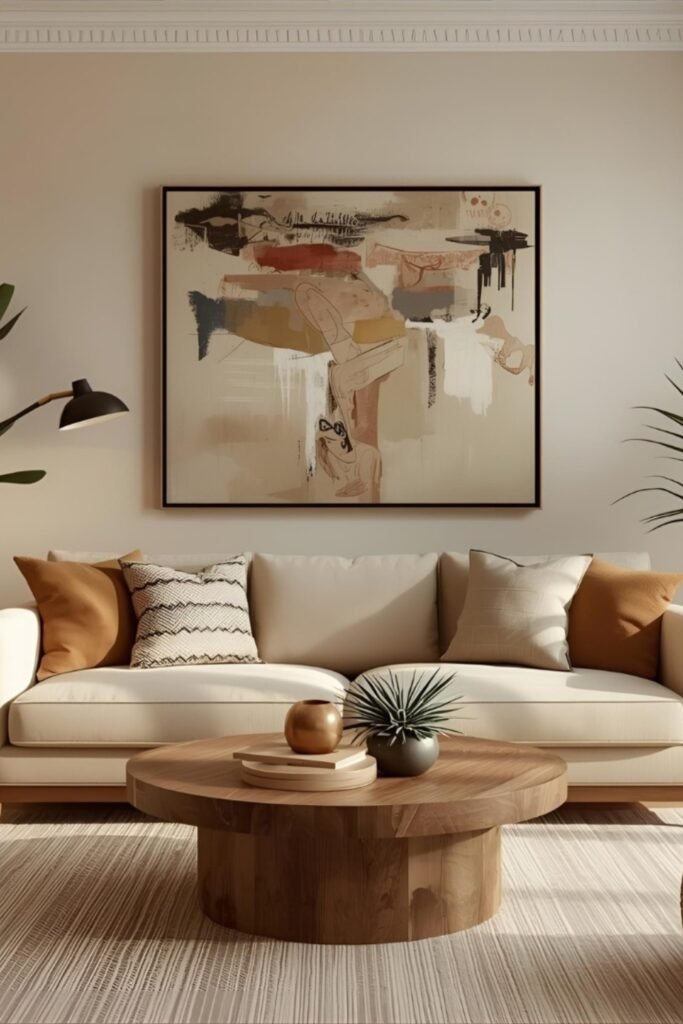
Warm Abstract Anchor
If your living room already uses warm neutrals, choose art that builds on those colors instead of disappearing into them.
A large abstract with rust, beige, cream, and black adds enough contrast while still fitting naturally with wood furniture and earthy cushions.
Keep the piece wide enough to relate to the sofa beneath it, but leave open wall around the frame.
This approach is ideal when you want noticeable artwork without introducing bright, unrelated colors.
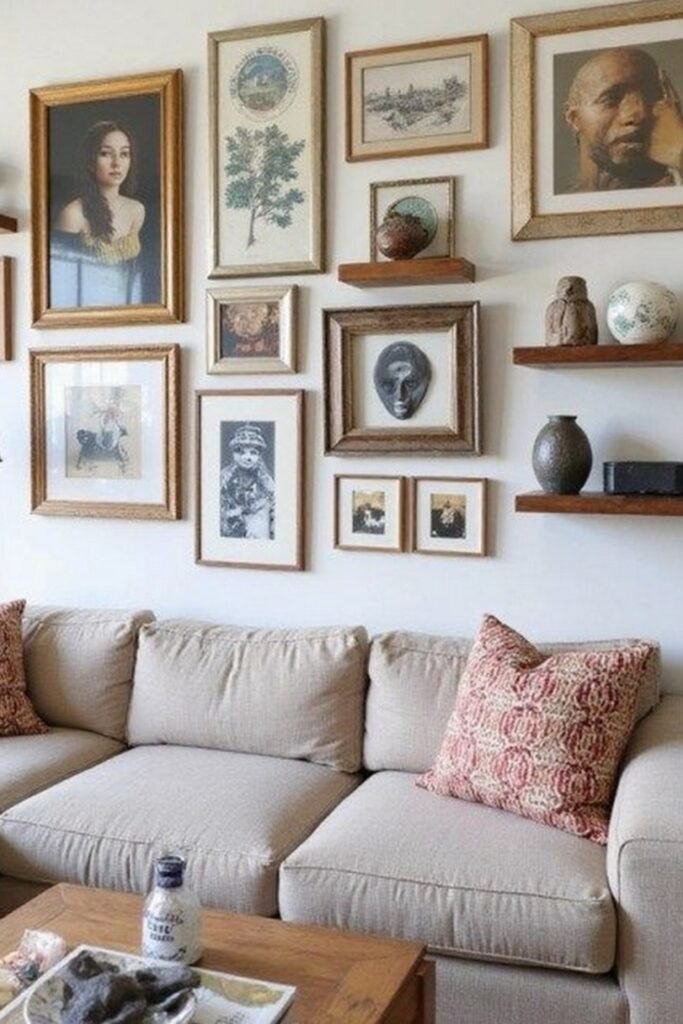
Art Meets Objects
Your gallery wall doesn’t have to stop at framed pictures.
Mix portraits, sketches, photographs, and botanical art with small floating shelves holding pottery or sculptural pieces.
Start with two or three larger frames to anchor the arrangement, then fill smaller gaps without forcing perfect symmetry.
Keeping the frames and shelves in similar warm wood tones helps a busy collection feel connected.
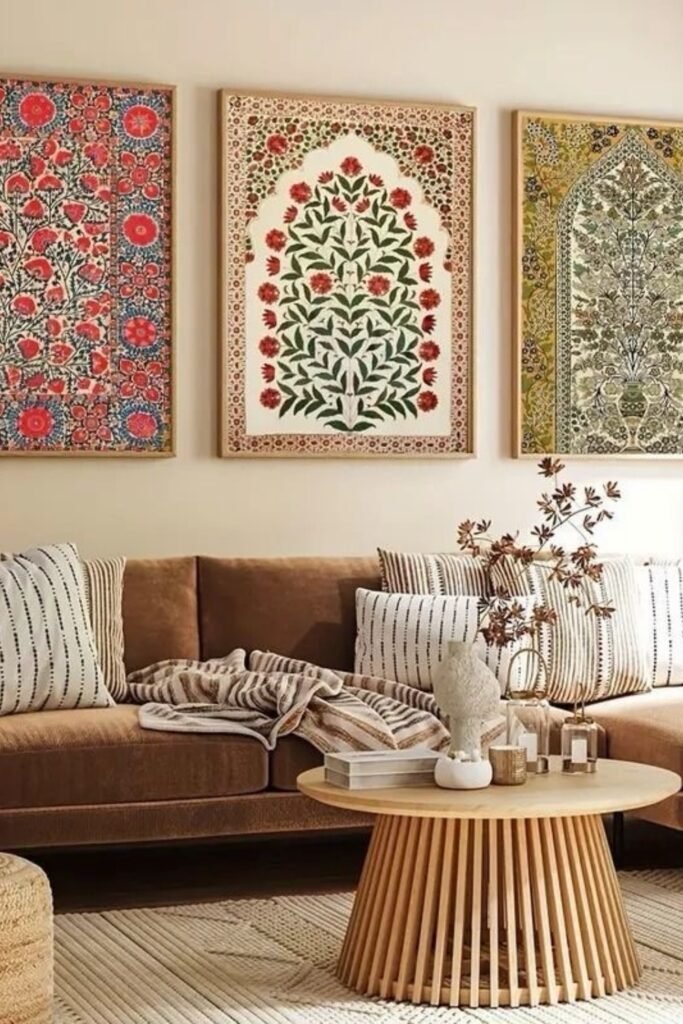
Botanical Art Trio
Three equal-sized prints are an easy answer when one artwork feels too plain but a gallery wall feels too busy.
Choose designs with a shared theme, then let each piece bring slightly different colors or patterns.
Botanical prints work especially well with earthy living rooms because their greens, reds, and warm yellows naturally sit alongside brown upholstery and wood furniture.
Hang the frames at the same height with even gaps so the detailed artwork still feels organized.
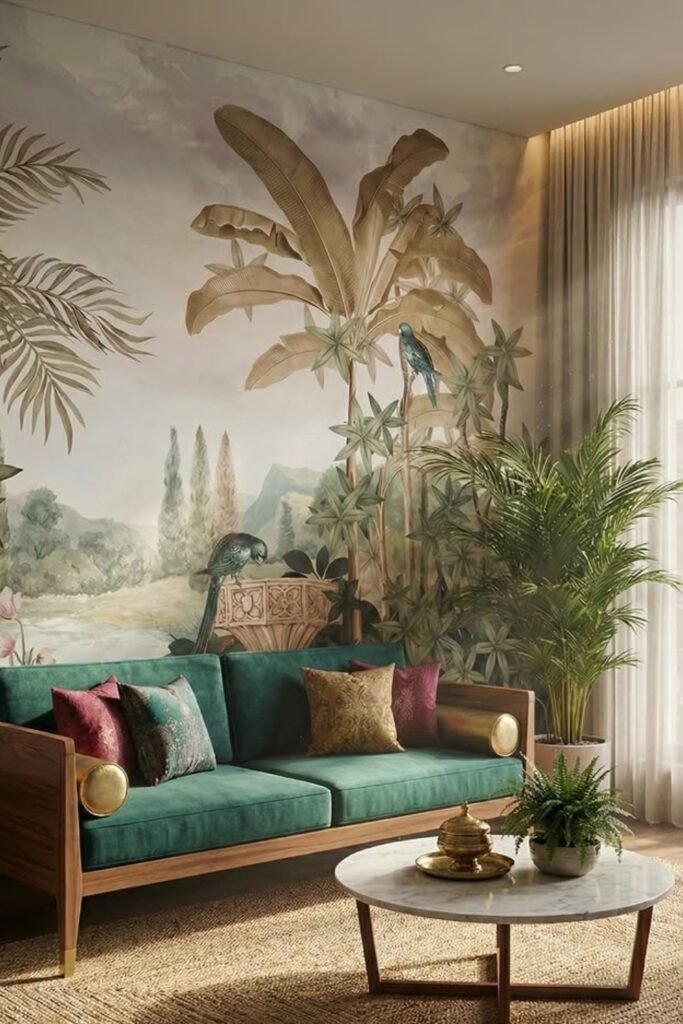
Full Wall Mural
When framed art feels too small for a large blank wall, let the artwork cover the whole surface instead.
A botanical mural can turn the wall behind your sofa into the room’s main feature without needing extra frames or shelves.
Choose a design with softer, slightly muted colors if you want something large without making the space feel overwhelming.
Pull one or two mural colors into your sofa or cushions to connect the wall with the rest of the room.
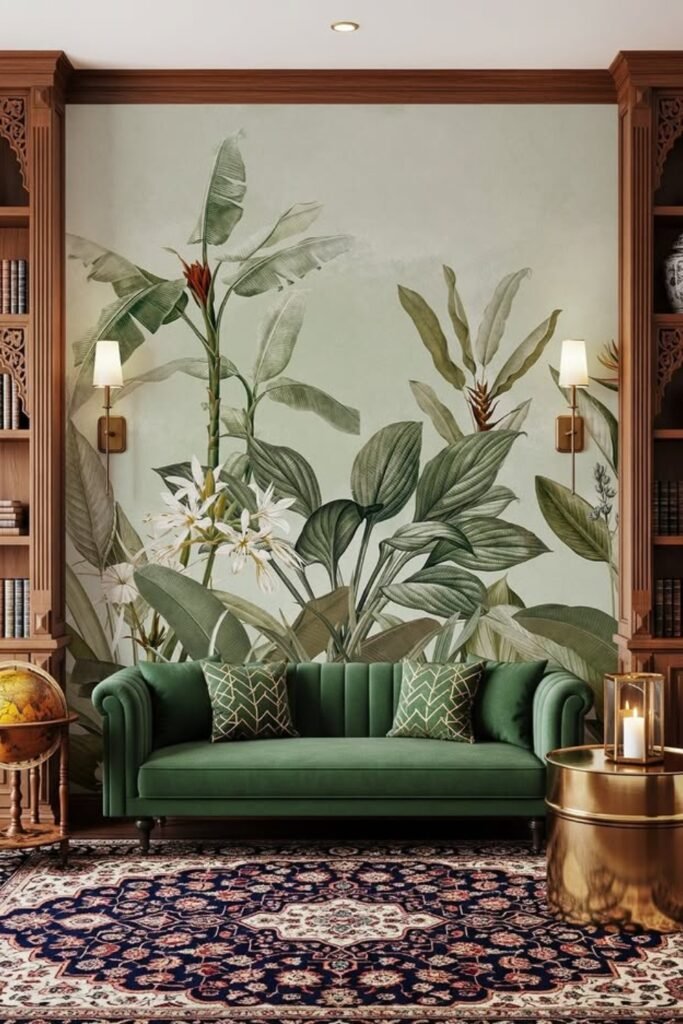
Framed Mural Moment
Built-ins can actually help you decide where large-scale wall art should go.
Use the open section between bookcases as a natural frame, then fill it with a mural that reaches from the sofa toward the ceiling.
A botanical design works especially well when dark wood cabinetry needs something lighter and softer beside it.
Adding slim sconces over the mural also gives the wall structure without covering the artwork with extra frames.
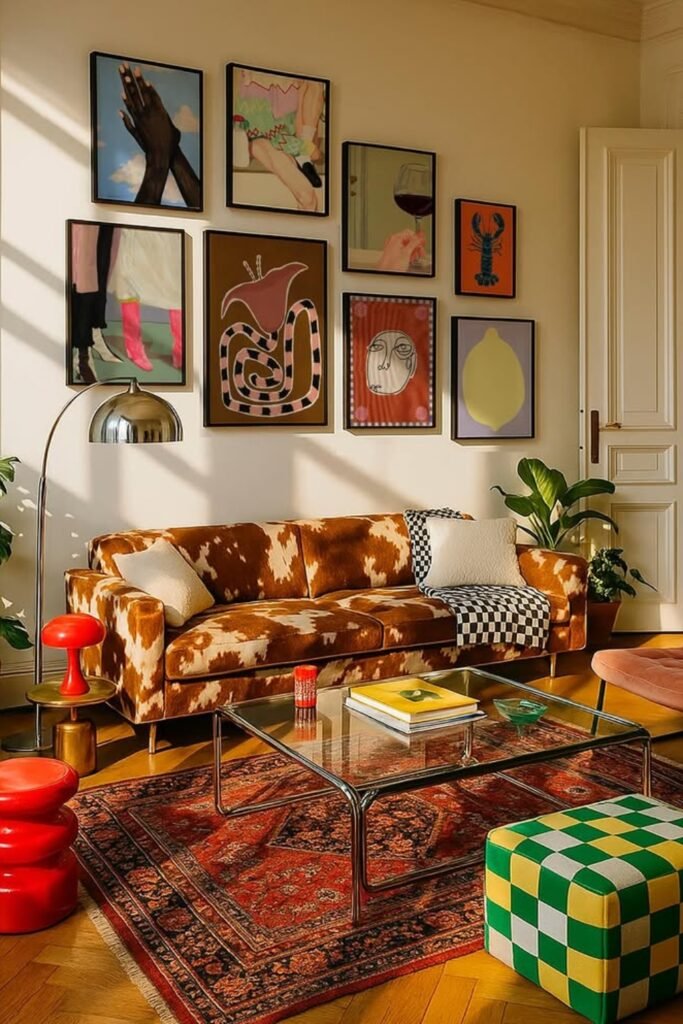
Playful Graphic Gallery
A colorful room can handle artwork with just as much personality.
Mix bold illustrations, quirky subjects, and different print sizes, then use simple dark frames to give the collection some order.
Instead of matching every artwork to the sofa, repeat small touches of orange, red, green, or black around the room.
This looser gallery style works especially well when you want your living room to feel creative rather than carefully coordinated.
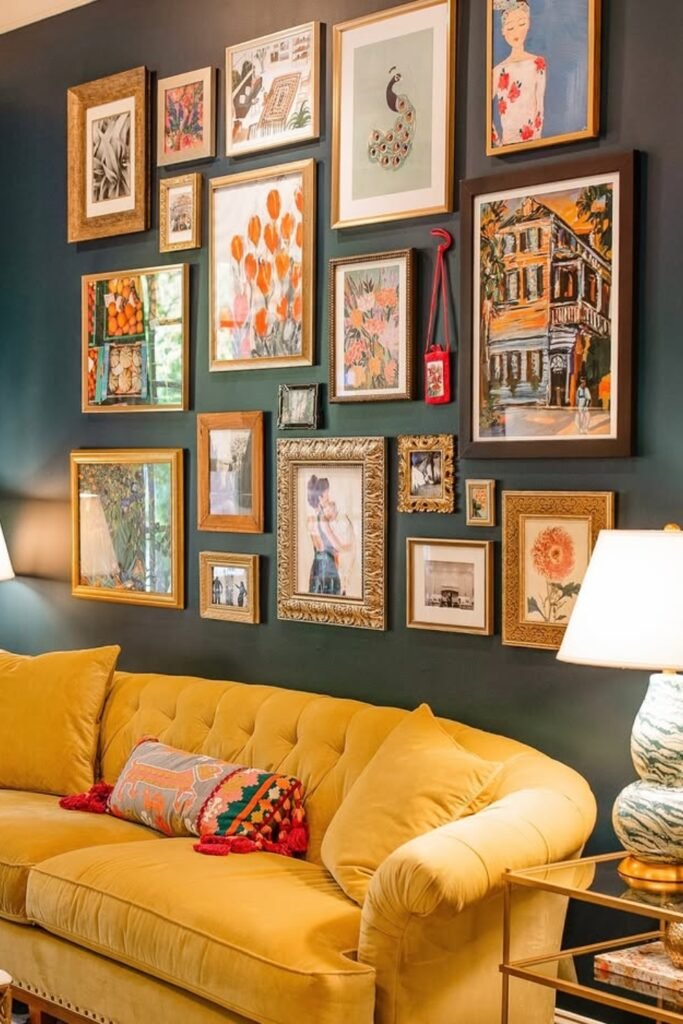
Collected Vintage Gallery
If you already own art from different places or periods, don’t hide the differences, use them to build character.
Combine portraits, florals, architecture, photography, and illustrations in frames with different finishes and sizes.
Start with the larger pieces, then tuck smaller frames into the remaining spaces until the arrangement feels balanced.
A dark wall makes warm wood and gold frames stand out beautifully, making this approach especially effective in colorful, vintage-inspired living rooms.
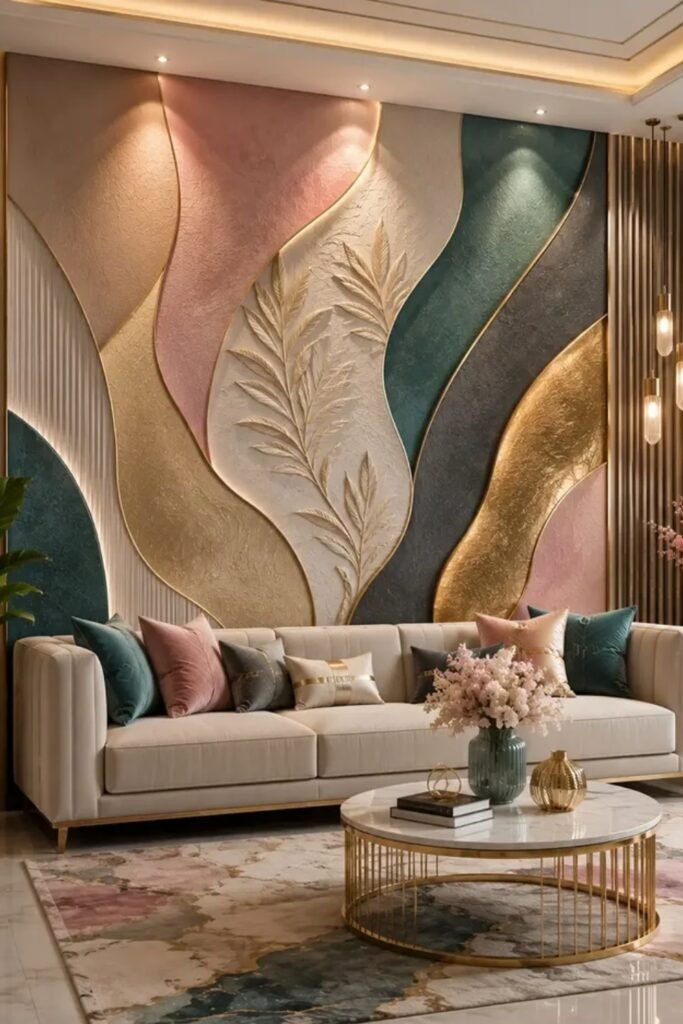
Sculpted Wall Art
If flat artwork feels too ordinary, turn the entire wall into a three-dimensional piece.
Layered curves, raised botanical details, and textured finishes create depth that changes as light moves across the surface.
Keep the furniture relatively simple so the wall remains the main feature, then repeat a few of its colors through cushions and accessories.
This works especially well on a large sofa wall in contemporary or luxe living rooms where one framed canvas might feel undersized.
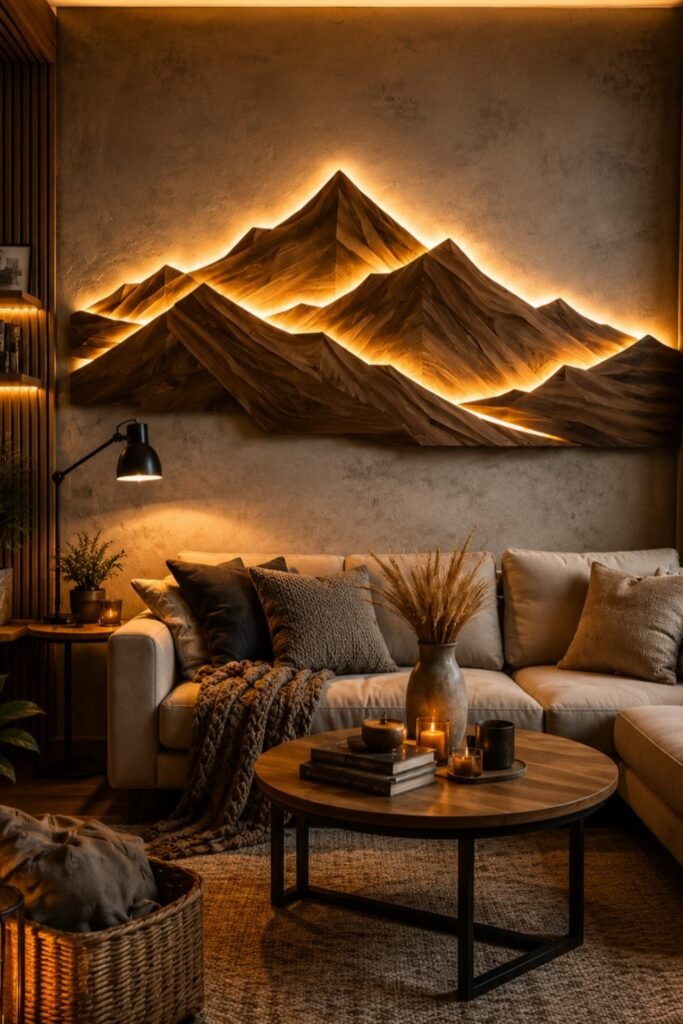
Illuminated Wood Mountains
Wall art can do more than add color, it can also bring warm lighting into the room.
Use layered wood panels to create a mountain silhouette, then add hidden backlighting behind the edges to emphasize the shape after dark.
This works especially well above a sectional in cozy, rustic, or modern living rooms with plenty of natural wood.
Keep nearby wall decor minimal because the combination of texture, scale, and light already gives the wall enough detail.
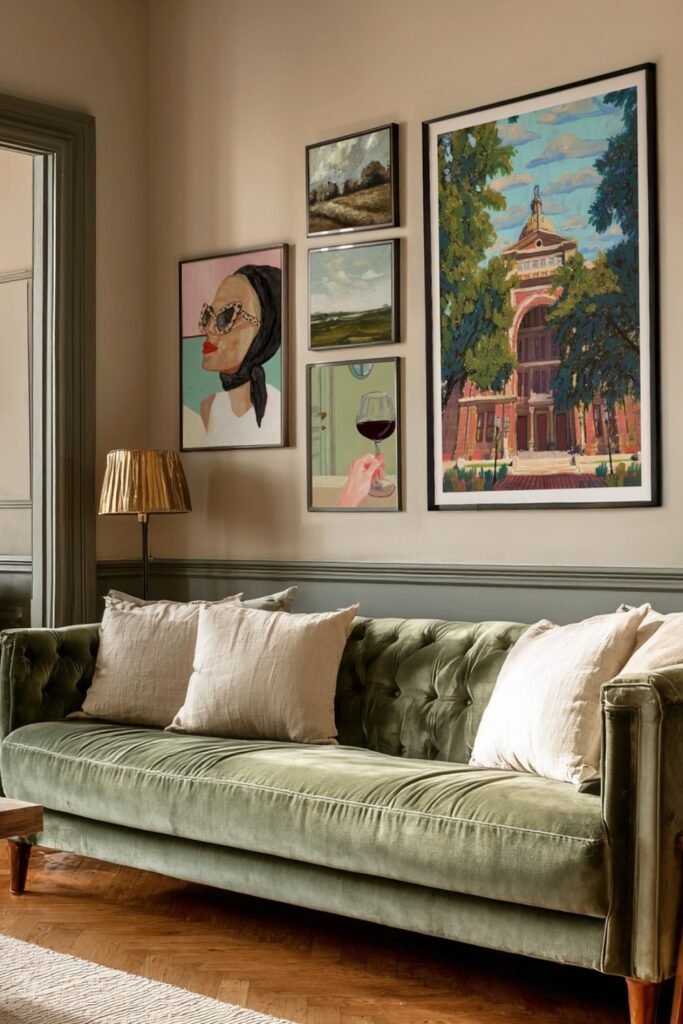
Mixed Art Cluster
You don’t need matching subjects to make a smaller gallery wall feel connected.
Pair portraits, landscapes, still lifes, and architectural prints, but keep the frames similar so the different artwork doesn’t look random.
Use one larger piece to give the arrangement an anchor, then stack smaller frames beside it to fill the wall vertically.
This works especially well above a sofa when you want variety without covering the entire wall.
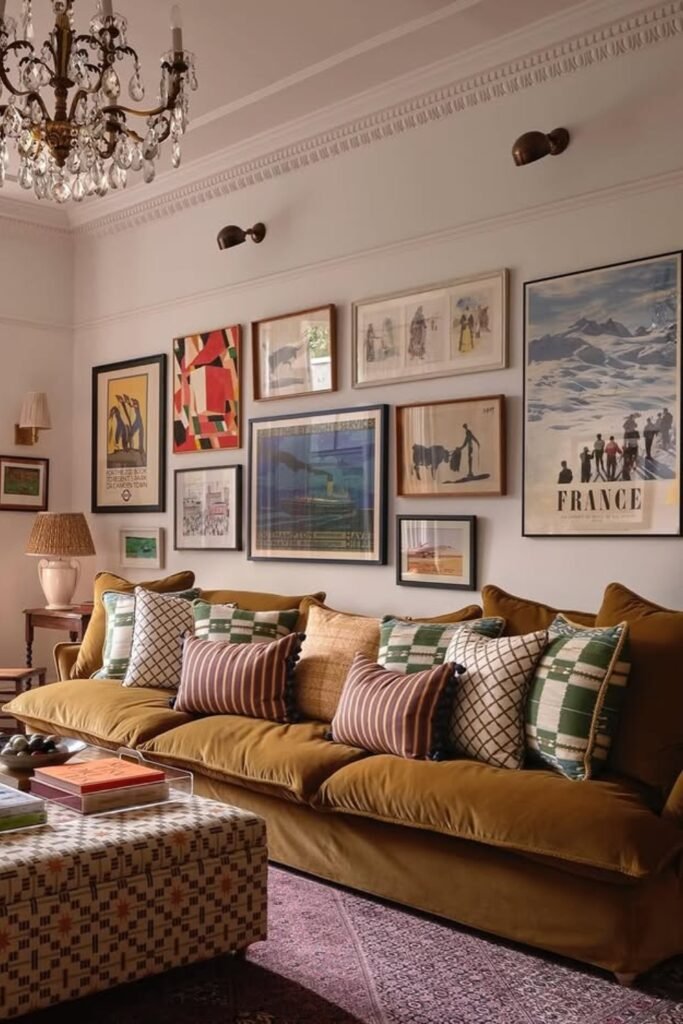
Travel Art Gallery
A travel-themed gallery wall works best when it feels like a collection of places and memories rather than matching vacation posters.
Mix destination prints with sketches, photography, and abstract pieces, then vary the sizes so the wall doesn’t feel too rigid.
Give one larger travel print a little more space to act as the focal point.
This is a great way to fill a long sofa wall while displaying places that actually mean something to you.
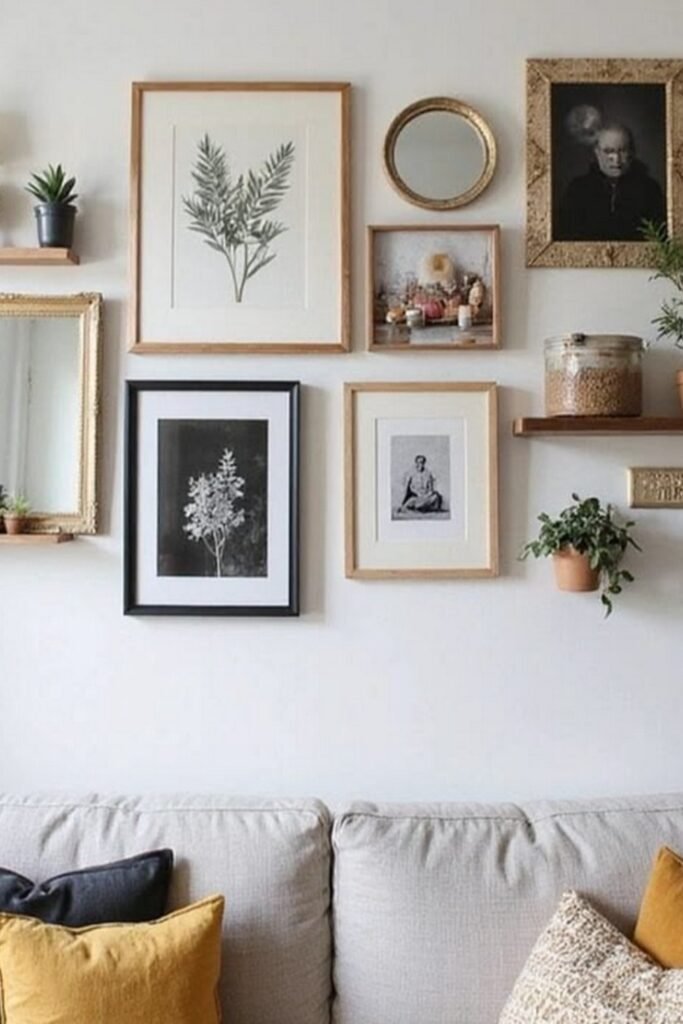
Layered Art Display
If framed prints alone feel too flat, mix them with mirrors, small shelves, and a few plants.
Start with two larger frames to give the arrangement structure, then work smaller pieces around them instead of filling every gap.
Keeping most of the artwork neutral lets the different shapes and materials provide the variety.
This setup is especially useful above a sofa when you want a personal gallery wall that can easily change as you collect new pieces.
FAQs
Should Living Room Wall Art Match the Sofa?
No, your art doesn’t need to match your sofa exactly.
Instead, repeat one or two colors from the room or choose artwork with a similar mood.
A little contrast can actually make the wall more interesting and stop the living room from looking overly coordinated.
How Do I Fill a Large Living Room Wall Without Making It Look Busy?
Start with scale rather than adding lots of small decorations.
One oversized canvas, a pair of large prints, a triptych, or a well-planned gallery wall can fill the space without creating clutter.
Leave some empty wall around the arrangement so each piece has room to stand out.