A living room window can bring in beautiful light and still be surprisingly hard to style.
Maybe your sofa blocks it, the curtains feel wrong, or you need more privacy without making the room dark.
From curtains and shades to window seats and furniture placement, these ideas will help you make your window work better with the whole room.
In this article, you’ll find 23 practical living room window ideas for different sizes, layouts, and styles.
Let’s jump in!
What Are the Best Types of Windows for a Living Room?
The best window depends on what your living room needs most.
If you want maximum natural light and a clear outdoor view, a large picture window is a great choice.
If fresh air matters too, choose casement or double-hung windows that you can easily open.

For a living room with extra floor space, bay or bow windows work well because you can add a bench, reading spot, or plants underneath.
Floor-to-ceiling windows suit rooms with a beautiful view, but you’ll need to think about privacy and glare.
Before choosing, look at your room size, sunlight direction, furniture layout, and privacy needs.
A window should make the room easier to use, not harder to arrange.
Frame the Outdoor View
When your living room faces a view worth keeping, oversized windows can become the main feature without needing curtains or extra decoration.
Keep sofas and tables low around the glass so furniture never interrupts the sightline or stops daylight from reaching deeper inside.
Dark window frames work especially well with high ceilings because they outline the landscape and give a large open room stronger structure.
Create a Bay Corner
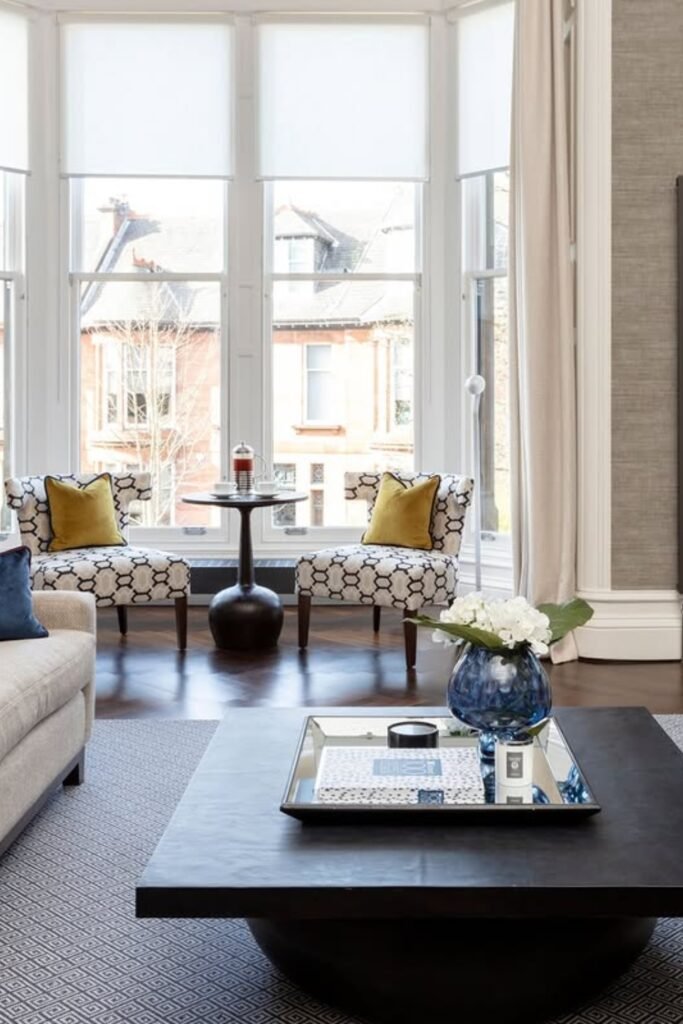
A bay window gives you a ready-made conversation spot, so place two compact chairs there instead of filling it with bulky furniture.
Use individual roller shades across each window when you need glare control, while keeping them partly raised to preserve plenty of daylight.
A small table between the chairs finishes the setup and turns an awkward window projection into a useful coffee or reading corner.
Let Tall Windows Breathe
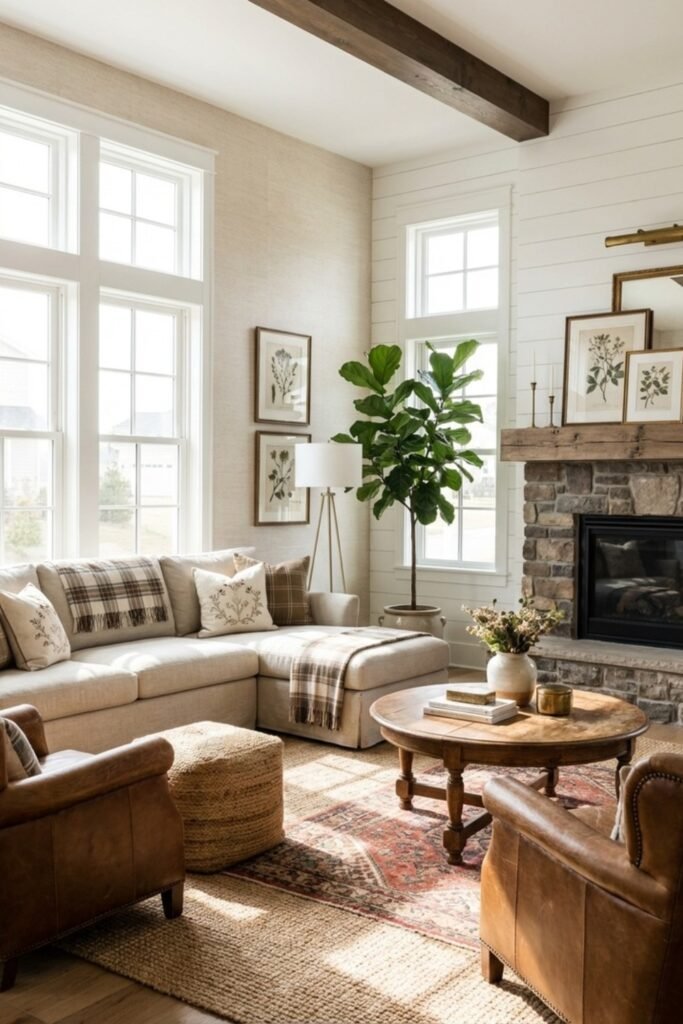
Tall windows already make a living room feel bigger, so avoid heavy treatments when privacy is not a major concern for you.
Position the sectional below the window line, then leave enough open glass above it to pull daylight across the seating area naturally.
If the windows flank a fireplace, repeat similar trim and proportions so both features feel connected instead of competing for attention visually.
Layer Bay Window Privacy
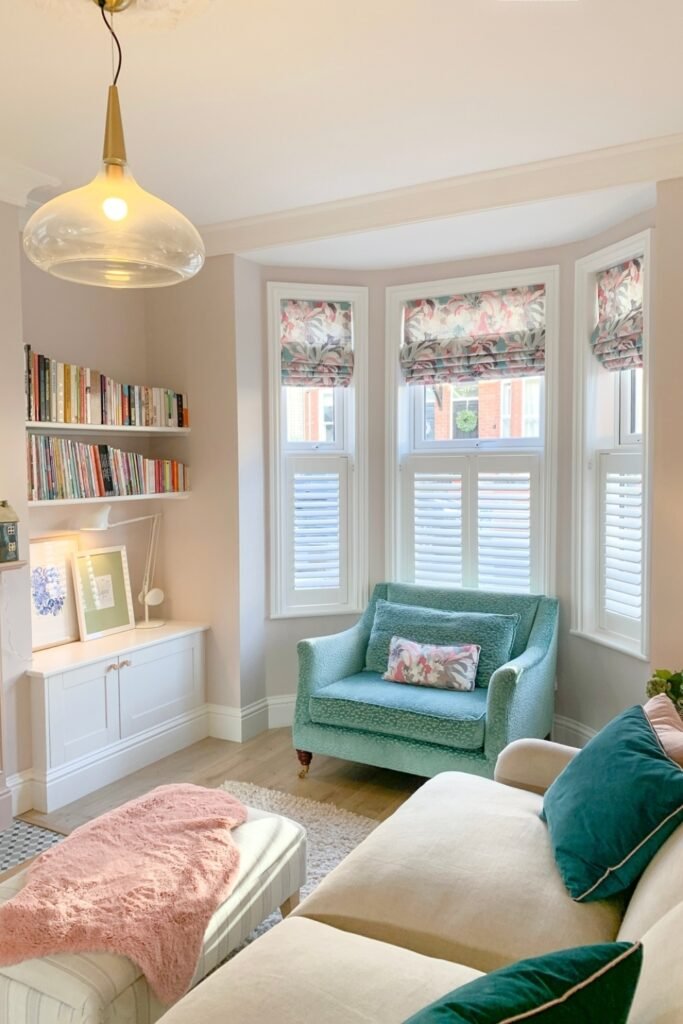
Street-facing bay windows need flexible privacy, and combining shutters with Roman shades gives you much better control throughout the entire day.
Close the lower shutters when people can see inside, while leaving the upper glass exposed so the room still receives natural light.
Choose patterned Roman shades when the surrounding walls are simple; they add personality without taking valuable floor space from a smaller living room.
Soften Double-Height Glass
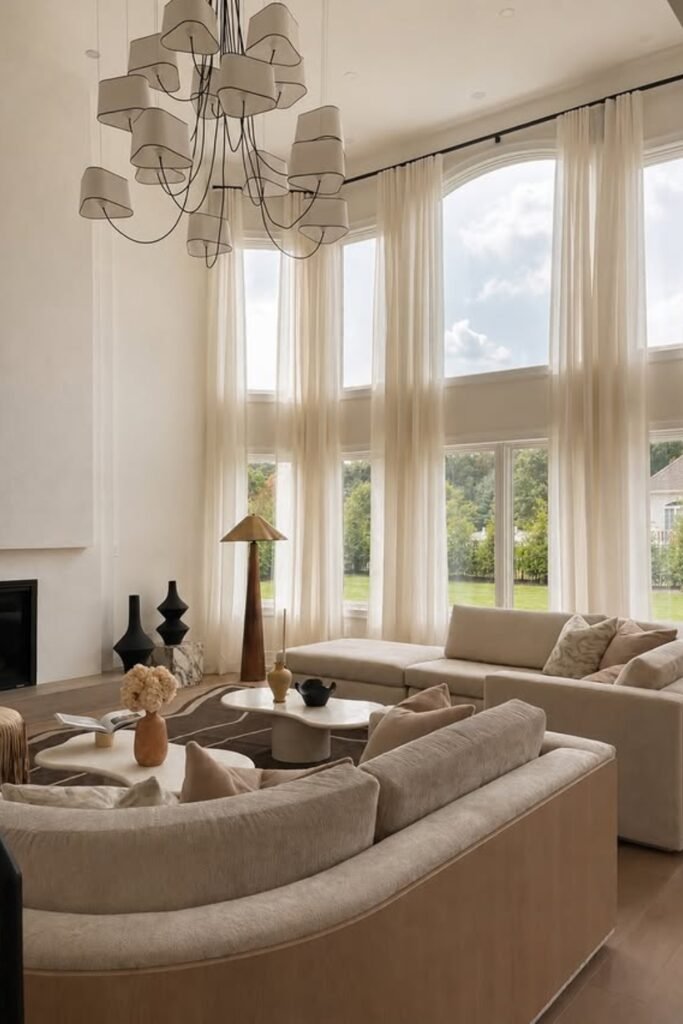
Double-height windows can feel overwhelming without some softness, so use ceiling-mounted sheer curtains to balance the glass.
Choose panels long enough to run from ceiling to floor, which emphasizes the room’s height instead of visually cutting those windows apart.
Keep large sofas slightly away from the glass so curtains can hang naturally and the seating still enjoys the open garden view.
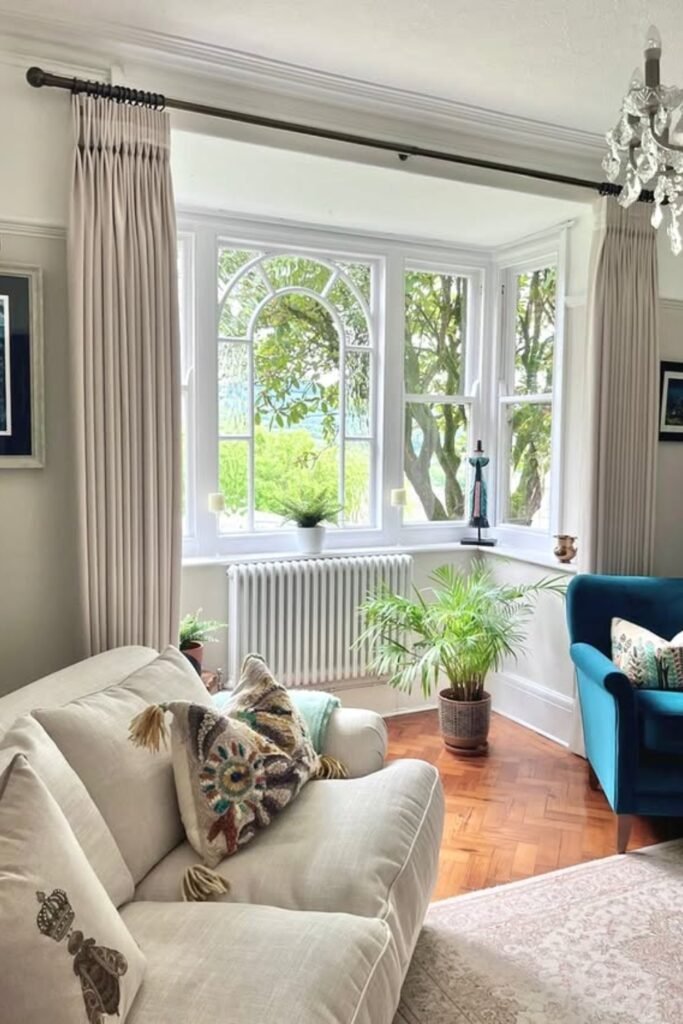
Highlight Arched Windows
When a window has beautiful architectural detail, frame it instead of hiding it behind fabric that covers the most interesting part completely.
Mount curtains outside the bay and pull them fully aside, allowing the arched center window to stay visible as a natural focal point.
This approach works especially well in traditional living rooms, where decorative trim, and classic furniture already support the window’s character.
Build Around Windows
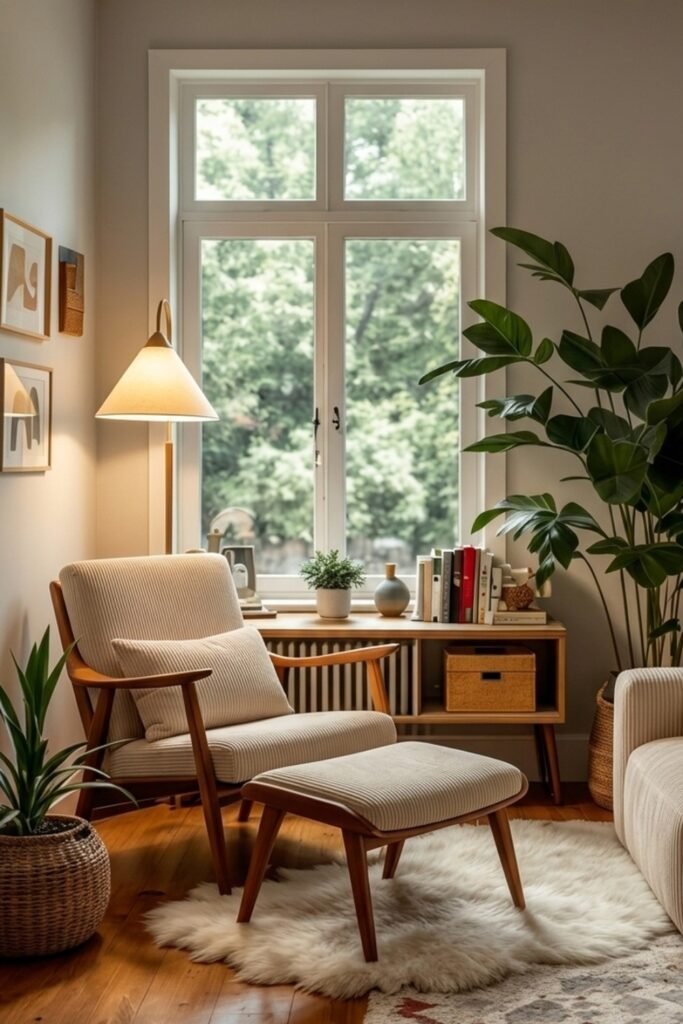
A standard window can become much more useful when you treat the space underneath as part of your furniture plan from the start.
Place a low console beneath the sill for books and storage, then add a comfortable chair nearby to create an easy reading spot.
Keeping the window uncovered works best when privacy allows, while tall plants beside it bring greenery indoors without blocking the outdoor view.
Turn Sills Into Seating
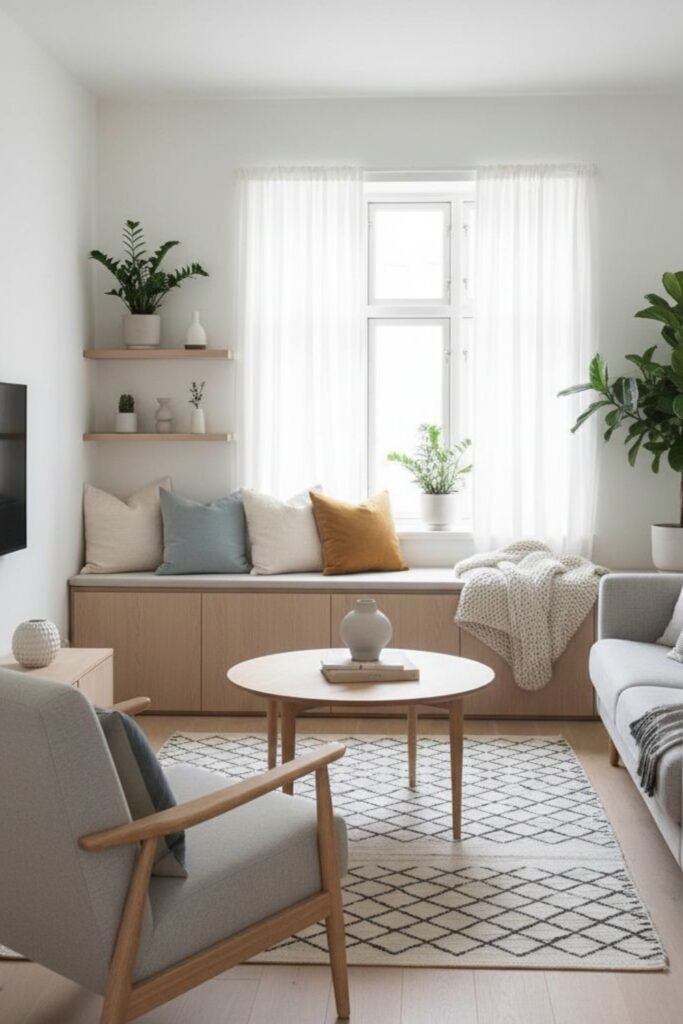
Small living rooms need every wall working harder, and a window wall can provide seating and storage without adding another bulky furniture piece.
Build low cabinets beneath the window, top them with comfortable cushions, and keep the height below the sill to preserve incoming daylight.
Light sheer curtains are enough when you want softness without heaviness, making this setup especially useful in narrow rooms with limited floor space.
Celebrate Arched Windows
Arched windows already bring plenty of character, so leave their curved tops uncovered instead of hiding that architectural detail behind heavy curtains.
Use slim dark frames to outline each opening, then arrange seating between the windows so everyone can enjoy the light and garden views.
This works beautifully in tall traditional living rooms, where matching arches and simple furniture let the windows carry most of the visual interest.

Make Bay Seating Cozy
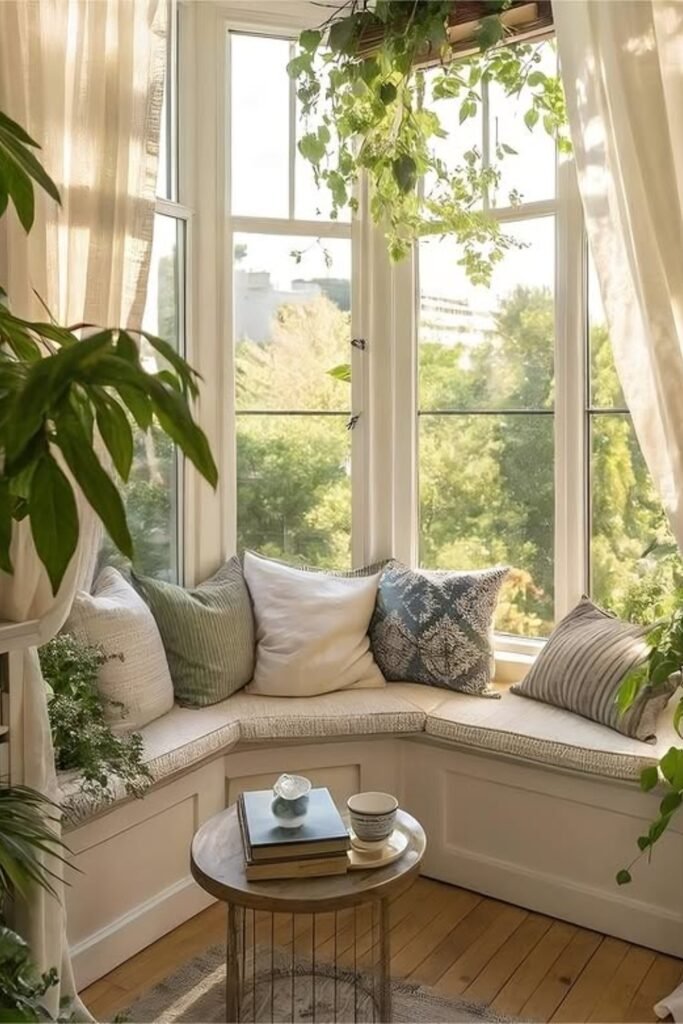
A deep bay window can become the coziest seat in the room when you build a fitted bench around its angled shape.
Add thick seat cushions and supportive pillows, but keep their colors quiet so greenery outside remains the strongest part of the view.
Finish with lightweight curtains and nearby plants to soften the window edges without making this naturally bright corner feel crowded or closed.
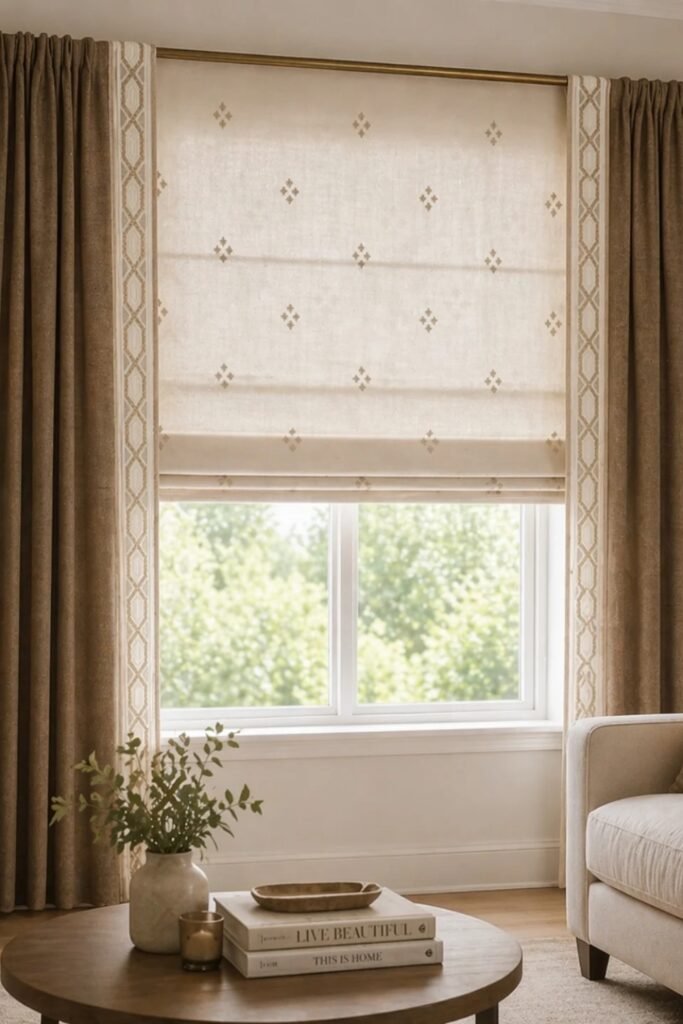
Double Up Treatments
When one window needs both softness and practical light control, pair full-length curtains with a Roman shade instead of choosing only one.
Mount the curtain rod beyond the frame so open panels expose more glass, while the shade handles privacy whenever you actually need it.
Choose fabrics from the same warm color family, then vary their patterns slightly to give a neutral living room more depth and interest.
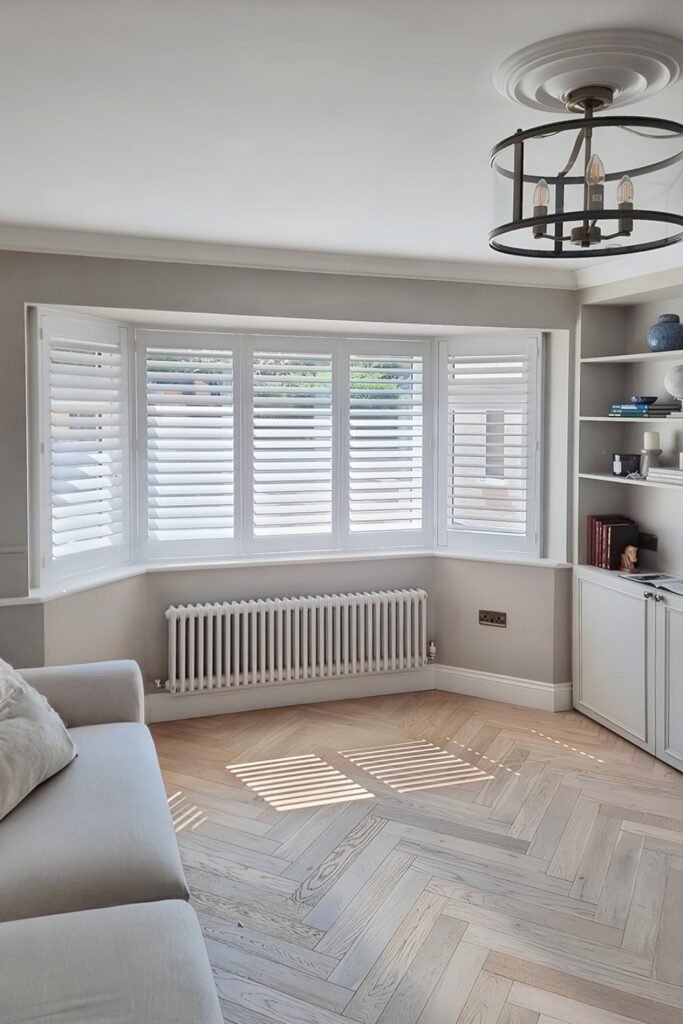
Control Bay Window Light
Wide bay windows can flood a living room with sunlight, but adjustable shutters let you control brightness without covering the entire feature.
Tilt the slats when direct sun becomes uncomfortable, then open them wider whenever you want the room to feel brighter and more spacious.
Because shutters fit each bay section closely, they also keep the window area neat when nearby built-ins already add plenty of visual detail.
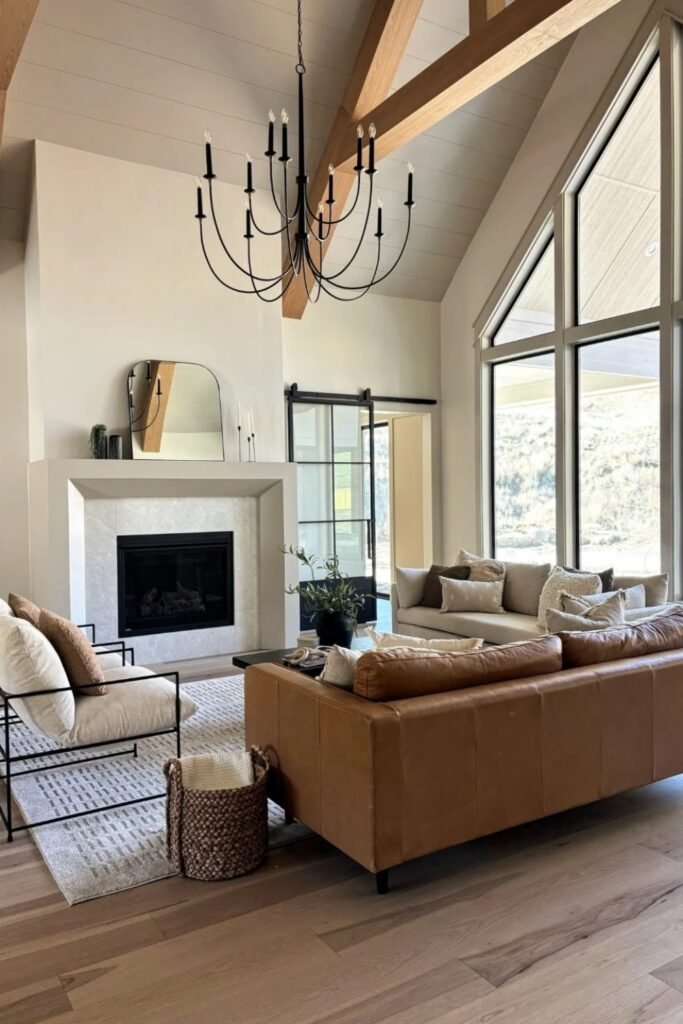
Follow the Roofline
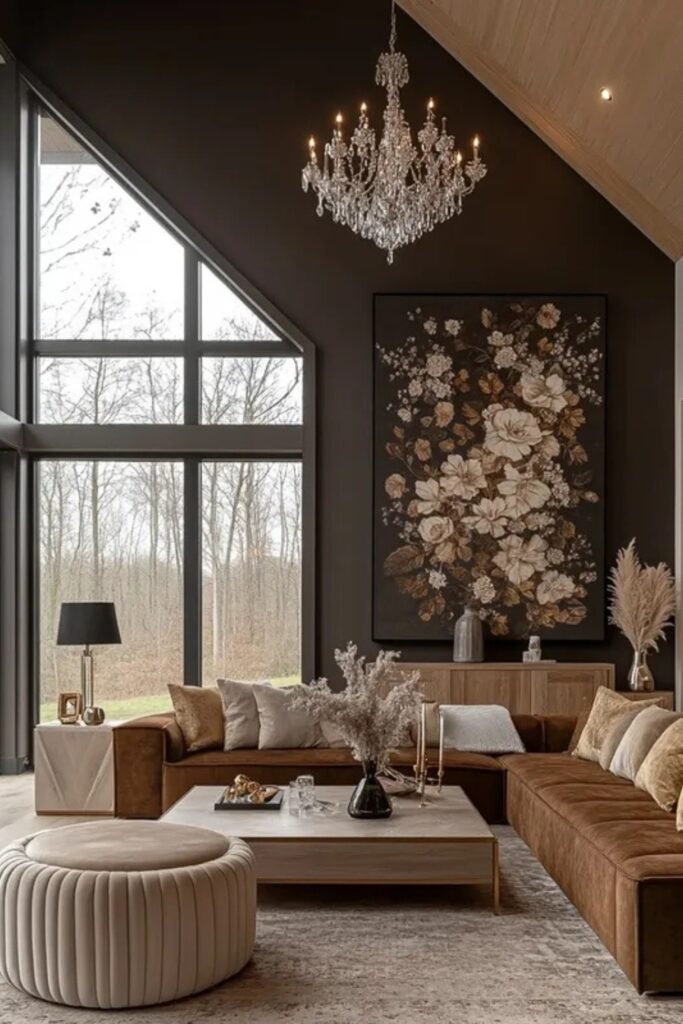
A vaulted living room feels more connected when the window follows the roof pitch instead of stopping at a standard rectangular shape.
Keep this kind of statement window mostly uncovered when privacy allows, letting its angled upper panes pull daylight toward the highest ceiling points.
Arrange seating below the glass rather than directly against it, so the dramatic window remains visible while everyone still enjoys the outdoor view.
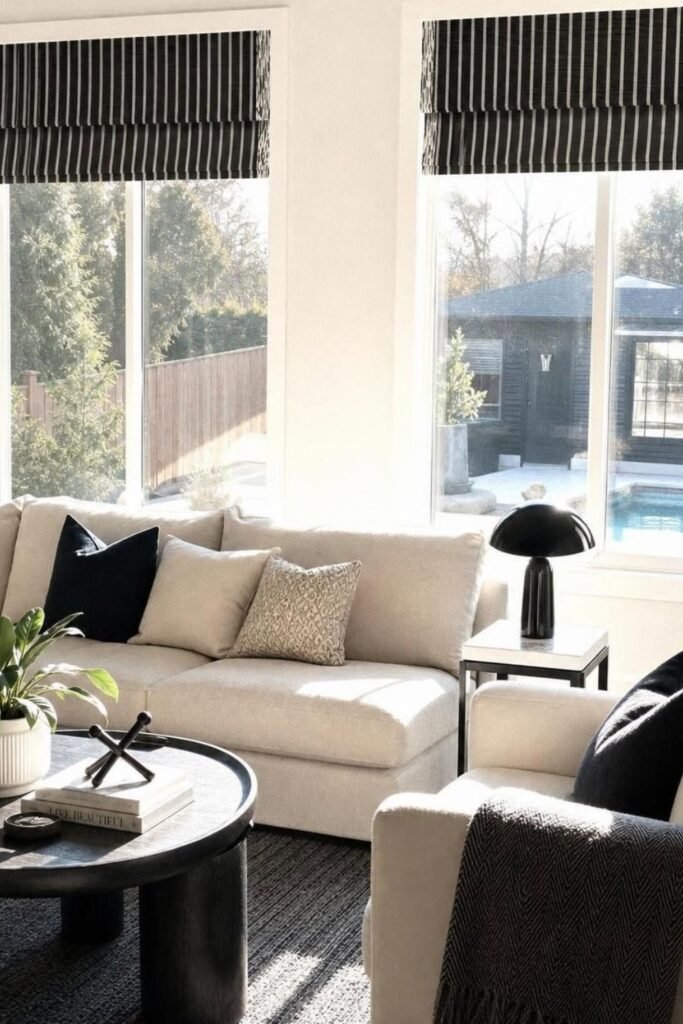
Add Graphic Shades
Bright rooms do not always need flowing curtains; striped Roman shades can bring stronger contrast while keeping the window area clean and compact.
Mount each shade inside its own frame, especially when several windows sit together and you want independent control over incoming sunlight.
Black stripes work particularly well in neutral living rooms because they connect easily with dark lamps, tables, pillows, and other small accents.
Keep Bay Windows Simple
When a bay window already has strong proportions, fitted blinds can handle privacy without adding layers of fabric around its angled shape.
Adjust the slats throughout the day to soften direct sunlight while still keeping enough of the outside view visible from your sofa.
This clean approach suits living rooms with decorative ceilings because the window treatment does not compete with existing architectural features.
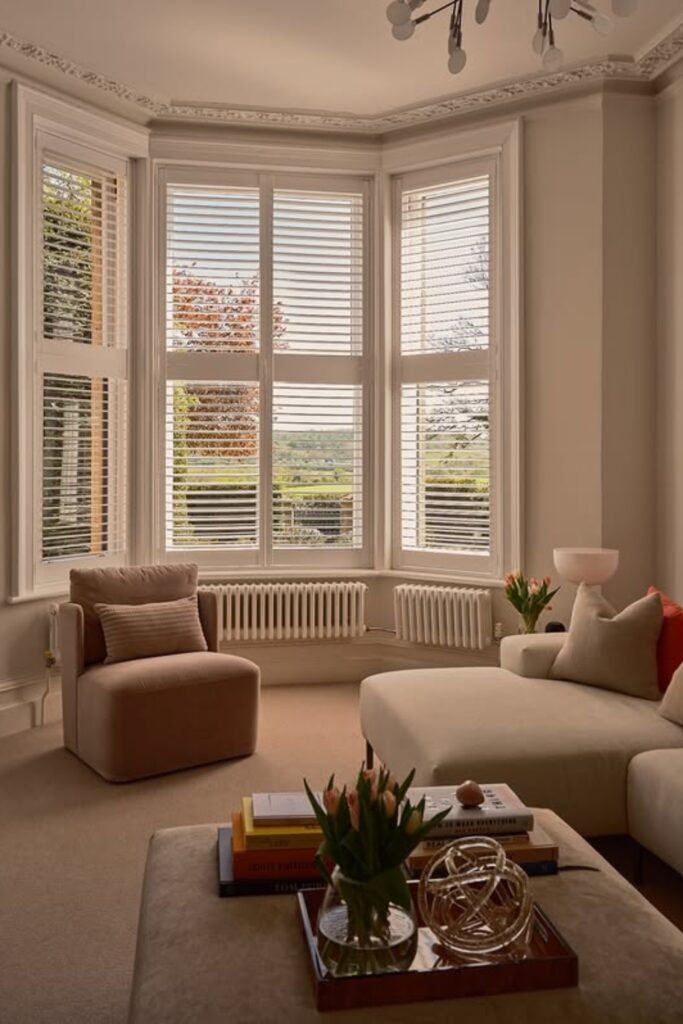
Work Below the Arch
A large arched window can sit behind your main sofa beautifully, as long as the furniture stays below its most interesting upper section.
Choose a low-backed sectional that follows the window wall, allowing the curved glass above to remain completely visible across the entire room.
Skip curtains when privacy permits, because leaving the arch exposed makes its shape feel intentional.
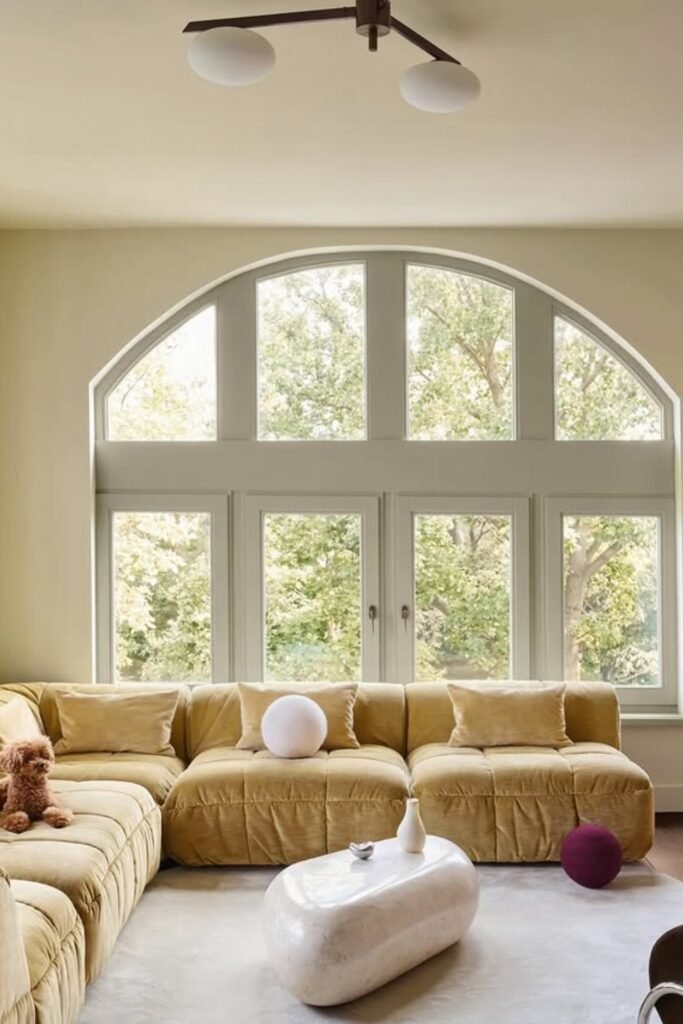
Let Corner Windows Connect
Corner windows can make two walls feel like one continuous view, so avoid filling the meeting point with tall furniture or heavy curtains.
Place one comfortable chair nearby instead, giving the corner a purpose while keeping both windows completely open to sunlight and outdoor scenery.
Dark frames add enough definition on their own, making this approach especially effective in simple living rooms surrounded by trees or garden views.
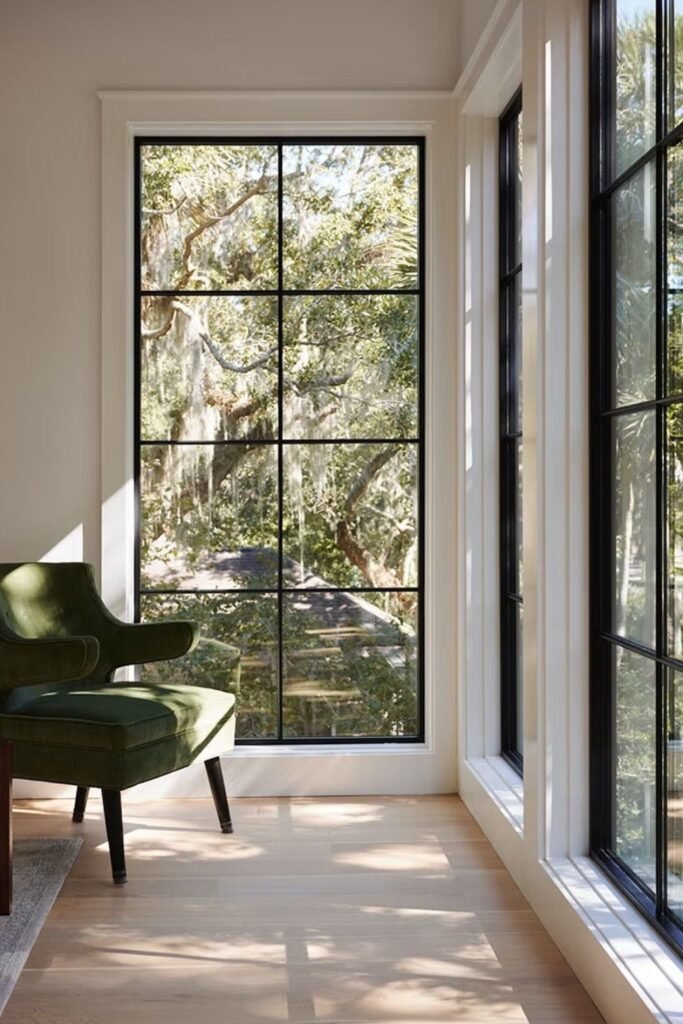
Balance Light With Layers
When sunlight changes throughout the day, pairing woven shades with sheer curtains gives you more control without making the windows feel overly dressed.
Lower the shades when glare becomes strong, then use the sheer panels to soften daylight while still keeping the living room naturally bright.
This combination works especially well with neutral furniture, since the woven texture adds warmth without introducing another strong color or busy pattern.
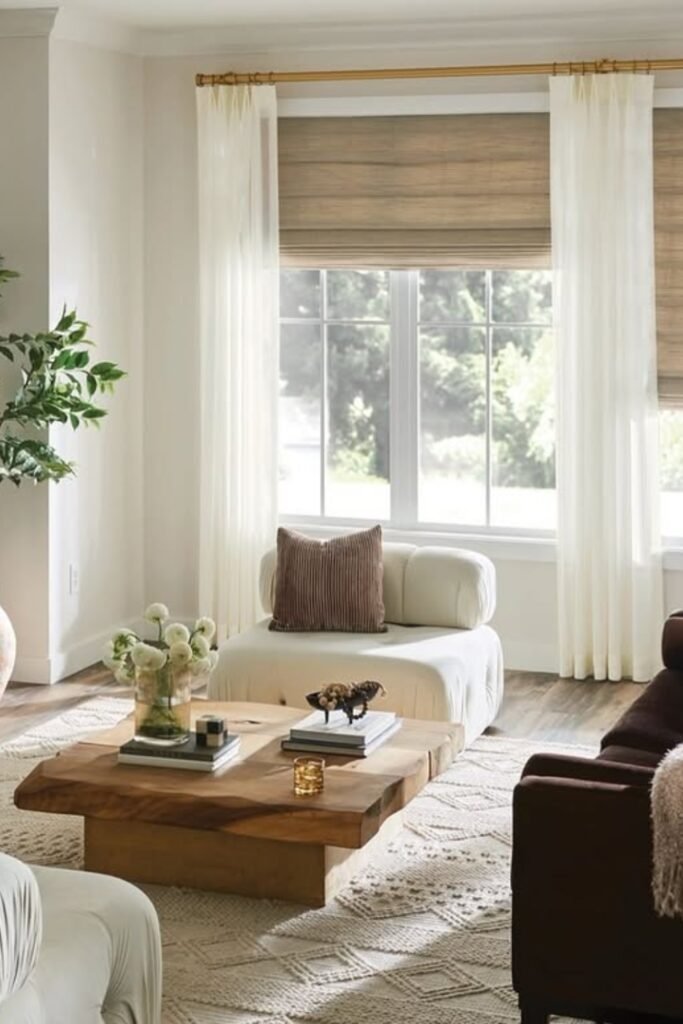
Turn Windows Into Lounging
A window seat becomes far more useful when you size it like a small sofa instead of treating it as decorative extra space.
Add a deep cushion, supportive pillows, and hidden storage underneath so the window wall handles seating and everyday clutter at the same time.
Layer sheer curtains behind heavier side panels when you want daytime softness and stronger privacy later without losing the cozy built-in feeling.
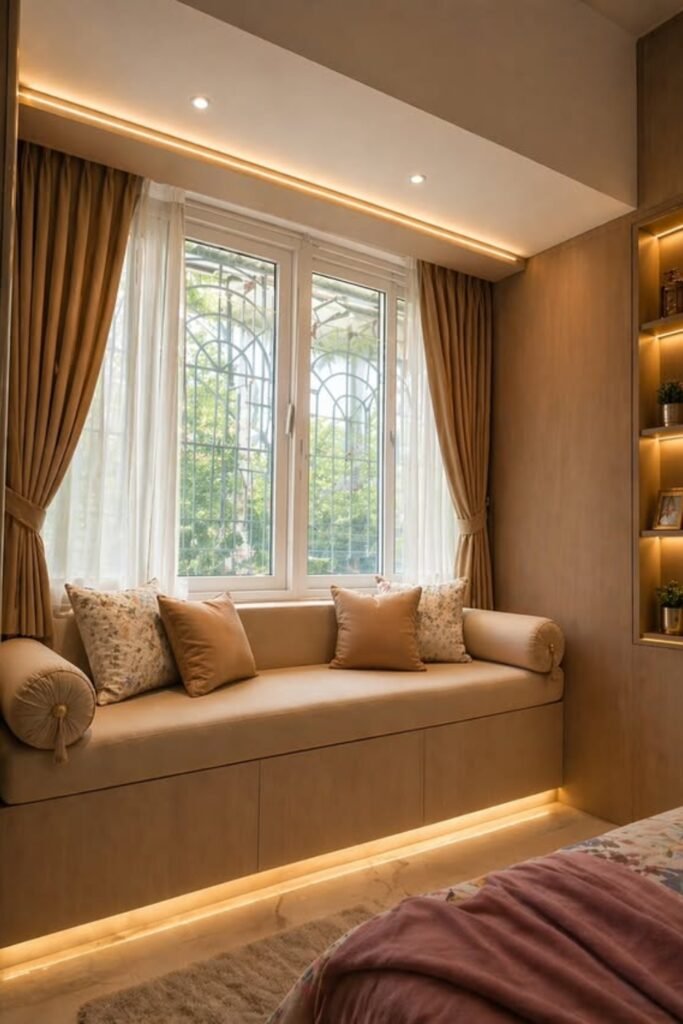
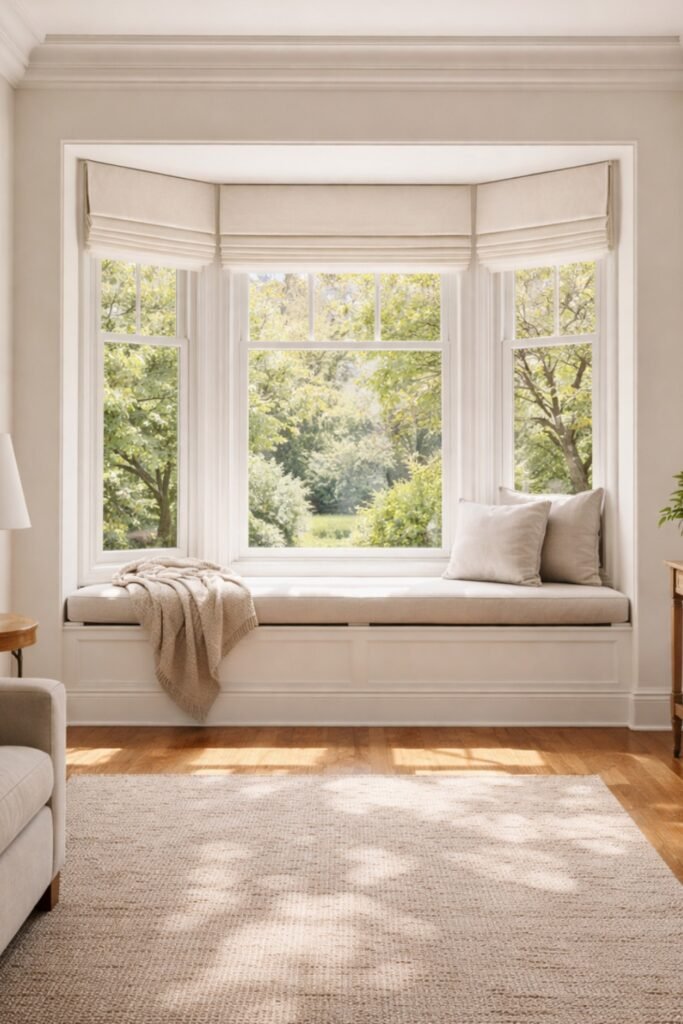
Fit Shades Precisely
Bay windows look cleaner when each section gets its own fitted Roman shade rather than one treatment stretched awkwardly across every angle.
Keep the shades close to the frame and choose a light neutral fabric so their folds never overpower the view or surrounding trim.
Pair them with a simple built-in bench below, turning the entire window into useful seating while keeping the living room floor more open.
Give Bay Windows Purpose
A bay window feels more finished when you place a slim bench underneath instead of leaving that valuable floor space completely unused.
Use fitted shutters for adjustable privacy, then add curtains at the outer edges when you want more softness and stronger evening coverage.
This setup works especially well in narrow living rooms because the bench adds another seat without competing with your main sofa area.
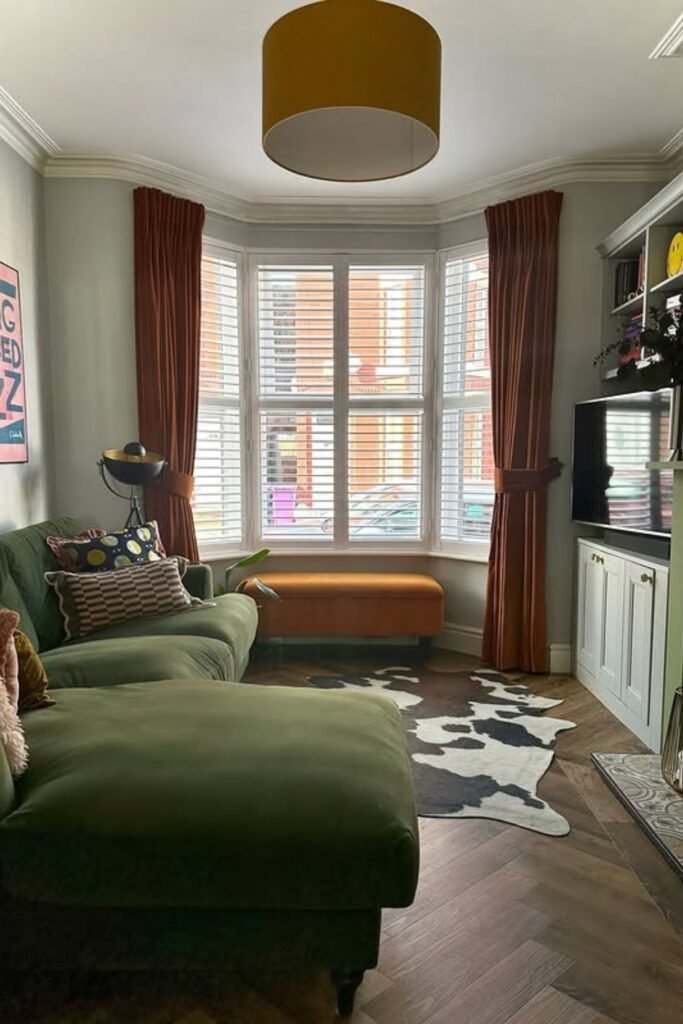
Keep Shutters Flexible
If your living room gets changing sunlight, plantation shutters let you adjust each section without constantly opening and closing full curtain panels.
Angle the slats to reduce glare while keeping daylight coming through, which works particularly well around chairs used for reading or conversation.
Add floor-length curtains only at the outer edge when you want softness, leaving the shutters responsible for everyday privacy and light control.
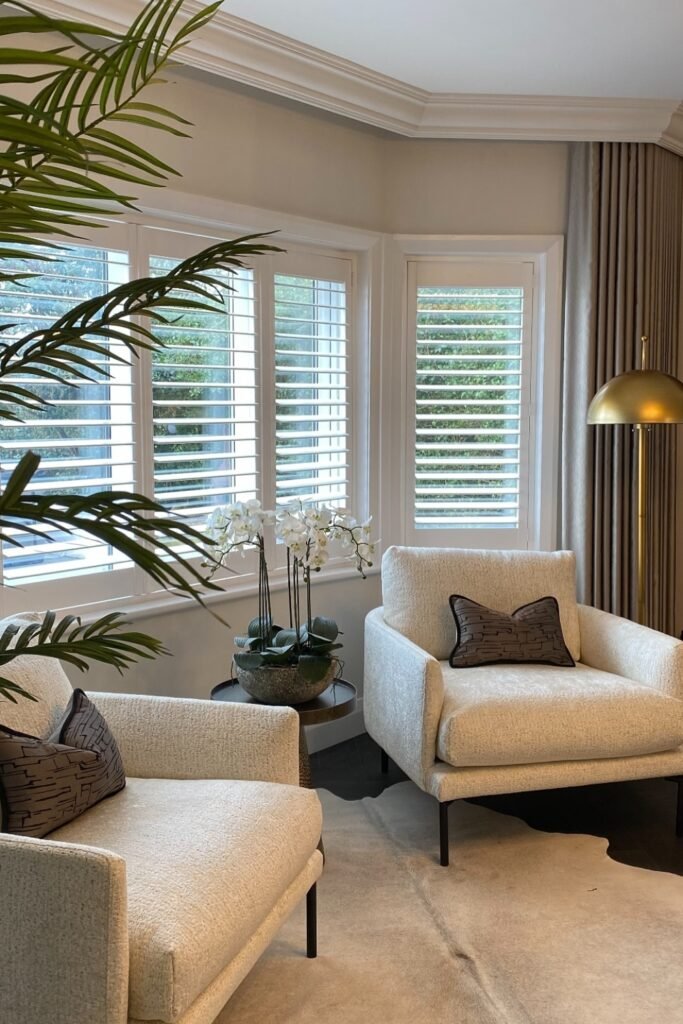
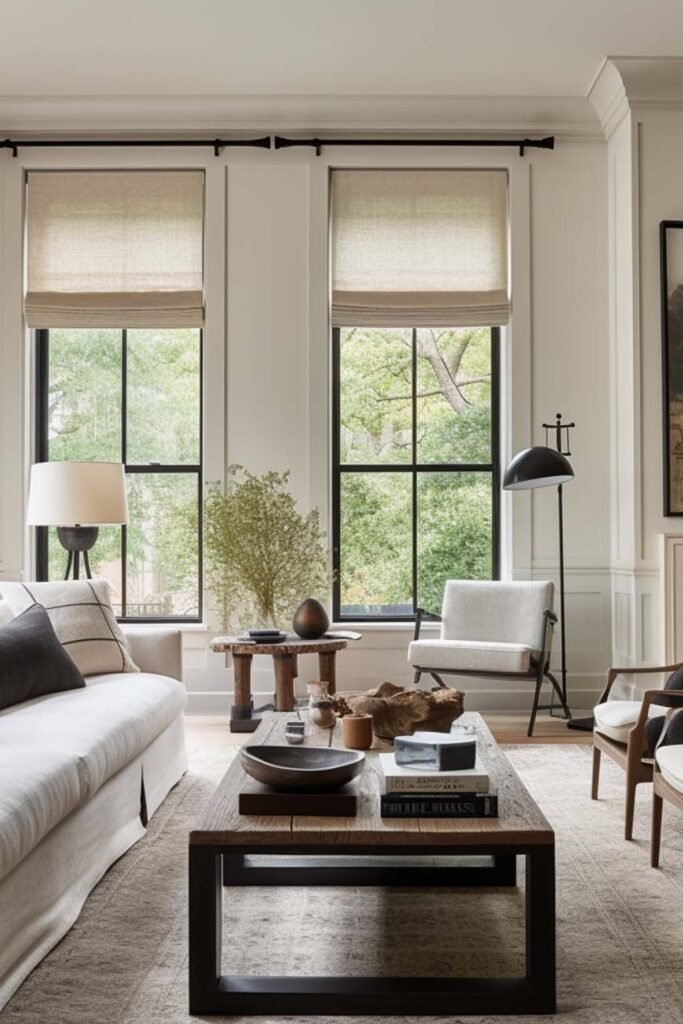
Treat Tall Windows Individually
Tall narrow windows look stronger when each opening gets its own fitted shade instead of disappearing behind one wide window treatment.
Keep Roman shades partly raised during the day, allowing the lower glass to frame greenery while still softening brighter light from above.
Repeat the same shade across matching windows so the wall feels balanced, especially when a fireplace or artwork creates another nearby focal point.
FAQs
How Can I Make a Small Living Room Window Look Bigger?
Hang curtains higher than the window frame and extend the rod beyond both sides.
This exposes more glass when the curtains are open and makes the window feel wider.
Light fabrics also help because they soften the window without making a small living room feel heavy.
Should Living Room Windows Match the Furniture Layout?
Your windows do not need to control the entire layout, but you should avoid blocking their best light and views.
If furniture must sit in front of a window, choose a low sofa, bench, or chair that stays below most of the glass and keeps the room feeling open.