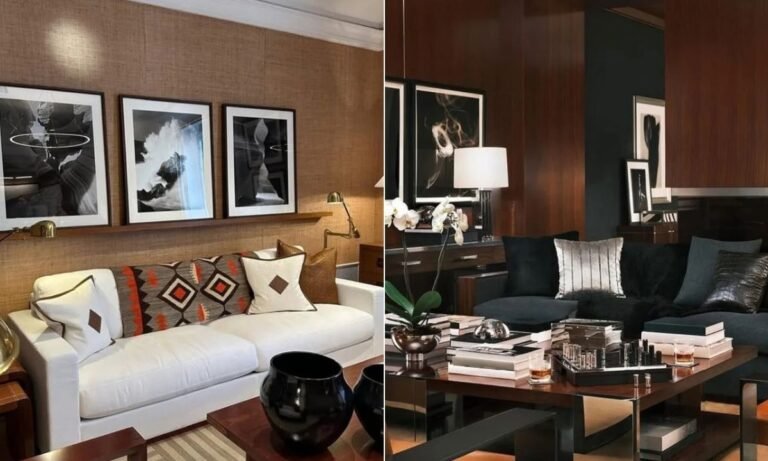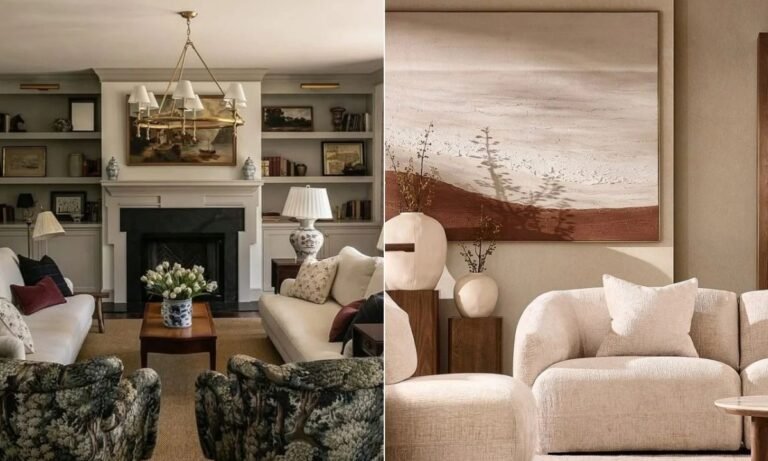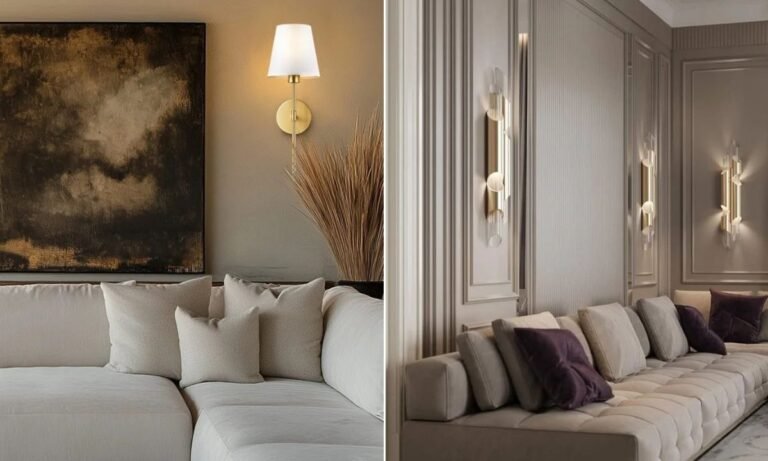
You can love warm wood, low furniture, and retro shapes but still worry your living room will end up looking stuck in the past.
The trick is knowing which mid-century details to keep, which ones to soften, and where a few modern pieces can make all the difference.
You don’t need a full room of vintage furniture either, a strong sofa, walnut piece, good lighting, and the right colors can set the look.
In this article, you’ll find practical ways to create a mid-century modern living room.
Let’s jump in!
What Is a Mid-Century Modern Living Room?
A mid-century modern living room uses clean furniture shapes, low profiles, warm wood, and simple details without filling every corner with decor.
You’ll often see walnut or teak furniture, tapered legs, open chair frames, and curved pieces that keep heavier wood from taking over.
Colors can stay neutral with cream and brown, or you can bring in olive, mustard, rust, and muted blue for more character.
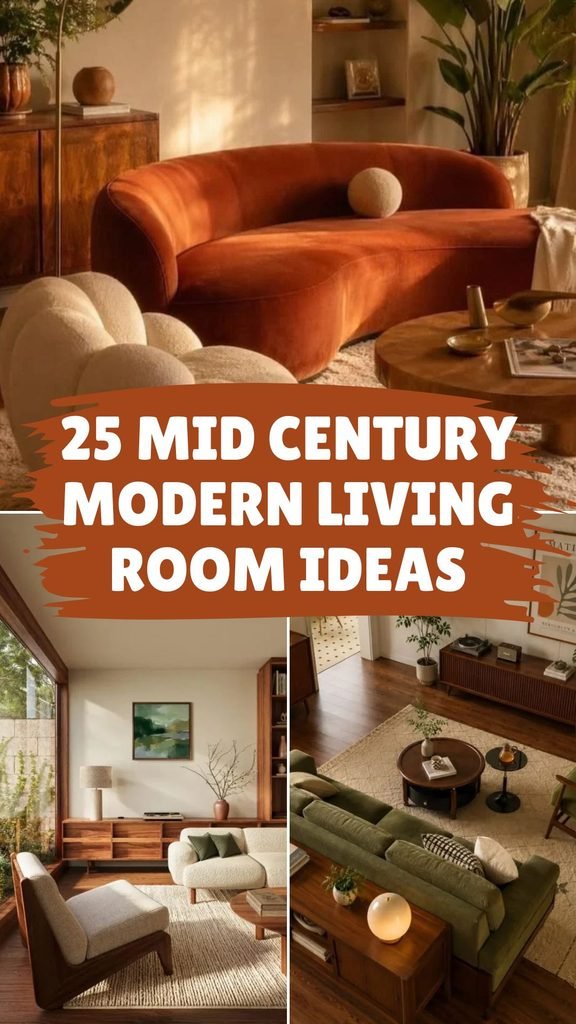
If you want the room to feel current, mix these older design cues with a comfortable modern sofa, simple rug, or contemporary artwork.
Lighting matters too, so use a sculptural floor lamp or globe fixture instead of relying only on one basic ceiling light.
The goal isn’t to recreate the 1950s; it’s to borrow its best ideas and make them work for how you live today.
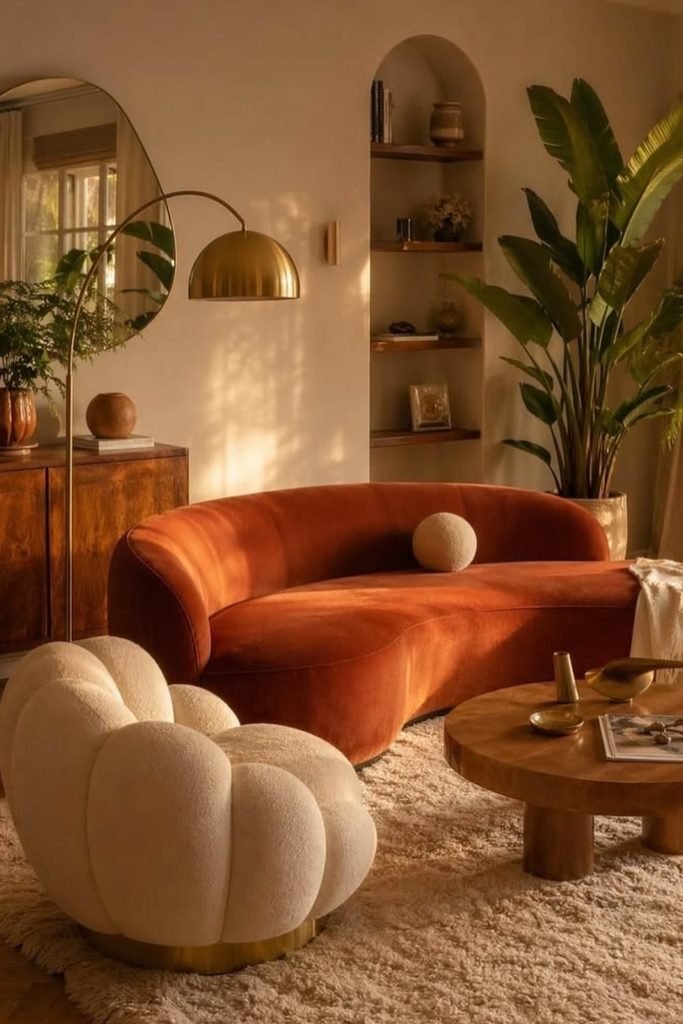
Burnt Orange
Let burnt orange take the lead when you want a warmer mid-century room, then balance its richness with cream seating and walnut.
Curved furniture keeps the bold color from feeling heavy, while a round wooden table and arched brass lamp repeat those softer shapes.
This approach suits cozy rooms with warm natural light, especially when a large plant and textured rug keep the palette grounded.
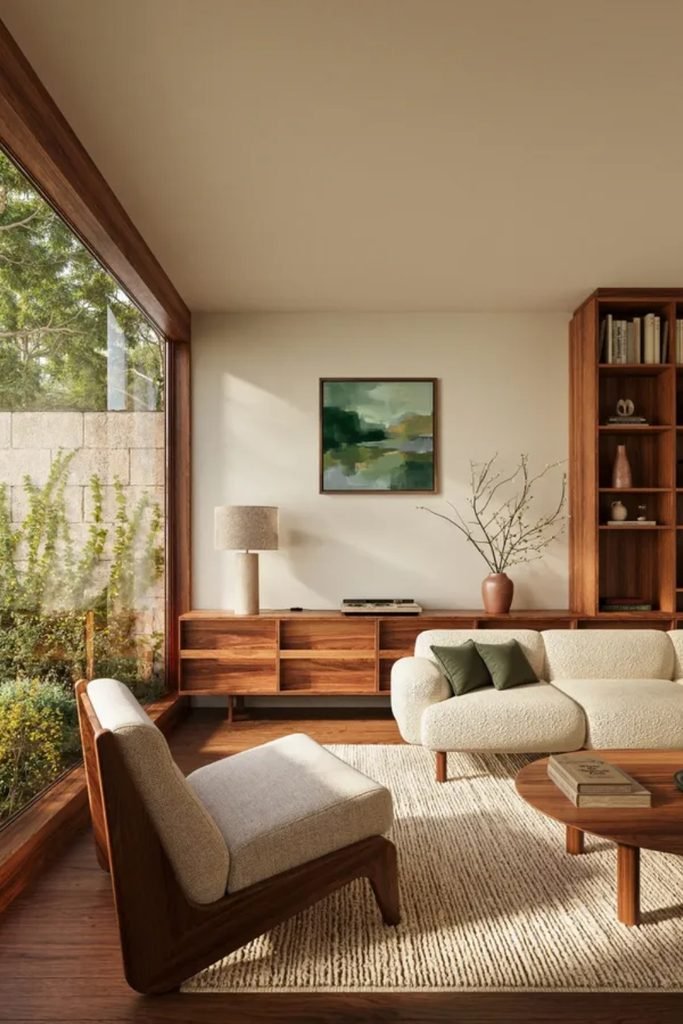
Natural Connection
Large windows can become part of your mid-century look, so keep nearby furniture low enough to leave the outdoor view uninterrupted.
Build around walnut storage and cream upholstery, then bring green indoors through artwork or cushions instead of adding several competing colors.
A layout like this feels especially natural in bright living rooms, where simple furniture lets the architecture and surrounding greenery do more.
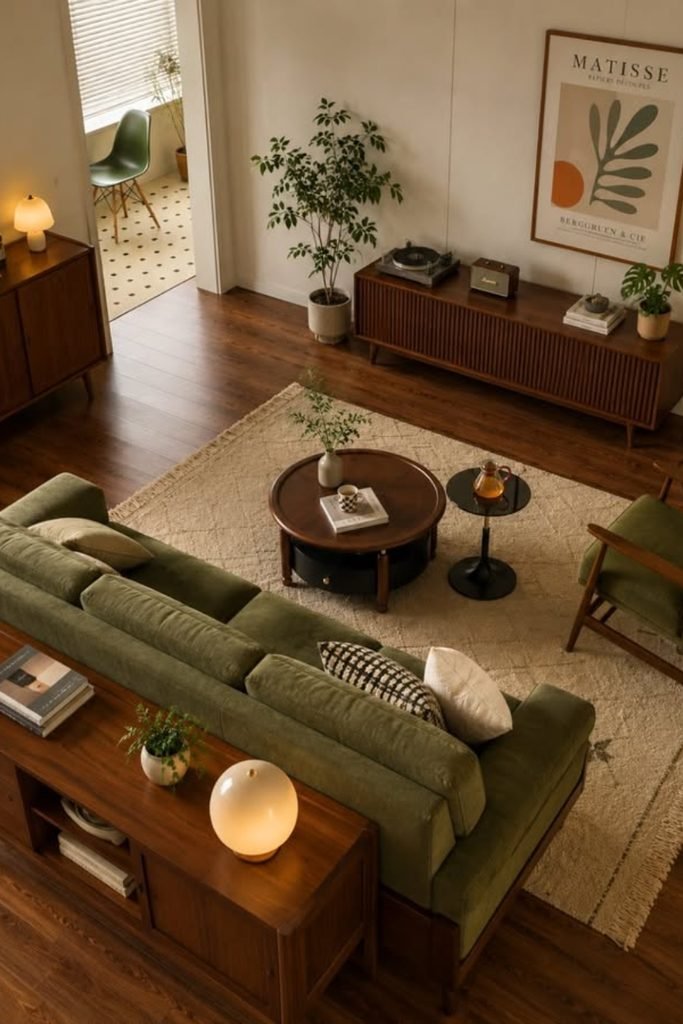
Olive Comfort
Olive upholstery gives a wood-heavy living room enough color without fighting the walnut tones, making it an easy alternative to brighter retro shades.
Place a slim console behind the sofa when you need extra storage, because it uses otherwise wasted space without crowding the seating area.
Finish with warm lamps, simple artwork, and a light rug so the darker furniture stays inviting rather than turning the room too brown.
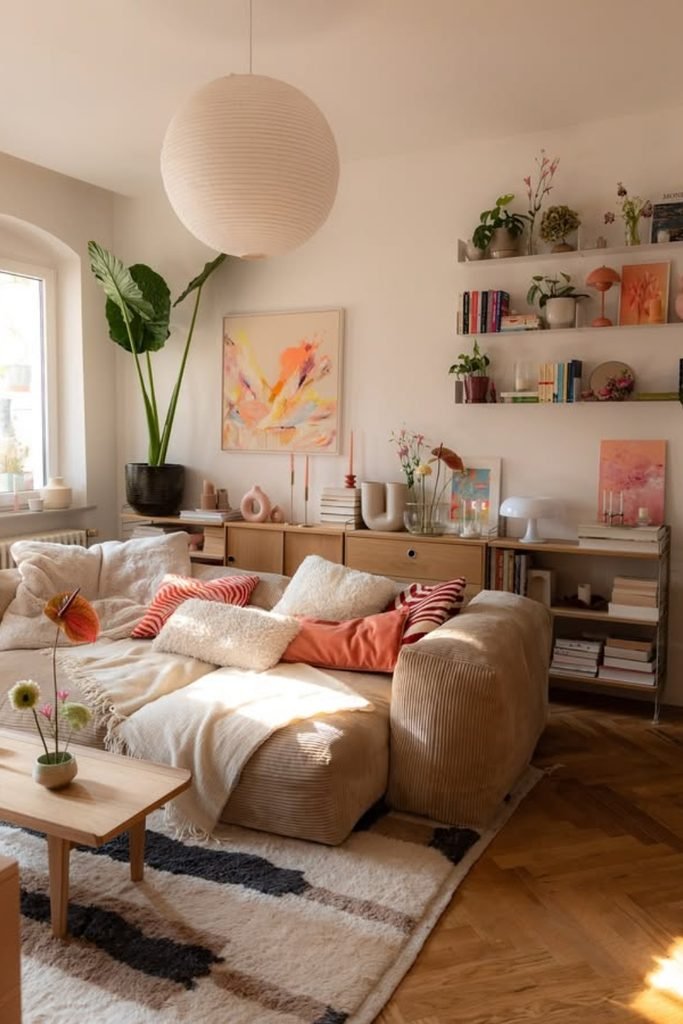
Playful Neutrals
Soft neutrals can still carry mid-century character when you bring in low wooden furniture, rounded lighting, and a few playful retro accents.
Use coral pillows and artwork as small color hits, especially when the sofa, walls, and rug already sit within a quiet neutral palette.
This direction works nicely in smaller everyday living rooms because open shelving and low storage add personality without bringing in bulky furniture.
Mustard Walnut
Mustard upholstery works beautifully when your living room already has plenty of walnut, because the earthy yellow adds contrast without feeling too loud.
Keep the larger surfaces calm with a neutral rug and sheer curtains, then let one sculptural chair and glass table sharpen the retro look.
This combination suits sunny rooms especially well, where natural light can pull out the warm tones in wood, leather, and textured fabric.
Brick Warmth
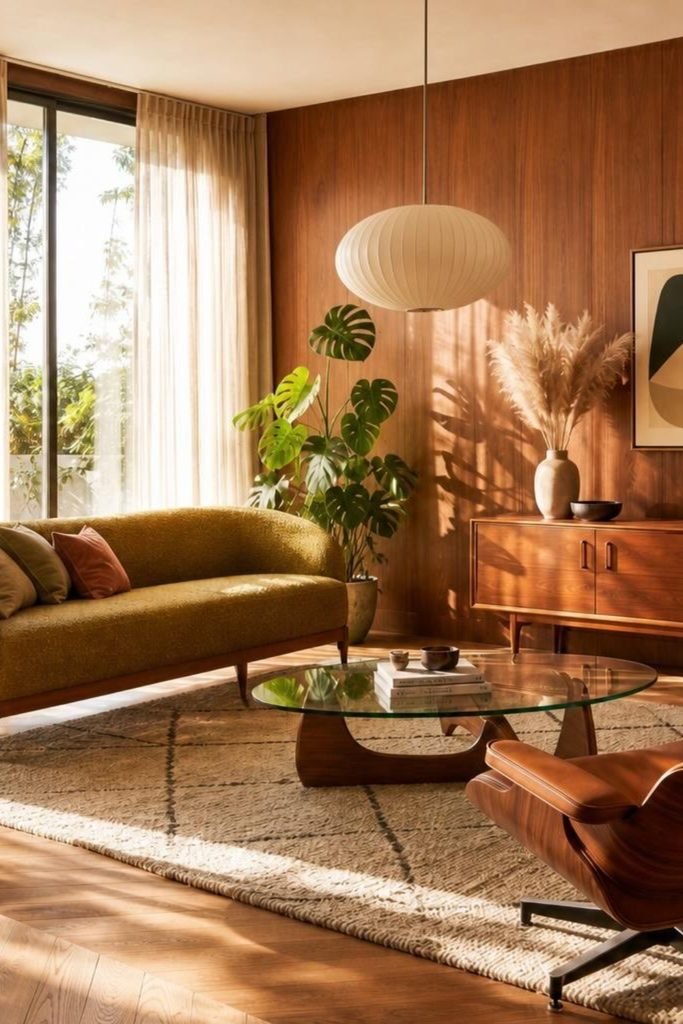
A brick fireplace already gives you strong mid-century character, so build around it with earthy upholstery, simple walnut furniture, and restrained artwork.
Terracotta walls can extend that warmth across the room, while cream curtains and a pale rug stop the brown palette becoming too heavy.
Try this approach in rooms with original brick or wood details, letting those permanent features guide your colors instead of covering them up.
Color Balance
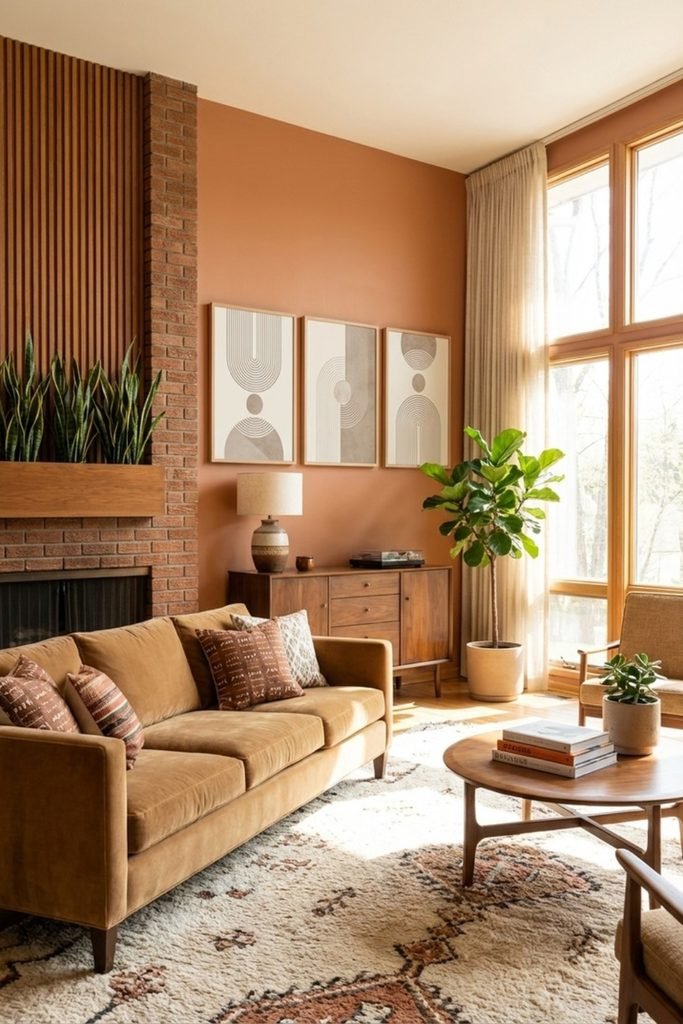
Bold color can still feel mid-century when you repeat it thoughtfully, rather than spreading lots of unrelated bright shades around the living room.
Pair a deep green sofa with mustard seating, then use rust and blue through the walls, rug, or cushions to connect everything naturally.
Open shelving and plenty of plants suit this livelier direction, but leave some breathing room so the colors and furniture shapes stay readable.
Turquoise Contrast
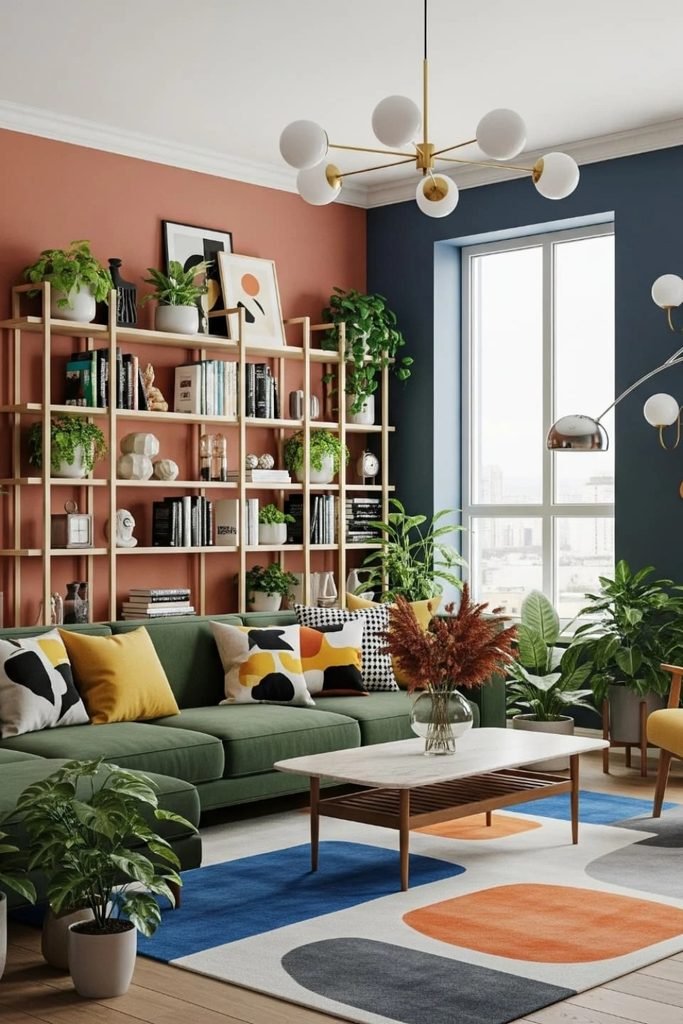
A turquoise sofa can pull a warm terracotta room together when you want stronger contrast than the usual cream, brown, and olive palette.
Bring the wall color back through patterned textiles and rugs, while walnut furniture gives those brighter shades a steady mid-century base underneath.
This setup is useful for smaller living rooms too, especially when a storage coffee table handles everyday clutter without adding another bulky cabinet.
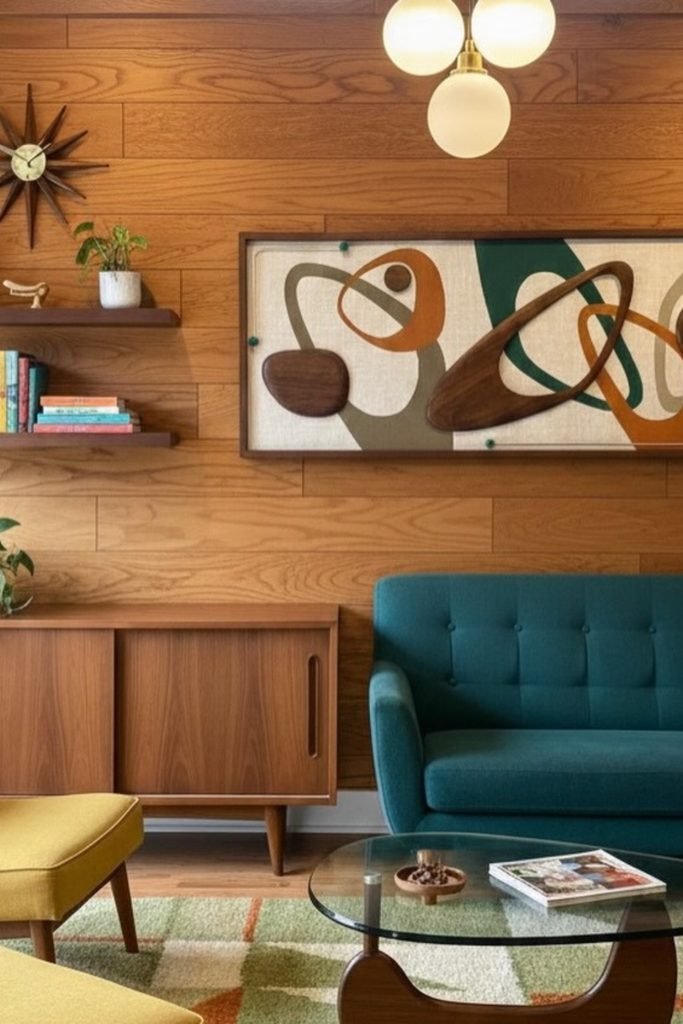
Teal Statement
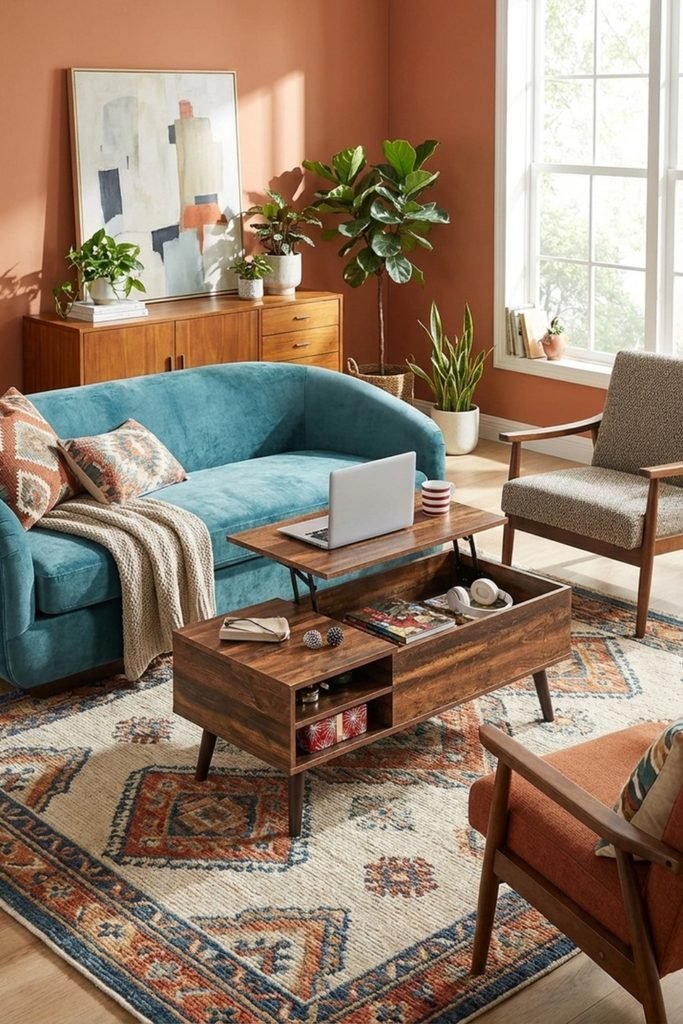
Teal seating brings strong mid-century color into a wood-heavy room, while mustard chairs keep the palette warm instead of turning overly cool.
Let one large abstract artwork echo those colors, then use a glass coffee table so the center stays visually open and light.
This direction fits smaller retro-inspired rooms where wall paneling provides enough texture, leaving furniture shapes and bold upholstery to carry the personality.
Navy Layers
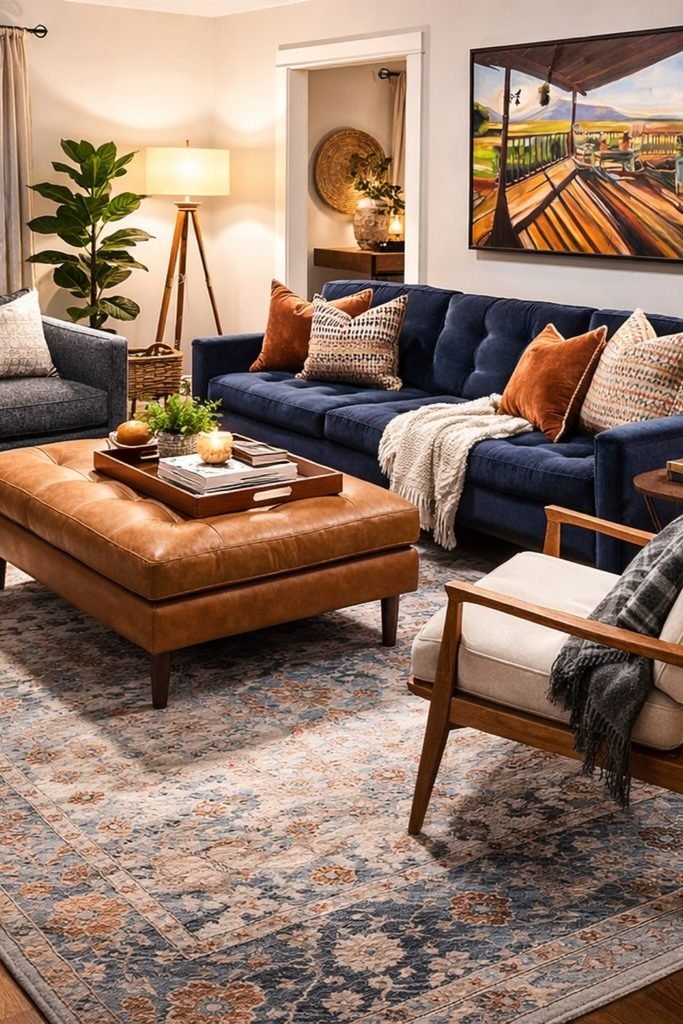
A navy sofa gives you a calmer mid-century base when you prefer deeper color, especially alongside cognac leather and warm wooden chair frames.
Instead of another standard coffee table, use a large leather ottoman to soften the seating arrangement while giving everyone an easy footrest.
Layer patterned cushions and a faded rug carefully here, because repeating rust and blue tones keeps several fabrics from looking randomly collected.
Quiet Simplicity
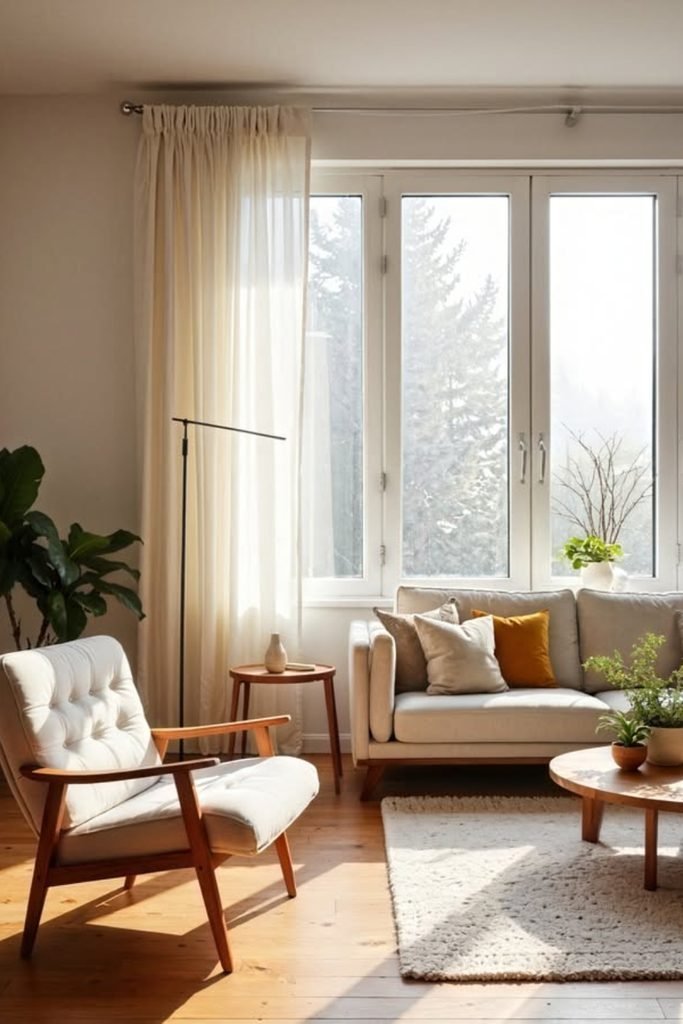
You can keep mid-century style surprisingly simple by pairing light upholstery with exposed wooden frames, rather than filling the room with retro accessories.
A low round coffee table and slim floor lamp add function without blocking the windows, which helps natural light remain the strongest feature.
Choose this direction for compact or bright living rooms where you want mid-century warmth but still prefer an airy, uncluttered everyday space.
Sculpted Sectional
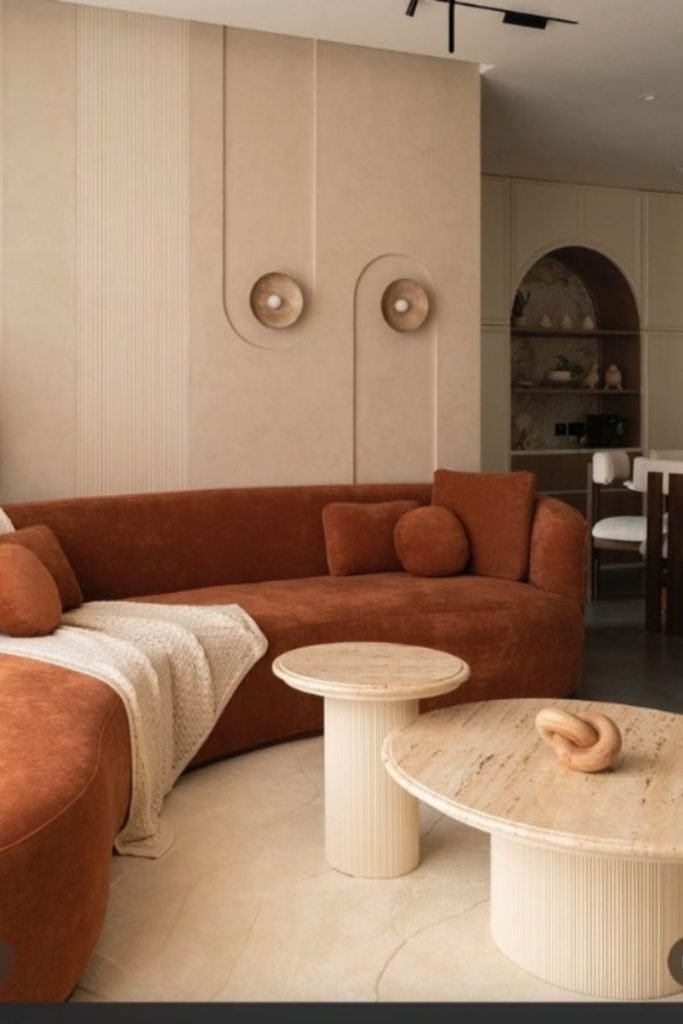
A curved rust sectional can handle most of the room’s personality, so surrounding it with soft beige keeps the larger layout calm.
Round stone tables are a smart match because their pale finish breaks up the upholstery while repeating the sofa’s smooth, curved movement.
This setup suits open living areas where one generous sectional can define the seating zone without needing several smaller chairs around it.
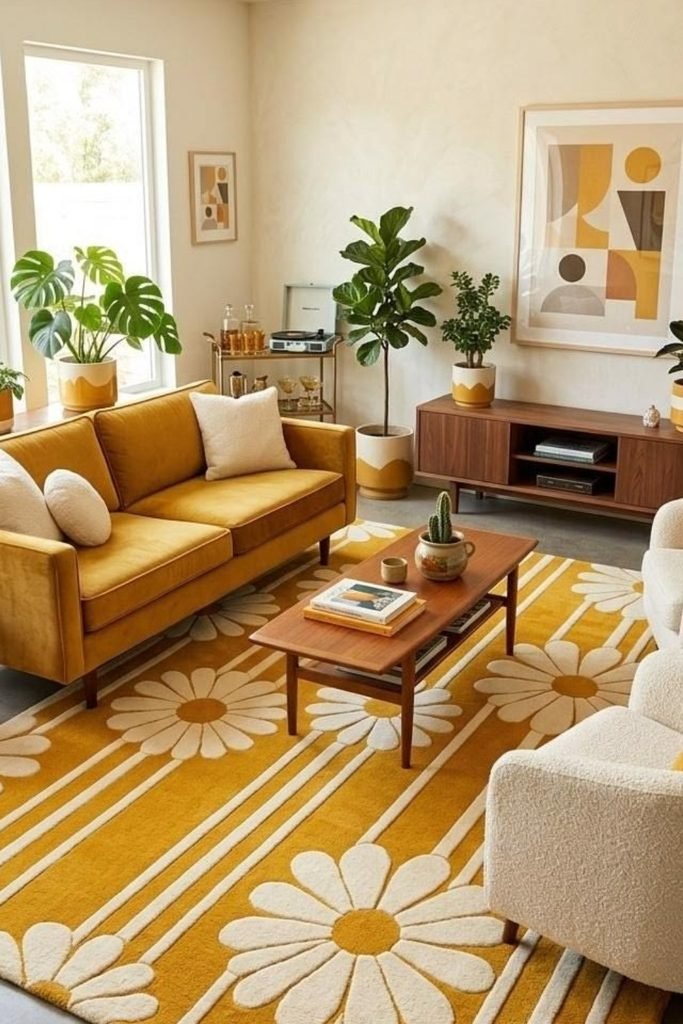
Mustard Florals
Mustard can feel cheerful rather than dated when you repeat it through one sofa, a bold rug, and a few smaller decorative details.
Let cream chairs break up the yellow, while slim walnut tables and storage bring the clean wooden lines that keep everything mid-century.
This brighter approach works best in naturally sunny rooms, where plants and simple geometric artwork can support the playful palette without adding clutter.
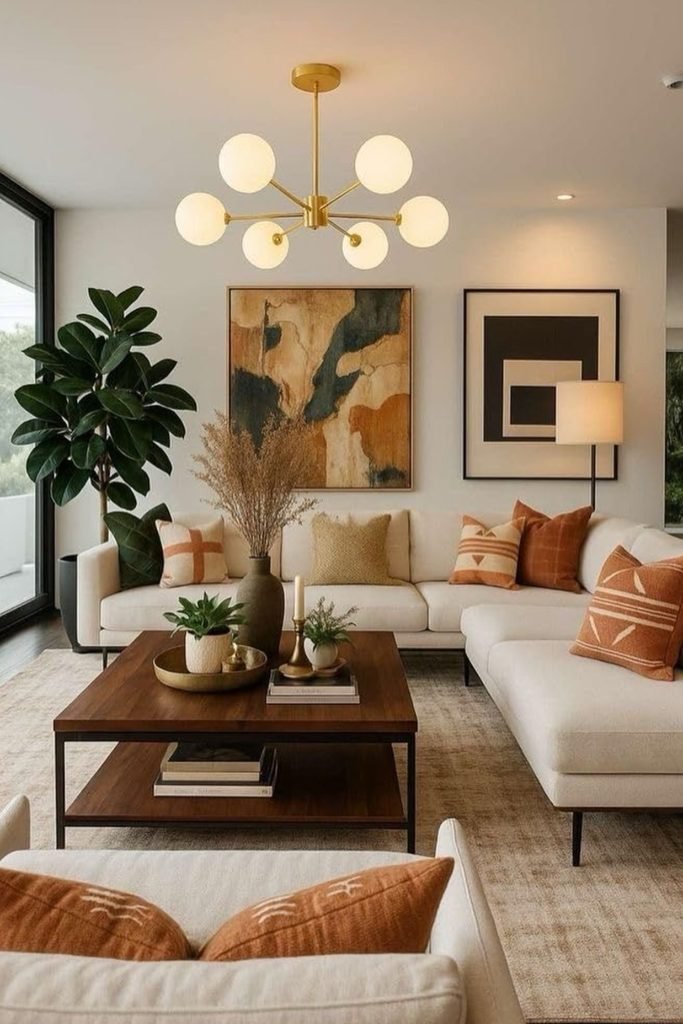
Rust Accents
A cream sectional gives you plenty of room to introduce stronger mid-century colors without committing to a bold sofa or painted wall.
Repeat rust through cushions and artwork, then anchor the seating with a dark walnut table so those warm accents feel intentionally connected.
This is an easy route for modern homes where you want mid-century influence while keeping the larger furniture neutral and easy to update.
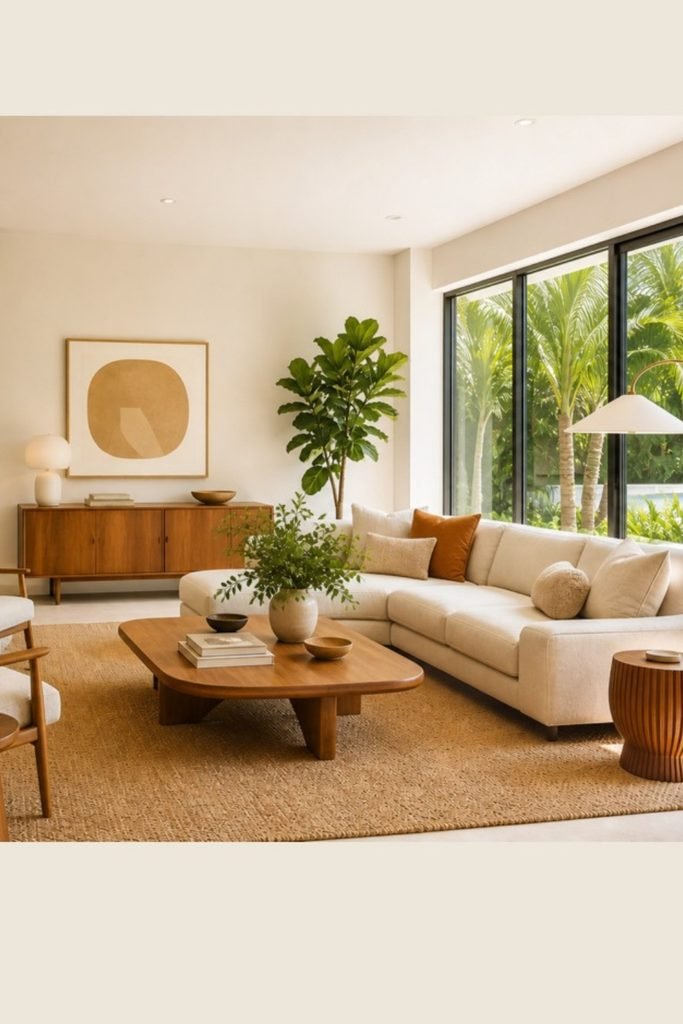
Tropical Calm
Large windows and outdoor greenery can carry much of the atmosphere, so keep your mid-century furniture warm, low, and relatively quiet indoors.
Choose cream upholstery with exposed wooden chair arms, then repeat walnut through a low credenza, coffee table, and smaller occasional pieces.
This relaxed setup suits homes with garden views, where natural textures and open sightlines make the indoor-outdoor connection feel much more intentional.
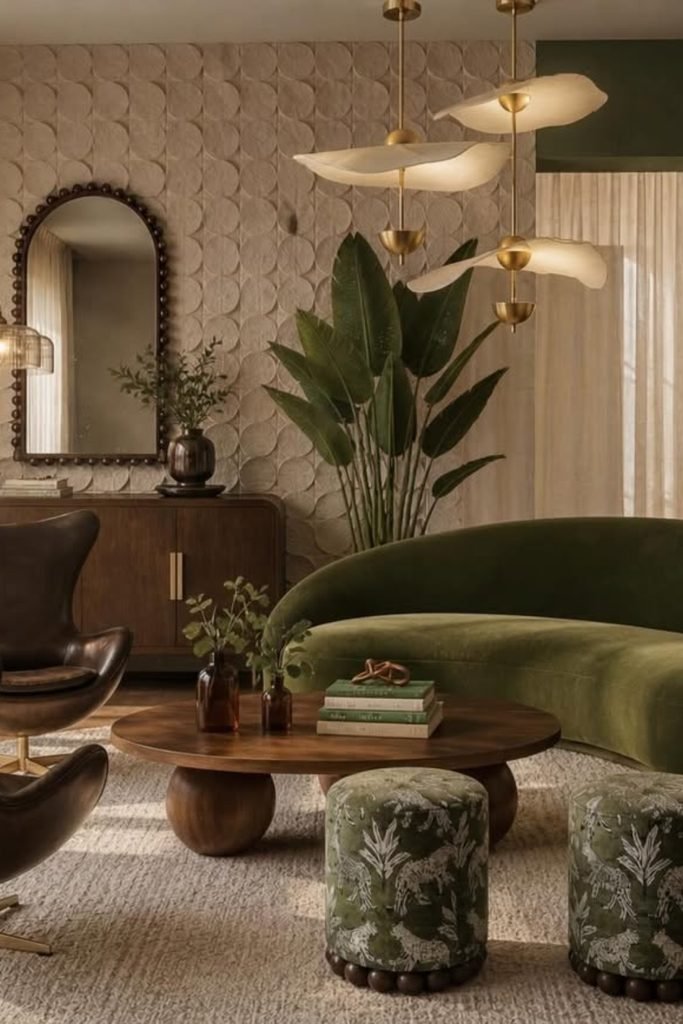
Olive Drama
Deep olive creates a moodier mid-century living room when you pair it with curved seating, dark wood, and rich brown leather chairs.
Instead of brightening every surface, bring contrast through a pale textured rug, sheer curtains, and sculptural lighting with warm brass details.
Use this richer palette in rooms with good natural light, because the lighter background keeps those dark greens and browns from feeling closed-in.
Retro Harmony
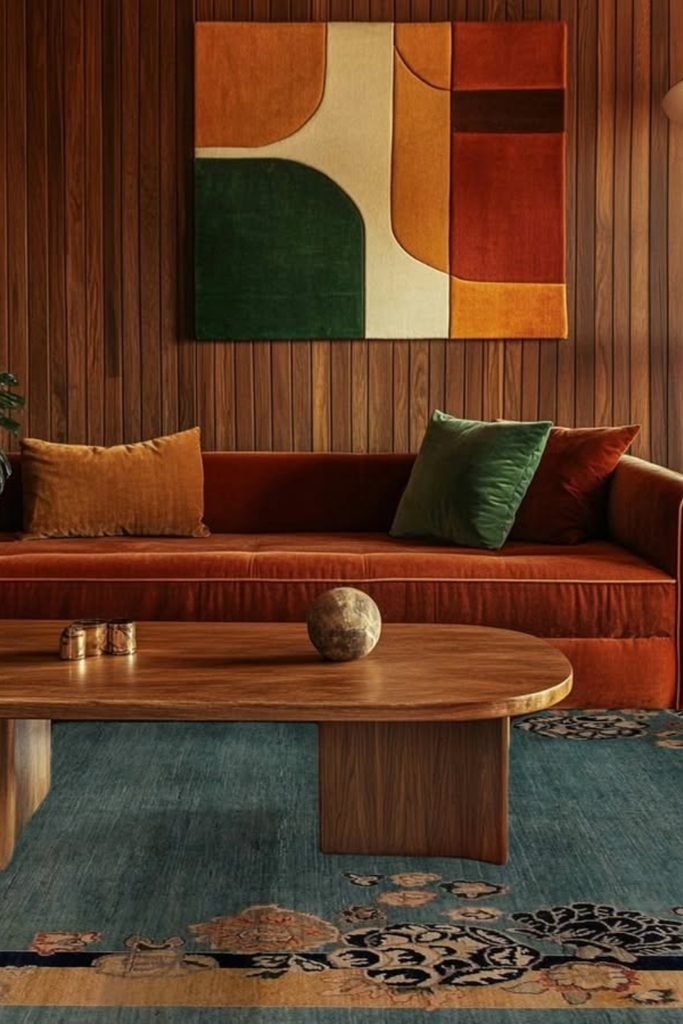
Rust upholstery feels richer against full wood paneling, especially when you pull green and mustard from the artwork into smaller cushions nearby.
Keep the coffee table broad and low so it matches the sofa’s horizontal shape without interrupting the strong color story behind it.
A patterned rug can introduce cooler contrast underneath, helping this warm, wood-heavy living room feel layered instead of overly matched or monochromatic.
Moody Contrast
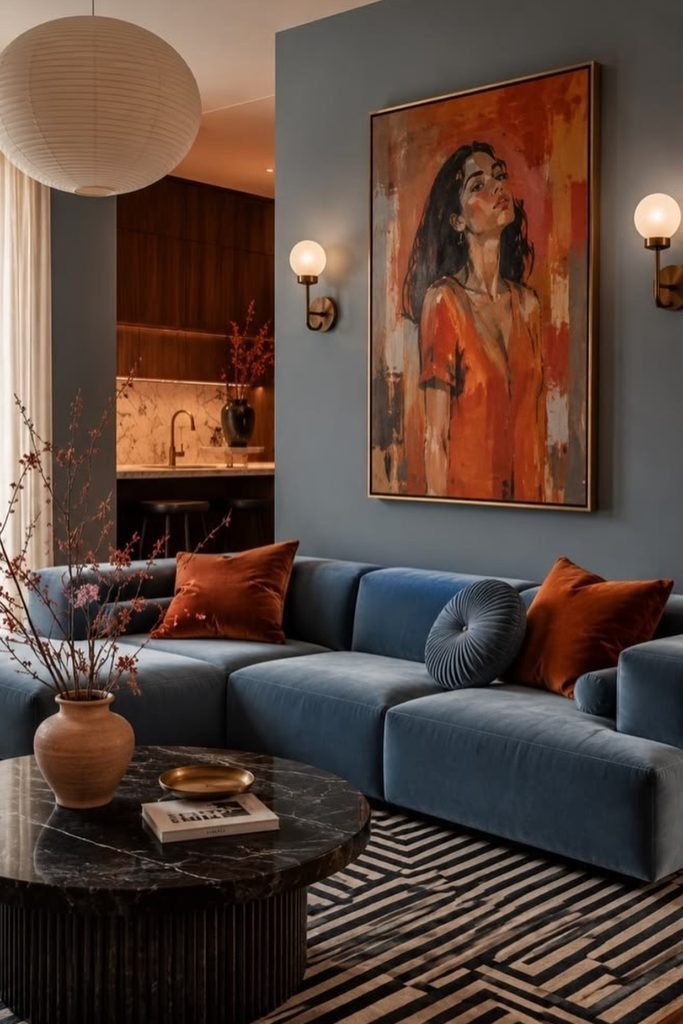
Deep blue gives a mid-century living room a moodier direction, while burnt orange accents stop the darker sofa and walls feeling too serious.
Let one oversized artwork carry most of the orange, then repeat that shade sparingly through cushions instead of scattering warm accessories everywhere.
A black marble table and graphic rug suit this polished approach, especially when globe sconces bring softer light around the darker seating area.
Fireplace Retreat
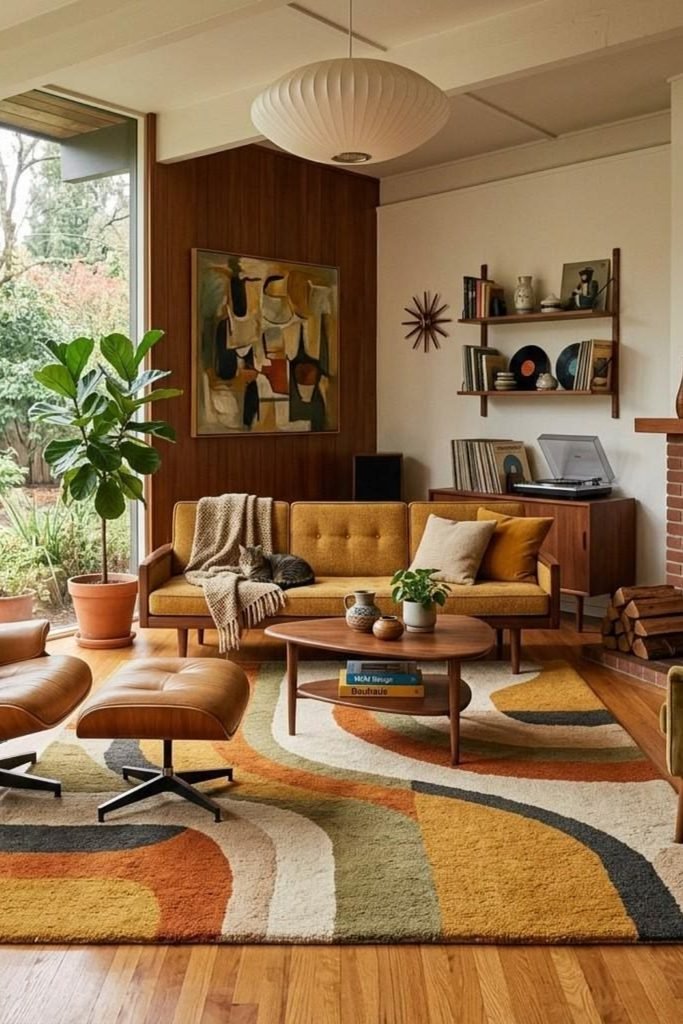
Original architectural details deserve attention, so arrange your mid-century seating around the fireplace and windows instead of treating furniture as the main feature.
Mustard upholstery, cognac leather, and olive seating echo the earthy setting, while an abstract rug ties those separate colors together underfoot.
This layout feels right for older homes with strong bones, where records, books, plants, and collected pieces can add lived-in character naturally.
Cabin Color
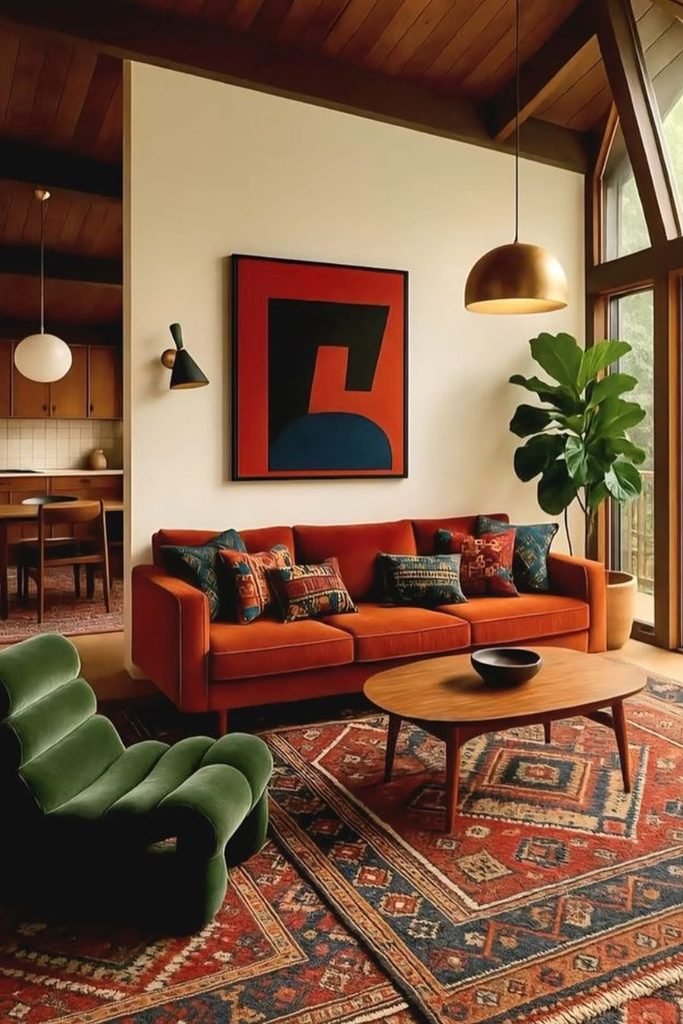
A wood-lined living room can handle surprisingly bold furniture, especially when orange and green echo the earthy colors already surrounding the space.
Keep the main shapes simple with a straight sofa, sculptural lounge chair, and oval wooden table rather than adding more decorative furniture.
This approach fits cabins or rooms with exposed timber, where patterned rugs and cushions can bring personality without hiding the original architecture.
Organic Layers
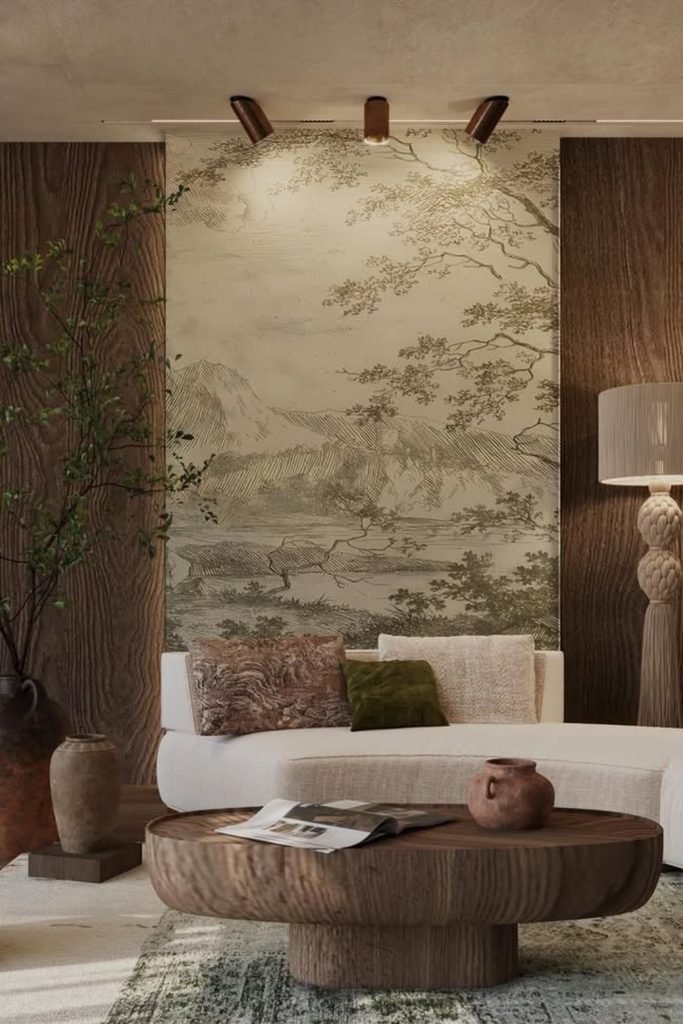
Dark wood walls can feel softer when you introduce a cream sectional, muted green textiles, and one oversized landscape panel for contrast.
Choose a chunky round coffee table to balance the curved sofa, then add tall branches so the room gains height without extra furniture.
This direction works beautifully in larger living rooms where layered rugs and earthy accessories can warm the space without relying on bright color.
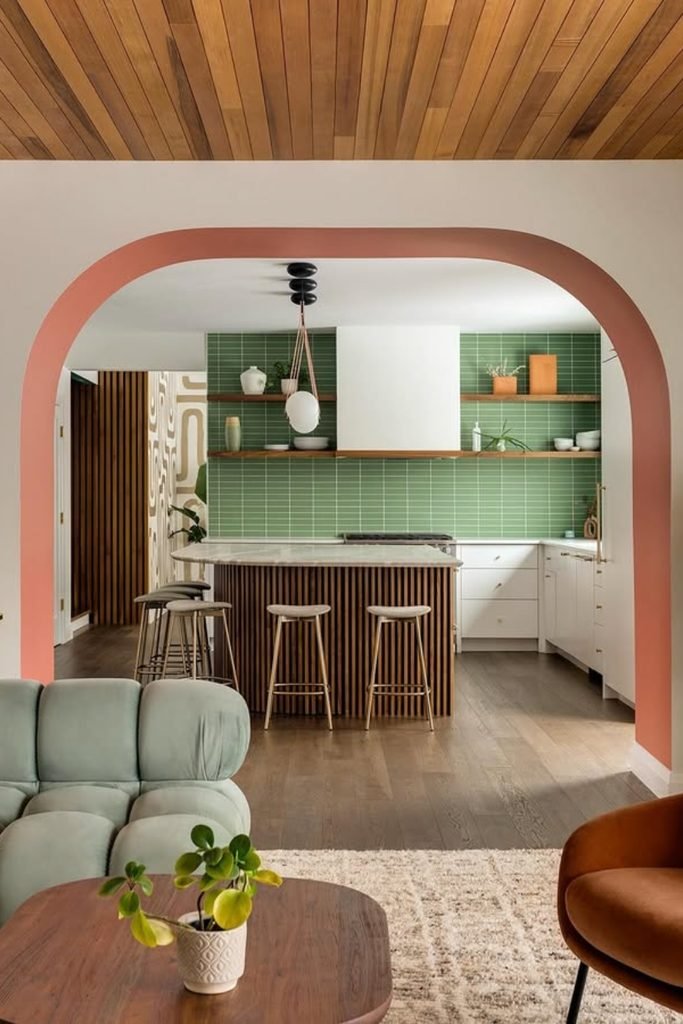
Arched Opening
An oversized arched opening can give an open-plan living room instant retro character while still keeping the kitchen visually connected to seating.
Outline the arch with a dusty coral tone, then repeat green and warm brown through upholstery so the transition between spaces feels intentional.
This idea suits open layouts especially well, where one architectural color detail can separate zones without adding doors, dividers, or bulky shelving.
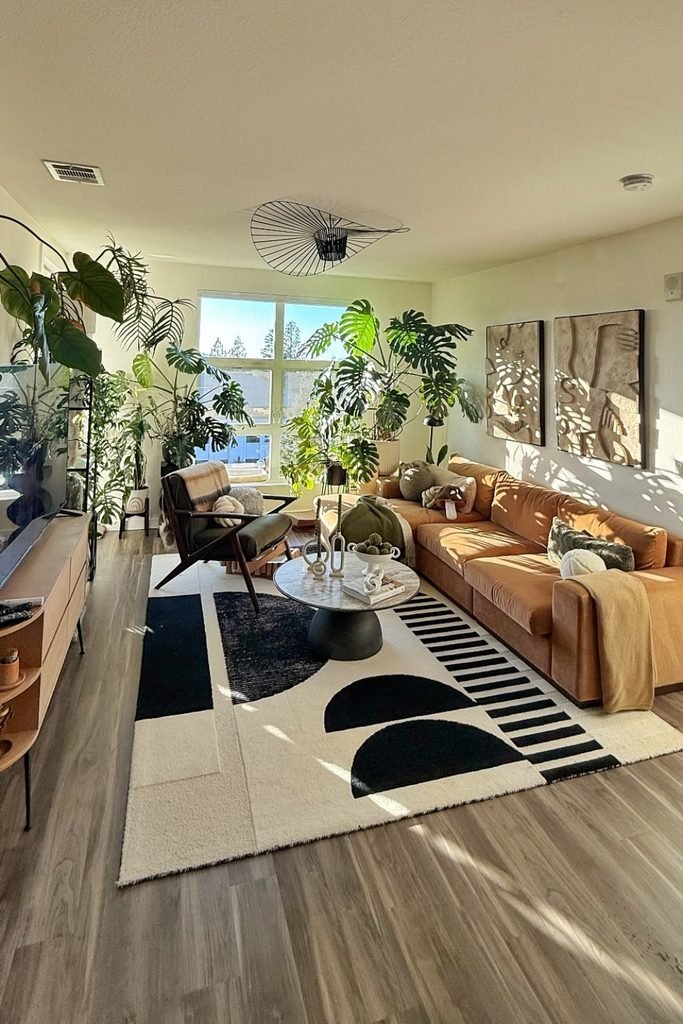
Plant Filled
A plant-heavy living room feels more controlled when you ground all that greenery with a warm caramel sofa and strong black-and-cream rug.
Mix plant heights around windows and shelving rather than lining pots together, which creates depth while still leaving the main walkway comfortably open.
This relaxed approach is great for apartments with strong daylight, especially when simple wood furniture keeps the greenery from overwhelming the mid-century look.
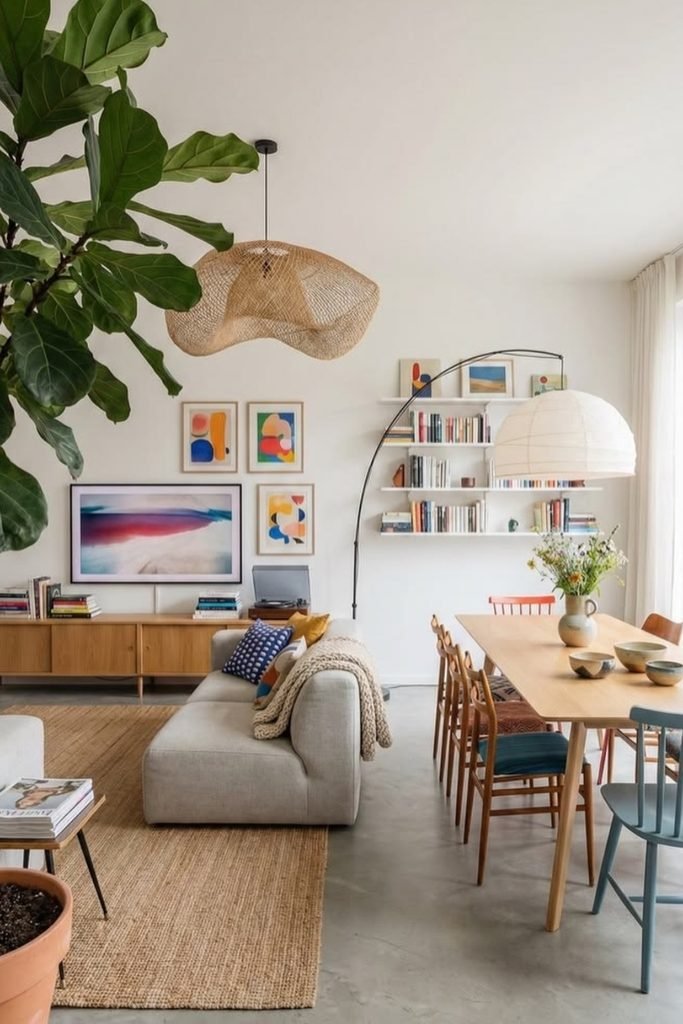
Shared Space
Open living and dining areas feel more connected when both zones use similar light woods, simple furniture shapes, and one consistent neutral backdrop.
Keep the sofa low to preserve sightlines toward the dining table, then use colorful artwork and mismatched chairs for personality without adding clutter.
A natural woven rug can quietly mark the living zone, making this setup useful when you need two functions to share one open room.
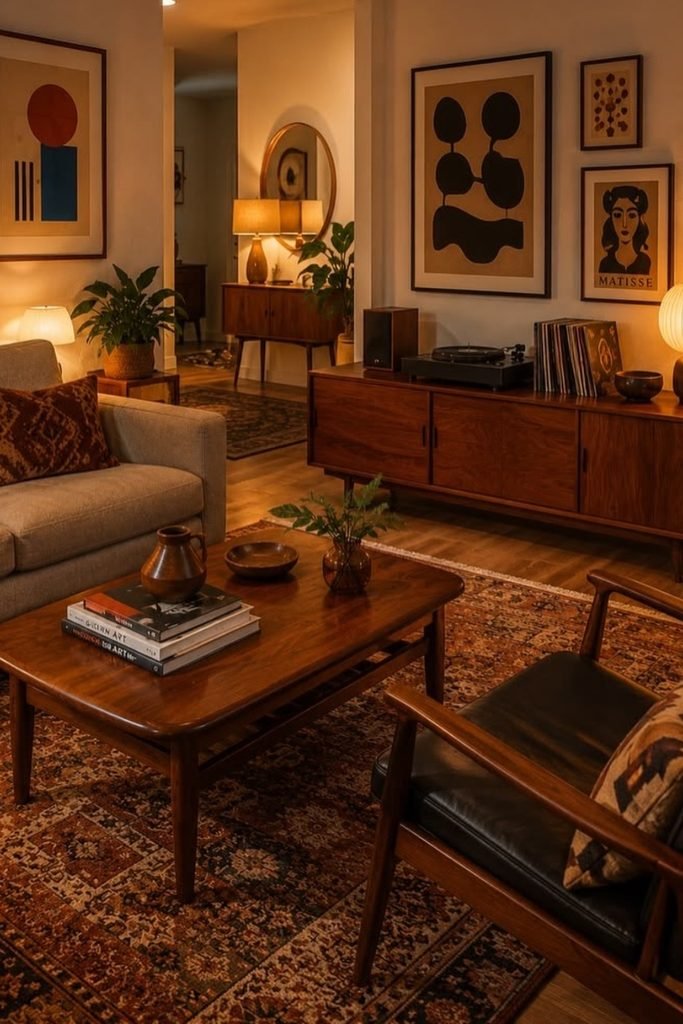
Vintage Glow
Warm lighting can make a wood-filled mid-century living room feel inviting at night, especially when several small lamps replace one harsh overhead fixture.
Let walnut storage and a slim coffee table set the period feel, then soften those darker finishes with a light neutral sofa.
Finish with framed graphic art, a patterned rug, and a leather lounge chair so the room feels collected rather than overly coordinated.
FAQs
How do you make a mid-century modern living room feel cozy?
Start with warm wood and comfortable upholstery, then bring in a soft rug, textured cushions, and curtains to remove any showroom feeling.
Use several smaller lamps instead of relying only on overhead lighting, because warm pools of light make clean-lined furniture feel much more inviting.
Plants, books, artwork, and personal pieces can finish the room naturally, giving mid-century furniture character without covering every surface with decorative objects.
Can you mix mid-century modern furniture with newer pieces?
You don’t need every piece to be mid-century; mixing in newer furniture often keeps the living room from looking like a vintage set.
Choose a few recognizable elements, such as a walnut credenza, tapered-leg chair, or low coffee table, then keep your larger pieces comfortably modern.
Connect old and new through repeated wood tones, colors, or simple shapes, so everything feels related even when the furniture comes from different periods.