You clear the shelves, remove a few decorations, and suddenly your living room feels empty instead of calm.
The tricky part is knowing what to keep, what to remove, and how to bring in warmth without letting clutter creep back in.
With the right furniture, soft textures, smart storage, and a few well-chosen details, you can make the room feel simple, cozy, and complete.
In this article, you’ll find practical styling tips and 21 minimalist living room ideas to help you create a space.
Let’s jump in!
How to Style a Minimalist Living Room?
Start by removing anything you rarely use, but don’t empty the room just to make it look minimal.
Choose a few furniture pieces that fit the space well, and leave enough open floor area so the room can breathe.

If the room starts feeling cold, bring in warm wood, a soft rug, linen curtains, or textured cushions instead of adding lots of small decor.
Keep everyday clutter inside closed cabinets, drawers, or baskets so useful things stay nearby without covering your surfaces.
Finish with one or two details you genuinely love, such as a large artwork, plant, or lamp, because minimalism should still feel like your home.
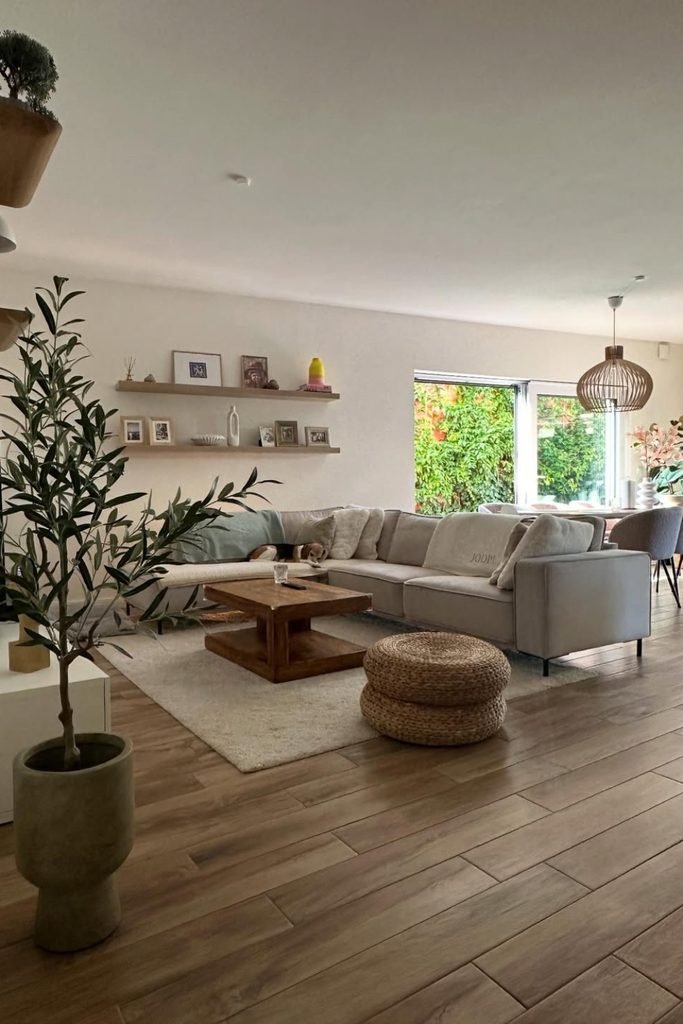
Warm Open Plan
Let warm wood flooring do most of the work when you want a minimalist living room to feel relaxed rather than overly plain.
Pair one generous neutral sectional with a simple wooden table, then use a soft rug to clearly define seating inside an open layout.
Keep wall shelves lightly styled and bring in one tall plant, so personality comes through without filling every surface with small accessories.
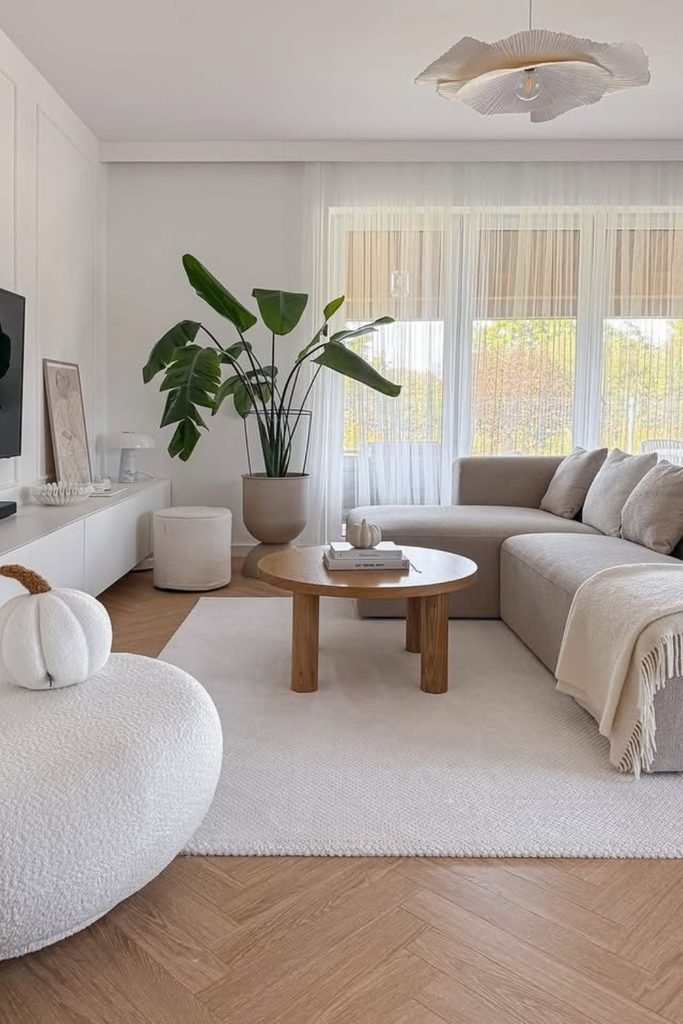
Soft Neutrality
Soft whites work especially well in smaller living rooms because keeping furniture and walls close in tone reduces strong visual breaks.
Bring warmth back through a round wooden coffee table and natural flooring, while textured upholstery keeps the pale palette from feeling flat.
Choose one large leafy plant instead of several small decorations; its height adds contrast while leaving cabinets and surrounding surfaces noticeably clean.
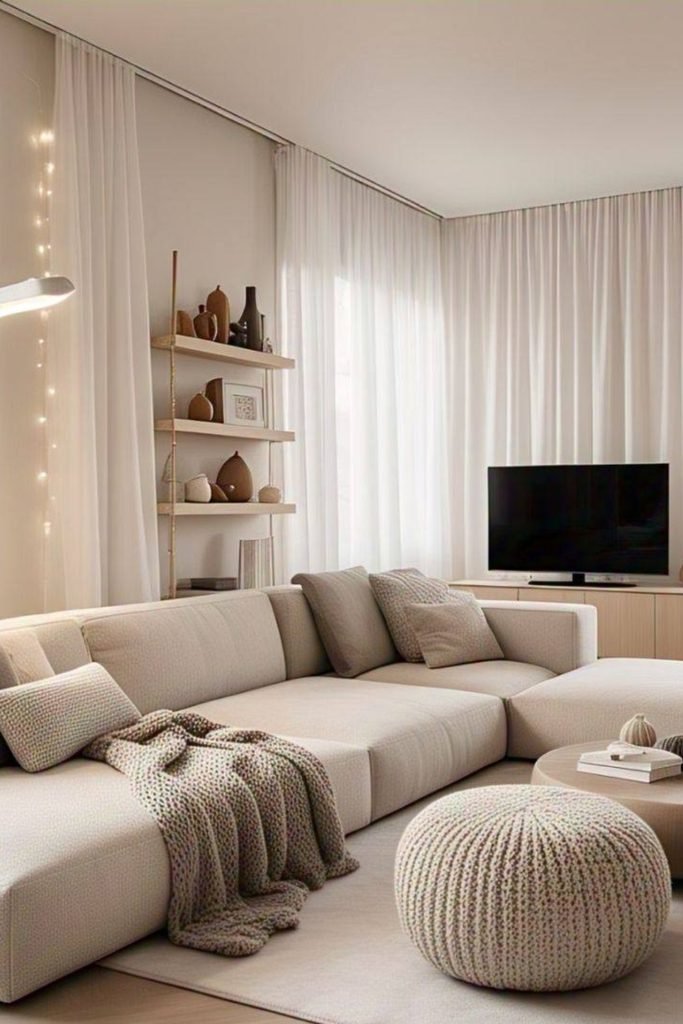
Layered Comfort
Minimalism can still handle a large sectional when comfort matters, especially in family rooms where everyone needs somewhere practical to settle.
Use similar cream tones across the sofa, rug, and curtains, then introduce knitted textures so the space gains depth without extra colors.
Instead of filling every corner, let one curved lamp and a few carefully spaced shelf pieces provide character while keeping the layout restful.
Quiet Contrast
Give a simple neutral living room one controlled accent color when the sofa, walls, and flooring start blending together too much.
Place one large artwork above the sofa rather than several smaller frames, creating a clear focal point without making the wall feel busy.
Finish with a slim wooden coffee table and restrained greenery, which add natural warmth while preserving plenty of open space around the furniture.

Graphic Contrast
Black accents can give a pale minimalist living room more definition, especially when an all-neutral palette starts feeling washed out or unfinished.
Repeat the darker tone across one wall, lighting, tables, and media furniture so every contrast feels connected rather than randomly added.
Balance those strong surfaces with light seating and a few leafy plants, which soften the room without weakening its clean modern character.

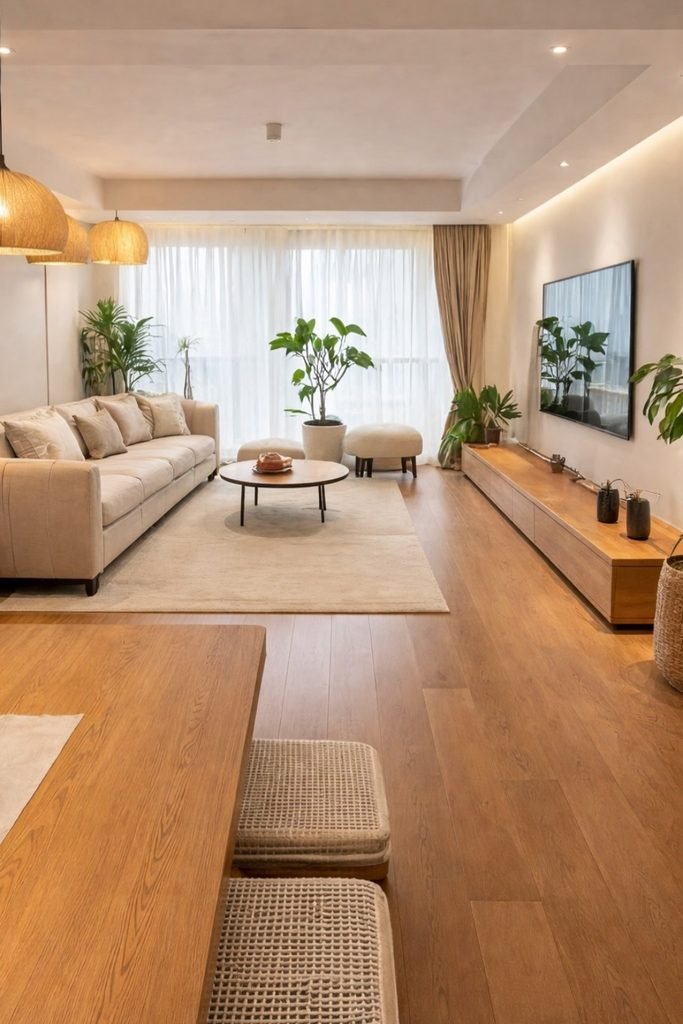
Natural Glow
Warm lighting makes a big difference in open living rooms where white walls and simple furniture could otherwise feel too plain.
Combine wood flooring with a long low media unit, then use woven pendant lights to carry natural warmth upward through the room.
Keep larger plants near windows and corners, letting greenery fill awkward gaps while the main walking areas remain open, practical, and uncluttered.
Defined Zones
Long living and dining spaces feel more organized when each function gets its own visual zone instead of furniture competing for attention.
Anchor the sofa area with a large rug, then keep the dining set farther back so both sections have comfortable breathing room.
Use black furniture details across both zones to connect them, while one warm accent color prevents the neutral scheme from becoming predictable.

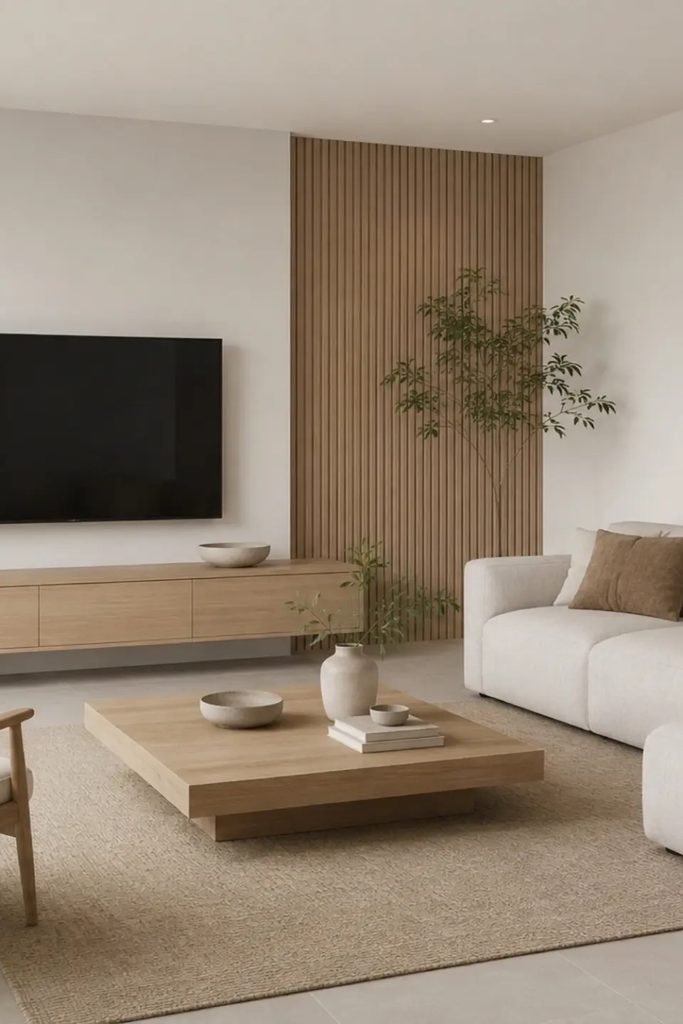
Slatted Warmth
Wood slats are useful when a minimalist TV wall feels too bare, because they add texture without requiring shelves or extra decorations.
Carry similar light wood onto the floating media cabinet and coffee table, giving the room a consistent finish that feels naturally connected.
Keep the sofa, rug, and walls soft and neutral, then add restrained greenery so the wood remains the strongest source of visual warmth.
Reflective Corner
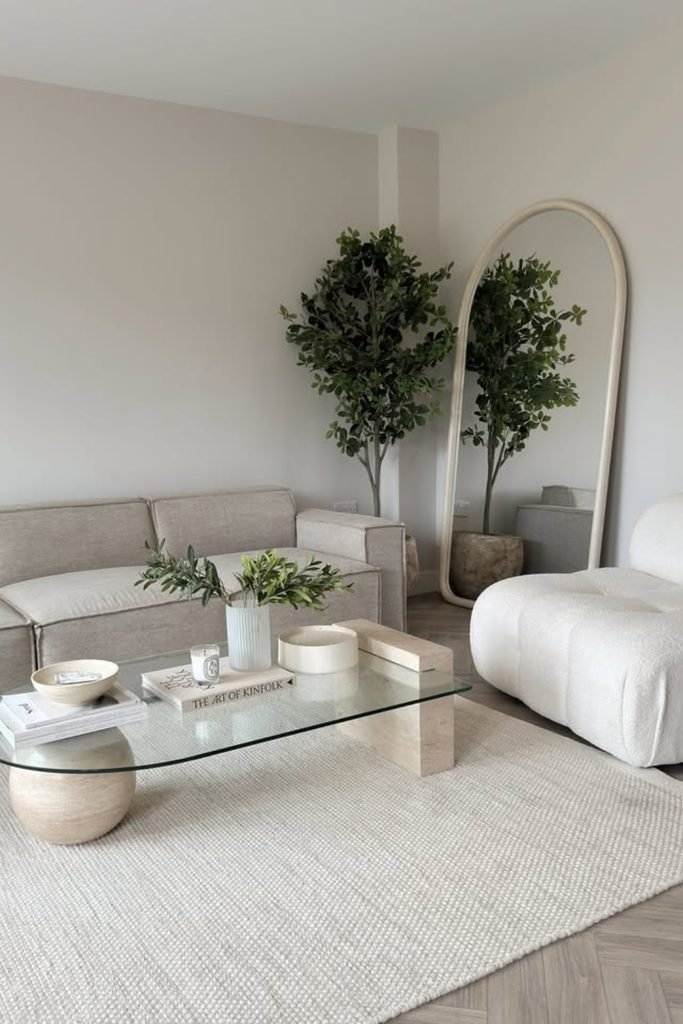
An oversized floor mirror can open up a compact minimalist living room while giving an unused corner a clear purpose without extra furniture.
Lean it near a tall indoor tree, where reflected greenery adds depth and makes one plant feel more present throughout the space.
Keep nearby seating low and neutral, then choose a glass coffee table so sightlines stay open and the arrangement never feels visually heavy.
Blue Anchor
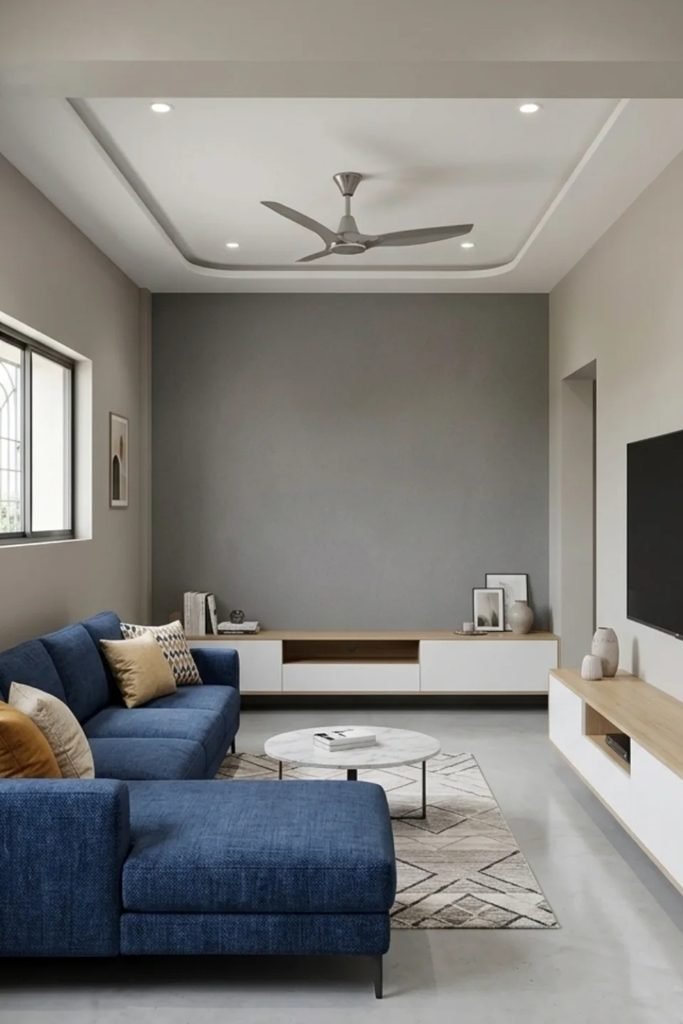
Minimalist rooms do not have to stay beige, and one deep blue sectional can become the main feature without creating visual clutter.
Let the sofa carry most of the color, then surround it with gray walls, pale wood storage, and a lightly patterned rug.
Wall-mounted media cabinets are especially useful in narrow rooms because exposing more floor underneath makes the whole living area feel less crowded.
Hidden Lighting
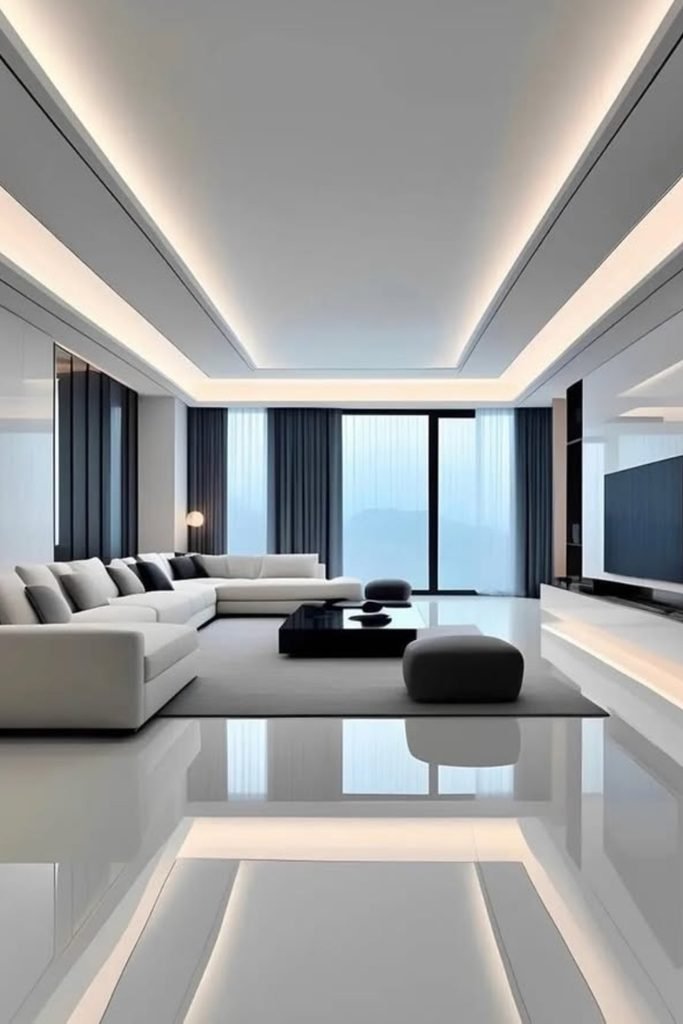
Built-in lighting works beautifully when you want a larger minimalist living room to feel polished without filling it with decorative lamps everywhere.
Run warm indirect light along ceiling edges and behind the media wall, creating depth while keeping fixtures mostly out of direct view.
Continue warm wood across cabinetry and wall panels, then choose creamy seating so the darker architectural details never make the room feel heavy.

Balanced Simplicity
Symmetry can calm a rectangular living room quickly, especially when the sofa and television naturally sit along two opposite walls.
Center a simple coffee table between them and use one generous rug underneath, helping separate the seating zone without adding physical dividers.
Bring height into one corner with a leafy plant, while matching neutral curtains soften the window and keep attention on the clean layout.
Woven Warmth
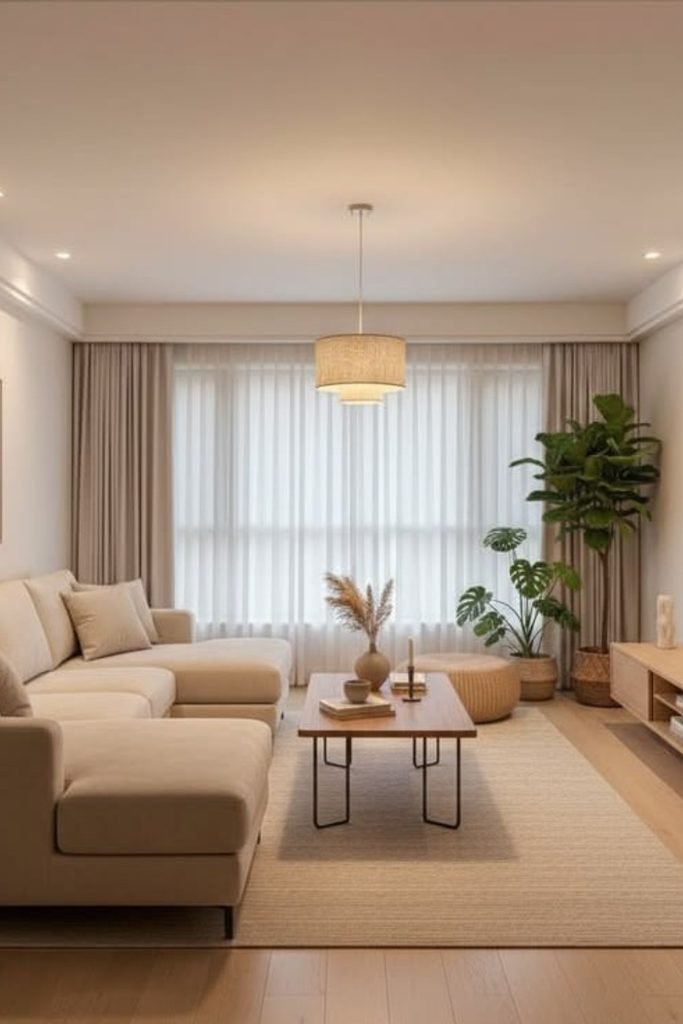
Natural woven pieces are an easy way to soften a pale minimalist living room without relying on extra colors or busy decorative patterns.
Pair light wood furniture with a woven pendant, textured rug, and simple basket so warmth appears naturally across different parts of the room.
Add muted green cushions and one tall tree for gentle color, while keeping shelves lightly styled so the overall setting remains calm.
Earthy Accents
Rust-colored cushions can wake up a neutral living room when you want warmth and personality without committing to colorful furniture or walls.
Keep the sofa and rug creamy, then repeat earthy tones through artwork and small accessories so the accent color feels properly connected.
Choose one dark coffee table to ground the lighter seating, giving the arrangement stronger definition while still maintaining a clean minimalist balance.
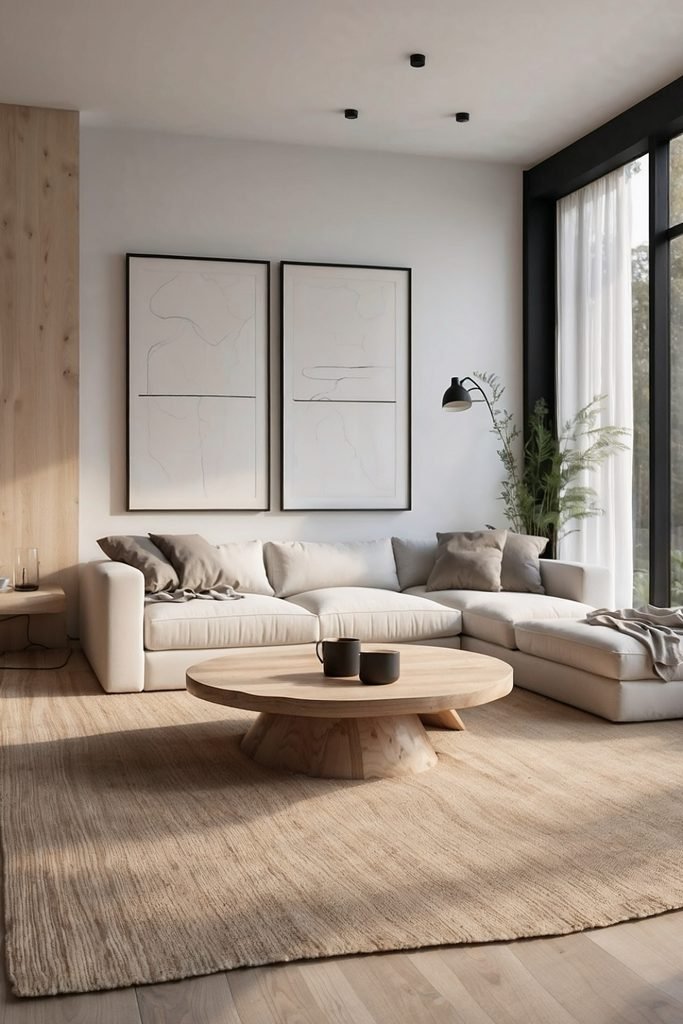
Organic Minimalism
Natural materials work especially well in spacious living rooms where too many smooth neutral surfaces could make the space feel overly polished.
Layer chunky textiles, raw wood, woven fibers, and simple pottery while staying within similar earthy tones to create depth without visual clutter.
Use built-in shelves sparingly and repeat leafy branches around the room, bringing softness to architectural features like fireplaces, beams, and arched openings.

Sculptural Calm
Let oversized artwork carry the decorative weight when you have tall walls, rather than trying to fill every open area with smaller pieces.
Combine a low wooden sofa with a substantial coffee table and handcrafted pottery, creating interest through shape and material instead of bright color.
One loose, sculptural indoor tree adds movement beside the seating and works especially well where strong natural light already shapes the room.

Olive Contrast
Deep olive seating is a smart choice when you want richer color in a minimalist room without losing the calm, earthy atmosphere.
Balance the darker sofa with cream seating, natural wood, and a woven rug so the color feels grounded rather than visually dominant.
Let one oversized artwork and sculptural coffee table handle the decoration, leaving smaller surfaces mostly clear to protect the room’s relaxed character.

Clean Media
Keep the television wall simple when you want technology to blend into the living room instead of becoming its strongest design feature.
Use a floating wood cabinet beneath the screen and add one vertical slatted section, creating texture without surrounding the television with accessories.
Repeat the same pale wood on the coffee table and chair frame, which ties separate furniture pieces together without needing matching sets.

Olive Curves
Curved furniture can make minimalist spaces feel softer, especially when straight walls and wood panels are already creating strong architectural lines.
Choose one rounded cream sofa, then bring in muted olive through a chair, cushion, or throw instead of spreading color everywhere.
Finish with a round coffee table and restrained artwork, letting repeated curves create flow while greenery adds height without crowding the seating area.
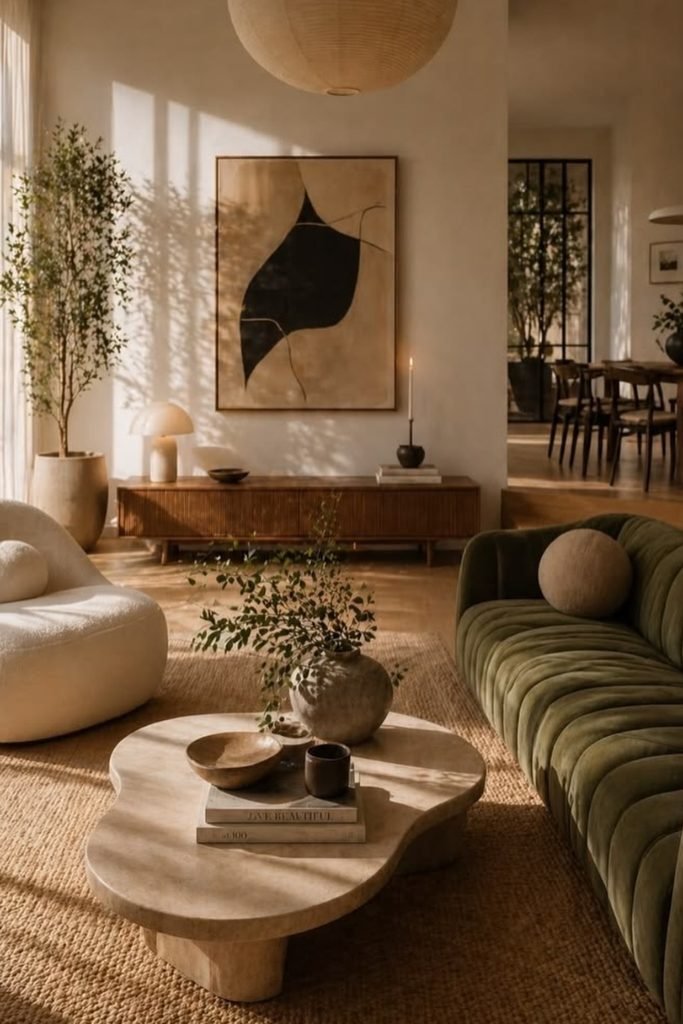
Monochrome Texture
When you prefer almost no color, texture becomes essential because flat white furniture against pale walls can quickly make everything disappear together.
Mix boucle seating, a woven rug, sculptural side tables, and a solid coffee table so each neutral surface has its own character.
Add dark brown cushions in a few controlled spots, giving the pale sectional enough contrast without breaking the room’s quiet monochrome direction.

Floating Storage
Wall-mounted storage works especially well in smaller living rooms because keeping the floor visible makes the television area feel lighter and less crowded.
Choose a warm wood cabinet with closed drawers, giving remotes, cables, and media accessories somewhere practical to disappear after everyday use.
Bring in woven textures and a few green plants around the room, softening the clean media setup without adding unnecessary decorative clutter.

FAQs
Can Minimalist Living Rooms Still Feel Warm And Cozy?
Yes, because minimalism does not mean removing every soft detail; it means keeping fewer pieces that add comfort and serve a purpose.
Layer warm wood, textured rugs, curtains, and soft fabrics so the room gains depth without relying on lots of decorative accessories.
Use warm lighting and a few personal pieces to finish the space, helping it feel lived-in while keeping surfaces calm and uncluttered.
How Do You Keep A Minimalist Living Room Clutter-Free?
Give everyday items a proper home first, because even a beautifully styled minimalist room quickly feels messy when small belongings stay visible.
Choose closed cabinets, drawers, baskets, or storage tables for remotes, chargers, blankets, and other things you regularly use in the room.
Leave some surfaces intentionally empty and review what collects there, so unnecessary items do not slowly work their way back into your space.