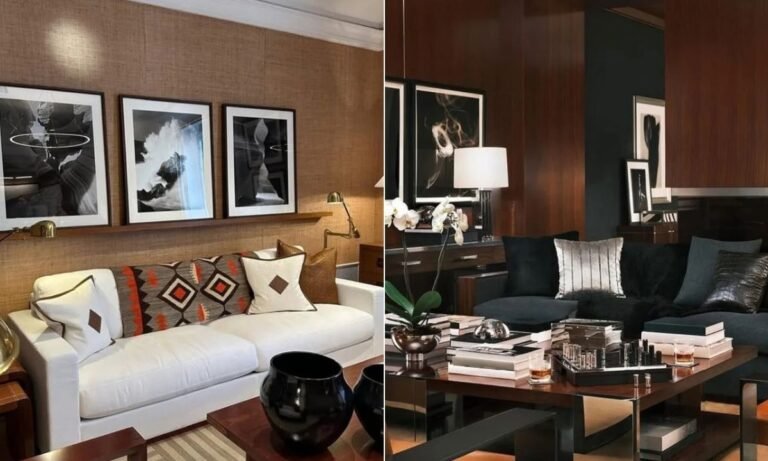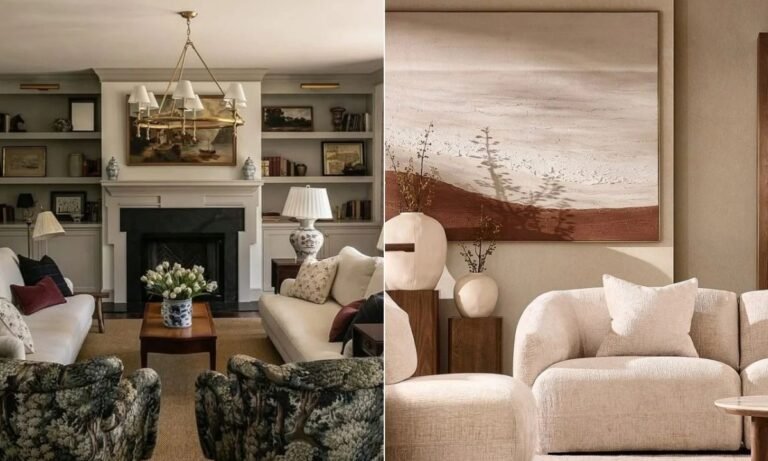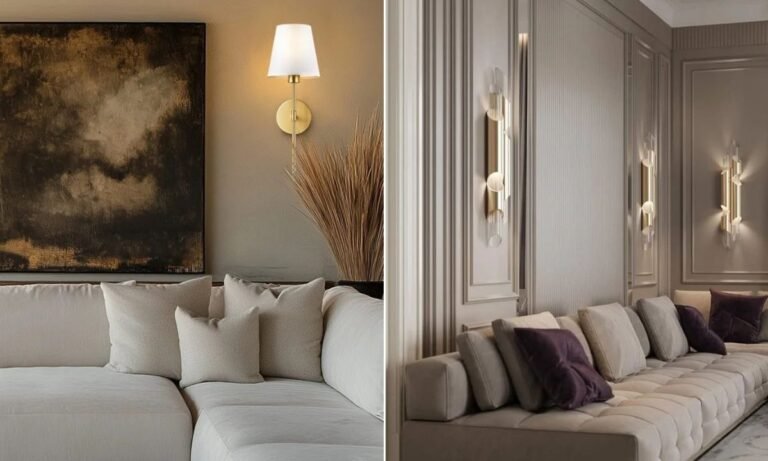
A moody living room can look warm, cozy, and full of character in photos, but trying the same look at home can feel risky.
Go too dark, and the room may feel gloomy; play it too safe, and you lose the rich, cozy mood you wanted in the first place.
The trick is knowing where to use deeper colors and where to bring back light, warmth, and contrast.
From choosing the right wall color to balancing furniture, lighting, textures, and wood tones, a few smart decisions can completely change the result.
In this article, you’ll learn how to build that moody look step by step, then see 23 living room ideas.
Let’s jump in!
How to Design a Moody Living Room?
Start with the feeling you want instead of picking the darkest paint you can find. A good moody living room feels cozy and layered, not gloomy.
Choose one deep base color such as forest green, navy, chocolate brown, burgundy, or charcoal, then build around it with warmer and lighter tones.
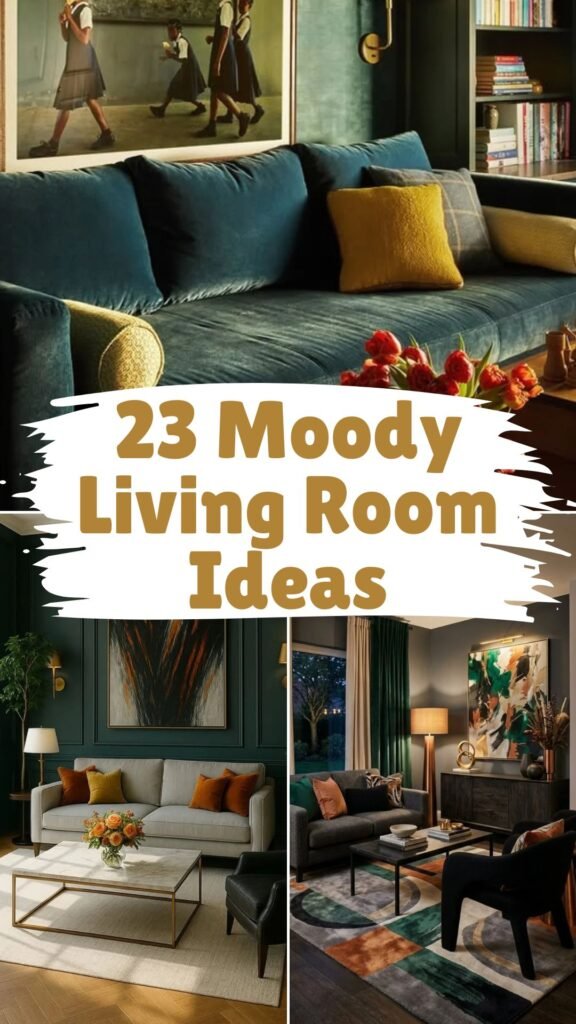
If your walls are dark, use wood, cream fabrics, a lighter rug, or warm metals to stop the room from feeling too heavy.
Lighting matters just as much as color, so don’t depend on one ceiling light. Add floor lamps, table lamps, or wall sconces at different heights.
Once the basic balance feels right, you can bring in deeper textures, artwork, curtains, and smaller details.
Moody Library
Dark green built-ins are an easy way to create mood while adding useful storage.
Carry the same green onto the surrounding wall, then bring in a velvet sofa for a rich, layered look.
Colorful books, warm artwork, and mustard cushions keep the darker palette from feeling too serious.
Add a wall sconce near the seating area to make the room feel cozy at night.

Jewel Tone
A charcoal backdrop gives you room to use richer colors without making the living room feel busy.
Bring emerald green through full-length curtains, then repeat it in artwork and the rug for a connected look.
Rust accents add warmth, while black chairs and dark wood furniture deepen the mood.
Warm floor lamps are especially useful here because they soften the charcoal walls after sunset.

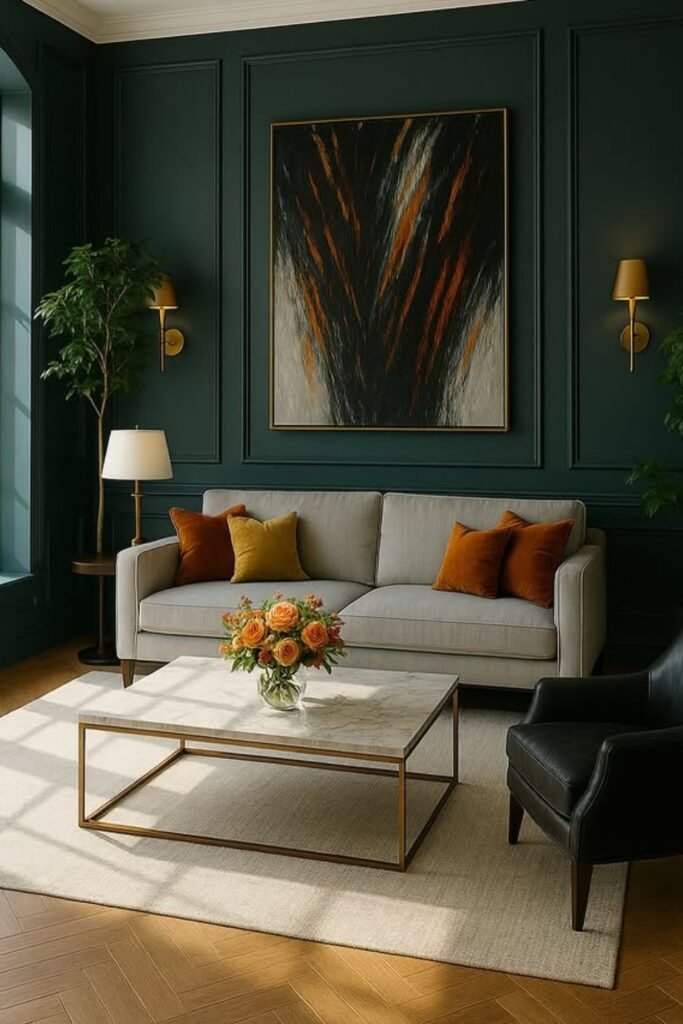
Paneled Green
Deep green paneling gives a moody living room more depth because the molding creates subtle shadows across the walls.
Keep the larger furniture light, like a cream sofa and neutral rug, so the darker color never overwhelms the room.
Rust cushions and brass lighting add warmth, while one oversized artwork gives the paneled wall a clear focal point.
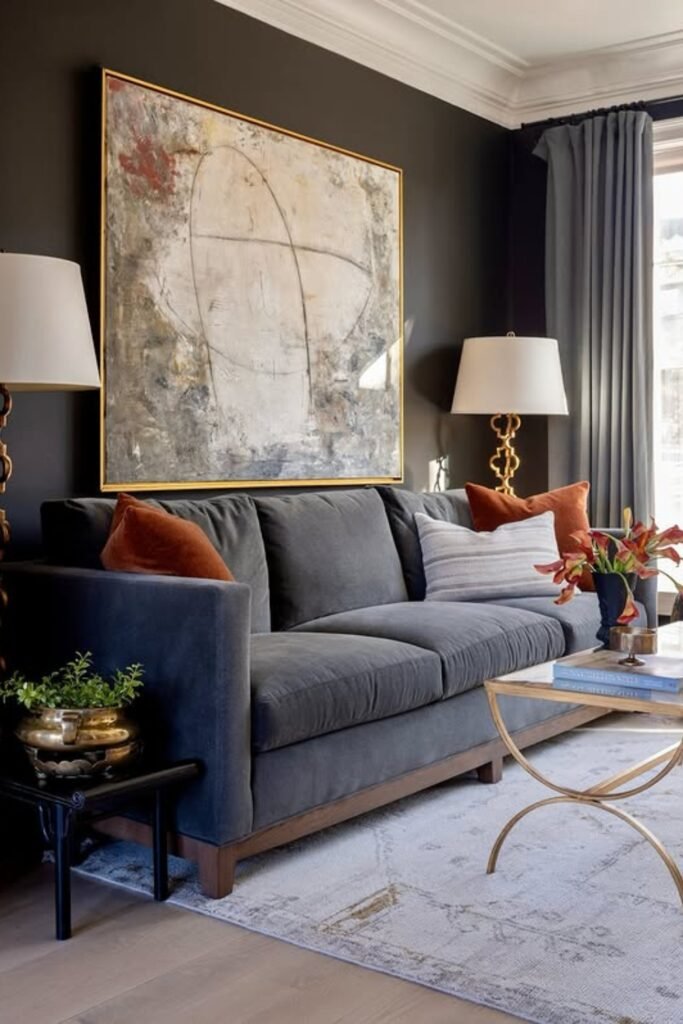
Charcoal Contrast
Charcoal walls can feel surprisingly balanced when you keep a few large surfaces light.
Pair them with a soft gray sofa, pale rug, and oversized neutral artwork rather than filling the room with more dark pieces.
Rust cushions bring warmth, while gold lamps and furniture details catch the light and stop the gray palette from looking cold.
Vintage Moody
Black walls feel much warmer when you bring in furniture with aged, earthy color.
Pair an olive velvet sofa with brown leather chairs, then use a vintage red rug to tie those tones together.
If your room has good natural light, painting the window trim dark can deepen the mood without making the space feel closed in.

Luxury Black
A nearly black palette works best when the room has several warm light sources to reveal its details.
Use dark sofas and marble as the foundation, then layer recessed lighting, shelf lights, candles, and a fireplace around the space.
Reflective stone and glass also catch that light, giving the room depth instead of leaving large areas looking flat.

Industrial Moody
Exposed brick already gives you the warmth a dark living room needs, so let it become the main feature instead of covering it.
Pair it with charcoal seating and black furniture, then use lanterns, candles, or warm string lights to bring out the brick’s texture.
Large leafy plants soften the industrial finishes and keep the darker corner from feeling too harsh.

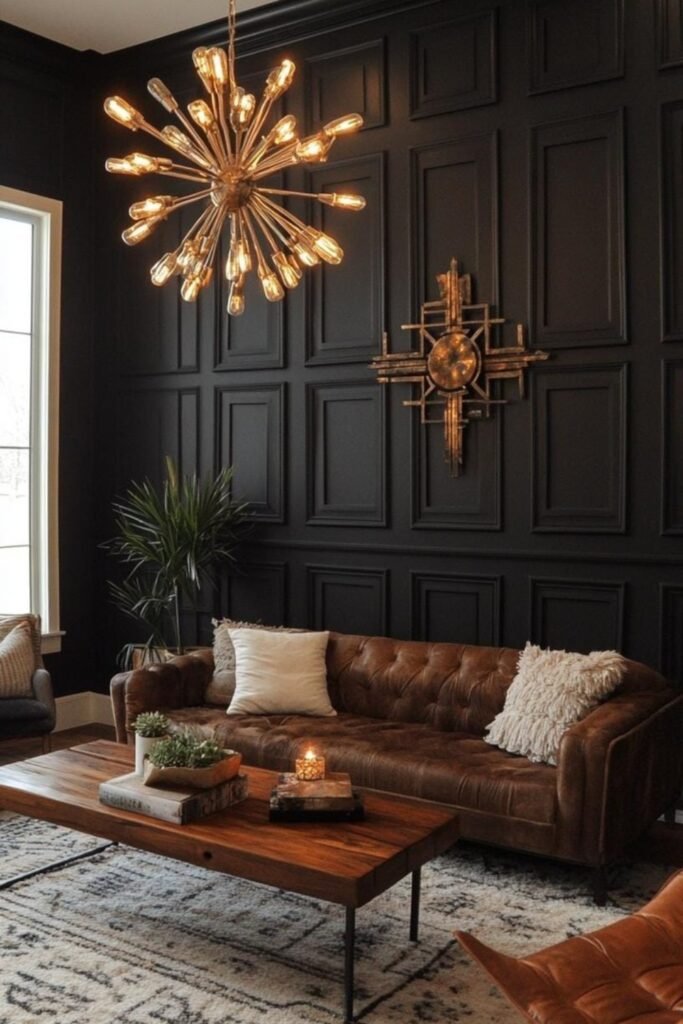
Paneled Black
Black walls feel far more intentional when molding adds depth instead of leaving one flat dark surface.
Pair the paneling with a worn brown leather sofa and warm wood table to soften the black.
A statement brass chandelier pulls the eye upward, while a pale patterned rug and cream cushions keep the lower half of the room from becoming too heavy.
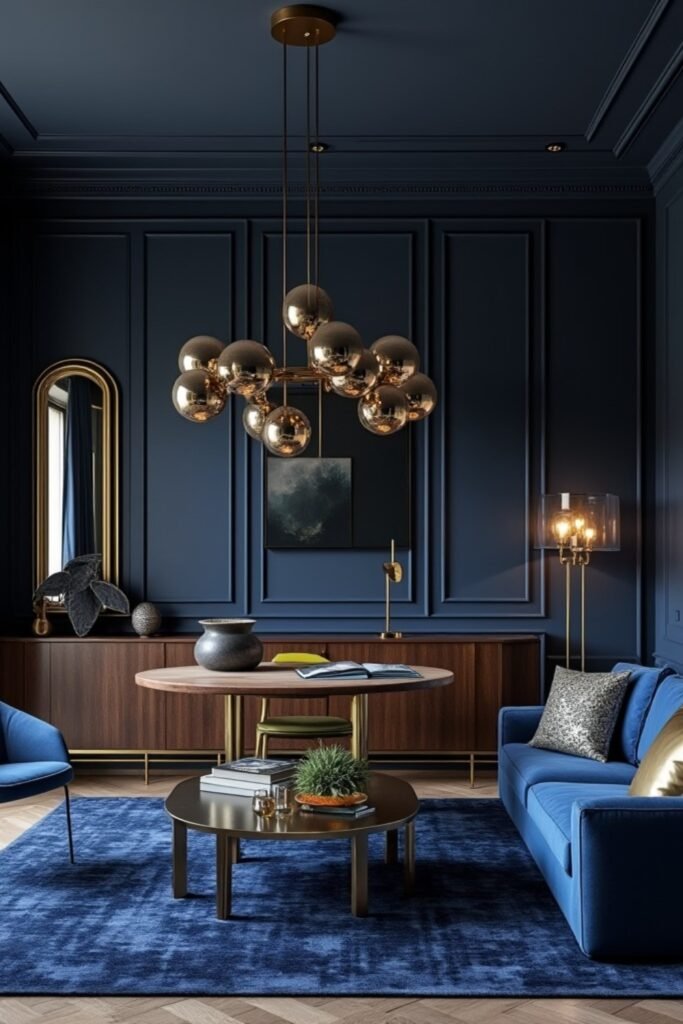
Color Drenched
If you want a fully immersive look, carry deep navy across the walls, molding, trim, and ceiling instead of breaking it up with white.
Keep the room from disappearing into one shade by using brighter blue seating, warm walnut furniture, and brass lighting.
A matching dark rug strengthens the cocooning effect while lighter wood flooring gives the palette some breathing room.
Cocooning Media
For a TV-focused living room, use dark wood around the screen so it blends into the wall instead of becoming the main feature.
Deep brown curtains and oversized gray sectionals continue the cozy mood without making everything black.
Build warmth with recessed shelf lighting, table lamps, candles, and a fireplace, especially if the room gets little natural light.

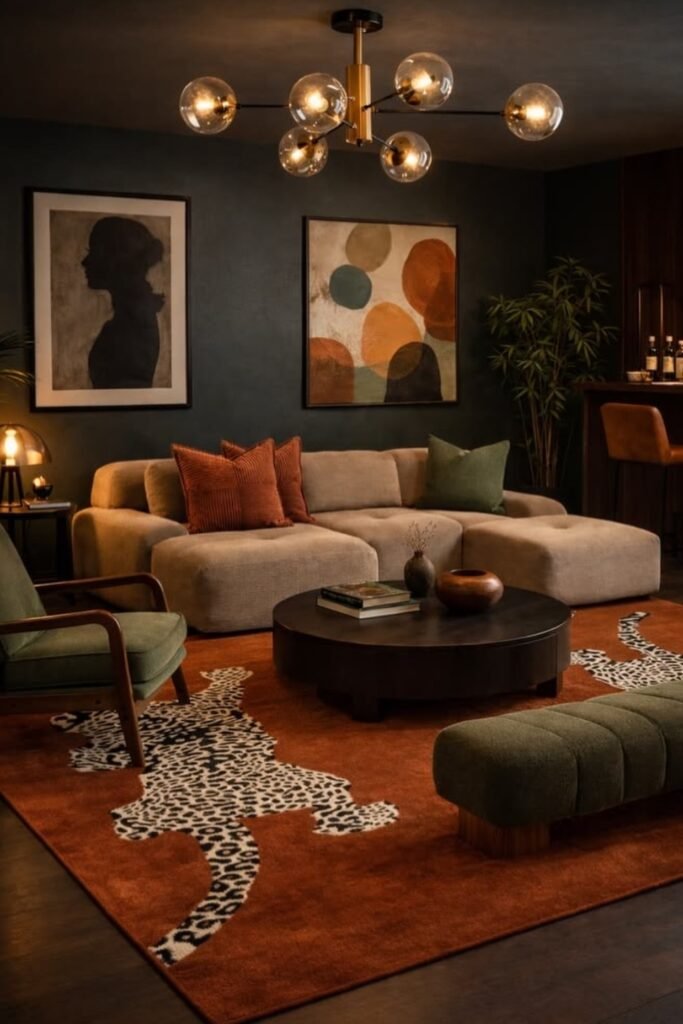
Earthy Moody
A dark room doesn’t need dark furniture everywhere.
Start with charcoal walls, then use a beige sectional to create a softer center before layering in olive green and burnt orange.
A bold rust rug can carry those warmer tones across the floor, making the whole palette feel connected.
Finish with warm lamps and dark wood furniture to keep the contrast cozy rather than sharp.
Collected Vintage
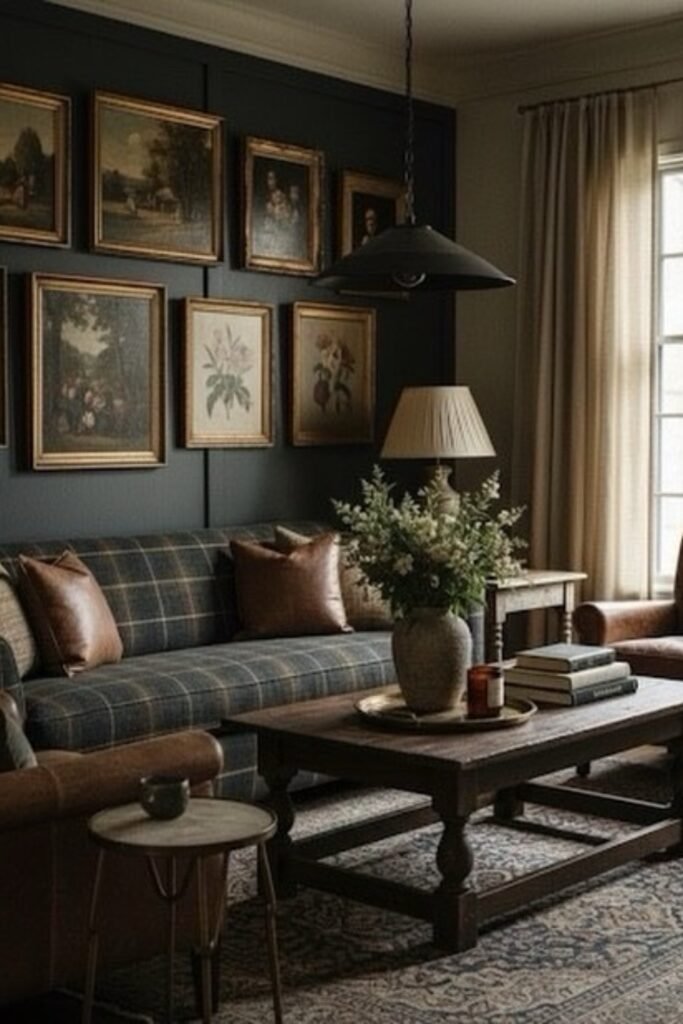
A gallery wall is a smart way to make dark walls feel personal instead of empty.
Mix vintage landscapes, portraits, and botanical art in warm wood or brass frames, then carry those aged tones into leather chairs and a wooden coffee table.
Keep the curtains light so daylight can soften the darker palette, while plaid upholstery adds another layer without introducing a new color family.
Charcoal Leather
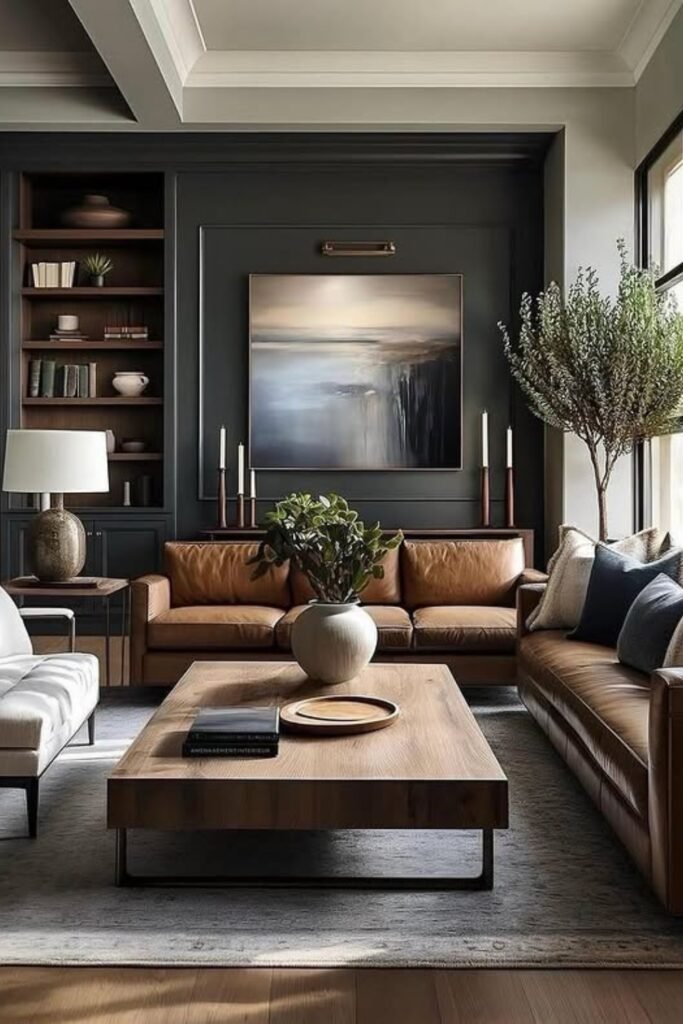
Cognac leather is one of the easiest ways to warm up charcoal walls without weakening the moody look.
Repeat the brown through built-in shelves and a large wood coffee table, then add a light chair for contrast.
If your room has large windows, keep the surrounding trim dark so the outdoor light becomes the natural break in the deeper palette.
Fireplace Moody
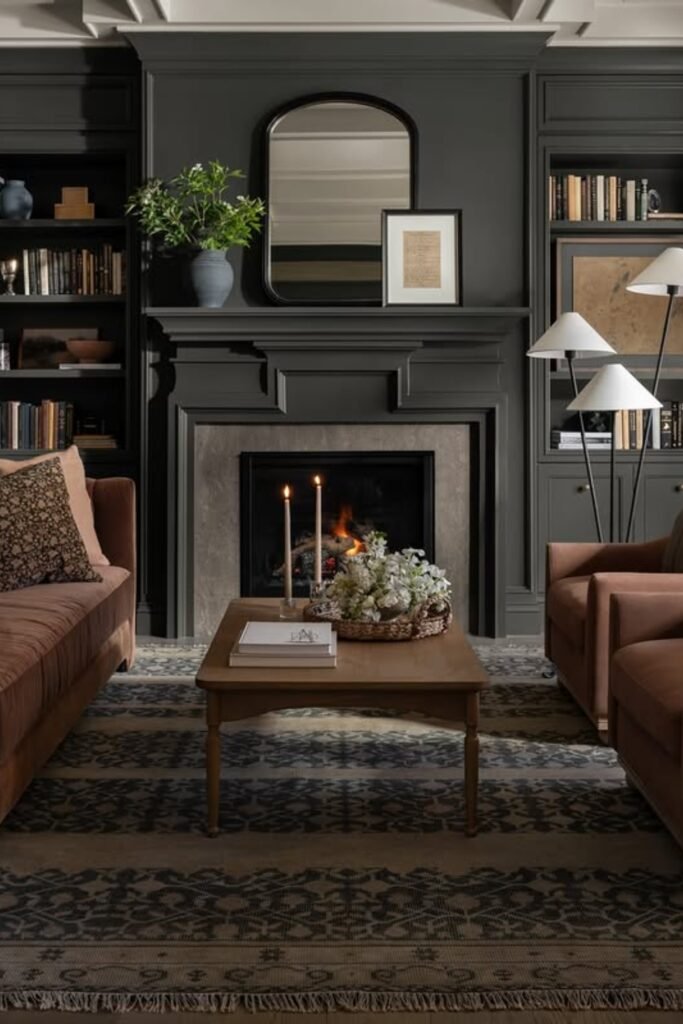
A fireplace can become the anchor that makes a dark living room feel cozy rather than gloomy.
Paint the fireplace surround and built-ins the same charcoal shade for a seamless backdrop, then soften it with warm brown seating and a patterned rug.
Keep a mirror above the mantel to reflect light, while lamps and firelight add warmth around the darker cabinetry.
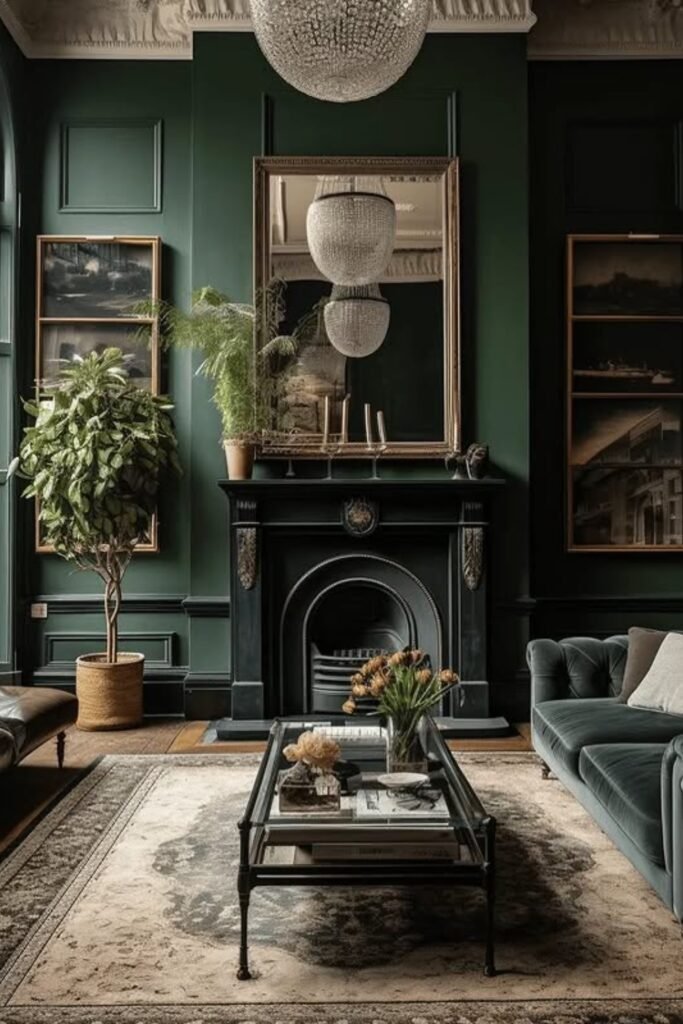
Emerald Classic
Deep emerald walls work beautifully in a traditional living room because molding and architectural details keep the color from looking flat.
Let a black fireplace create the central focal point, then use a large mirror to bounce daylight back into the room.
A muted green sofa continues the tonal look, while a faded neutral rug keeps the darker walls and furniture from feeling too heavy.
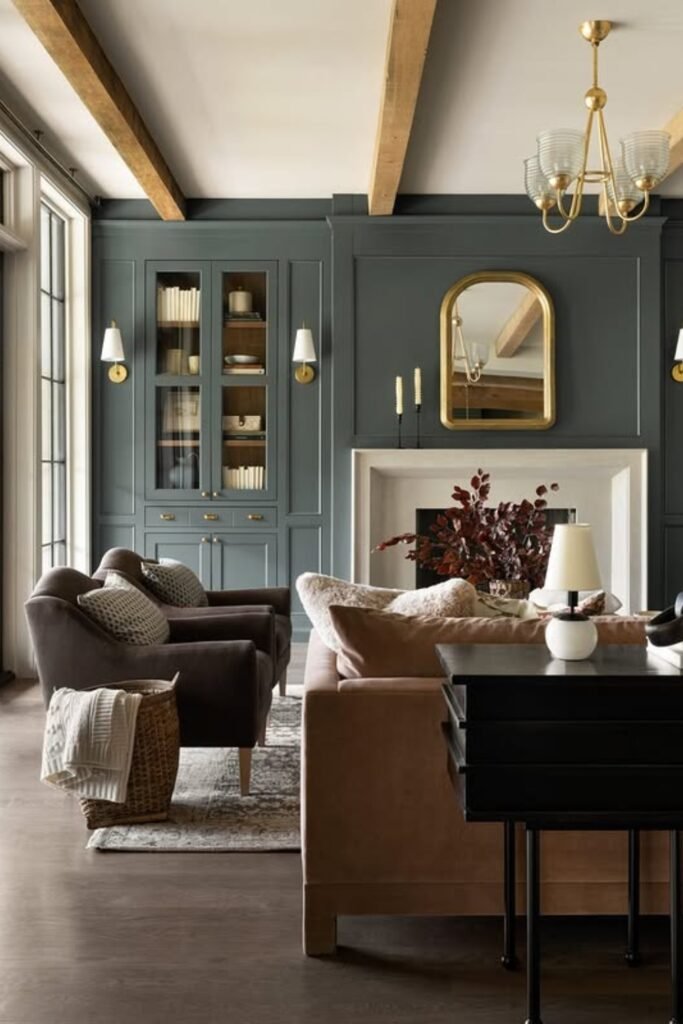
Soft Moody
You don’t need near-black walls to create a moody feel.
Try a muted charcoal-green on the built-ins and paneling, then balance it with brown seating, exposed wood beams, and a creamy fireplace.
Large windows keep the darker cabinetry comfortable during the day, while brass lighting and a gold mirror add warmth without making the room feel overly formal.
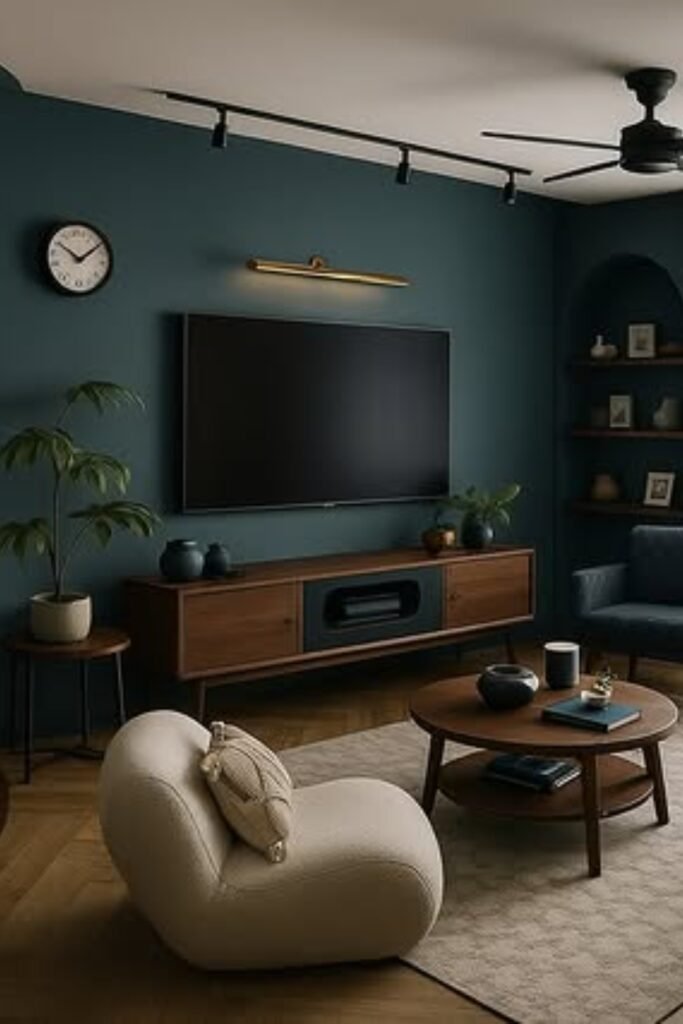
Moody TV
A dark wall is one of the easiest ways to make a large TV feel less noticeable.
Choose deep teal or charcoal, then use a warm wood console to break up the darker surface.
Keep the window treatments light so daytime brightness still reaches the room, and add cream seating or a pale rug to balance the heavier furniture.
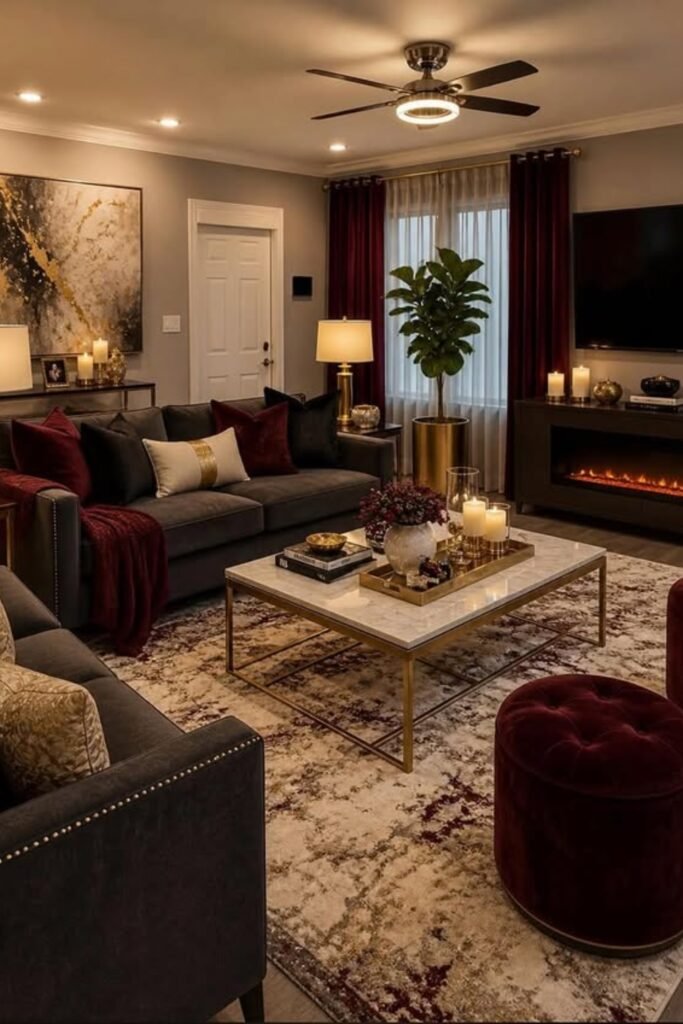
Burgundy Accent
Burgundy is a great choice when you want mood without committing to dark walls.
Layer it through velvet curtains, cushions, throws, and an ottoman, then ground those richer accents with charcoal seating.
Warm brass lamps and candlelight bring out the red undertones, while a lighter patterned rug keeps the room from becoming too visually heavy.
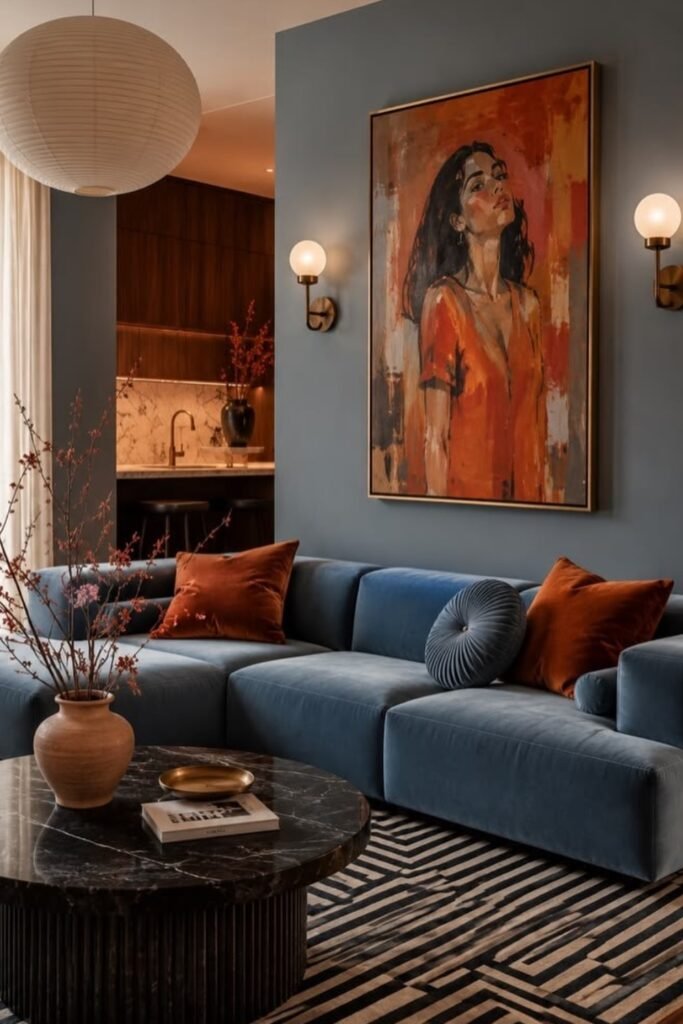
Burnt Orange
Burnt orange can warm up a blue-gray living room without taking away its moody feel.
Repeat the orange through cushions and oversized artwork so the accent looks intentional rather than random.
A deep blue sofa keeps the palette grounded, while globe sconces add soft evening light.
Use sheer curtains nearby if you want the darker colors to still feel fresh during the day.
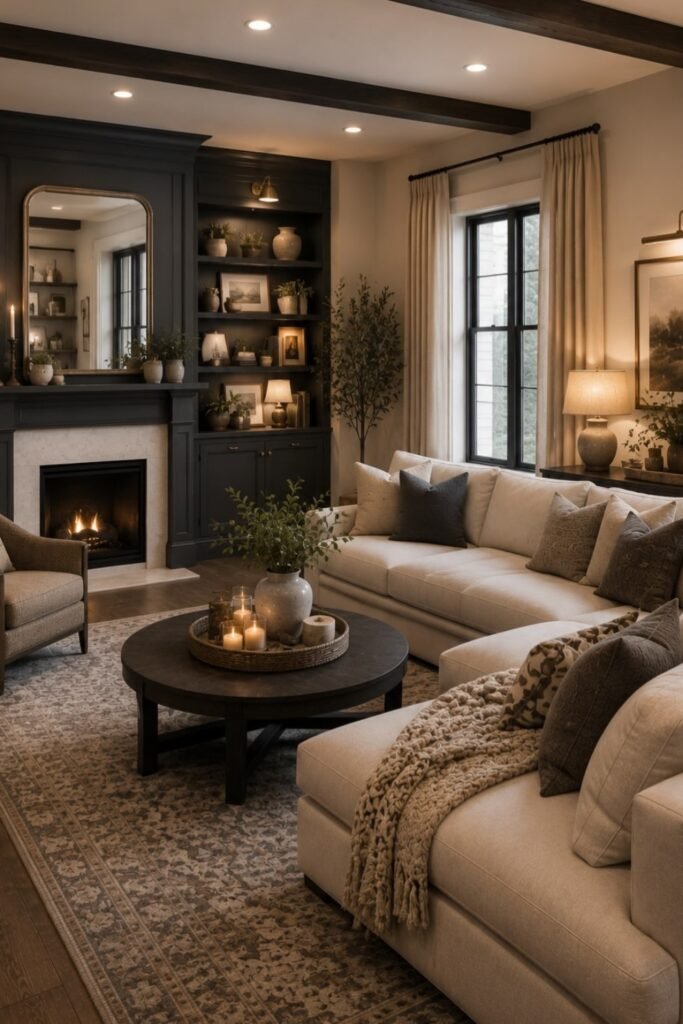
Light Contrast
Moody doesn’t mean every wall and sofa needs to be dark.
Use charcoal built-ins around the fireplace as your main dark feature, then balance them with cream sectionals, soft curtains, and a faded rug.
Dark ceiling beams and a black coffee table repeat the deeper tone across the room, while warm lamps and candlelight keep the contrast soft and cozy.
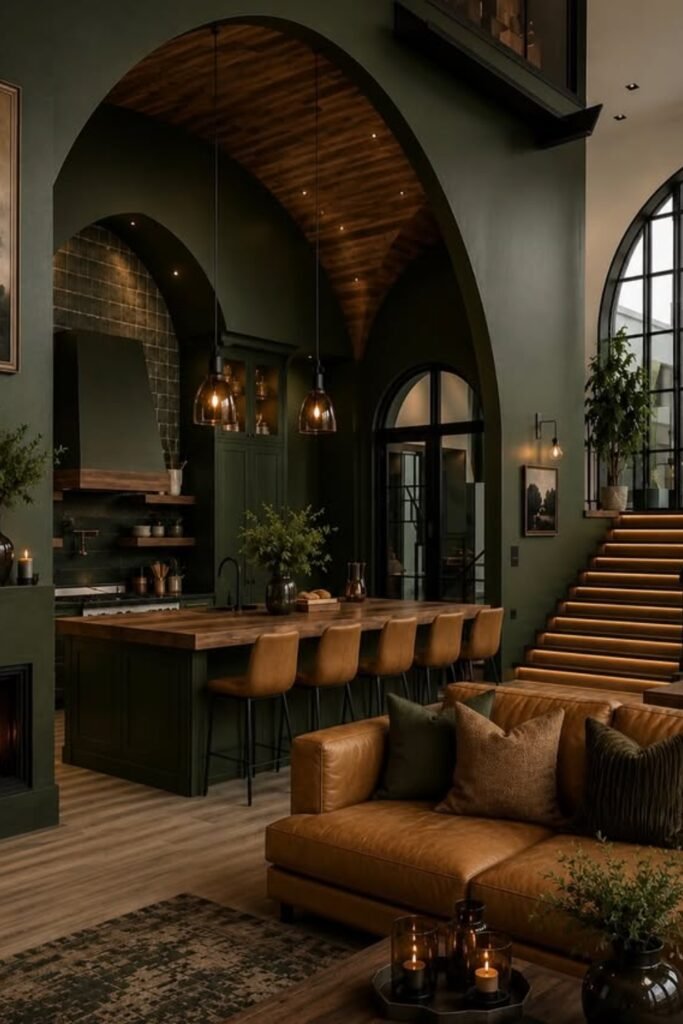
Olive Open
An open-plan room can still feel moody without losing its sense of space.
Carry deep olive across the living area and nearby kitchen so both zones feel connected, then warm it with cognac leather and natural wood.
Large arched windows keep the darker palette balanced during the day, while pendant lights, stair lighting, and the fireplace create a softer mood at night.
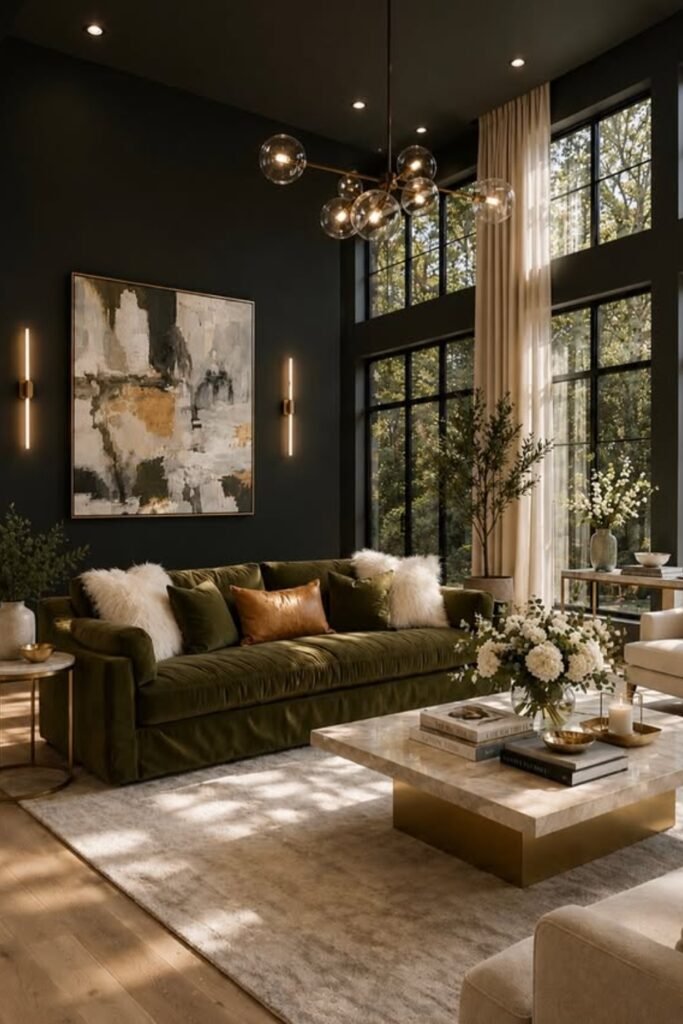
Olive Velvet
Tall windows give you more freedom to use very dark walls because daylight naturally breaks up the deeper color.
Add an olive velvet sofa to keep the palette rich, then use cream chairs, a pale rug, and light curtains for balance.
Warm wood flooring and a marble coffee table introduce different finishes, so the room feels layered instead of dominated by one dark tone.
Chocolate Moody
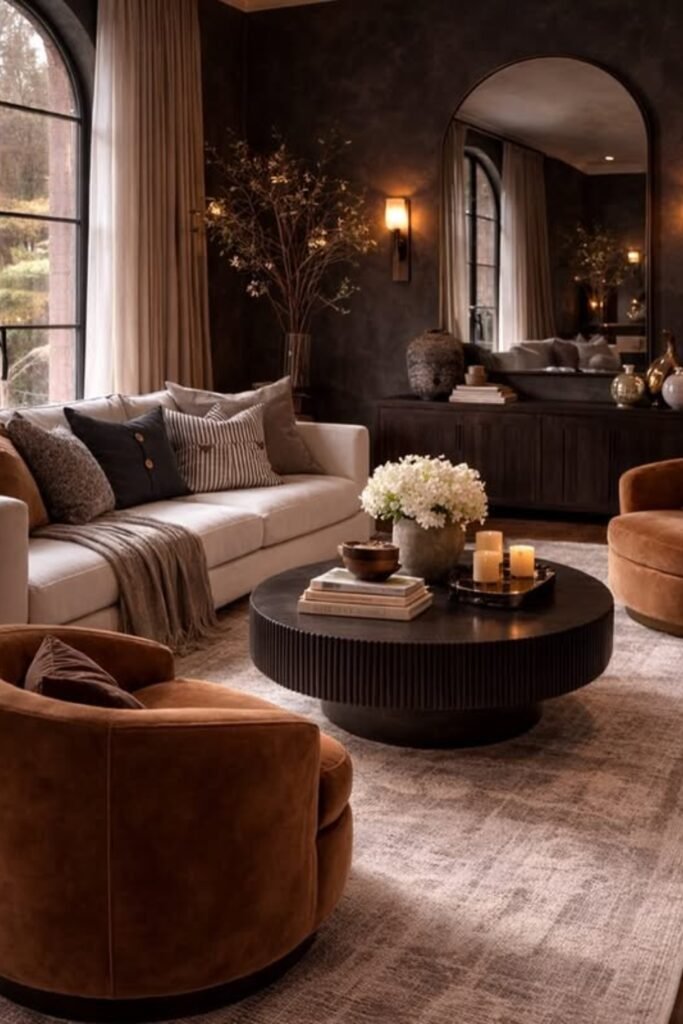
Chocolate walls create a softer kind of mood than black or charcoal, especially when you pair them with warm caramel chairs.
Keep the sofa and rug light to stop the brown palette from becoming too heavy.
An oversized mirror is especially useful opposite large windows because it spreads natural light deeper into the room, while wall sconces keep the space cozy after dark.
FAQs
Can a Moody Living Room Work in a Small Space?
Yes. Dark colors don’t automatically make a small living room feel cramped.
Keep some contrast through a lighter rug, sofa, curtains, or artwork, and use several warm light sources instead of relying on one ceiling light.
Mirrors can also help move natural light around the room.
How Do I Make a Moody Living Room Feel Warm Instead of Gloomy?
Mix your darker colors with warm materials rather than adding more black.
Natural wood, cognac leather, brass, velvet, textured rugs, and cream fabrics all soften deep walls.
Table lamps, sconces, and warm bulbs also create smaller pools of light that make the room feel cozy instead of dim.