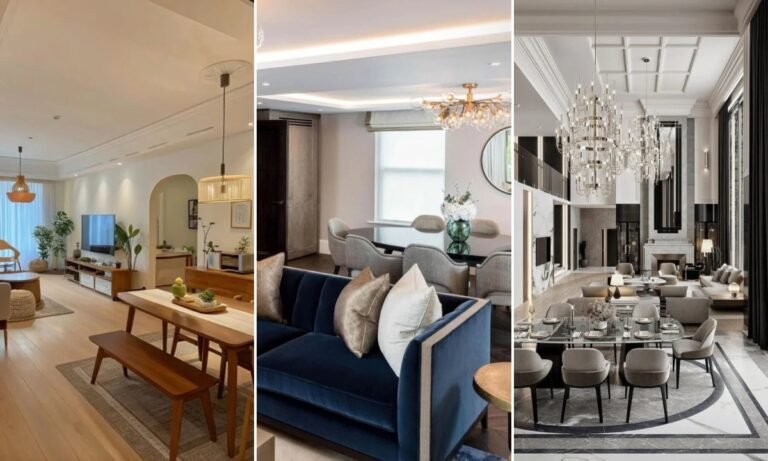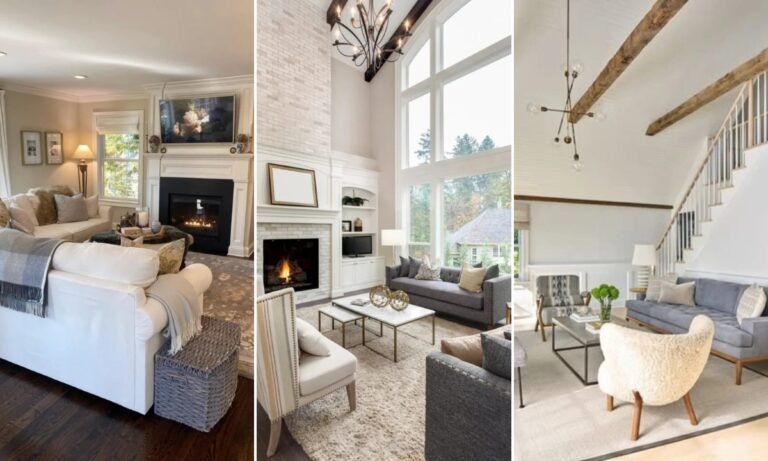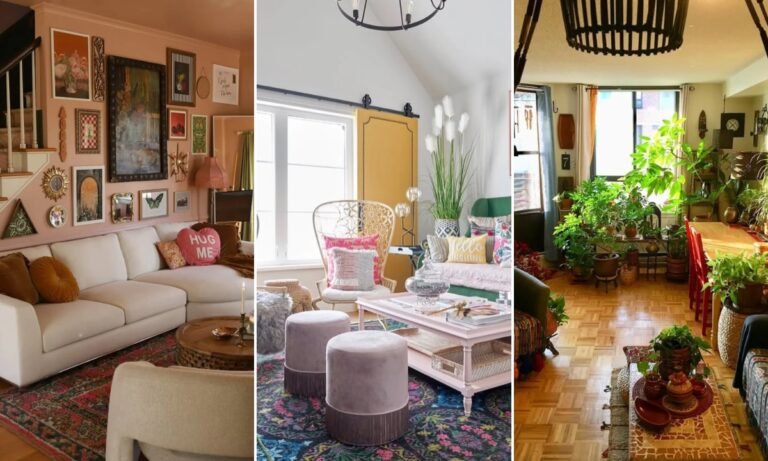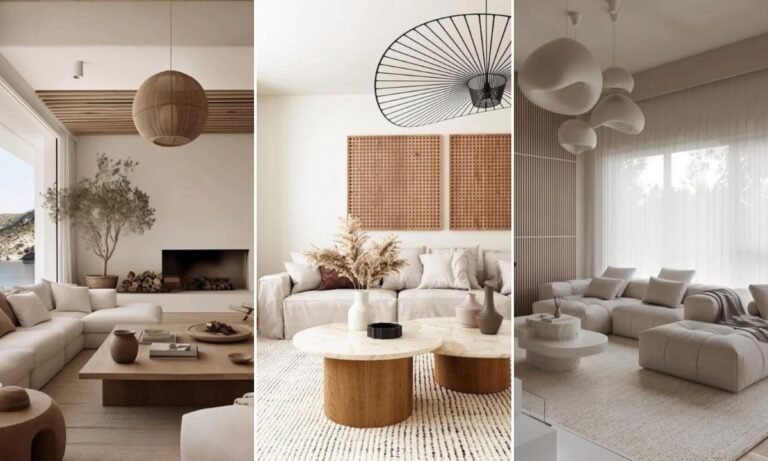
20 Sectional Living Room Layout Ideas for 2026
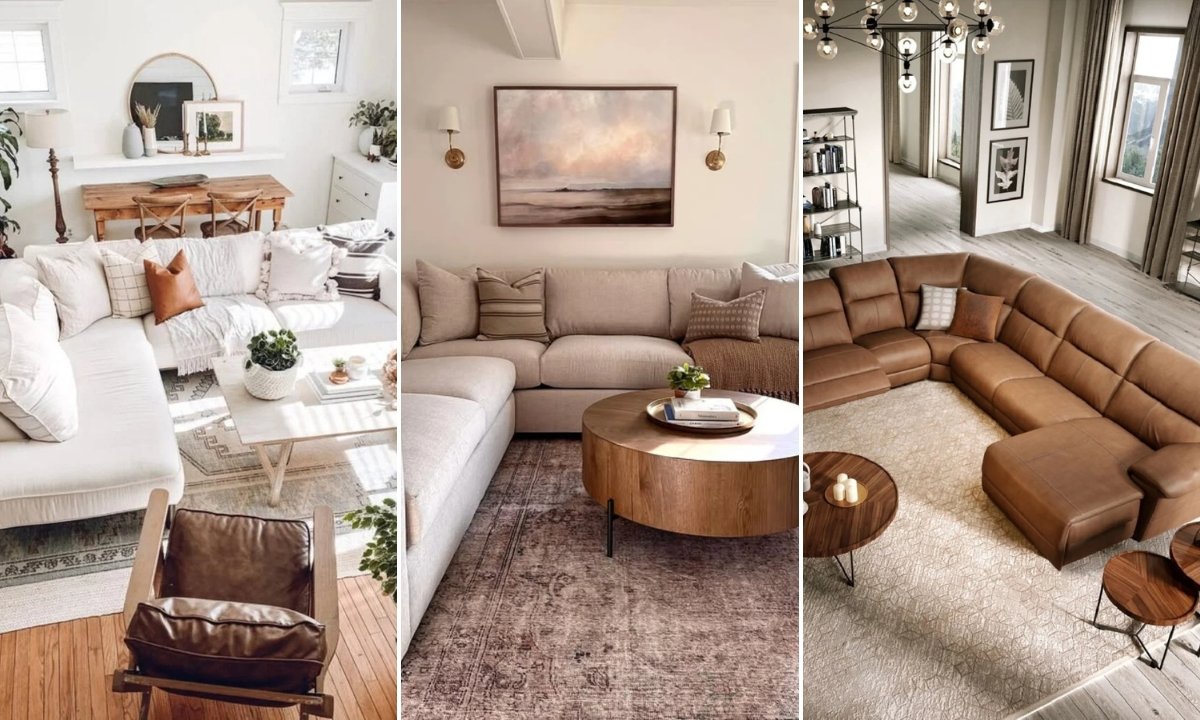
You bought the sectional because you thought it would be perfect in your living room.
You imagined it big, cozy, and inviting. But now that you have it, you notice that you keep bumping into the chaise.
You feel like the room is too tight. You wonder why the coffee table looks so awkward. You try moving things around, but you can’t seem to get it to feel right.
If you’ve ever felt this way, you shouldn’t blame yourself, you can still make it work. You just need a smarter layout.
In this article, you will see how you can arrange your sectional so you can enjoy a living room that feels open, balanced, and intentional.
Let’s jump in!
How To Arrange A Sectional In A Living Room?
You can start with the walkway. If you notice that you or your guests have to squeeze past the chaise or twist sideways just to get through the room, you know your layout isn’t working.
You should leave at least 30 inches of walking space where you naturally pass. If the chaise blocks that path, you can flip the sectional or move it to the quieter side of the room so you can walk freely.
Next, think about what you want your sectional to face. Is it the TV? The fireplace? A window? You should pick one main focal point.
If you try to face everything, you will feel confused every time you walk in.
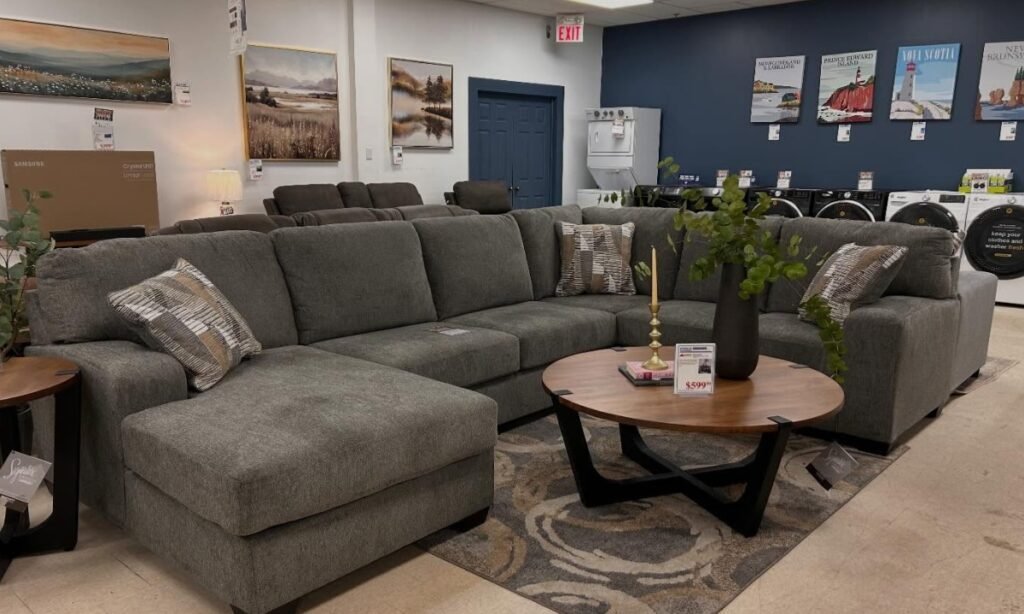
Once you choose, you can center your sectional toward that point and arrange the rest of the furniture around it.
Now check your spacing. You need about 16-18 inches between your sectional and your coffee table. If the table is too far, you will feel disconnected from the space.
If it’s too close, you’ll feel cramped. You should also make sure the front legs of your sectional sit on a rug that’s large enough to anchor the space, if you pick a small rug, you will notice the room looks off balance.
If your room is small, you can push one side of the sectional against the wall to open up floor space.
If you have an open concept layout, you might float the sectional slightly away from the wall so you can create a clear living zone for yourself.
And here’s the key: stop moving furniture around randomly. You should measure first.
You can test with painter’s tape. You will see that even small adjustments, just a few inches, can completely change how your living room feels to you.
Float and Define
You don’t have to push your sectional against the wall just because you feel like the room is small.
You can pull it slightly inward and let it define your living zone.
When you do this, you create a clear seating area while you still let another space, like a desk behind it, serve a purpose without walls.
You should keep the rug large enough so you can anchor the front legs and place the coffee table close enough so you can reach it comfortably.
This setup can work beautifully when you need separation without closing off the room.
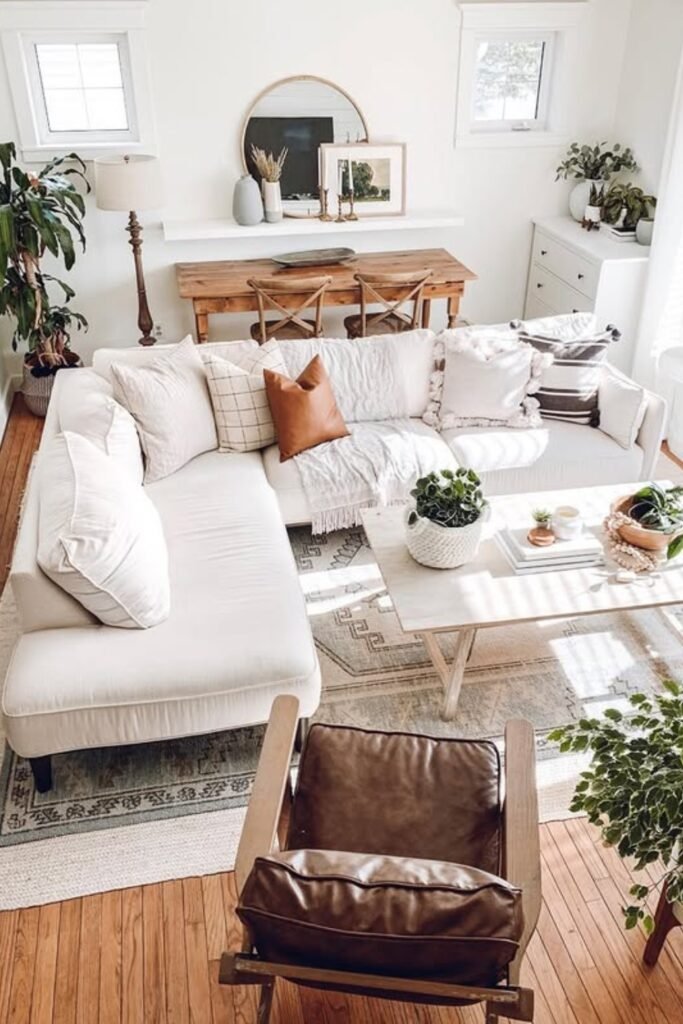
Anchor With Round
You might notice that sharp corners can make your seating area feel boxed in.
You can instantly soften it with a round coffee table. When you do, you improve flow around an L-shaped sectional.
You should keep about 16-18 inches between your table and sofa so you feel connected but not cramped.
You can also center artwork above to balance the long wall, and let the rug extend under the sectional so you can ground the whole space.
This works perfectly if you want your cozy, square living room to feel inviting.
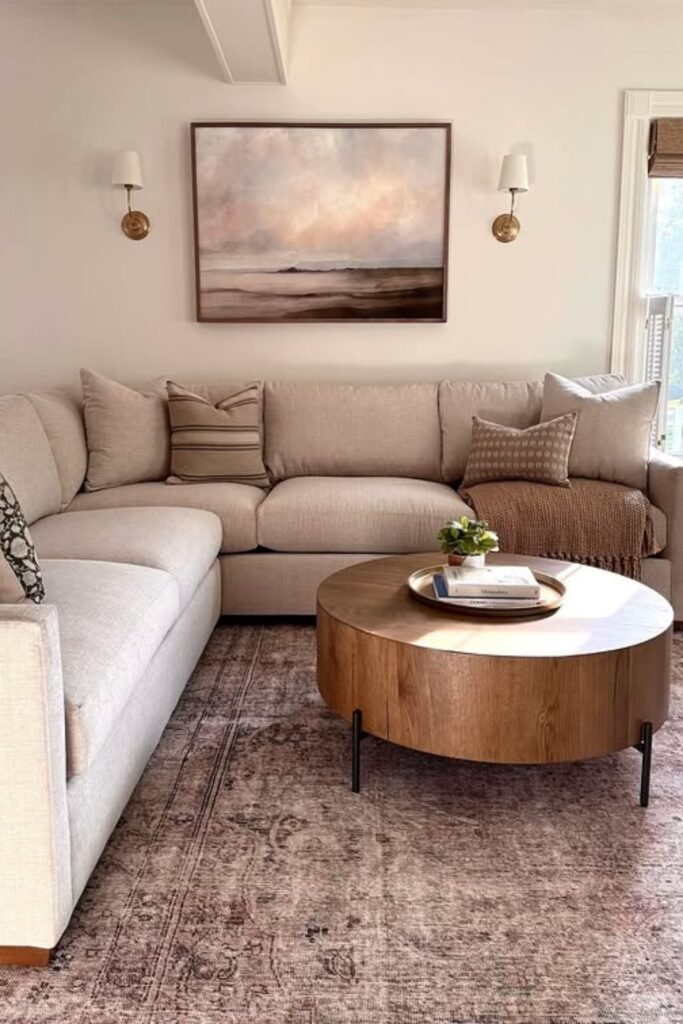
Command the Space
If you have a large, open room, you shouldn’t let your sectional shrink into one corner. You can use it to claim the center and create a natural conversation zone.
You will notice that a wide U-shape lets people gather without walls.
You should keep a large rug underneath to anchor the sectional, and you can break up the middle with round tables so movement stays easy.
This works best when you want the seating to feel bold, not lost in the space.
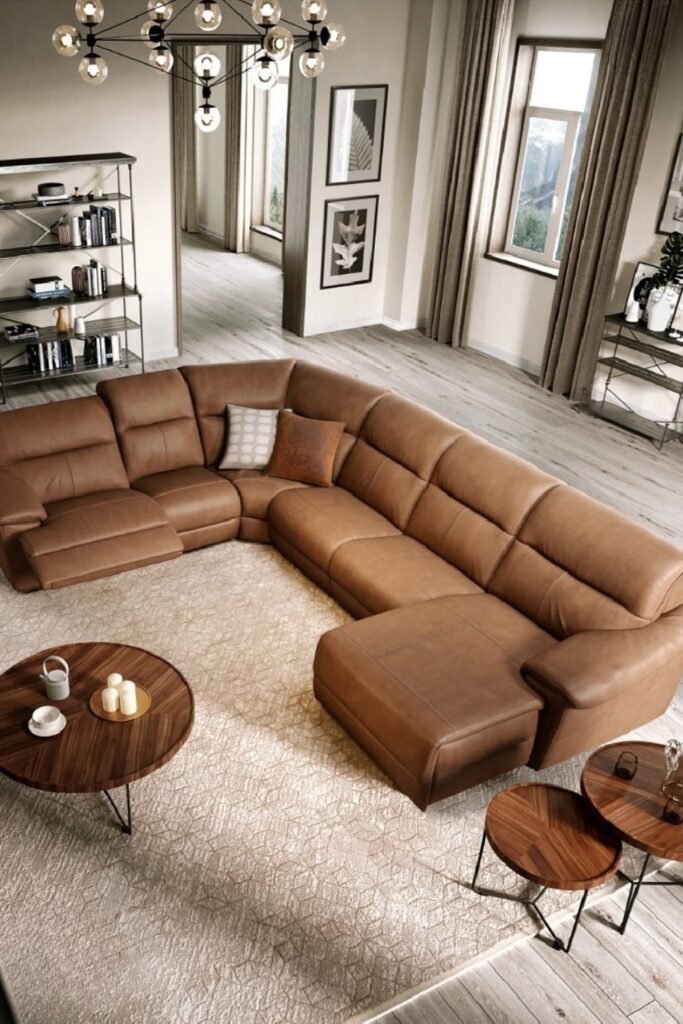
Frame the Windows
You should let your sectional follow the natural lines of your room.
When you place it along the window wall, you keep the layout clean and balanced while leaving the center open.
You will see how the chaise extends toward the brighter side without blocking light or traffic. You can also use a round coffee table to soften the corner and keep movement smooth.
This setup works beautifully if you want symmetry and bright, open spaces.
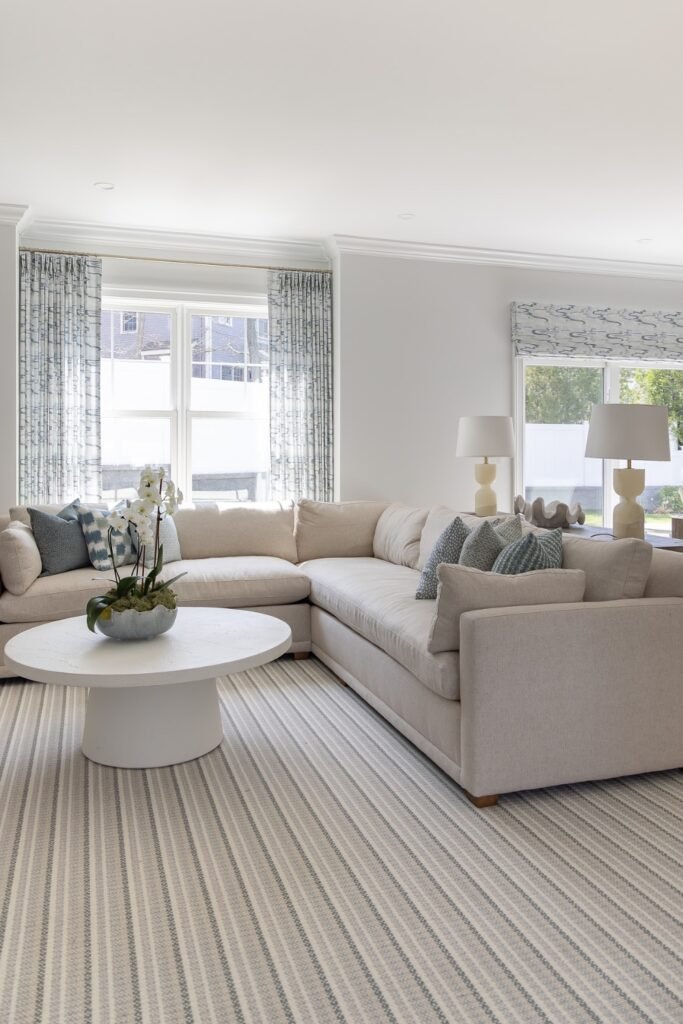
Soften the Corner
You don’t always need sharp angles for your sectional. You can choose a curved corner to make the seating area feel welcoming and easy to move around.
You will notice that it naturally pulls people into conversation instead of boxing them in.
You can pair it with a round coffee table to keep the flow smooth and avoid hard edges.
This layout works especially well when you want comfort without visual heaviness.
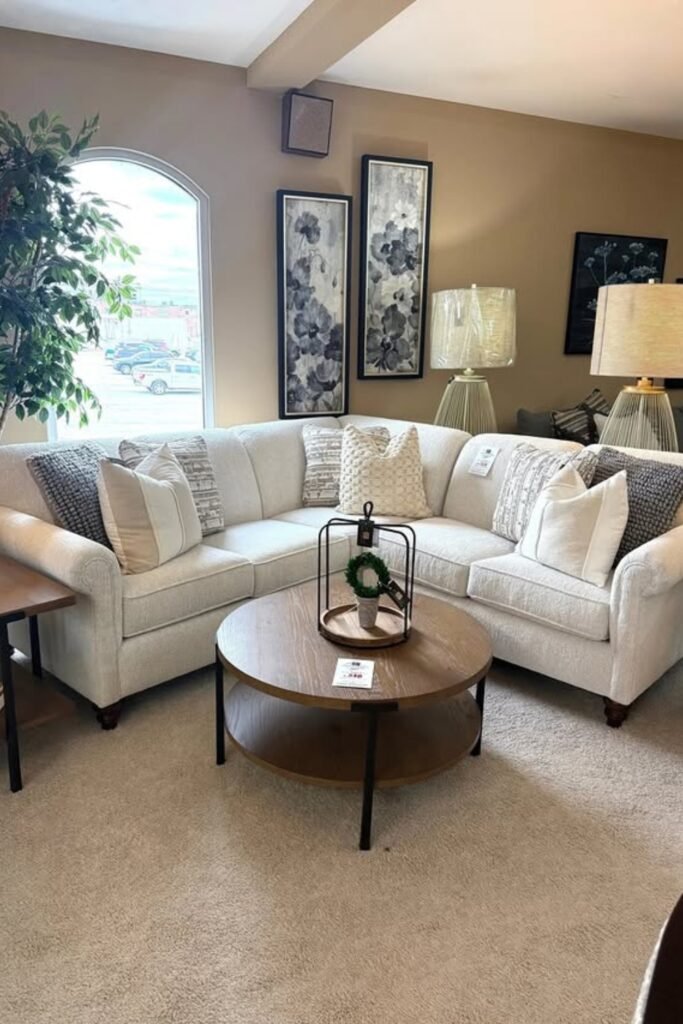
Balance With Ottoman
You can skip the traditional coffee table and use a large ottoman instead.
You will see that it softens the layout, adds extra seating, and keeps your space flexible.
You should let your sectional hug the wall under the windows while the ottoman anchors the center without blocking movement.
You can also add a tray on top to keep it practical. This works well when you want comfort first and sharp edges last.
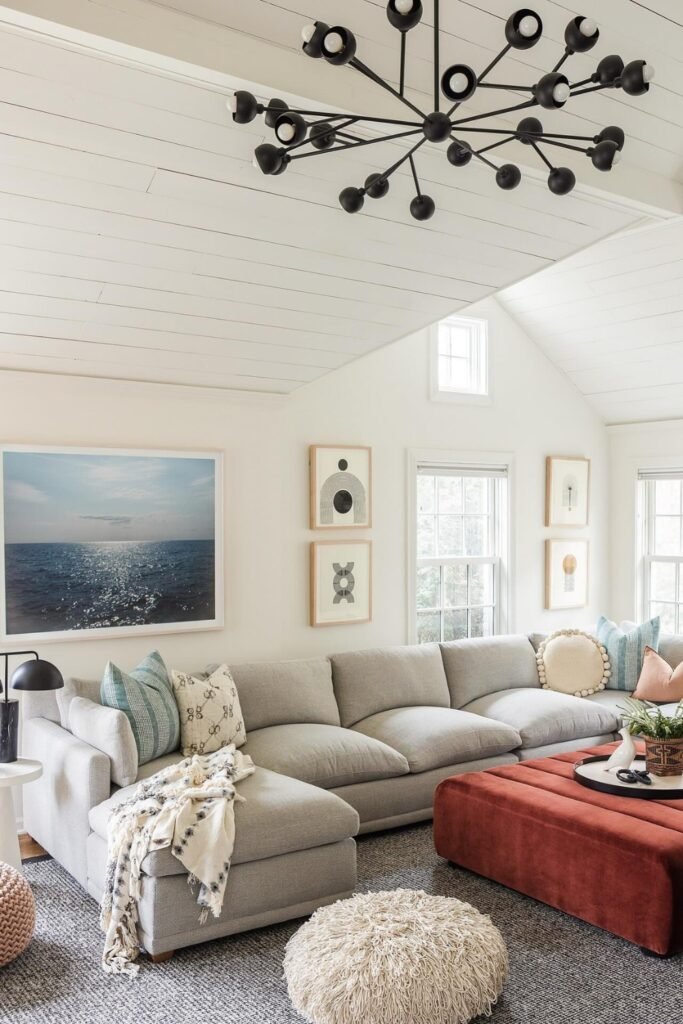
Follow the View
If you have floor-to-ceiling windows, you should let your sectional face the scenery.
You don’t need to fight the natural focal point. You can keep the layout low and open so the view stays the star.
You will notice that a wide chaise along the glass creates a relaxed lounge zone without blocking light.
You should use soft, neutral tones and round tables so everything feels calm. This works best when you want your living room to feel bigger and modern.
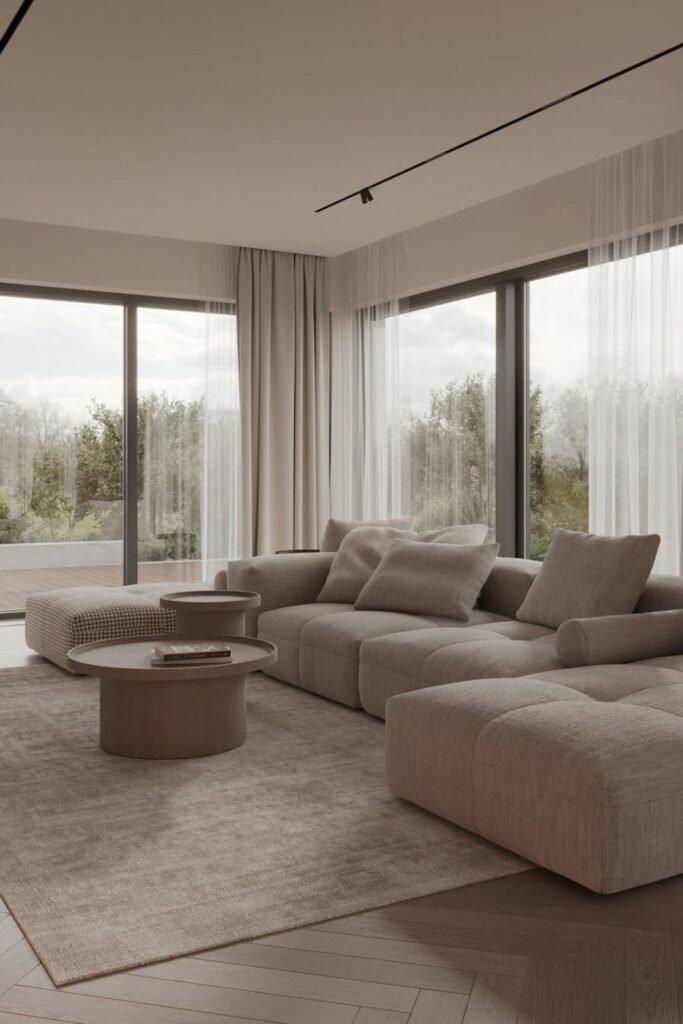
Define From Behind
Sometimes the smartest move is turning your sectional away from the wall.
You can place it with the back facing the entry to define your living zone without adding partitions.
You should leave enough space behind it for a clear walkway, and you can anchor the front with a rug that extends past your coffee table.
You can even add a console or statement piece on the wall to balance the open side. This works perfectly for rectangular rooms where you need structure.
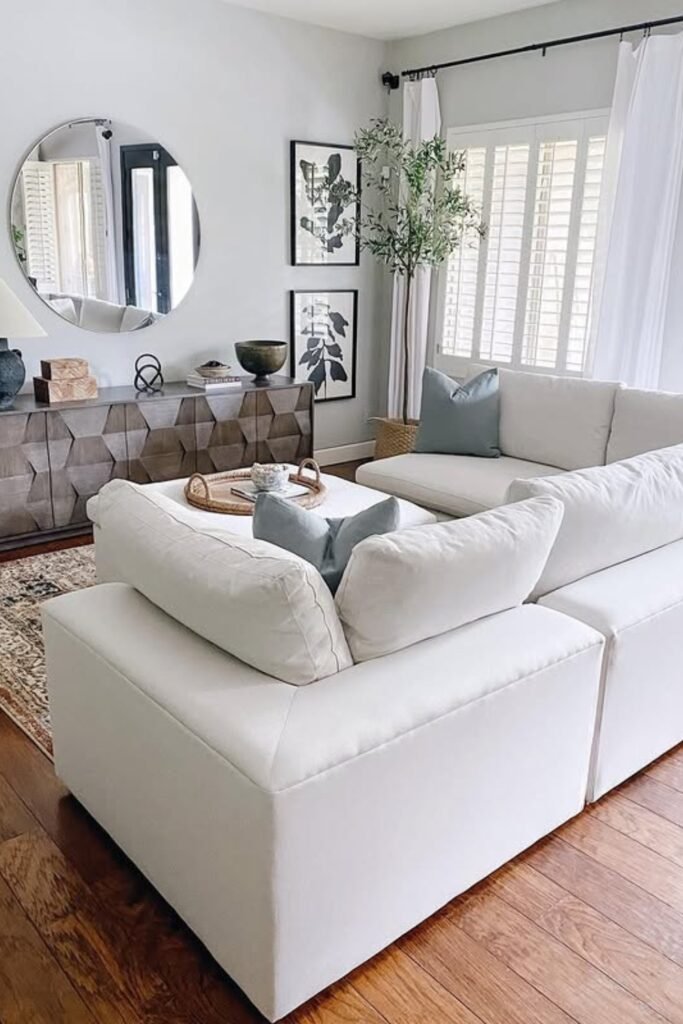
Face the Fireplace
You should let the fireplace lead your layout. You can turn your sectional to frame the hearth instead of fighting it.
You will notice that the chaise extending toward the open side keeps movement easy.
You can also use a compact round table so the center stays light and practical. This works best when you want your seating grounded around a natural focal point.
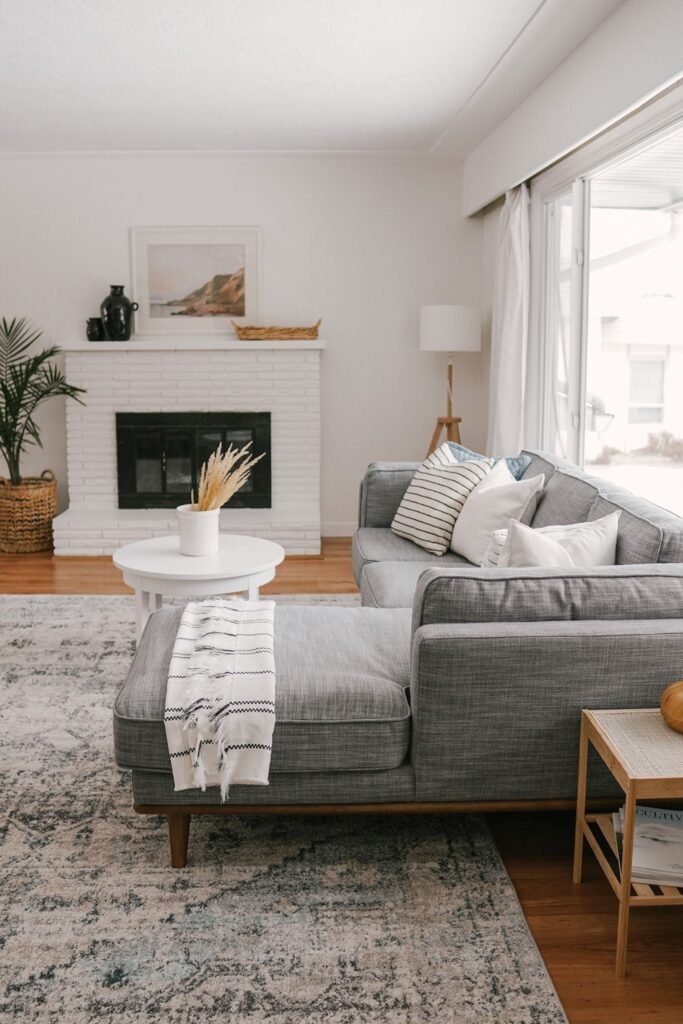
Embrace the Corner
When your sectional wraps two walls, you can use that corner fully instead of leaving it empty.
You should tuck it tight so you free up the center for movement and layering.
You will see how the chaise extends toward the open side, not into the main walkway.
You should keep a large rug to soften the floor and let your TV or fireplace anchor the opposite wall. This is ideal for compact, cozy living rooms.
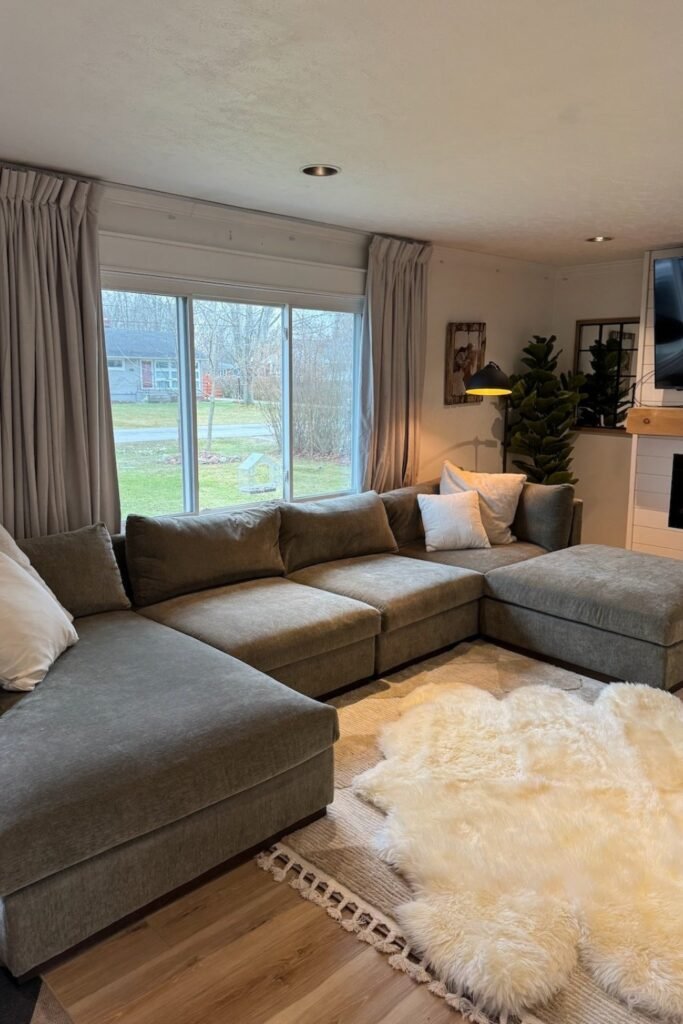
Center the Conversation
You have big windows? You should create a layout that feels intentional, not scattered.
You can pull the sectional inward and let it frame a square coffee table in the center.
You should keep equal spacing on both sides so the seating feels balanced and inviting.
You can also extend a large rug beyond the sectional edges to ground the space.
This works best when you want your seating to feel connected and ready for real conversation.
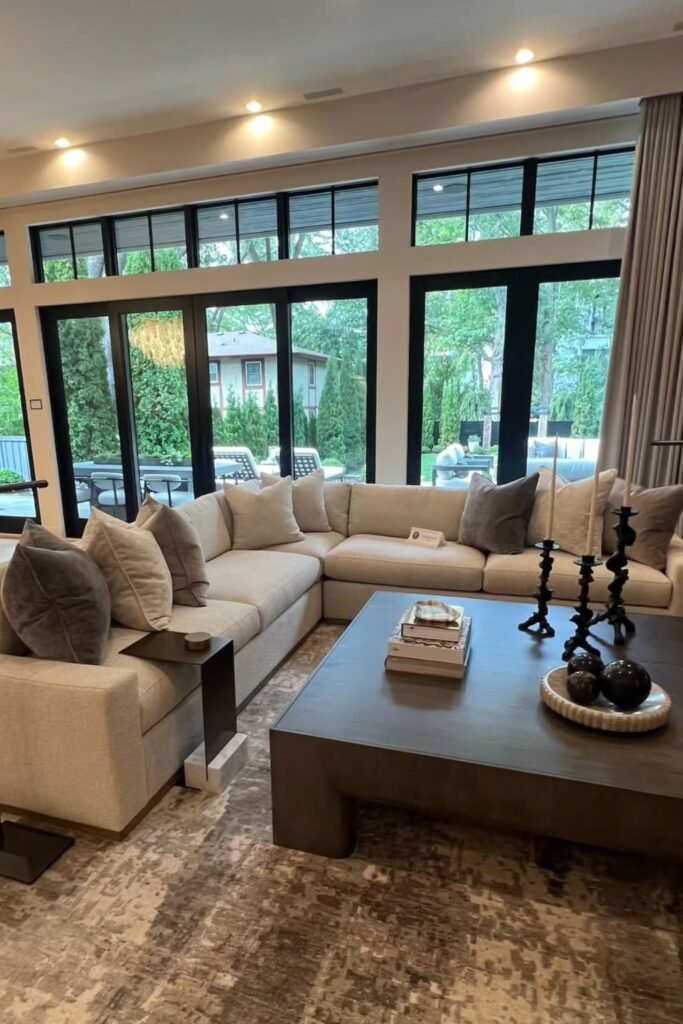
Curve Around Comfort
You don’t have to stick to straight lines if you want your living room to feel relaxed.
You can choose a curved sectional to instantly soften the space and naturally pull everyone toward the center.
You should keep the coffee table round and scaled to fit inside the curve so you can move around easily. You will want at least 18 inches around it for comfort.
This layout works beautifully when you want your smaller room to feel cozy, modern, and welcoming without harsh edges.
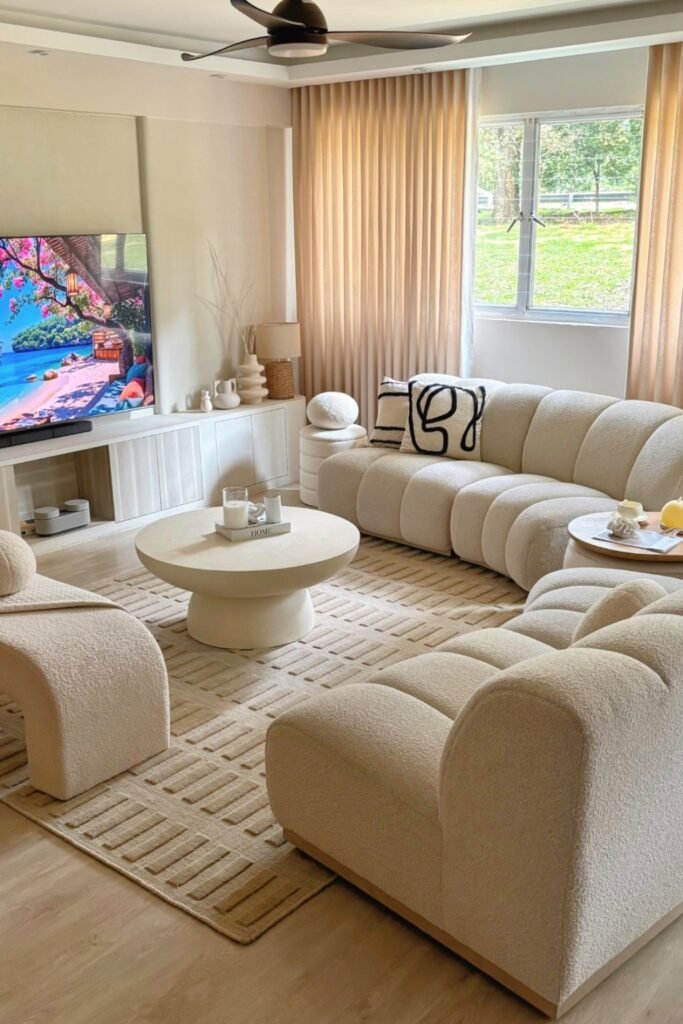
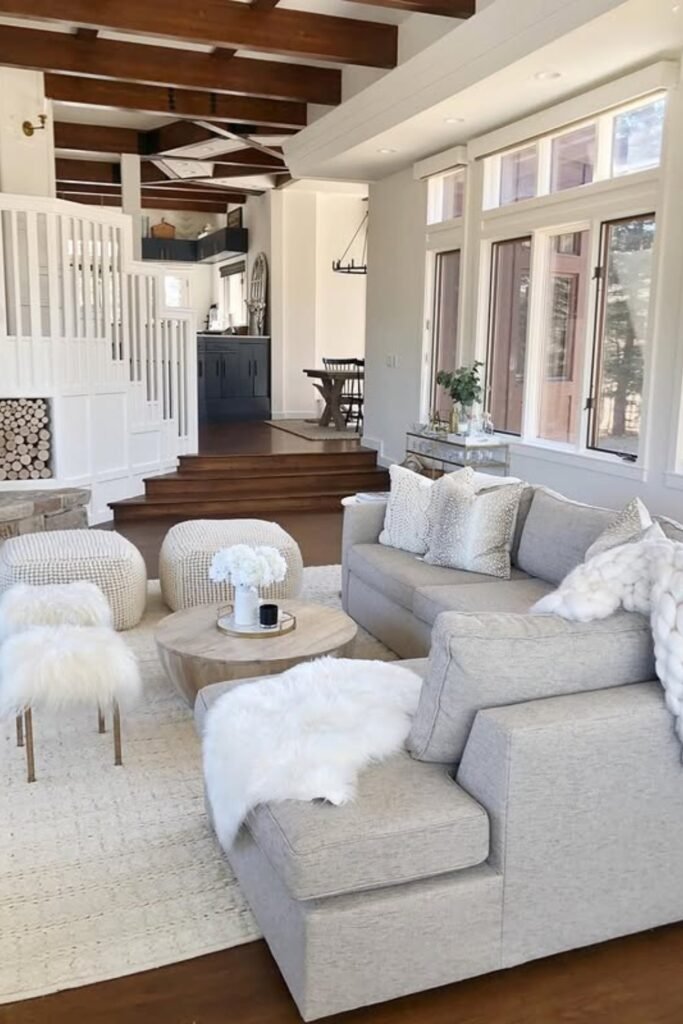
Step Down Seating
When your living room sits lower than the rest of the space, you should let your sectional define that level.
You can place it fully on a large rug so the sunken area feels intentional, not random.
You will notice that keeping the chaise toward the open side makes movement from the stairs effortless.
You can add low, round tables and soft stools to keep the layout flexible.
This setup works perfectly when you want the seating zone to feel grounded and cozy in split-level homes.
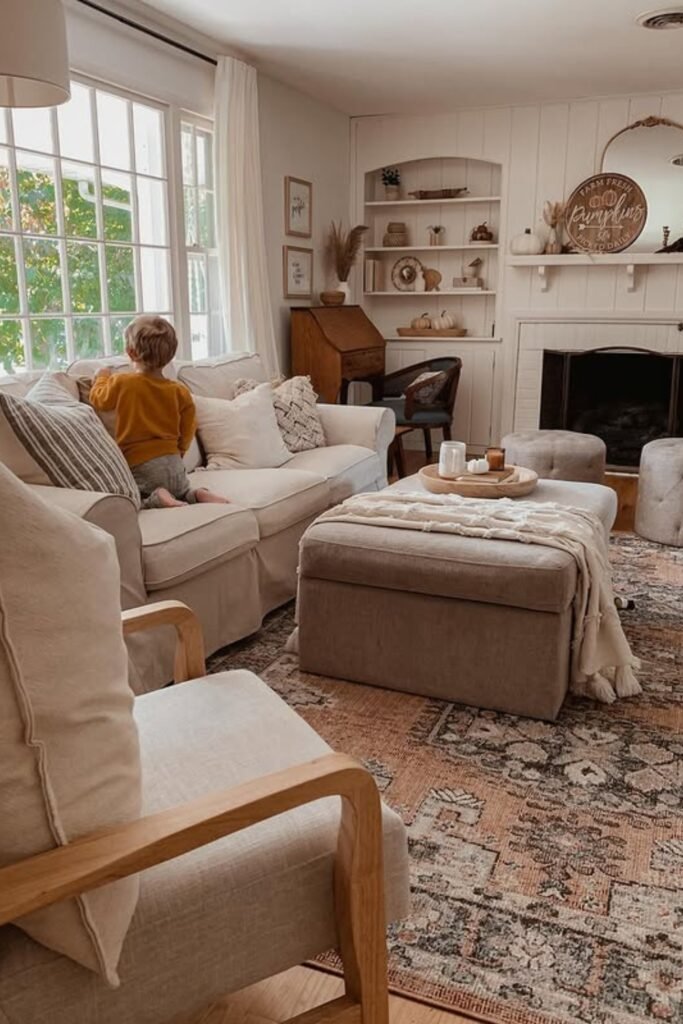
Cozy Around the Hearth
You can let comfort lead when your fireplace is the heart of the room.
You should keep your sectional close enough so you feel intimate, but leave clear walking space between the ottoman and seating.
You will see that a large upholstered ottoman works better than a hard table in family spaces, it doubles as seating and softens sharp lines.
You can add a chair across from your sectional to complete the circle. This setup works perfectly in smaller living rooms that need warmth and function.
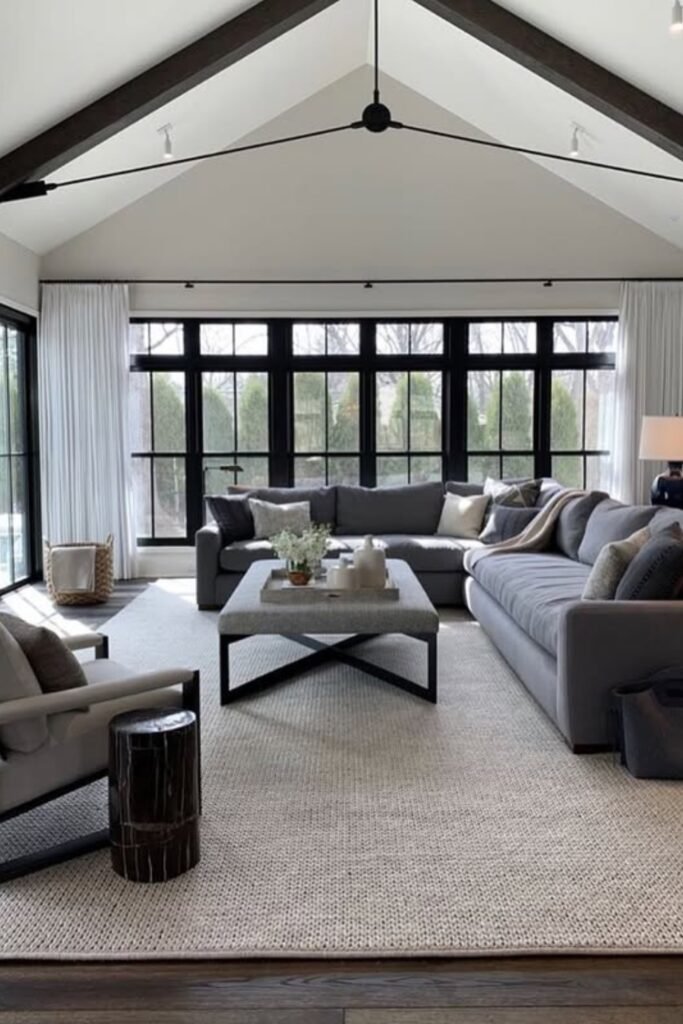
Mirror the Architecture
When your ceiling and windows make a statement, you should let your sectional follow their lines.
You can place it symmetrically along the back wall so you feel grounded and balanced.
You will want a large rug underneath to define your seating zone, and you can center a rectangular table to echo the shape of the room.
You can also add one accent chair to soften the layout. This works beautifully when you want wide living rooms with strong architectural features to feel cohesive.
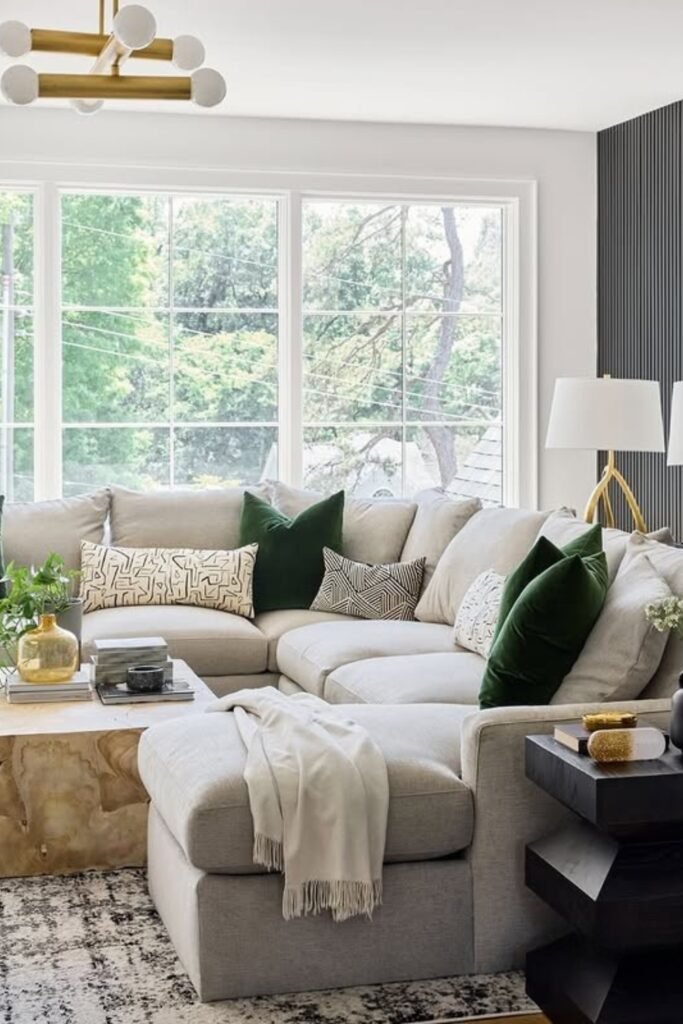
Let Light Lead
You should let natural light guide your layout instead of fighting it.
You can place your sectional directly under the windows so you feel bright and open instead of boxed in.
You will notice that keeping the chaise extending inward toward the center avoids blocking walkways.
You can anchor the middle with a solid coffee table and add darker side tables to create contrast without crowding.
This works best when you want your bright living room to feel open and welcoming.
Build Around Balance
You can make a large living room feel calm by creating symmetry.
You should center your sectional directly across from the fireplace so the layout feels anchored.
You can keep both sides visually even with matching windows or spacing, and you will see that letting the chaise extend into open floor space, not the walkway, keeps movement easy.
You can add a soft rug under the whole seating area to tie everything together.
This works best when you want a formal living room with strong architectural lines to feel balanced.
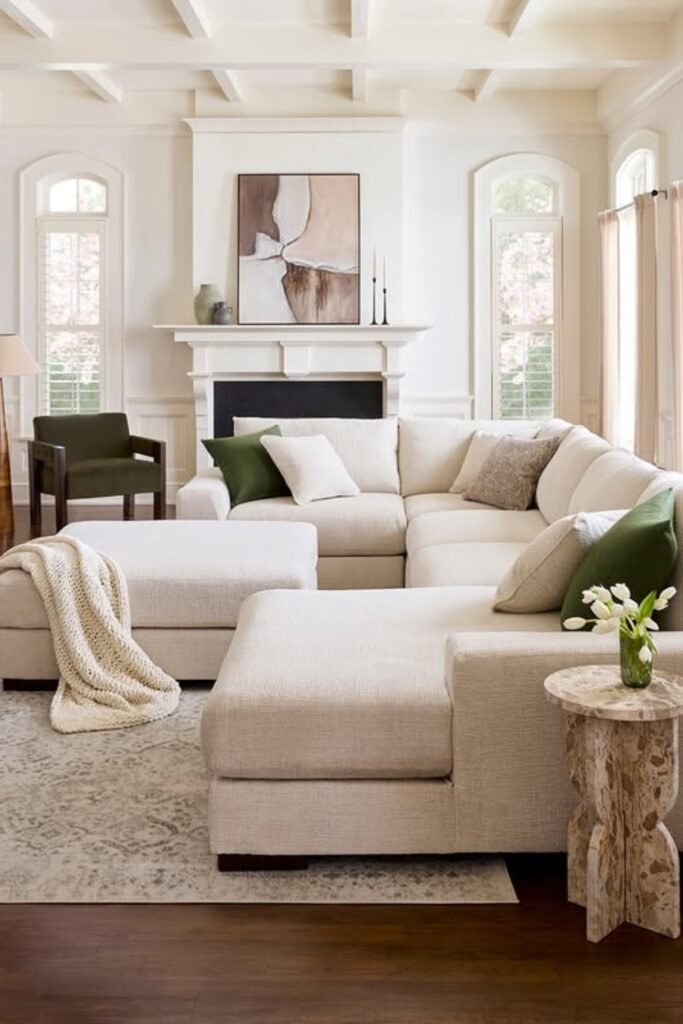
Frame the Height
When your ceilings are tall, you should ground your furniture so it doesn’t feel small.
You can place the sectional directly under the large window so you feel connected to the architecture instead of floating.
You can add one accent chair to close the seating circle and keep conversations intimate. You should place a rug fully under the front legs to anchor everything.
This works best in living rooms with dramatic height and oversized windows.
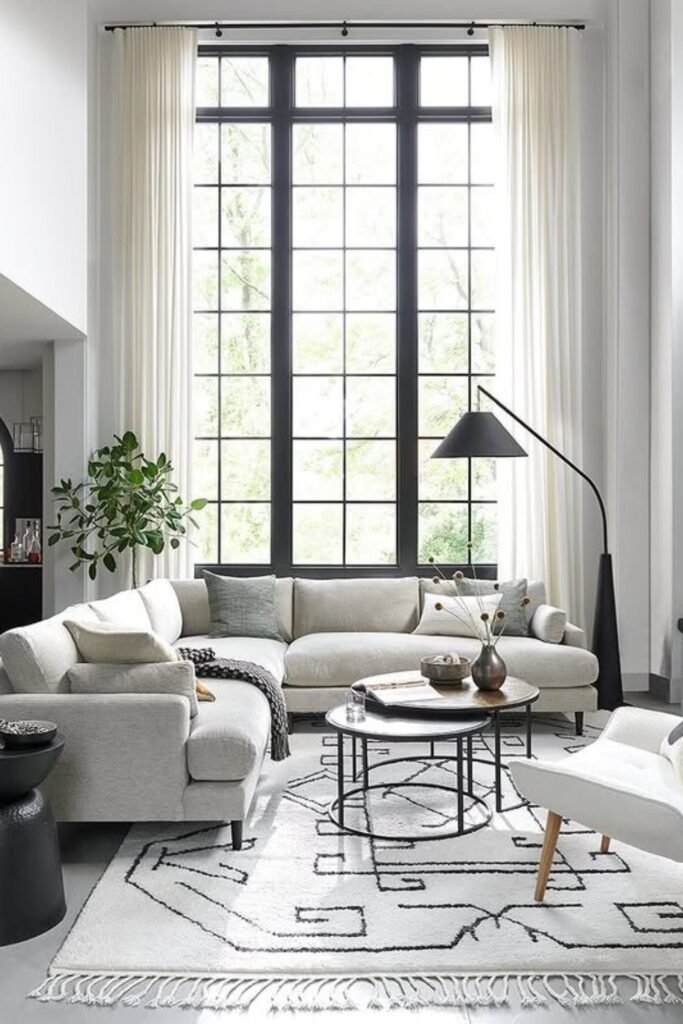
Divide the Open Plan
You can create structure in an open layout with your sectional. You should turn the back of the sofa toward the dining area so you clearly separate spaces without adding walls.
You can keep a rug fully under the seating area to define your living zone, and you will want a round coffee table to soften the edges.
You should leave at least 30 inches behind your sectional so you can move easily between rooms. This works perfectly in modern open-concept homes.
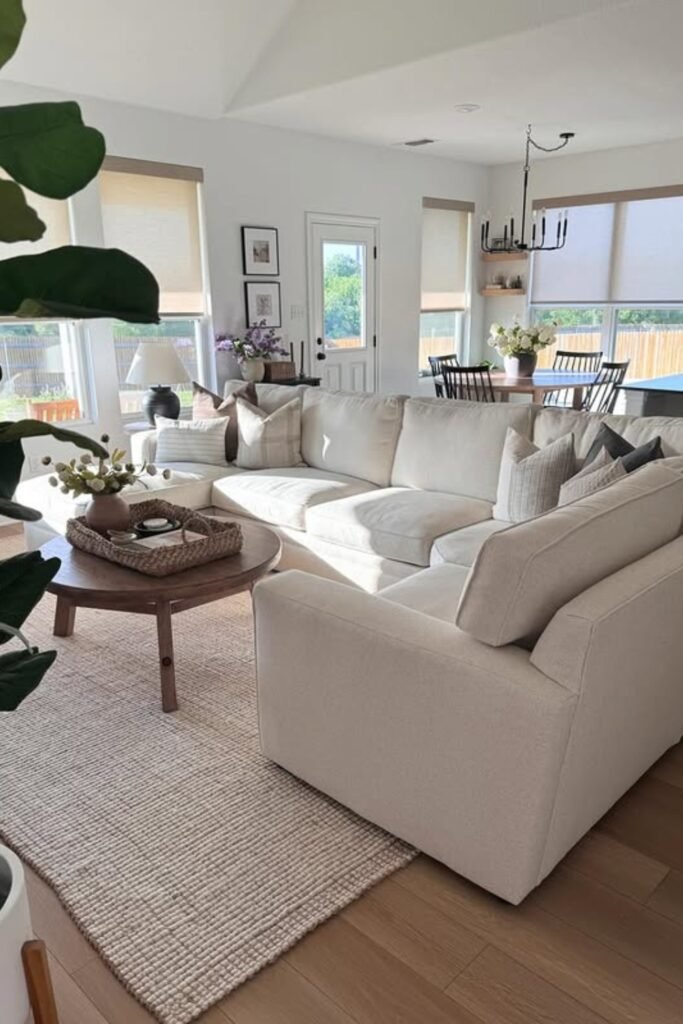
Hug the Wall
When your living room is compact, you can keep the sectional tight to one wall and let the rest of the space breathe.
You will see that this keeps the center open and makes the room feel wider. You should use a light rug that extends past the front legs to anchor your seating without adding visual weight.
You can add a small round table so you can move around comfortably. This works ideally in apartments or narrow living rooms where you want simplicity and openness.
FAQs
Should a sectional go against the wall?
You shouldn’t always push your sectional against the wall.
In a small living room, you can place it there to free up floor space and make it easier for you to move around.
But if your space is larger or open-concept, you might want to pull it away from the wall so you can define your seating area and make the room feel more intentional.
You should decide based on your walkway and how you use the space, not just the size of the room.
How much space should you leave around a sectional?
You should leave at least 30 inches for your main walkways so you can move comfortably.
You will want to keep about 16-18 inches between your sectional and the coffee table so you can reach it easily.
If you notice that the space feels tight or hard for you to walk through, you can adjust your layout before you add any more furniture.
You may interested to read!