A tropical living room can go wrong surprisingly fast.
Add one too many leaf prints, palms, or rattan pieces, and the relaxed resort look you wanted can start feeling busy and overly themed.
The trick is knowing where to stop. You don’t need to turn your living room into a jungle to make it feel tropical.
A few well-chosen plants, warm wood, woven textures, natural fabrics, and the right colors can do most of the work.
In this article, I’ll show you how to build that balance first, then we’ll get into tropical living room ideas.
Let’s jump in!
How to Make a Living Room Look Tropical?
Start with natural materials before adding anything obviously tropical.
A jute rug, warm wood table, rattan chair, or linen curtains will give the room an easy, relaxed base.
Then bring in greenery, but don’t fill every empty corner with plants. One tall palm or monstera can make more impact than several small pots.

Keep your main furniture fairly simple and use greens, earthy browns, warm whites, or sandy beige to connect everything.
If you want botanical wallpaper or a bold leaf print, let that become the main feature and keep nearby patterns quiet.
Most importantly, leave some open space. Tropical rooms feel best when they look breezy and comfortable, not packed with decor.
Warm Colonial Tropics
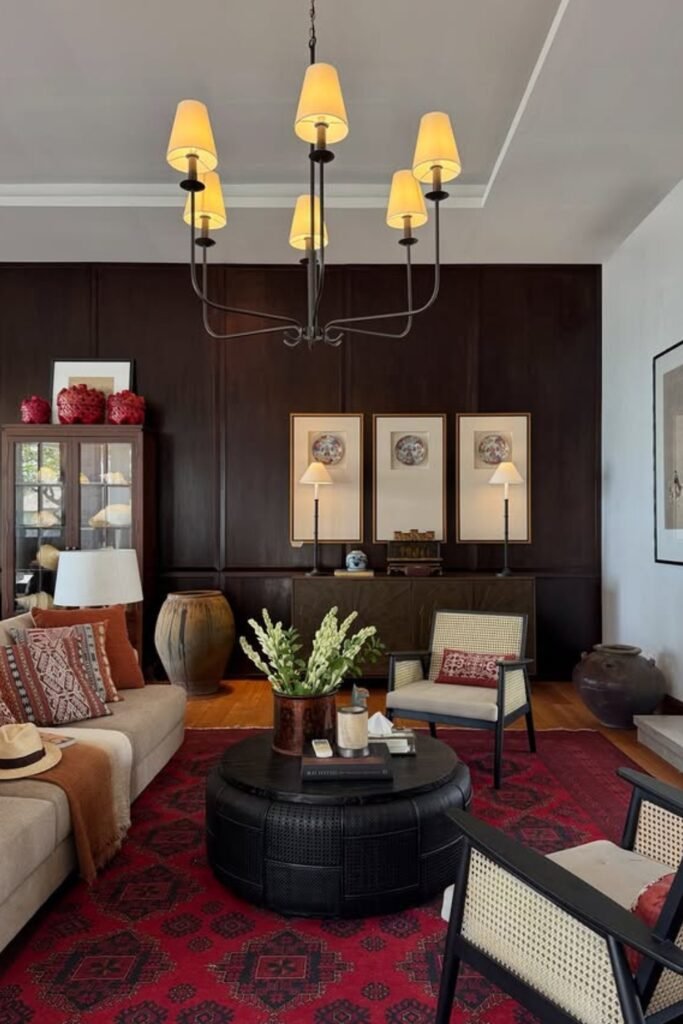
Dark wood can give a tropical living room more depth without relying heavily on green.
Pair rich wall paneling with cane chairs, warm neutral seating, and a patterned red rug to create a collected, old-world tropical feel.
Keep the larger sofa light so the dark backdrop doesn’t make the room feel heavy.
A few leafy stems or palms are enough here, the woven textures, natural wood, and earthy pottery already carry much of the tropical character.
Open Air Tropics
Blur the line between indoors and outdoors when you want tropical style to feel clean rather than decorative.
A large neutral sectional keeps the seating calm, while palms and broad-leaf plants create a lush natural border around the space.
For a similar look, stick with white, cream, and pale stone, then let greenery provide most of the color.
An open pergola or large windows also helps bring in the light and airflow that make this approach feel genuinely tropical.

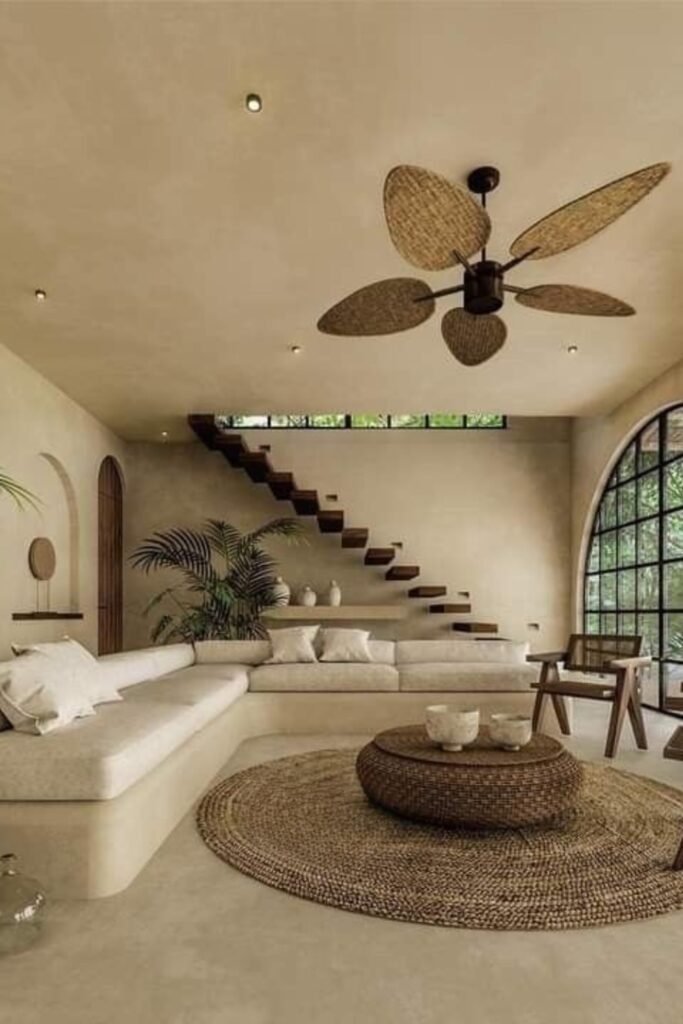
Earthy Resort Layers
Let texture create the tropical mood when you want a softer, more grown-up look.
Start with creamy seating and warm plaster-toned walls, then layer woven pieces through the rug, coffee table, and even the ceiling fan.
Tall palms placed around the edges bring greenery without taking over the seating area.
Dark wood chairs add enough contrast to keep all those sandy neutrals from blending together.
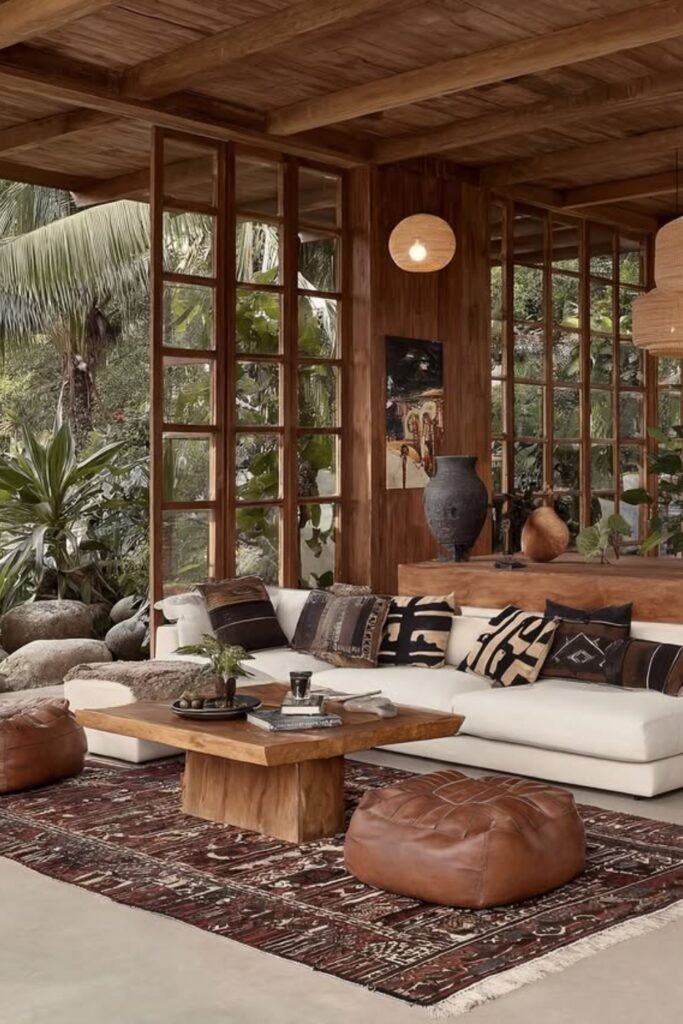
Timber Jungle Retreat
Warm wood can carry most of the tropical look when your living room already opens toward plenty of greenery.
Use timber across the ceiling, walls, or furniture, then break up all that brown with a light sofa so the room stays fresh.
Leather poufs and a patterned rug add warmth without introducing another strong color.
If your windows overlook trees or a garden, keep them visually open, the outdoor foliage can become part of the room instead of adding extra plants everywhere.
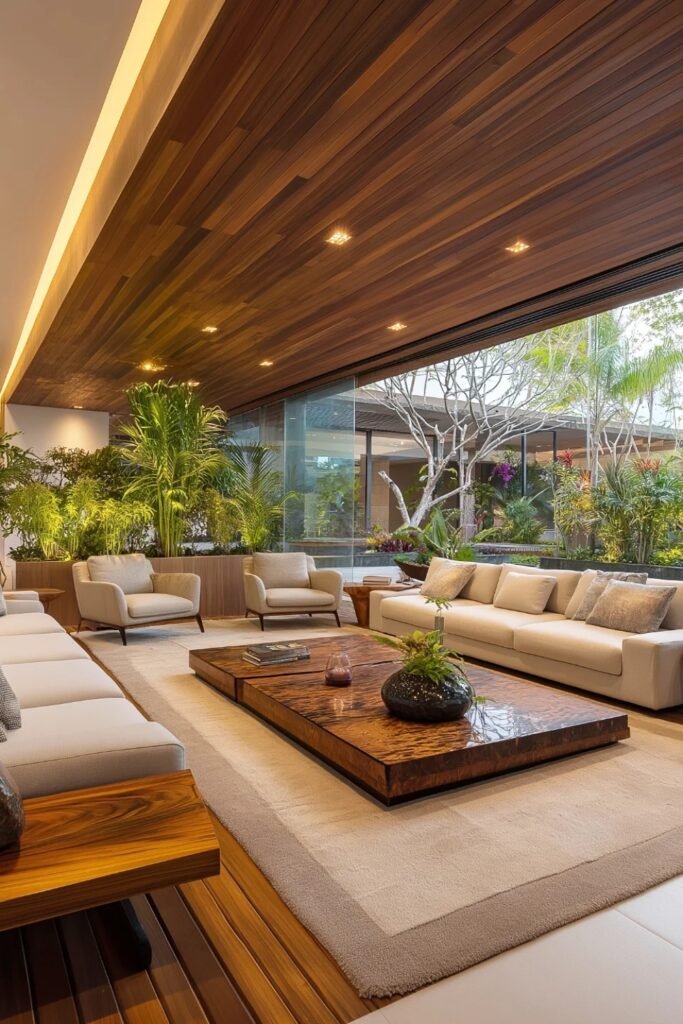
Garden Framed Living
When your living room faces a lush garden, let the view supply the tropical color instead of repeating green throughout the furniture.
Floor-to-ceiling glass keeps that connection strong, while cream sofas and a pale rug give the eye somewhere quiet to rest.
Bring warm timber onto the ceiling and coffee table to bridge the indoor space with the greenery outside.
A few indoor palms near the glass will soften the boundary and make the transition feel even more natural.
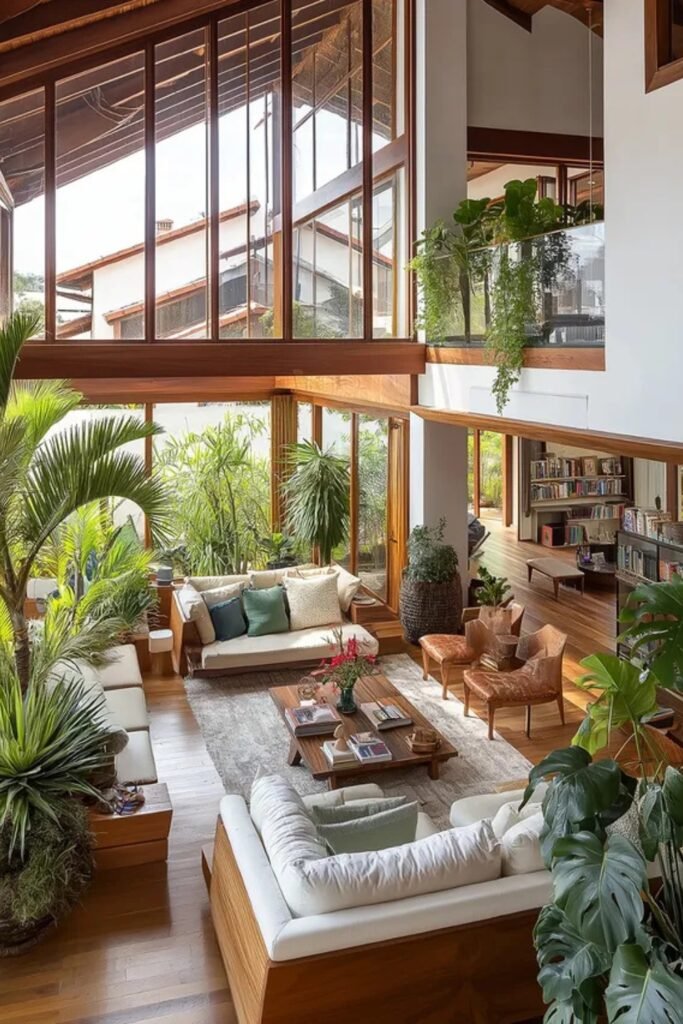
Double Height Tropics
A tall living room gives tropical plants room to become part of the architecture rather than small decorative accents.
Use large palms and broad-leaf plants around the outer edges, where they can fill empty vertical space without crowding the seating.
White sofas keep the plant-heavy room bright, while warm wood floors, window frames, and furniture add the natural warmth tropical spaces need.
For double-height rooms especially, vary plant heights so the greenery draws your eye upward instead of sitting only at floor level.
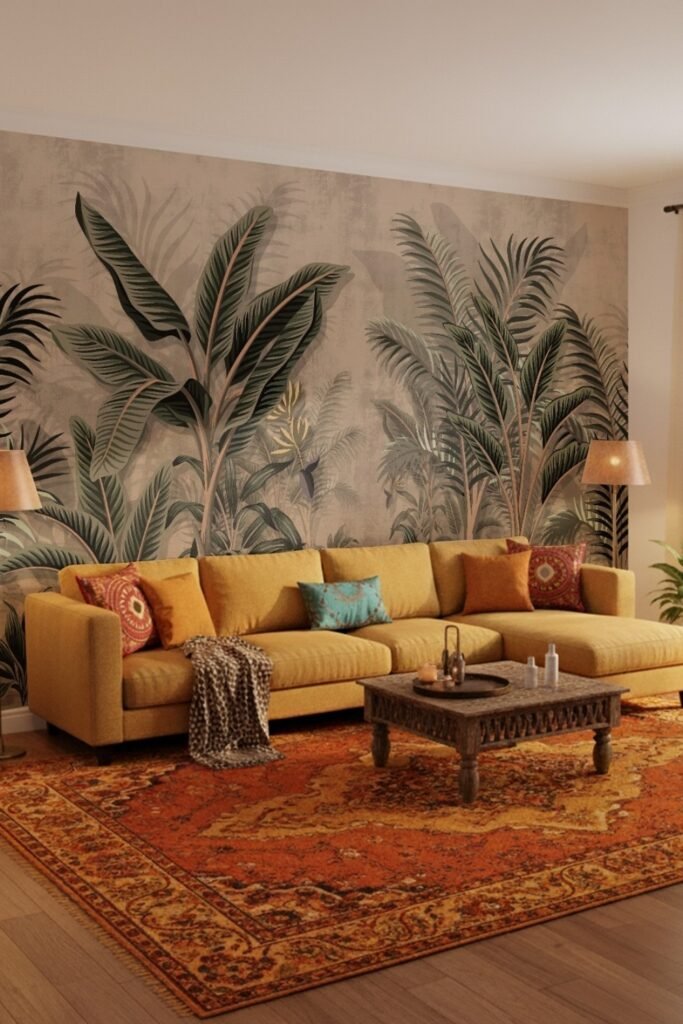
Sunset Jungle Palette
Tropical rooms don’t have to stay green and beige.
A mustard sofa with burnt-orange accents brings in the warm side of the tropics, while a large botanical mural keeps the theme clear.
If you use a bold wall like this, pull two or three muted colors from it for the furniture and accessories rather than adding more competing shades.
A vintage-style rug and carved wood table work especially well here because their earthy tones make the dramatic foliage feel warmer and more lived-in.
Soft Tropical Mix
Tropical style can feel light and playful without covering the room in green.
Start with a warm neutral base, then bring in bamboo furniture, a natural-fiber rug, and woven details to establish the tropical character.
Soft pink cushions keep the palette fresh, while patterned chairs add personality without competing with the natural textures.
If you have garden views, leave windows uncovered or use sheer curtains so the greenery outside becomes part of the scheme.

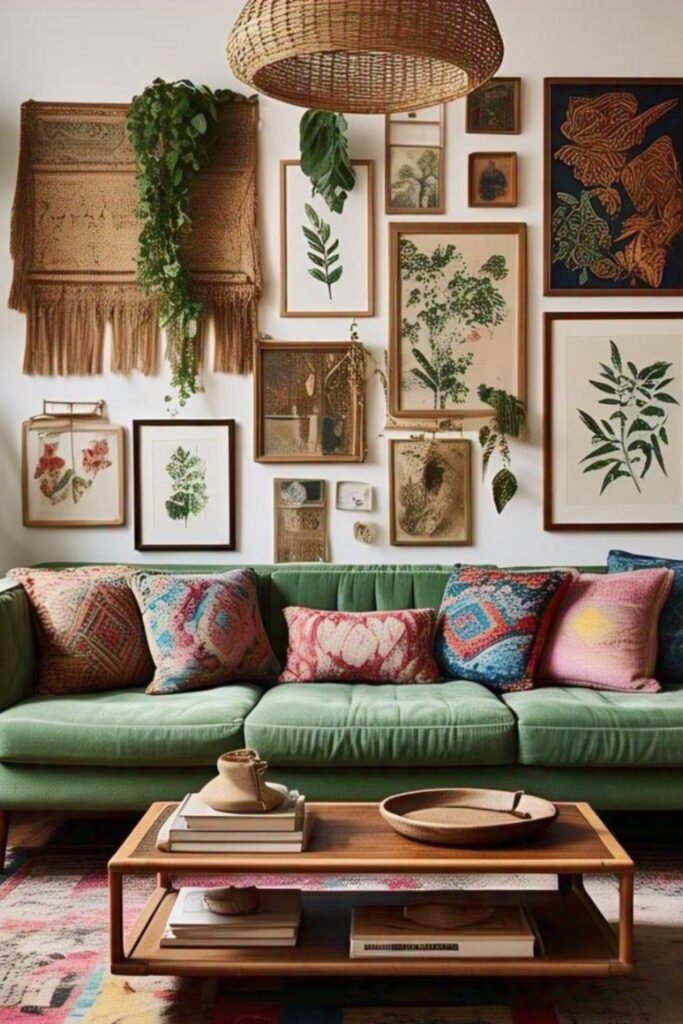
Collected Botanical Gallery
Turn the wall behind your sofa into the tropical feature when floor space is limited.
Mix botanical prints in different sizes rather than matching every frame, then repeat those leafy greens through the sofa and a few real plants.
Woven wall pieces and a large rattan pendant add texture between the artwork, which keeps the gallery from feeling too formal.
Because the wall already has plenty happening, use simple wood furniture below it and let colorful cushions provide smaller bursts of pattern.
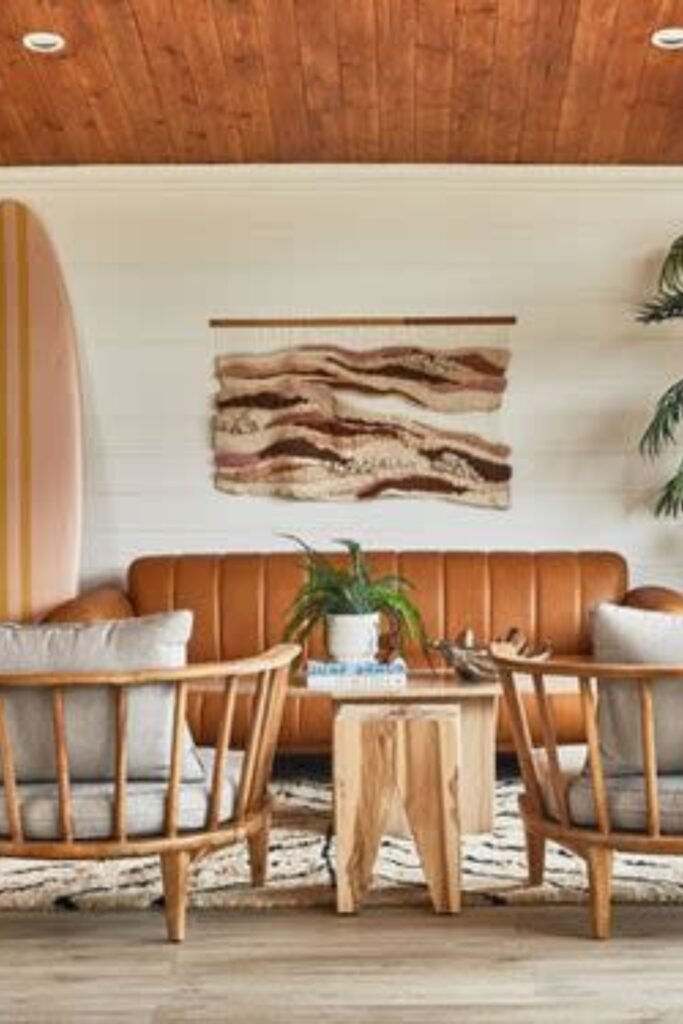
Surfside Tropical Ease
Give tropical style a casual coastal edge by mixing warm leather with light wood and relaxed woven seating.
A surfboard or similar beach-inspired piece can work as one strong accent, but keep the rest subtle so the room doesn’t become overly themed.
Tall palms in opposite corners frame the seating naturally, while a wood ceiling adds warmth overhead.
Stick with cream, tan, caramel, and muted green to keep the whole living room feeling sunny and laid-back.
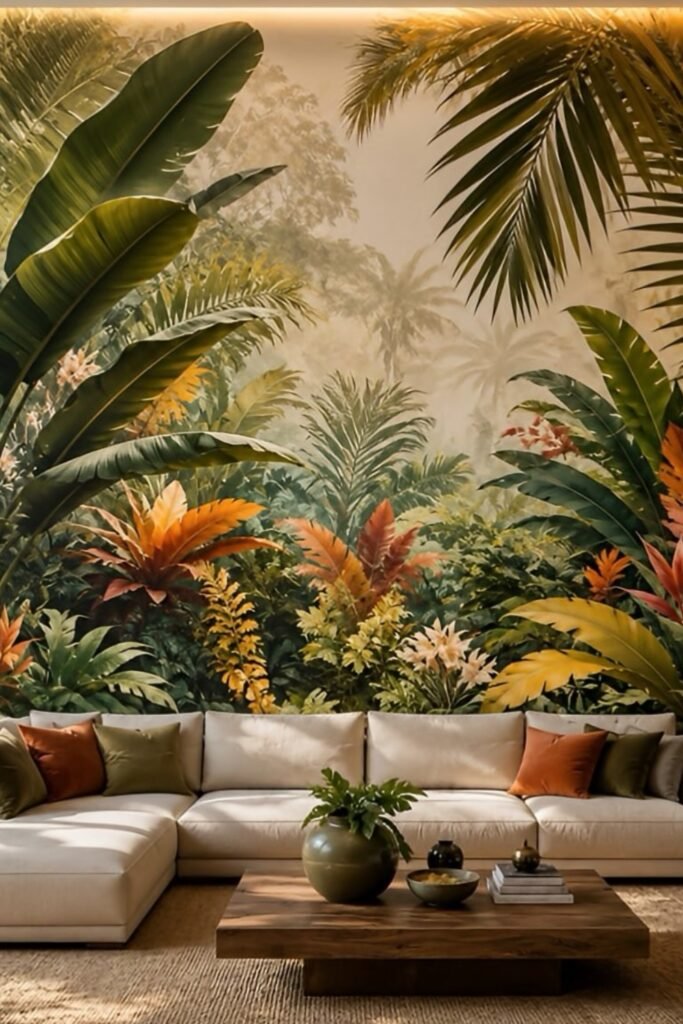
Immersive Jungle Wall
Let one oversized mural do the heavy lifting if you want a bold tropical living room without filling it with decor.
Choose a botanical scene with layered greens and a few warm orange or rust tones, then repeat those colors lightly through the cushions.
A cream sectional is especially useful here because it gives the eye a break from the busy backdrop.
Keep the coffee table, rug, and accessories earthy and simple so the mural remains the clear focal point.
Breezy Rattan Retreat
Rattan seating works best when you give it a calm backdrop instead of surrounding it with more tropical patterns.
Pair it with crisp white cushions, a chunky jute rug, and a simple wood table for an easy resort feel.
If possible, position the seating near large windows or garden doors so outdoor greenery becomes part of the room.
Stone-textured walls and woven pendants can add another natural layer without introducing extra color or clutter.
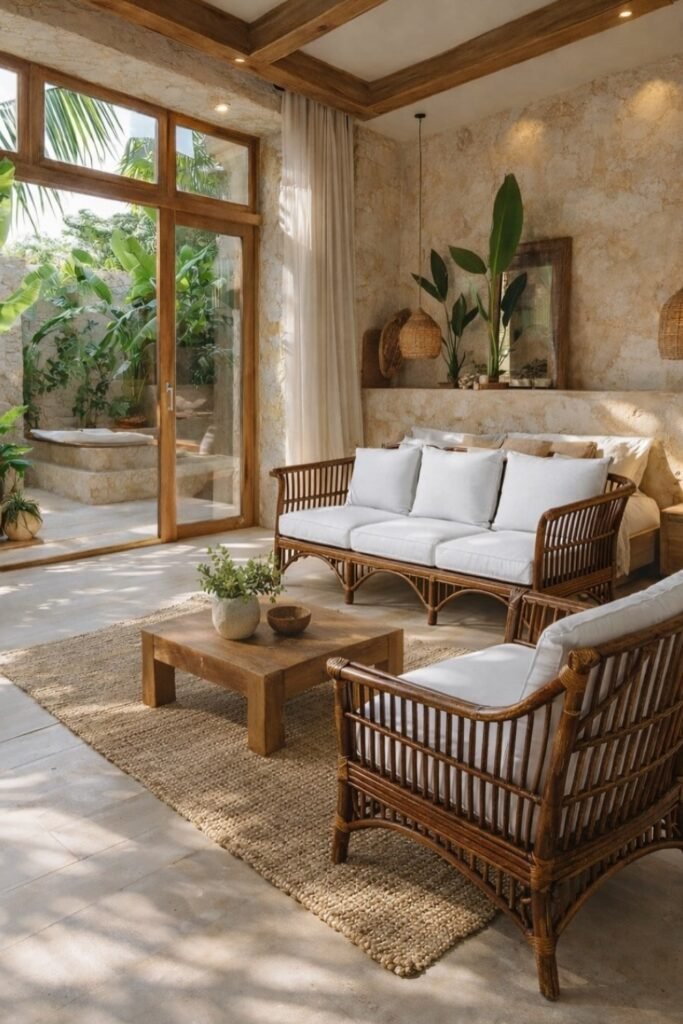
Minimal Jungle Living
Skip tropical prints entirely when the architecture already opens your living room to dense greenery.
Keep the sofa, rug, walls, and flooring in soft neutral tones so the plants become the strongest visual feature.
Large palms and broad leaves work best around the perimeter, where they create a lush frame without interfering with the seating.
Floor-to-ceiling glass or wide openings strengthen the effect, giving you a modern tropical room that feels calm rather than heavily decorated.

Layered Jungle Corner
Go darker when you want tropical style to feel cozy rather than breezy.
A charcoal or deep green wall creates a strong background for hanging vines, broad-leaf plants, carved wood, and woven decor.
Spread greenery across different heights instead of lining pots along the floor; that gives the room a fuller jungle effect without sacrificing walking space.
Keep larger furniture dark and simple, then use mustard, olive, and earthy patterned cushions to add warmth and stop the greenery from becoming the only focus.

Golden Tropical Lounge
Warm color can carry a tropical room just as well as green.
Try a deep mustard sofa against soft plaster walls, then let the outdoor palms or a few large plants provide the natural contrast.
Low, oversized seating makes the space feel relaxed, while dark gray cushions ground the brighter upholstery.
Keep decorative details subtle if the room already has a strong wall feature, and use warm lighting to deepen the sunset-like palette in the evening.
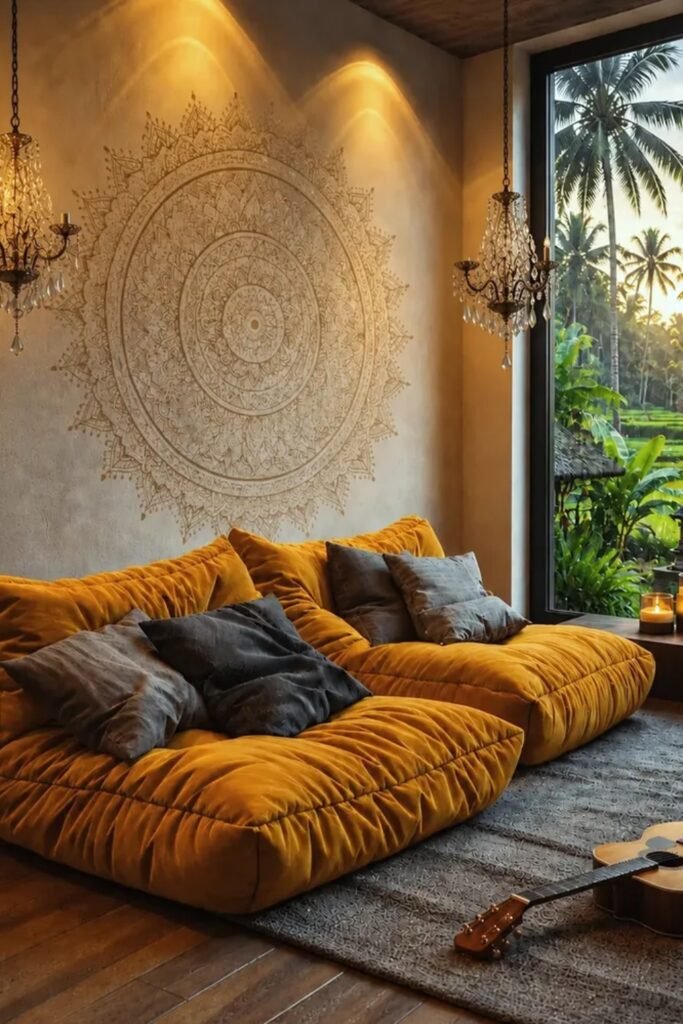
Moody Tropical Luxe
Deep tropical colors work beautifully when you want the room to feel sophisticated rather than beachy.
Use a dark botanical mural as the backdrop, then echo its olive tones through velvet chairs and cushions.
A cream sofa breaks up the darker palette, while a woven coffee table and natural rug bring back the relaxed tropical texture.
Add a few tall plants in front of the mural to blur the line between real and printed foliage, creating depth without covering every surface in greenery.
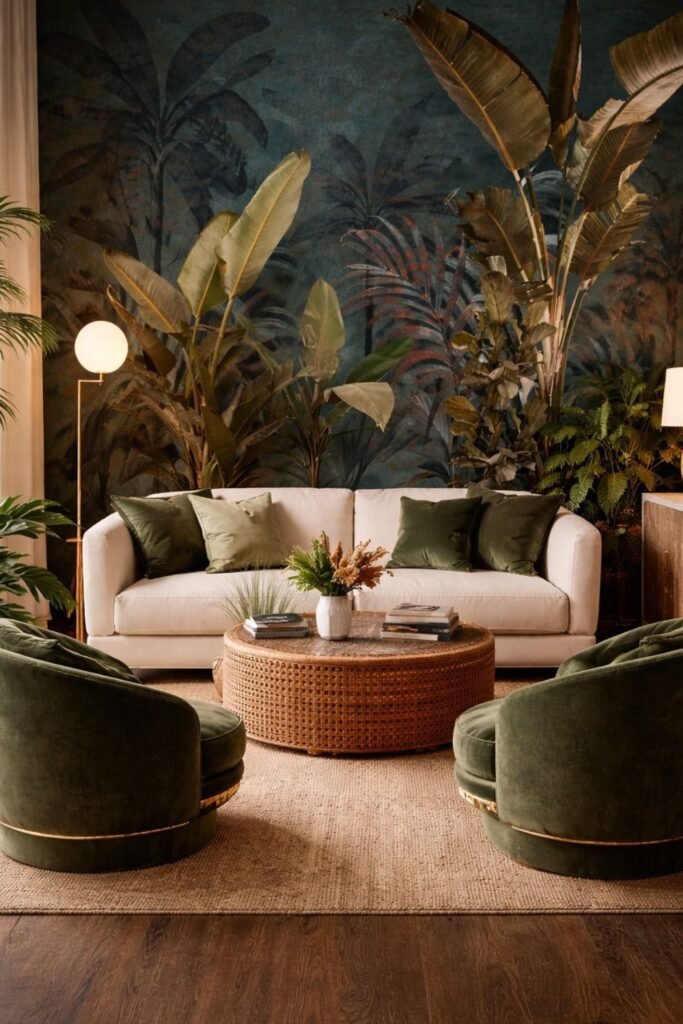
Heritage Tropical Living
Bring cultural character into a tropical room by pairing cane furniture and warm wood with handcrafted details rather than relying only on leaf prints.
A patterned tile floor can carry much of the color, so keep the main sectional cream and repeat green through cushions and one tall statement plant.
Arched openings, woven ceiling panels, and brass accents add another layer of warmth.
This approach works especially well when you want tropical style to feel collected, elegant, and connected to traditional design.
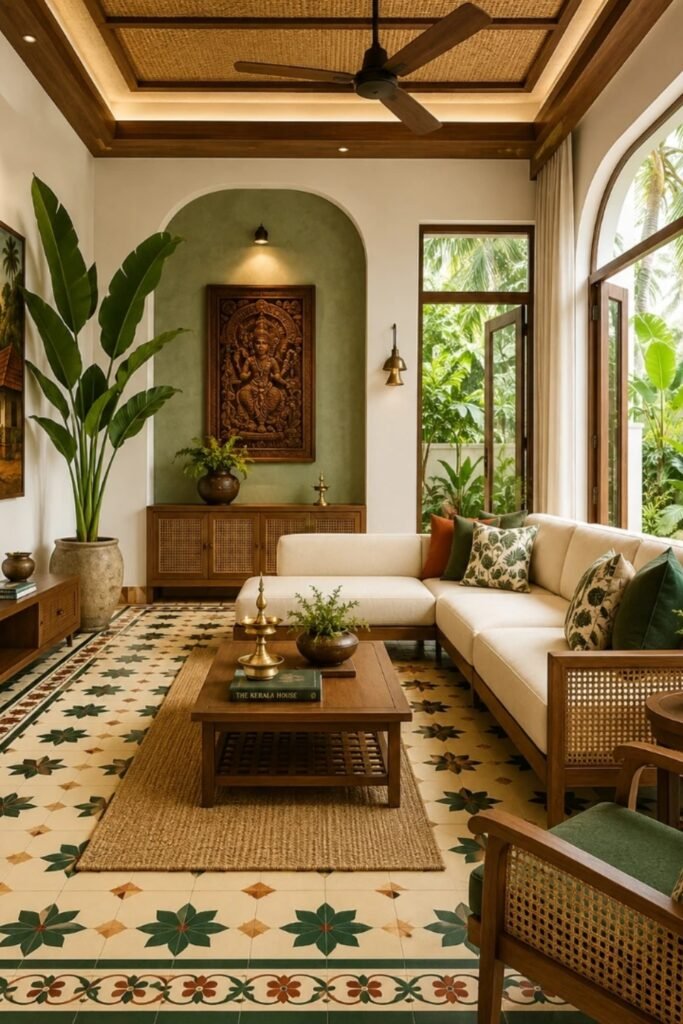
Urban Tropical Warmth
You can bring tropical style into a modern living room without making it feel like a resort.
Start with oversized botanical artwork, then build around its earthy greens and browns using caramel leather chairs, warm wood, and a natural woven rug.
Keep the main sofa cream so those deeper colors don’t make the room too heavy.
One tall palm and a woven pendant are enough to reinforce the tropical mood while black metal details keep everything feeling clean and contemporary.
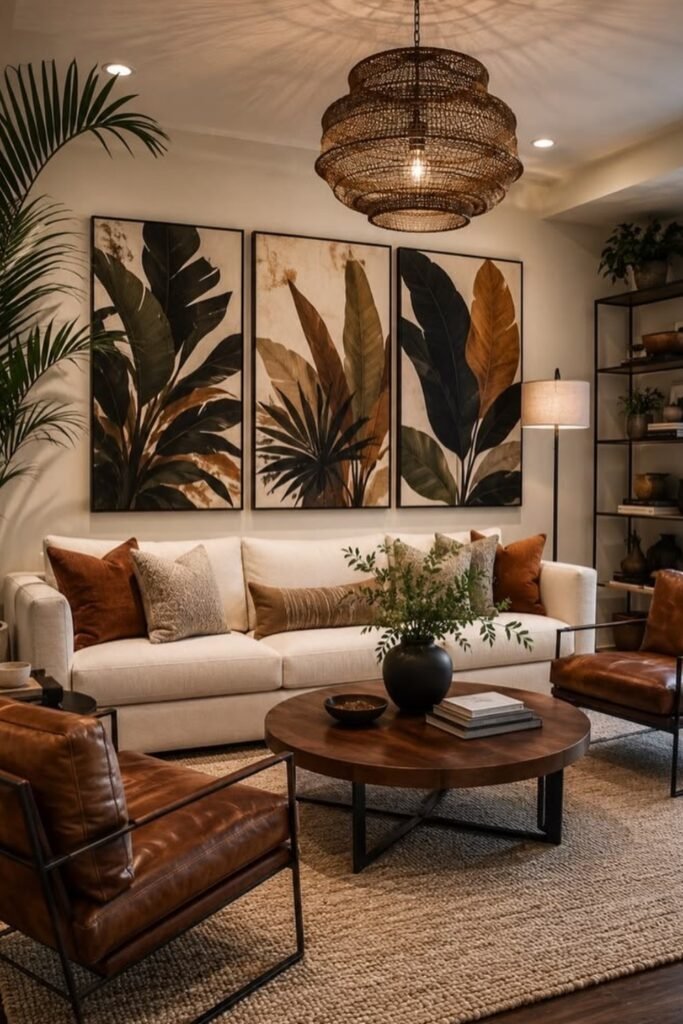
Island Rattan Living
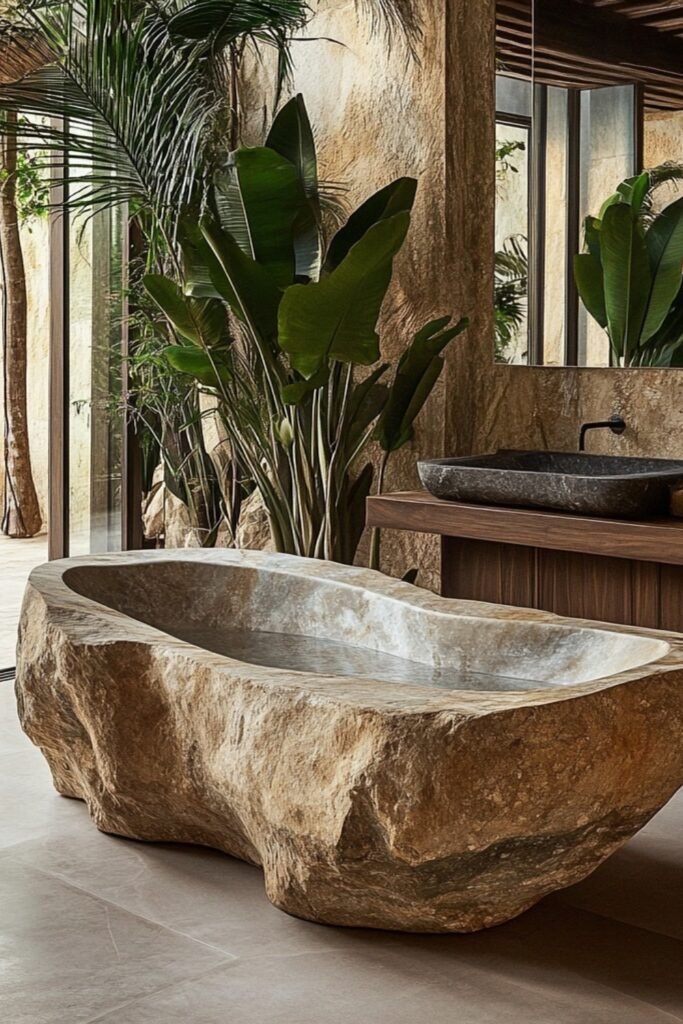
Rattan can become the main furniture story when you keep everything around it light and simple.
Use white cushions and pale walls to balance the amount of woven wood, then repeat tropical foliage through a few pillows and one large piece of botanical art.
A substantial palm in the corner adds real greenery without cluttering the room with small plants.
This combination works especially well in bright spaces where exposed beams, open doors, and natural airflow already create an easy island feel.
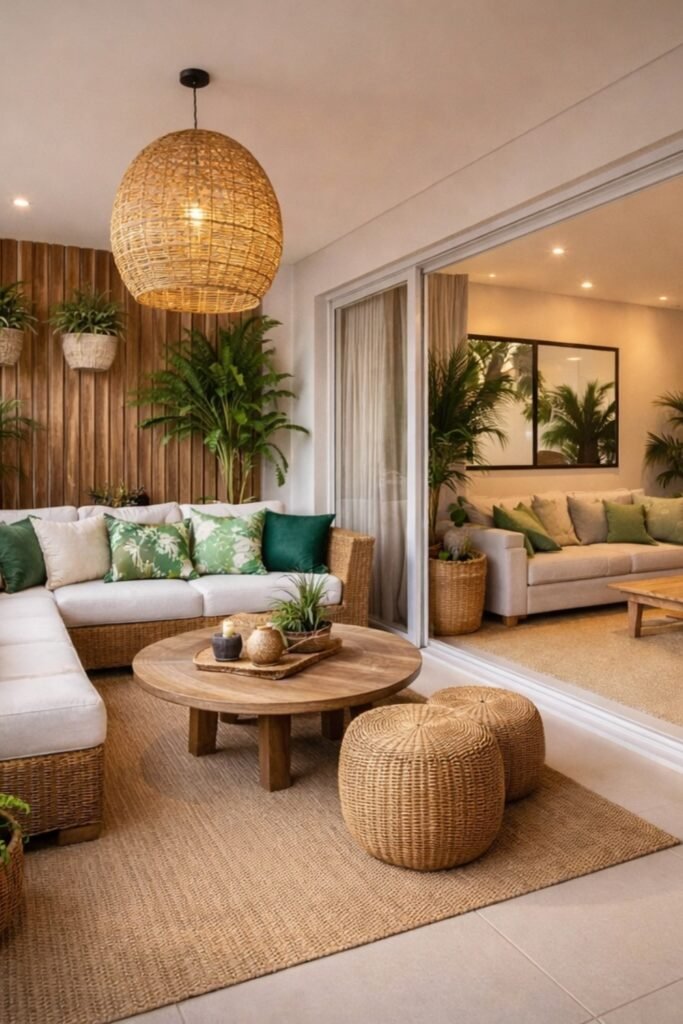
Seamless Tropical Flow
Extend the tropical mood across adjoining indoor and outdoor living areas instead of decorating each space separately.
Repeat palms, woven baskets, warm wood, and green cushions on both sides so the transition feels intentional.
Keep the main upholstery white or cream to prevent all those natural textures from becoming visually heavy.
Sliding glass doors work especially well here because opening them creates one larger social space.
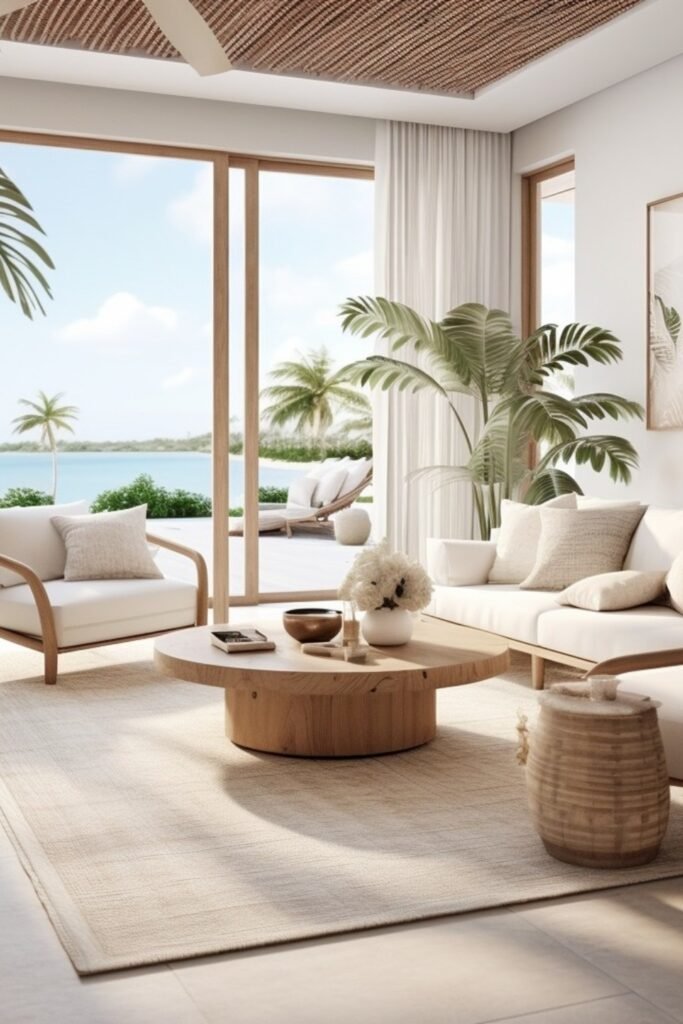
Coastal Tropical Calm
Keep the palette almost entirely white and sandy when you want tropical style to feel airy and understated.
Choose light wood furniture with woven details, then add one large palm instead of scattering small plants around the room.
Sheer curtains and wide windows help natural light become part of the design, while subtle botanical artwork reinforces the theme without adding strong color.
This approach works especially well when you have a garden, ocean, or palm-filled view that can provide the tropical backdrop naturally.
FAQs
Can a Tropical Living Room Work Without Lots of Plants?
Yes. Use rattan, cane, warm wood, jute, botanical artwork, and earthy greens to create the tropical mood.
One statement plant can be enough when the natural textures and colors already support the look.
How Do You Keep Tropical Decor From Looking Too Busy?
Choose one main tropical feature, such as a botanical wall, large plants, or rattan furniture, and let everything else support it.
Keep large furniture and rugs fairly simple so patterns, greenery, and woven textures have room to stand out.