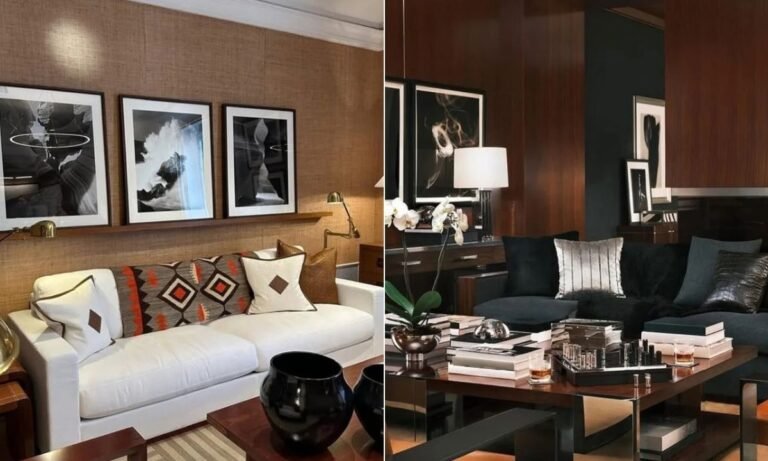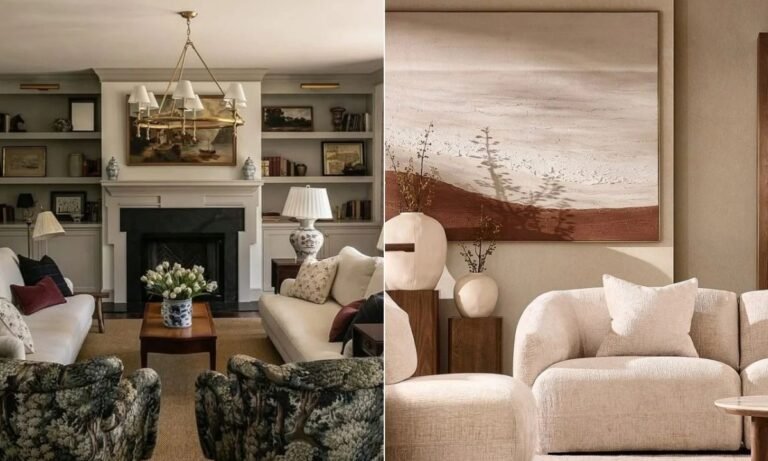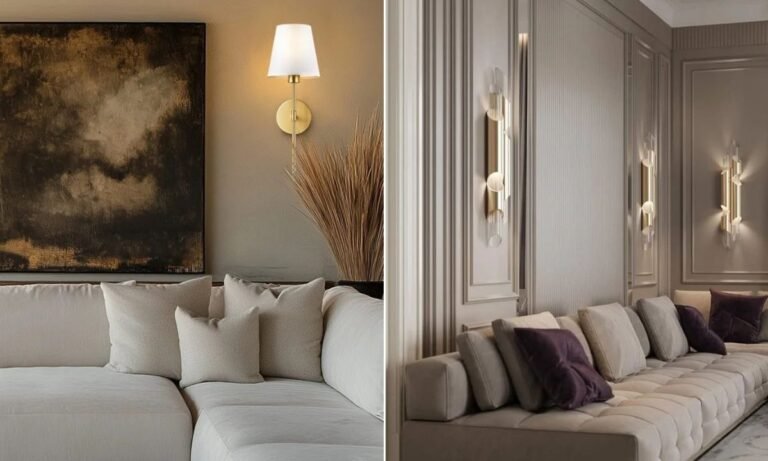
Tuscan living rooms can feel warm and inviting, but too much brown, heavy furniture, and dark decor can quickly make the space look dated.
The trick is keeping the stone, wood, earthy colors, and old-world charm while letting the room feel lighter, calmer, and easier to live in.
A few smart choices with walls, furniture, lighting, and texture can give you that Tuscan feel without turning your living room into a themed space.
In this article, you’ll find practical Tuscan living room ideas that help you create a warm, relaxed space that still feels fresh and current.
Let’s jump in!
What Is the Tuscan Decorating Style?
Tuscan decorating style comes from the warm, rustic homes of Tuscany, where stone, wood, plaster, and terracotta do most of the work.
You will usually see earthy colors like cream, olive, rust, brown, and soft terracotta instead of bright or overly polished shades.
Natural materials matter more than themed decor, so a rough wood table or stone fireplace often adds more character than several decorative accessories.
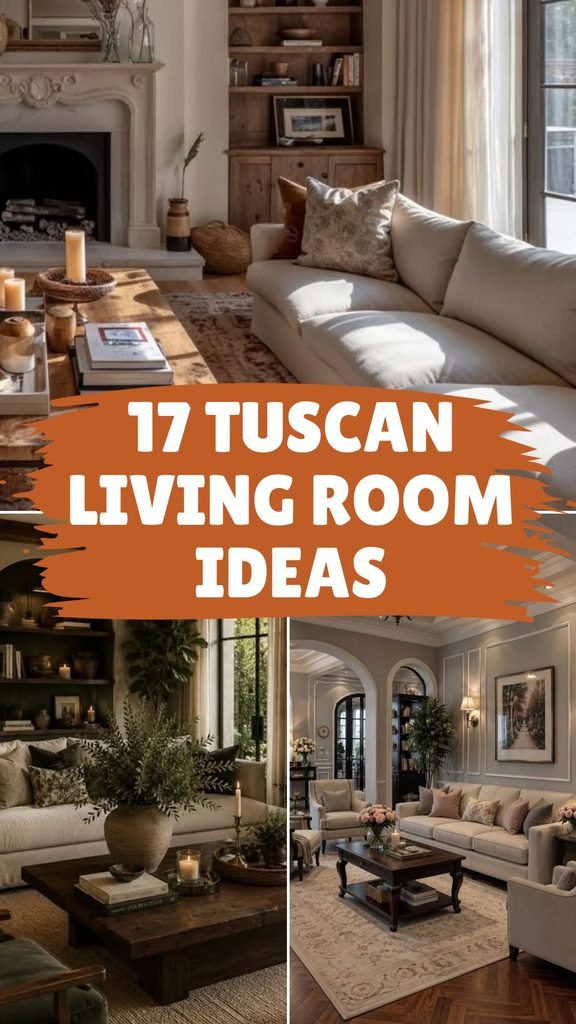
Traditional Tuscan rooms can feel heavy, so keep lighter walls, simple fabrics, and enough natural light if you want a more updated look.
The best rooms mix old and new, which helps the space feel collected and comfortable instead of looking like a themed Italian restaurant.
If you want this style to work today, focus on texture, warmth, and a few strong rustic details rather than filling every corner.
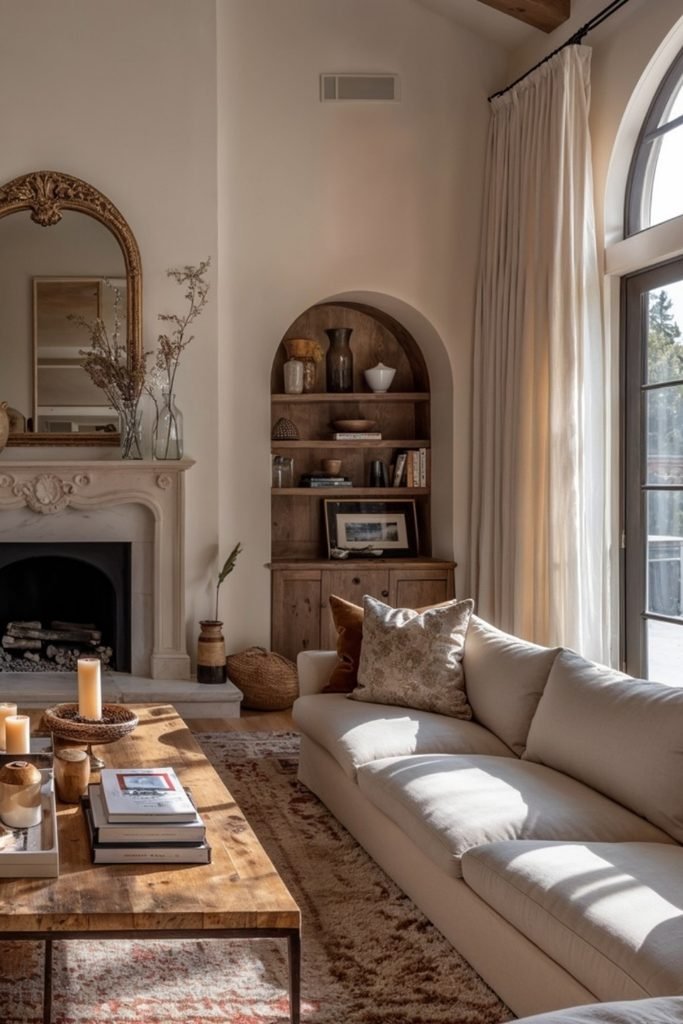
Arched Warmth
Let the arches do the decorating here, because curved windows, built-in niches, and a pale fireplace already bring strong Tuscan character.
Keep the sofa and curtains light so all that architectural detail feels warm and open instead of heavy or overly traditional.
A rough wood coffee table and aged pottery add enough rustic texture, making this approach especially useful in bright rooms with tall windows.
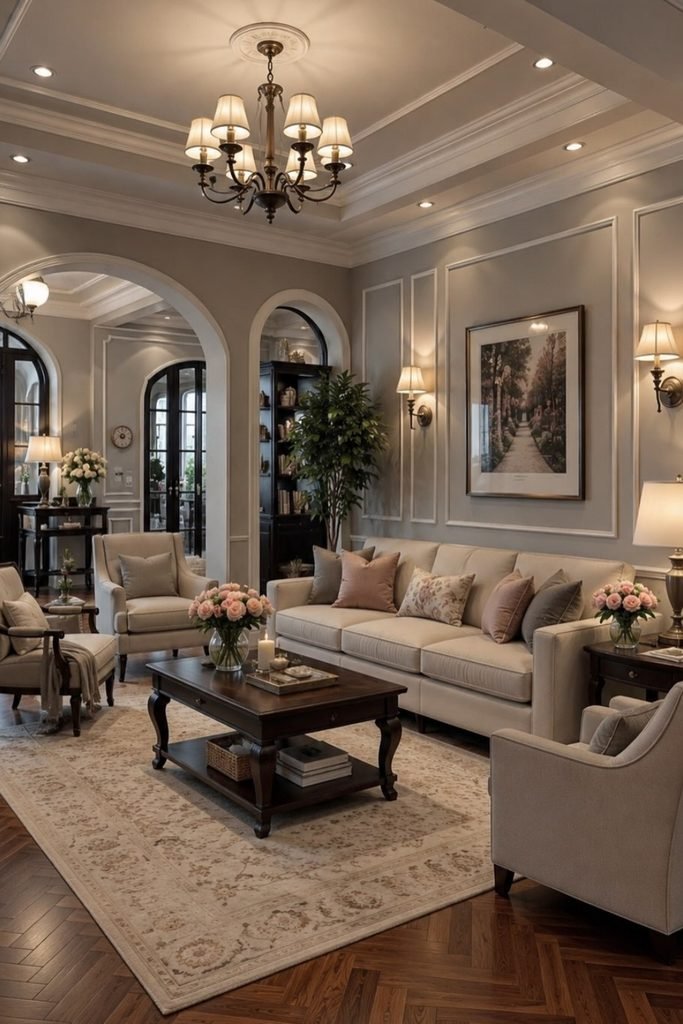
Refined Tuscan
Use Tuscan curves without going fully rustic by pairing arched openings with tailored wall molding, soft seating, and a dark wood coffee table.
This balance works well in formal living rooms where you want Italian warmth but still prefer a cleaner, more polished overall look.
Choose warm lamps and cream upholstery to soften the deeper wood tones, then let one framed landscape quietly carry the old-world mood.
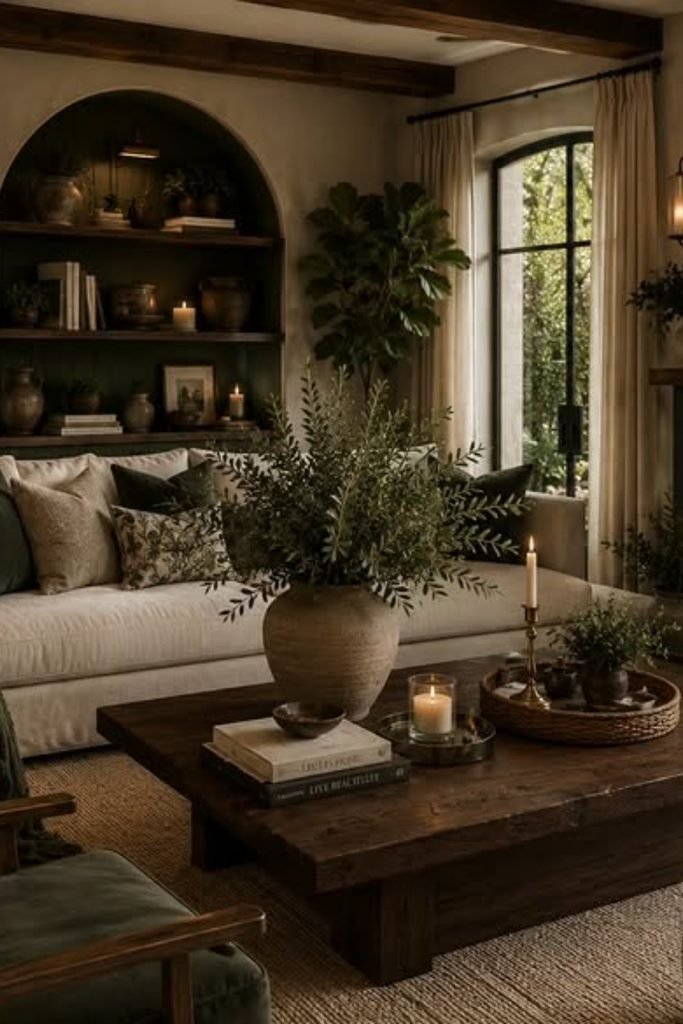
Olive Depth
Deep olive accents can make a Tuscan room feel richer, especially when you repeat them through cushions, plants, and one upholstered chair.
Balance those darker greens with a light sofa and warm plaster walls, otherwise the fireplace, beams, and wood furniture may feel too heavy.
Finish with a low chunky coffee table and simple pottery, which suits larger rooms where you want a cozy, grounded Tuscan atmosphere.
Soft Tuscan
Tuscan style can stay light and relaxed when you swap dark leather for slipcovered seating, pale wood, and soft sage green accents.
This approach fits open-plan homes beautifully, because the same warm wood and creamy neutrals can flow naturally from living area into kitchen.
Keep the fireplace simple, then layer woven rugs, pottery, and casual textiles so the room feels Tuscan-inspired without becoming formal or dark.

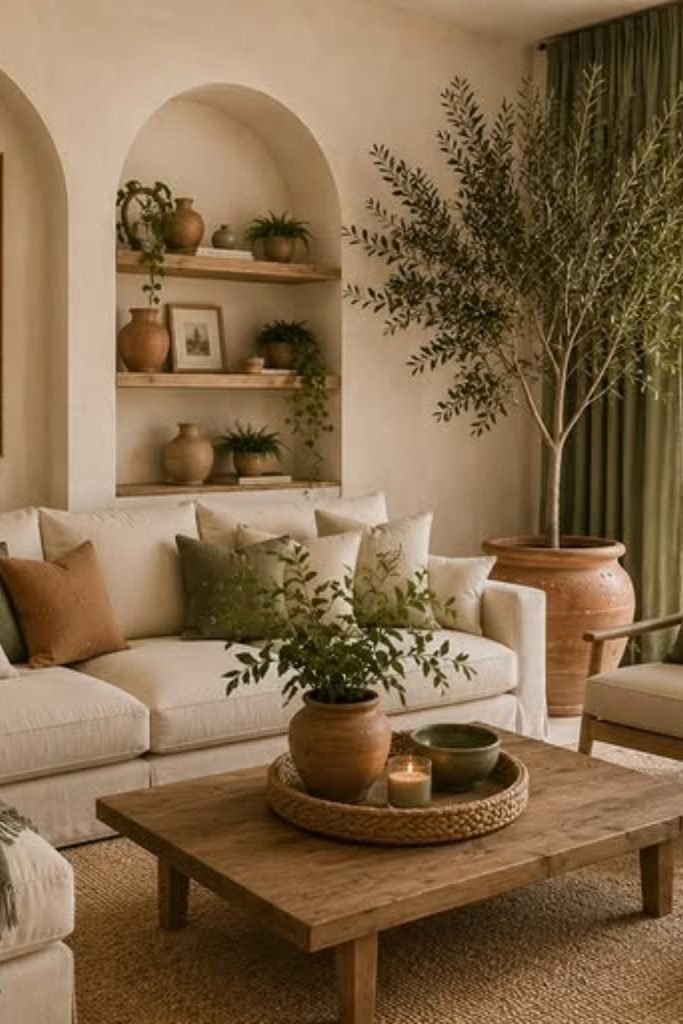
Olive Balance
Olive green works best here as a supporting color, because the cream seating and pale walls keep the room light and open.
Repeat that green through cushions, curtains, and one large olive tree so the color feels planned without taking over the whole room.
Built-in arches and terracotta pottery already add Tuscan character, so keep the coffee table simple and let those details carry the style.
Antique Layers
Vintage mirrors, framed landscapes, and warm brass can bring Tuscan age into a room even when the architecture itself feels fairly simple.
Use one soft green sofa with patterned cushions to break up brown wood, then let smaller antique pieces add character around it.
This approach suits traditional homes especially well, because you can build the look gradually instead of replacing every modern piece at once.

Sage Comfort
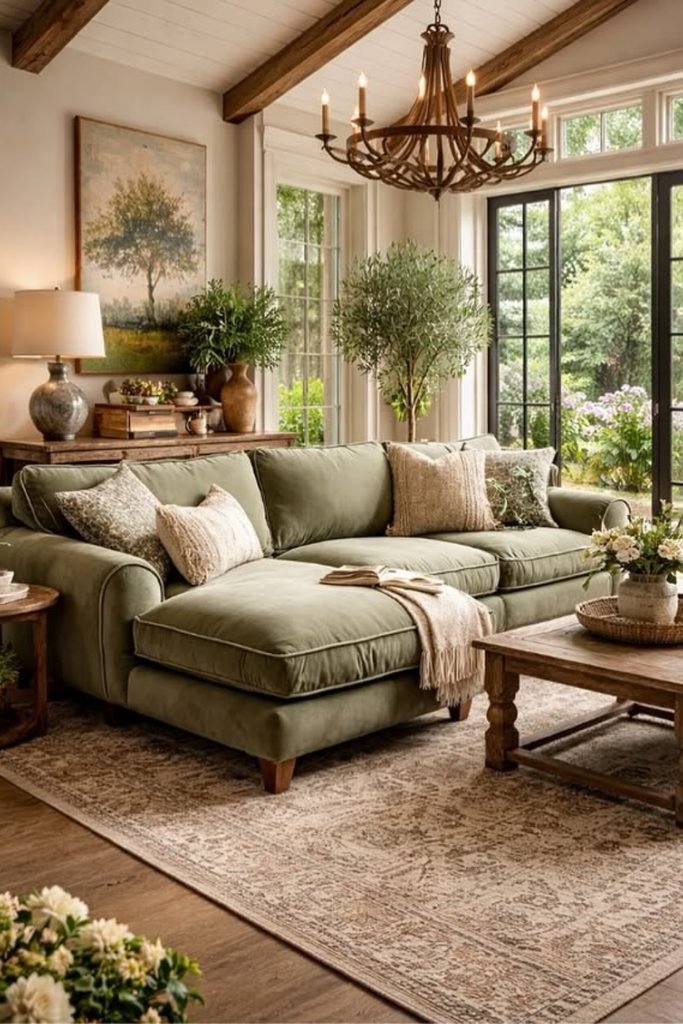
A sage sectional is an easy way to soften exposed beams, because the muted green keeps all that warm wood from feeling too heavy.
Choose a low rustic coffee table and faded rug underneath, which keeps the seating area grounded without adding another dark furniture layer.
An iron chandelier and olive tree finish the Tuscan mood, while large windows keep this richer palette bright enough for everyday living.
Artful Mix
Modern artwork can stop a Tuscan living room from feeling predictable, especially when the space already has beams, arches, and a stone fireplace.
Keep the sofa and rug quiet so the painting gets attention, then use patterned antique chairs to bring back a little old-world detail.
This mix works beautifully in brighter homes, where clean upholstery can balance traditional architecture without stripping away the room’s Tuscan character.

Light Architecture
Let pale stone and creamy walls carry the Tuscan look when your room already has arches, iron doors, and strong ceiling detail.
Add warm wood through a large coffee table, then use terracotta pottery and olive branches to stop the space feeling too polished.
Blue cushions can work as a cooler accent here, especially in sunny rooms where cream, tan, and wood already provide enough warmth.

Olive Walls
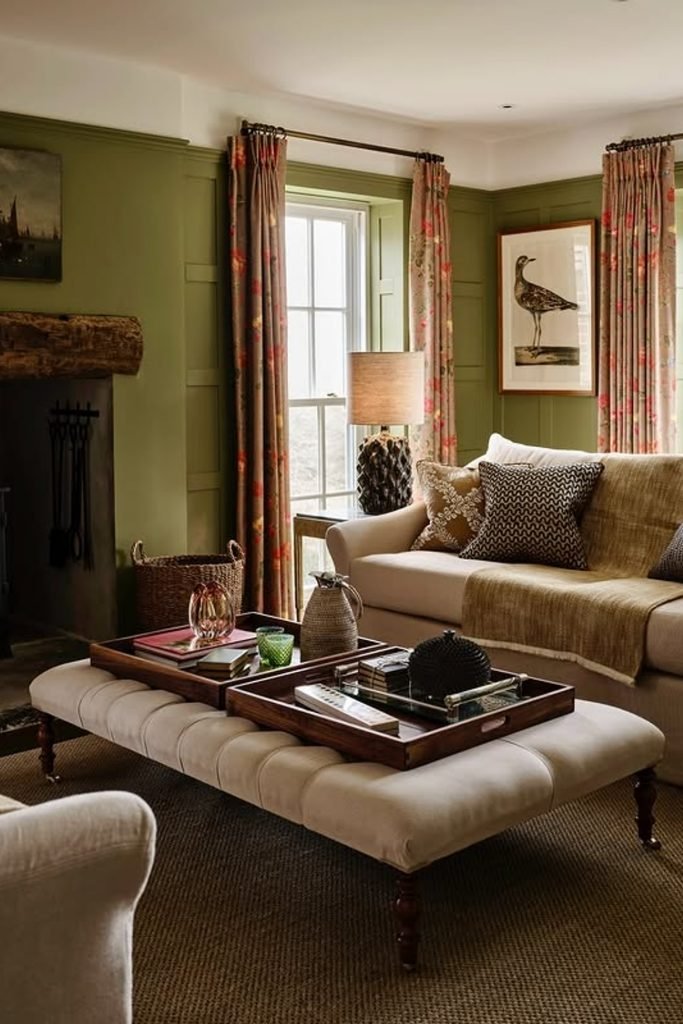
Painted olive walls are a smart choice when you want stronger Tuscan color without relying on the usual orange or deep brown.
Keep the sofa light and use patterned curtains sparingly, so the room still feels cozy rather than visually crowded or overly traditional.
A rough timber mantel gives enough rustic weight, making this setup especially useful in smaller rooms that need character without bulky furniture.
Quiet Tuscan
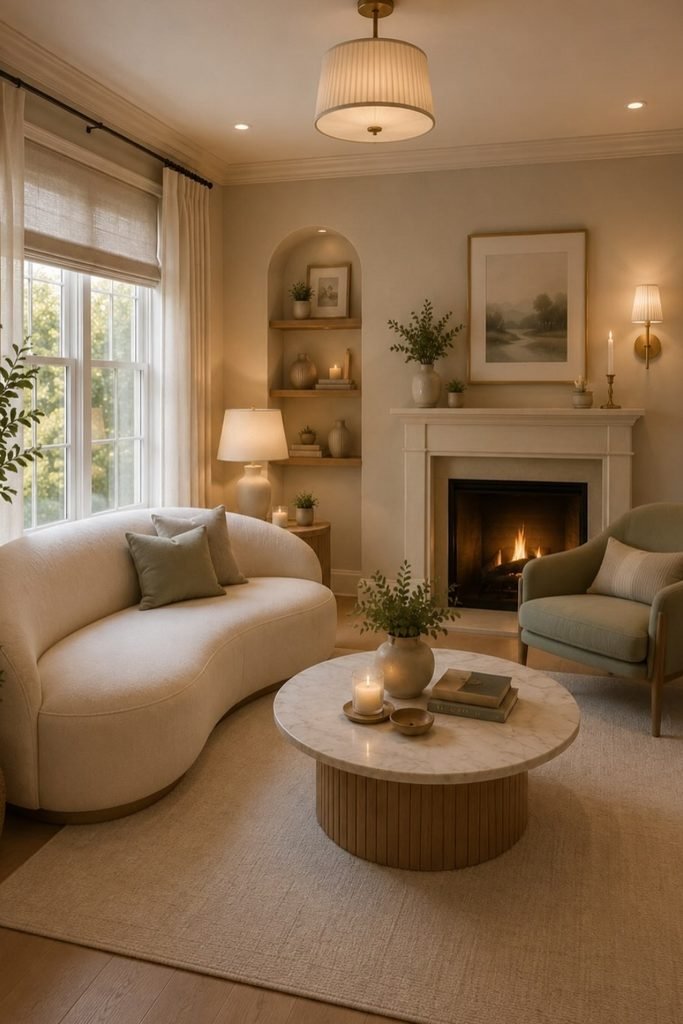
Tuscan style does not need heavy wood everywhere; a curved cream sofa can keep a compact living room soft and comfortable.
Bring the old-world feeling back through an arched niche, warm brass lighting, simple pottery, and a fireplace finished in pale stone.
Choose a round stone table instead of another dark wood piece, which keeps the layout open while still adding natural Tuscan texture.
Fresh Contrast
A blue sofa can freshen a Tuscan-inspired room when the architecture already gives you arches, warm wood floors, and traditional built-ins.
Keep walls and curtains light, then bring in brass and marble rather than piling on dark wood or heavy terracotta accents.
This direction suits homeowners who like Tuscan shapes but prefer a brighter, more polished room that still feels warm and connected.

Blue Formality
Deep navy accents can sharpen a Tuscan living room when cream sofas, warm wood, and a simple fireplace already keep the base soft.
Use blue through cushions and framed wall panels rather than large furniture pieces, so the room stays elegant without losing its warmth.
A rustic mantel beneath the television keeps the modern screen connected to the room, while brass lighting adds a more polished finish.

Heritage Richness
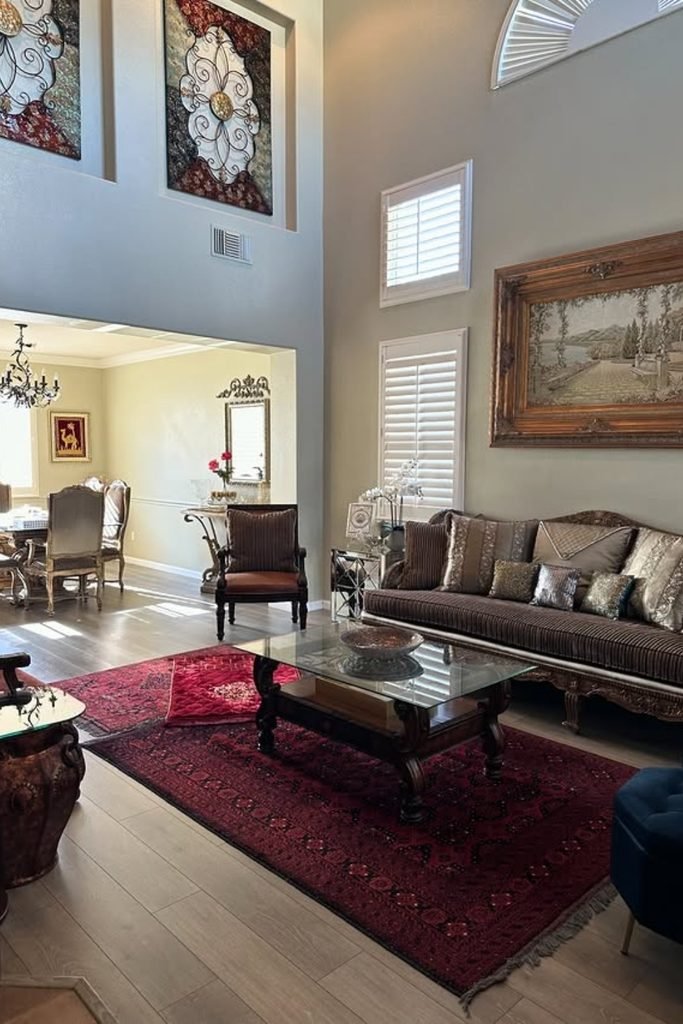
A deep red rug can anchor a traditional Tuscan room, especially when carved furniture and warm artwork already bring plenty of detail.
Keep the walls lighter than the furniture so the room feels rich rather than crowded, and let one large rug control the palette.
This approach suits high-ceiling spaces, where darker upholstery, ornate frames, and traditional wood pieces have enough breathing room to feel intentional.
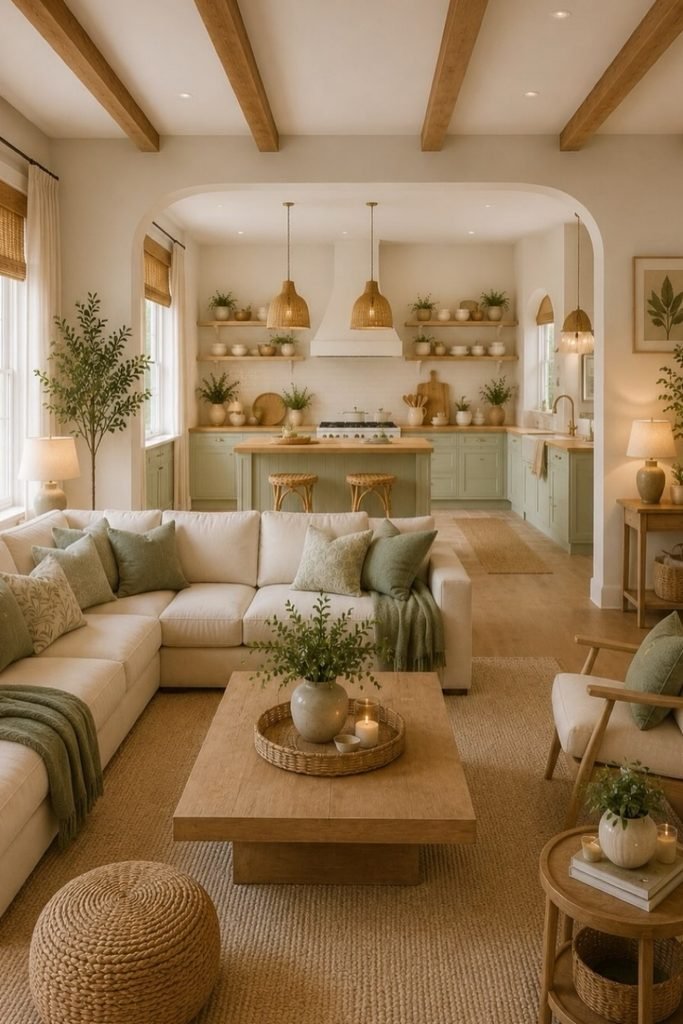
Sage Flow
Carry soft sage from the living room into the kitchen when you want an open-plan space to feel connected without matching everything.
Cream seating and pale wood keep the green fresh, while woven stools, rugs, and pendants add the relaxed texture Tuscan rooms need.
Expose a few warm ceiling beams above the seating area, then repeat natural wood below so the whole room feels balanced and grounded.
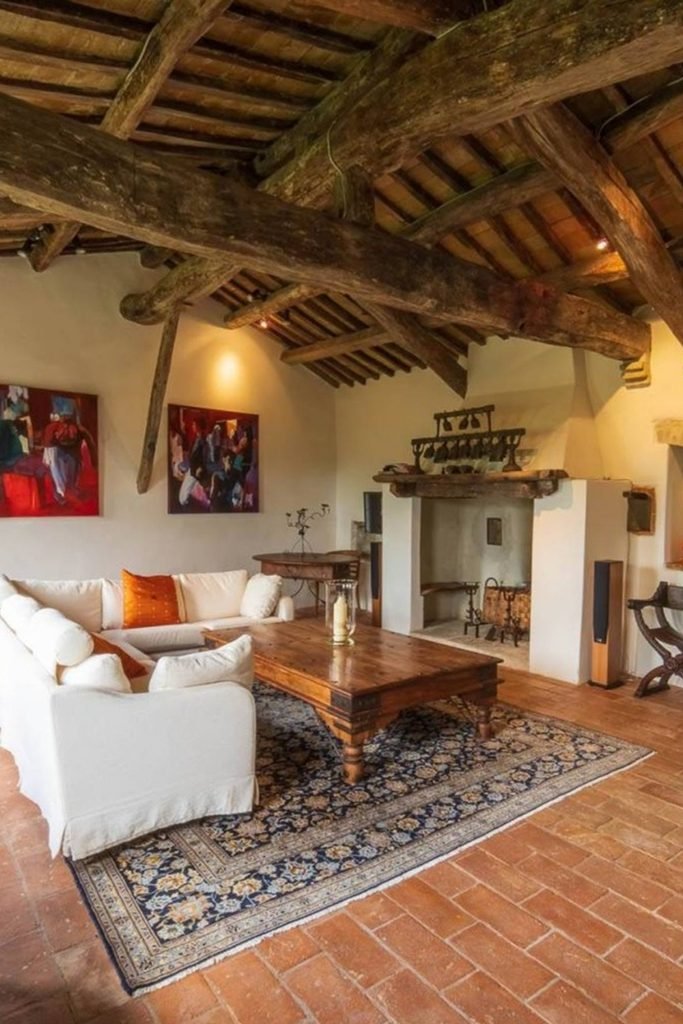
Beam Drama
Heavy ceiling beams can carry most of the Tuscan character, so keep the walls pale and seating light to avoid visual heaviness.
Terracotta flooring adds another strong rustic layer, which is why a patterned rug helps soften the room and define the seating area.
Use warm artwork and one simple wood table instead of extra dark furniture, letting the fireplace and beams stay the main features.
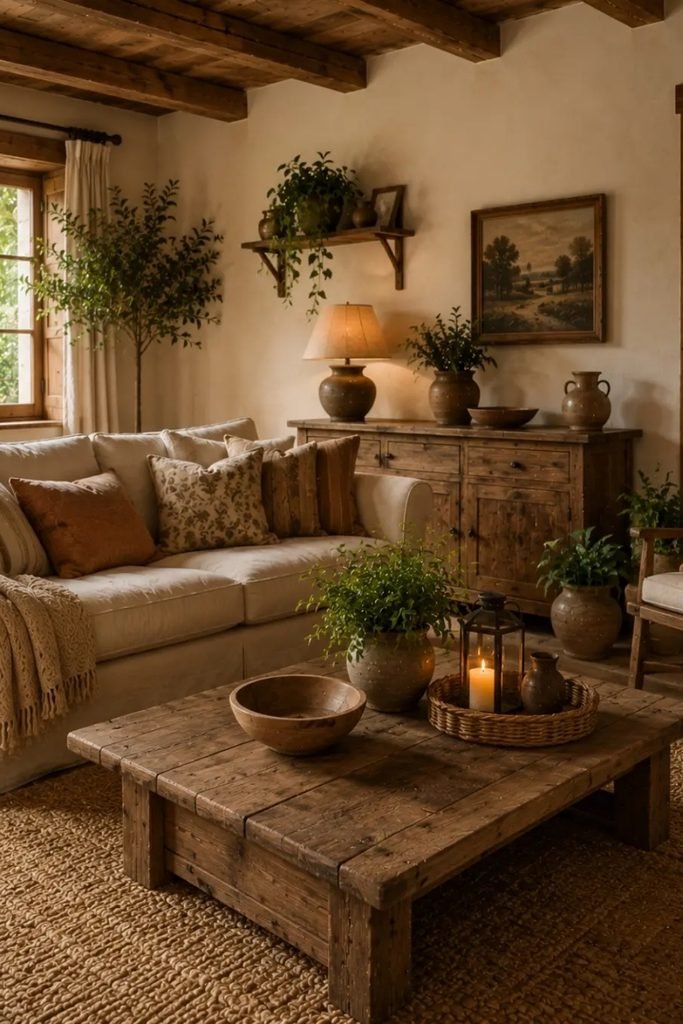
Collected Wood
A room with this much wood feels best when the sofa stays cream, because lighter upholstery breaks up the brown without losing warmth.
Mix reclaimed tables, an aged cabinet, and handmade pottery rather than matching finishes, so every piece feels gathered slowly over time.
Greenery keeps those earthy surfaces from feeling flat, while a woven rug and warm lamp make the whole seating area softer.
FAQs
Is Tuscan Decor Still in Style?
Tuscan decor still works today when you keep the natural stone, warm wood, soft neutrals, and rustic details without overdoing them.
Skip heavy orange walls, matching dark furniture, and too much iron, because those choices can quickly make the room feel dated.
A lighter palette, simple fabrics, and a few aged pieces will keep the Tuscan warmth while making the space feel current.
How Do You Modernize a Tuscan Living Room?
Start by lightening the biggest surfaces, especially walls and curtains, then keep your best stone, wood, beams, or arched details.
Bring in cleaner seating, warm neutral rugs, and simpler lighting so the room feels relaxed instead of packed with traditional pieces.
You do not need to remove every old feature; changing the color balance and furniture mix can completely refresh the room.