A white sofa looks easy to decorate around until the whole room starts feeling too pale, cold, or unfinished.
The trick is knowing which colors, textures, and furniture will give it warmth and contrast.
You also don’t have to give up the clean, bright look that made you choose white in the first place.
A few smart changes can make even a simple white sofa feel intentional.
In this article, I’ll show you how to style a white sofa so your living room feels cozy, balanced, and pulled together.
Let’s jump in!
What Colors Go With a White Sofa?
Almost any color can work with a white sofa, but choose it based on how you want the room to feel.
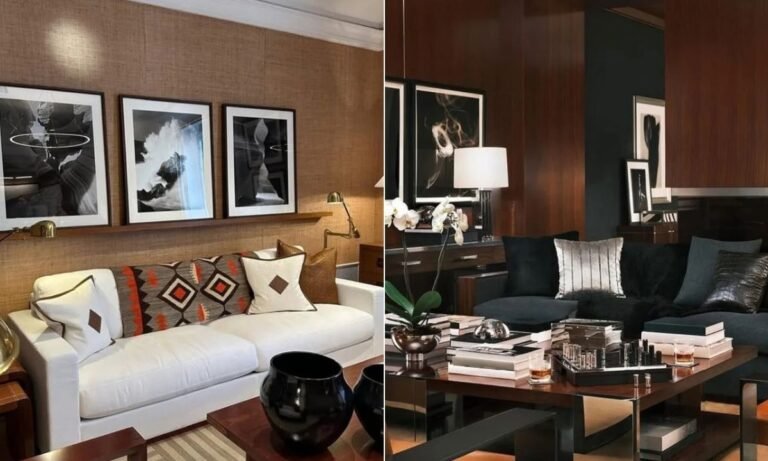
If your space looks cold, bring in warm beige, camel, brown, terracotta, or olive through pillows, rugs, curtains, and wood furniture.
These colors soften the white without making the room feel dark.

For a sharper modern look, pair your sofa with black, charcoal, navy, or deep green accents.
If you prefer something light and relaxed, use cream, soft blue, sage, or warm greige.Just avoid making every surface the same shade of white.
Even in a neutral room, mix warm wood, textured fabrics, and slightly darker tones so your sofa has enough contrast to stand out.
Soft Curved Seating
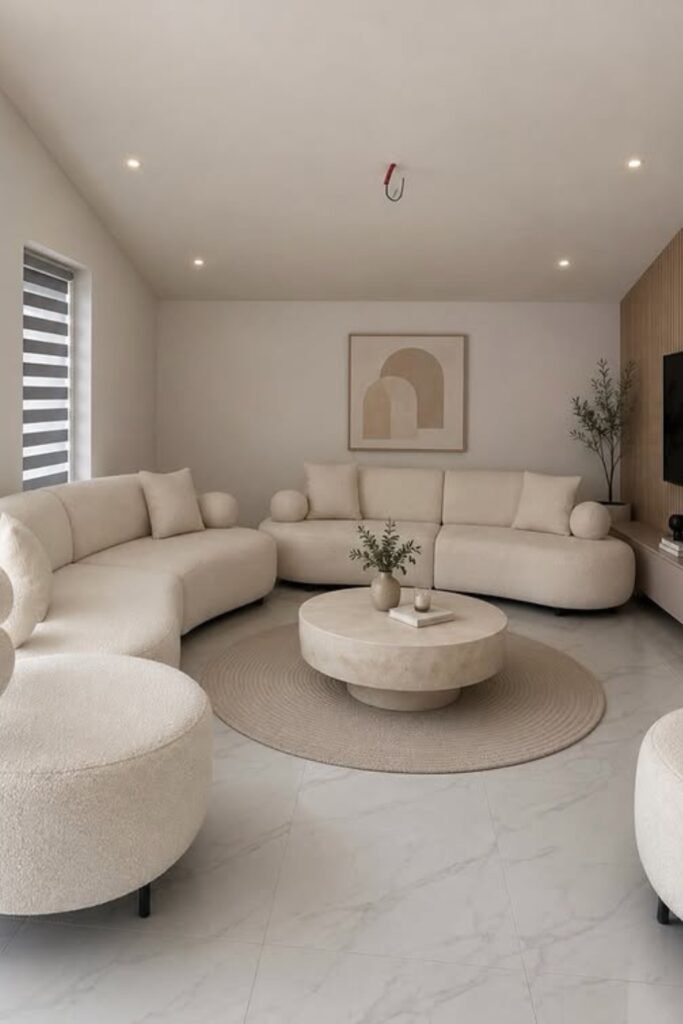
Curved white sofas work especially well in modern living rooms where you want generous seating without filling the space with sharp corners.
Keep the surrounding palette warm and quiet, then use a round textured rug and low coffee table to echo those softer furniture lines.
A slim wood feature wall and small touches of greenery add enough warmth, so the creamy upholstery never feels flat or overly sterile.
Warm Wood Balance
If a white sofa makes your living room feel too pale, place a chunky natural wood coffee table directly within the seating area.
The warmer grain gives the eye a strong focal point while cream walls and upholstery can remain light, relaxed, and visually connected.
Finish with dark pottery, small branches, and woven accessories; these earthy details introduce contrast without disturbing the room’s calm neutral direction.

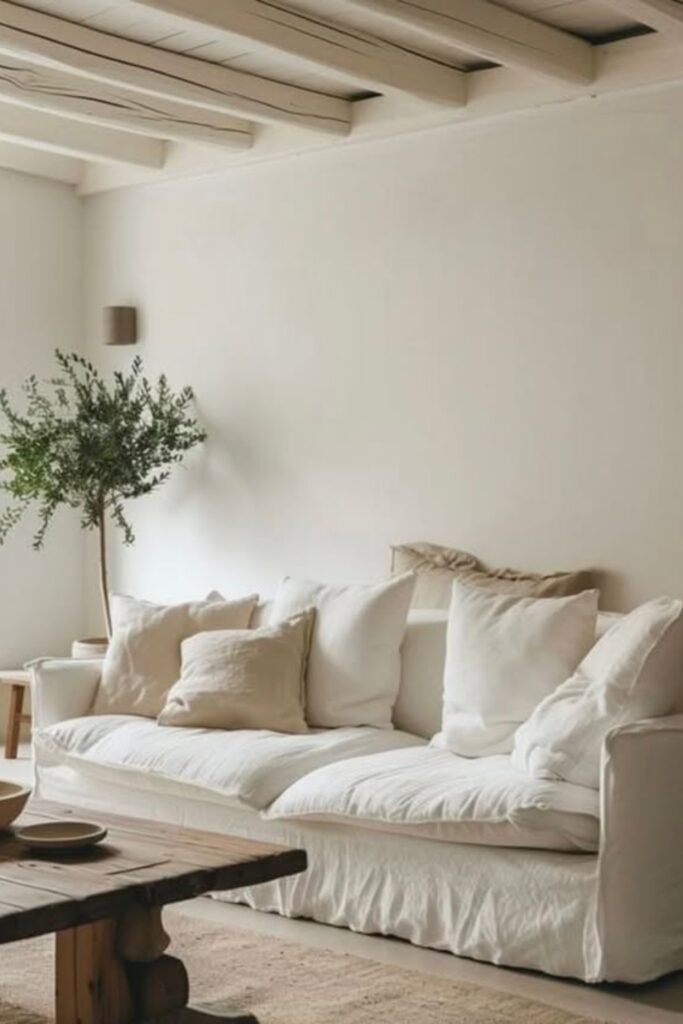
Relaxed Linen Layers
A slightly rumpled white sofa can actually make a neutral living room feel more inviting, especially when you prefer relaxed Mediterranean styling.
Choose linen or washable slipcovers, layer several off-white cushions, and bring in aged wood rather than adding unnecessary bright accent colors.
This approach suits sunlit rooms beautifully because natural fabrics and rustic furniture soften the brightness while keeping everything airy.
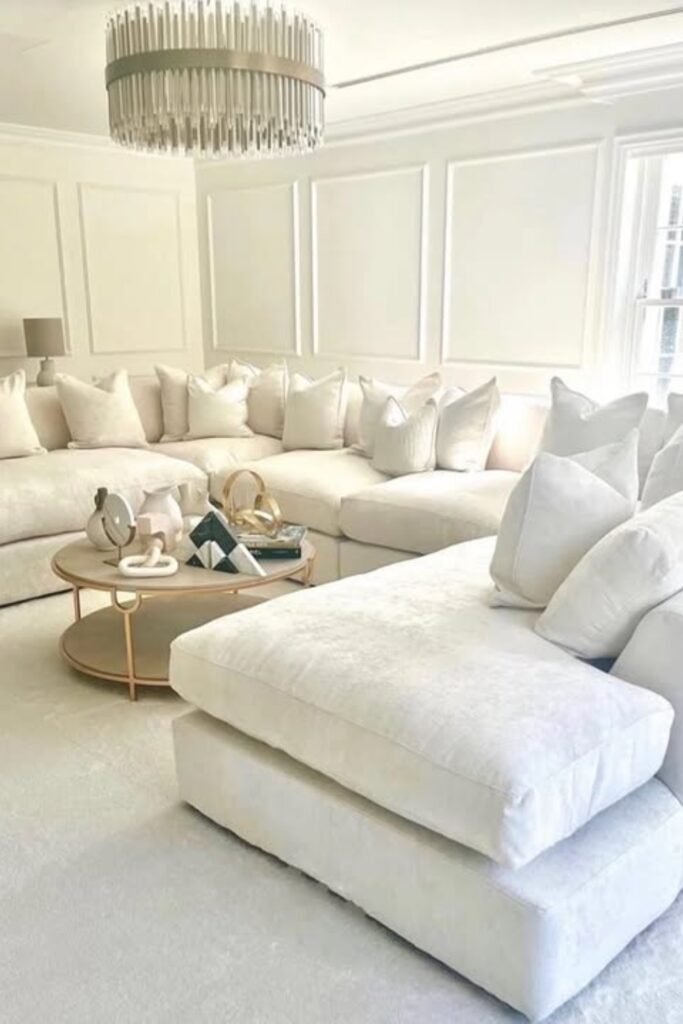
Layered White Comfort
Large living rooms can handle white-on-white seating when you create depth through scale, soft upholstery, and subtle architectural details around it.
Instead of introducing strong colors, vary your whites slightly across sofas, cushions, walls, and carpet so each surface remains visually separate.
A metallic coffee table and statement chandelier give this setup a polished finish, making it especially suitable for spacious formal living areas.
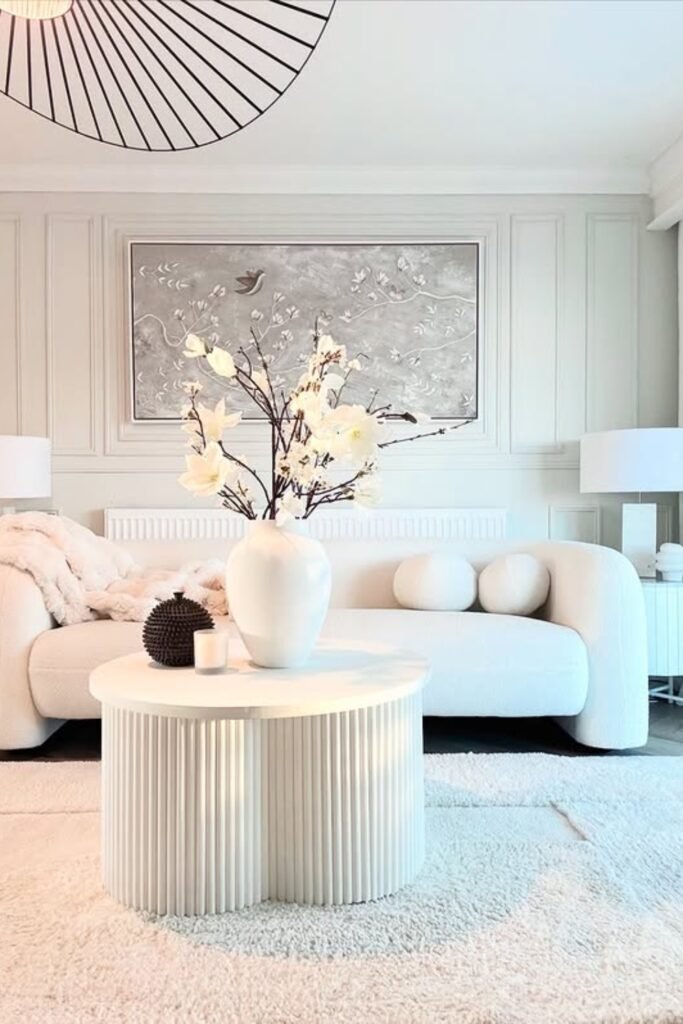
Sculptural White Layers
When an all-white room needs personality, let curved furniture and architectural details create the interest instead of reaching for bold accent colors.
Pair a rounded sofa with a fluted coffee table, paneled walls, and soft artwork so similar whites still have clear separation.
One dark decorative piece adds just enough contrast, while oversized flowers bring height and keep the pale arrangement from feeling too controlled.
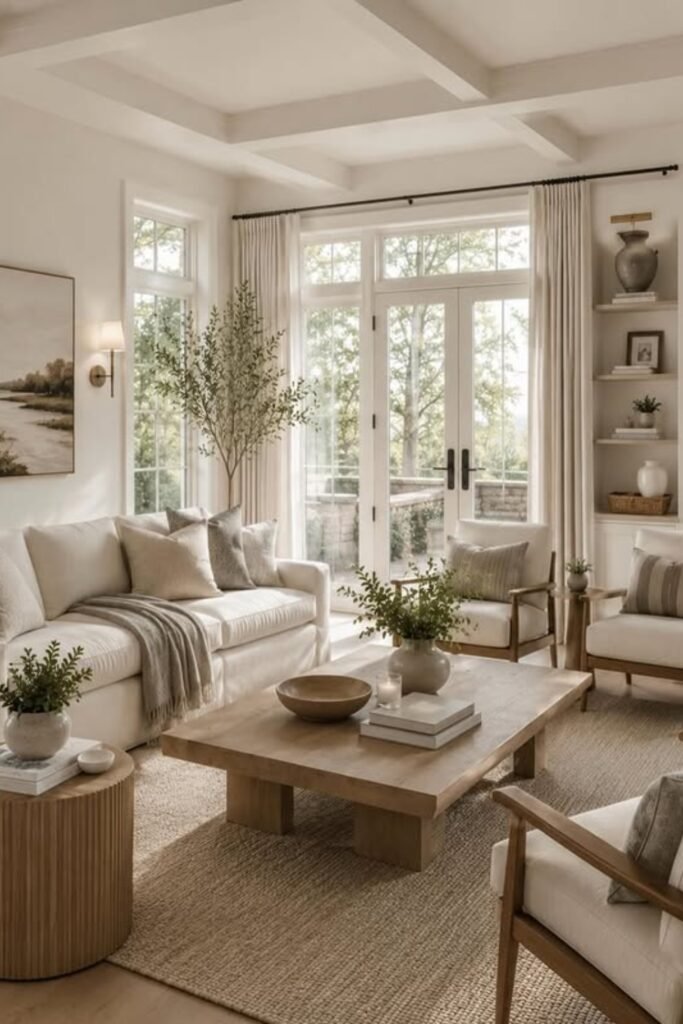
Natural Wood Warmth
For a white sofa that feels welcoming rather than pristine, surround it with medium wood tones and plenty of softly textured neutrals.
A chunky wood coffee table, woven rug, and timber-framed chairs give the seating area warmth without competing with its bright foundation.
This combination works beautifully in relaxed family rooms, especially when greenery, landscape art, and striped cushions add quiet touches of natural color.
Minimal Gray Contrast
You can keep a white living room extremely simple without making it disappear by adding just a few carefully placed gray accents.
Choose charcoal-gray cushions against the sectional, then repeat cooler tones through stone flooring and a substantial concrete-style table.
A tall green plant becomes the natural focal point, which is especially useful when you want minimal decor but still need some life.

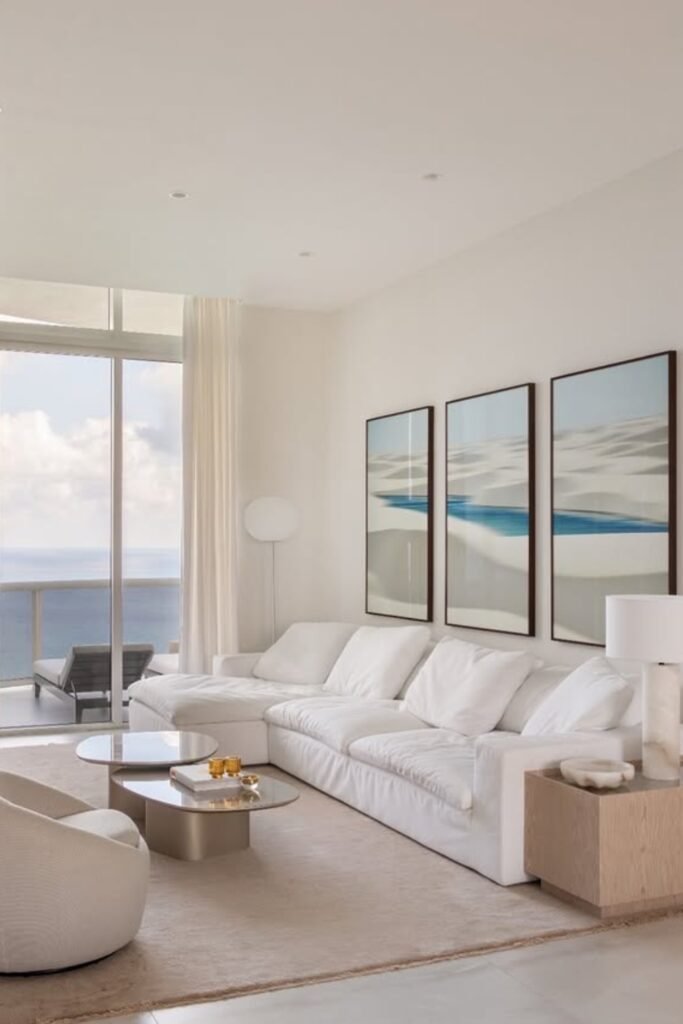
Coastal Blue Focus
If your white sofa faces a beautiful view, keep the furniture quiet and borrow your strongest accent color from what sits outside.
Blue artwork connects naturally with the water, while pale wood, a sandy rug, and cream seating maintain the soft coastal palette.
Try this approach in bright rooms with large windows, using artwork to repeat outdoor colors instead of filling the sofa with colorful cushions.
Elegant Cream Setting
For a softer luxury look, surround your white sofas with creamy walls and matching upholstery instead of introducing several competing neutral shades.
Wall molding, warm sconces, and a crystal chandelier add detail above eye level, letting the seating arrangement stay simple and comfortably uncluttered.
Choose this approach for formal living rooms, then add greenery and sculptural tables so the pale palette still feels fresh and welcoming.

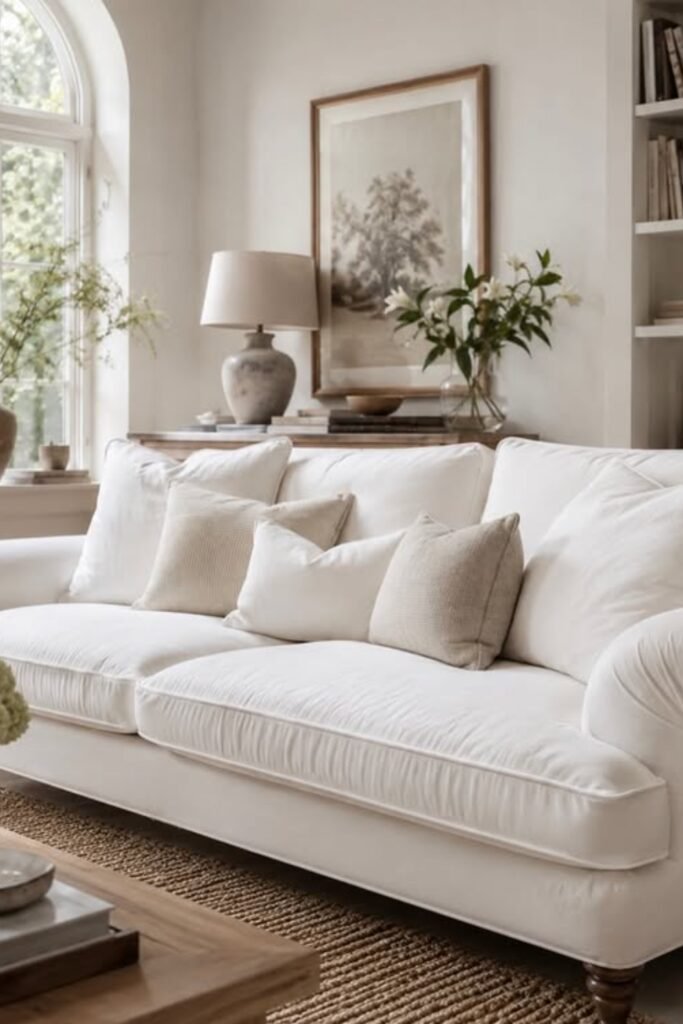
Classic Natural Layers
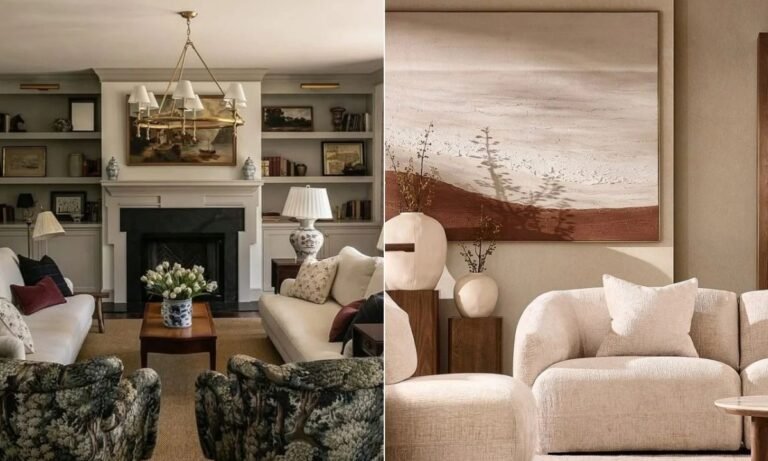
A traditional white sofa feels much less formal when you ground it with woven textures, warm wood, and softly patterned neutral cushions.
Bring those warmer tones around the room through framed artwork, pottery, books, and a natural rug rather than loading the sofa with color.
This works especially well in bright rooms with classic architecture, where collected accessories can add character without taking away the airy feeling.
Rustic Table Contrast
One substantial piece of raw wood can completely change a white sectional, especially when your living room is starting to feel overly polished.
Try a live-edge coffee table over a faded neutral rug, allowing the irregular grain and darker edges to break up all that softness.
Keep pillows mostly white and let a muted ceramic vase carry the earthy accent, giving casual rooms warmth without making them feel busy.

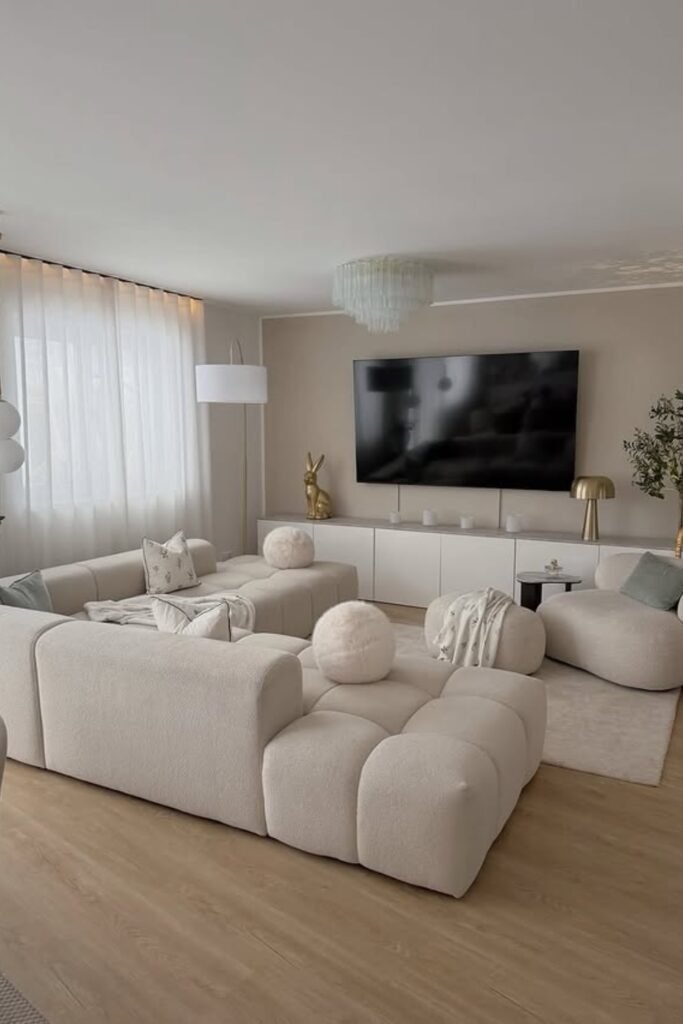
Soft Gold Details
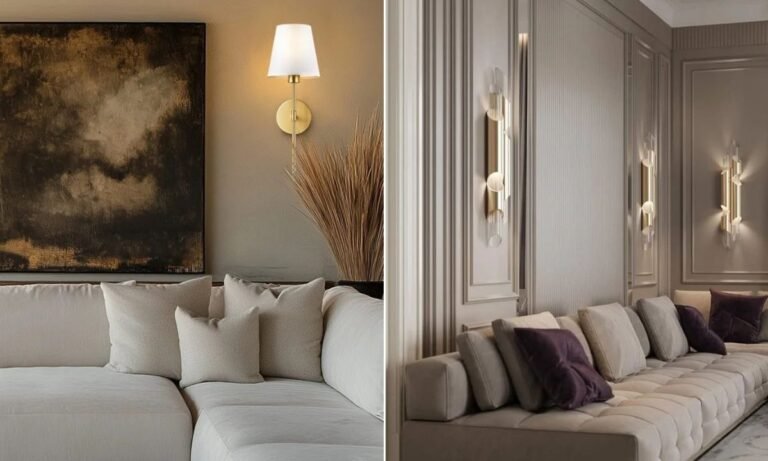
White modular seating can look much warmer when small gold details are repeated around the room instead of adding one large colorful feature.
Use brass through lamps and decorative objects, then keep walls taupe and flooring natural so those metallic touches feel subtle rather than flashy.
This setup suits contemporary TV rooms beautifully, where rounded seating and soft fabrics can balance the screen’s hard black shape and size.
Quiet Modern Contrast
If you like clean modern rooms, give a simple white sofa definition with taupe curtains, dark legs, and one deeper neutral cushion.
Keep the rug close to the sofa’s tone, then choose a marble coffee table with black supports to introduce contrast without extra color.
This works especially well in apartments or streamlined spaces where you want warmth and structure without filling the room with decorative pieces.
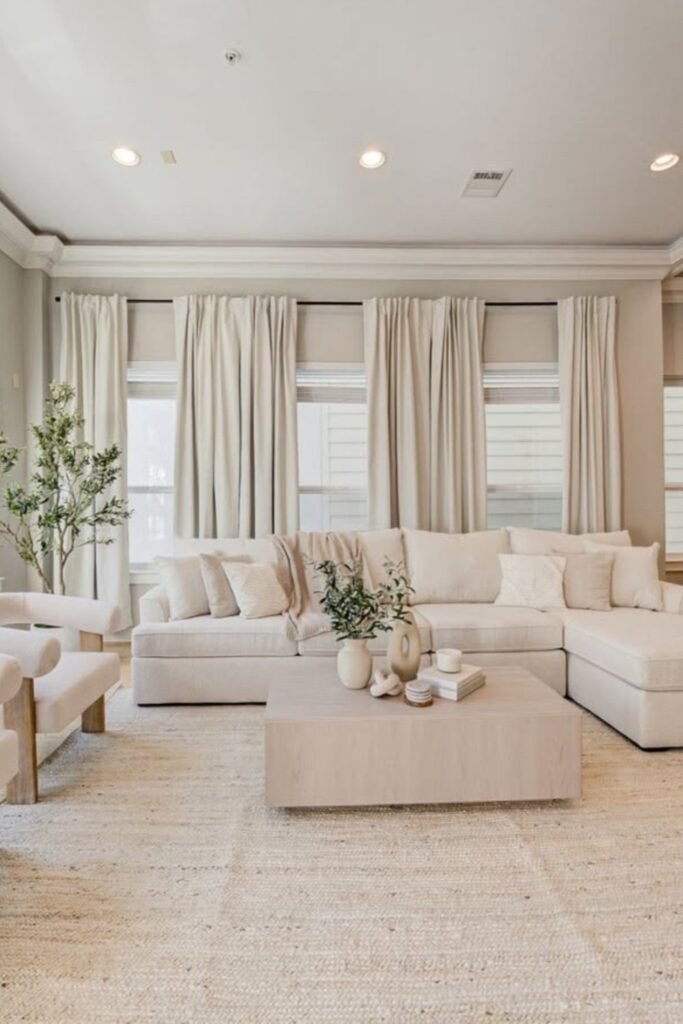
Tonal Family Comfort
A white sectional feels much cozier when nearby creams and beiges vary slightly instead of matching every upholstered surface to one shade.
Use warm curtains, a textured rug, pale wood furniture, and cream accent chairs to build layers while keeping the whole room light.
This approach suits busy family living rooms because generous seating remains practical, while subtle texture does the decorating instead of fragile accessories.
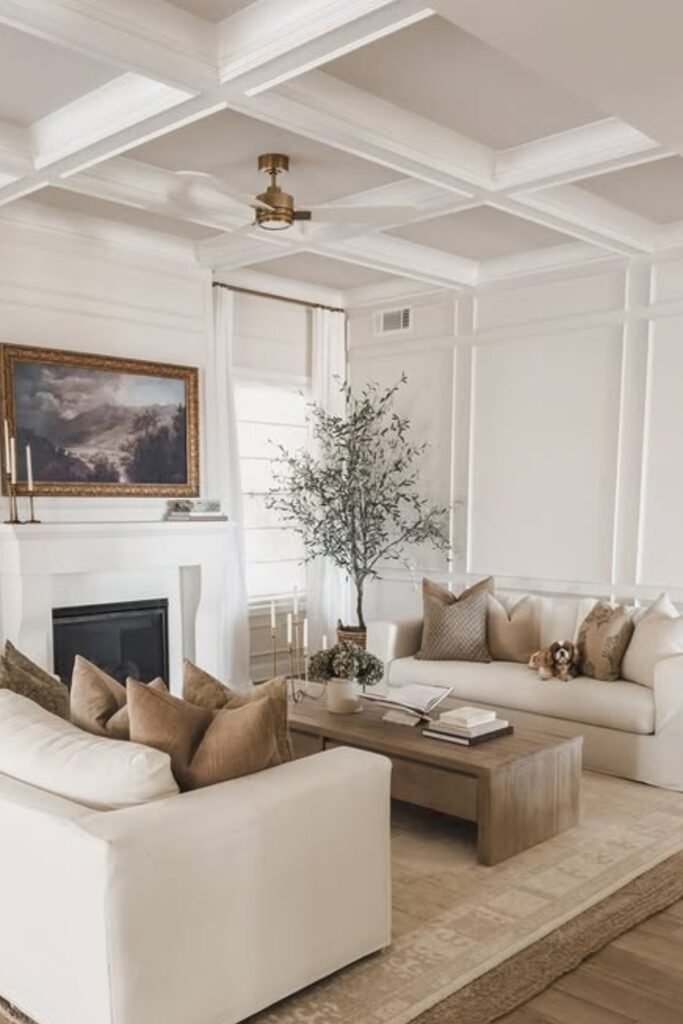
Earthy Traditional Layers
White sofas can handle plenty of character, so use brown patterned pillows and aged wood when a traditional room feels too clean.
Layer a natural jute rug beneath a softer patterned rug, then repeat those earthy browns through the coffee table and framed artwork.
The mix works best in rooms with molding or fireplaces, where relaxed natural materials keep classic architecture from feeling overly formal.
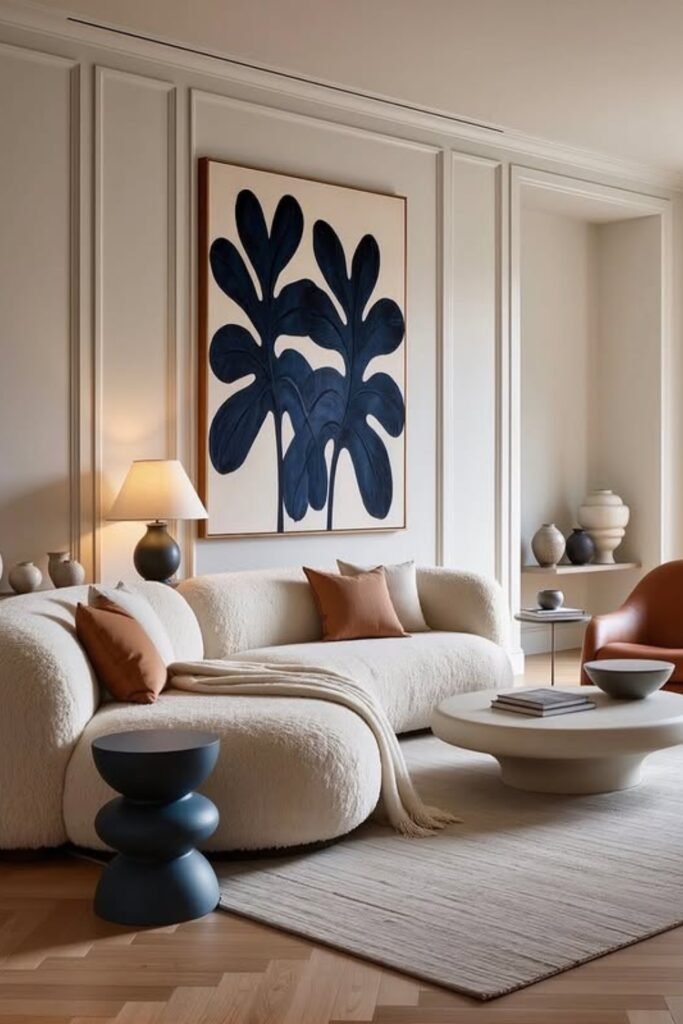
Navy Terracotta Accents
When you want real color around a white sofa, choose two strong accents that balance each other rather than scattering several shades.
Deep navy artwork and a dark side table bring cool contrast, while terracotta pillows and a leather chair add warmth near the seating.
Keep the rug and coffee table neutral so these colors stay intentional, a useful approach for modern rooms needing personality without visual clutter.
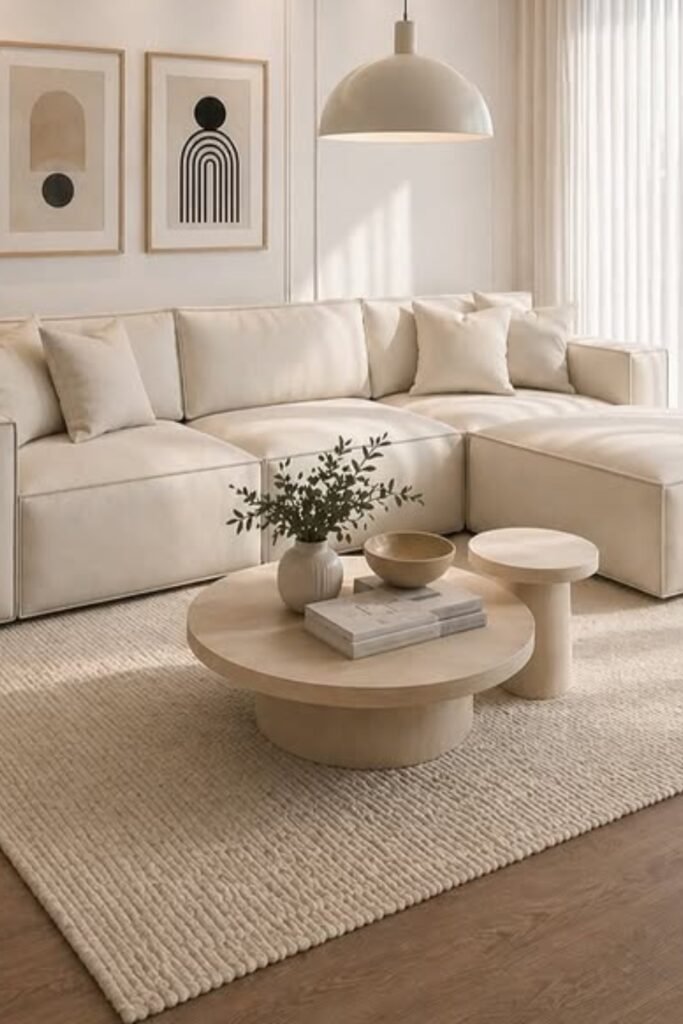
Warm Neutral Sectional
For a bright room that still feels grounded, pair your white sectional with warm wood flooring and a large cream textured rug.
Choose rounded wood tables and simple beige artwork, then let one leafy tree introduce natural color without breaking the calm neutral scheme.
This works especially well in modern open spaces, where layered lighting and sheer curtains keep a large sectional from feeling visually heavy.

Cozy Texture Mix
When your white sectional already fills most of the room, use texture instead of extra furniture to make the space feel more finished.
Layer a chunky woven rug, fluffy throw, boucle cushions, and a pale stone table so each white surface has its own character.
Keep accessories small and simple in tighter living rooms, allowing soft fabrics and natural daylight to create warmth without crowding your walking space.

Vintage Rug Anchor
Two white sofas can feel disconnected until a darker patterned rug gives the entire seating arrangement one strong visual foundation underneath.
Choose a vintage-style rug with brown and taupe details, then repeat those deeper shades through pillows, stools, and a wood coffee table.
This is an easy fix for larger living rooms where pale furniture needs more weight, but you still want bright walls and curtains.
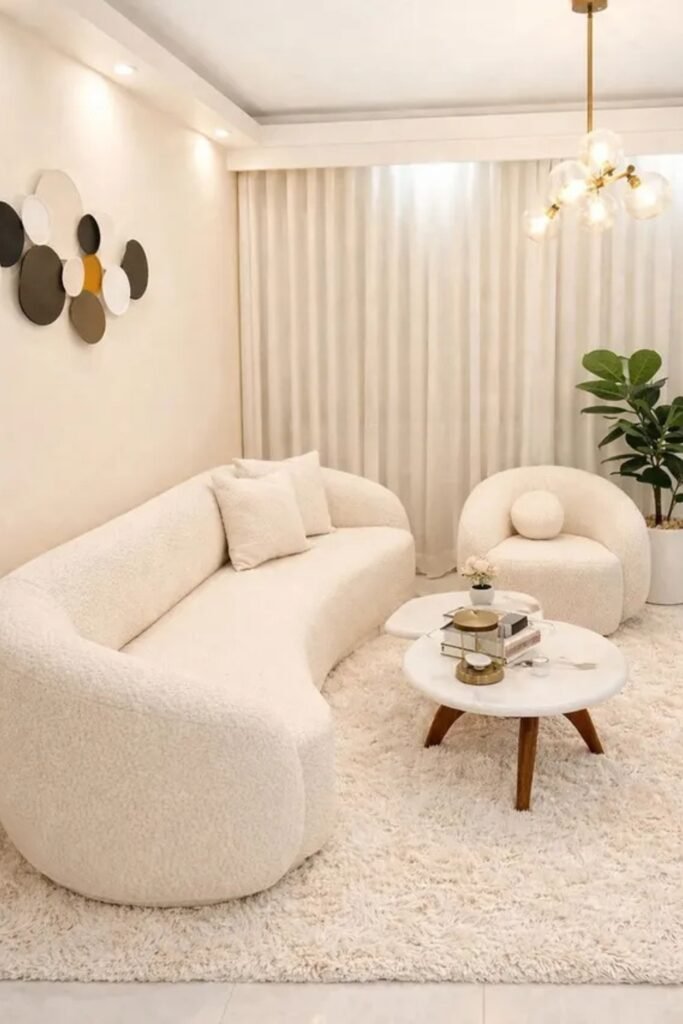
Curves For Small Spaces
A curved white sofa can soften a compact living room because its rounded edges keep the seating arrangement from looking stiff or boxy.
Pair it with one matching chair, a shaggy cream rug, and small round tables rather than squeezing in oversized rectangular furniture pieces.
Add contrast through wall art, warm wood legs, and greenery, giving the small space personality while keeping the main furniture visually light.

FAQs
How do I keep a white sofa from making my living room look too plain?
Give the sofa something to contrast with instead of adding random color.
Warm wood, textured rugs, darker artwork, greenery, and layered neutral pillows can create enough depth.
If you prefer an all-neutral room, mix cream, beige, taupe, and brown so every surface does not blend into the same shade.
What is the easiest way to update a white sofa living room without replacing furniture?
Start with the pieces that are easiest to change: pillows, throws, rugs, artwork, and lamps.
Pick two or three repeating accent colors and carry them around the room.
This gives your white sofa a new direction without requiring a different coffee table, chairs, or expensive furniture.