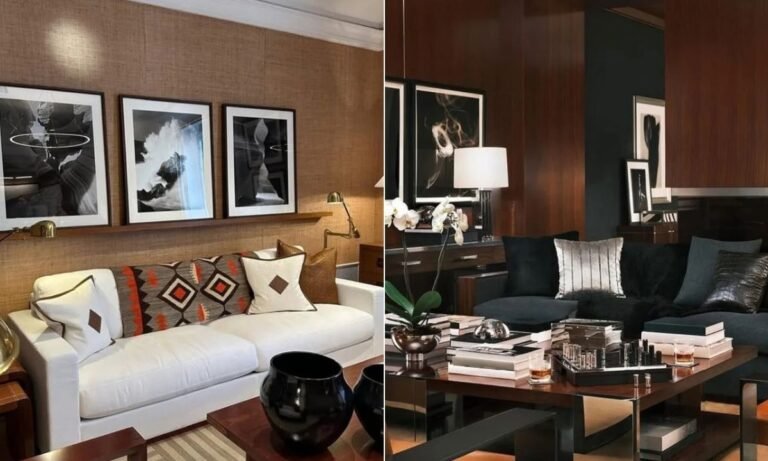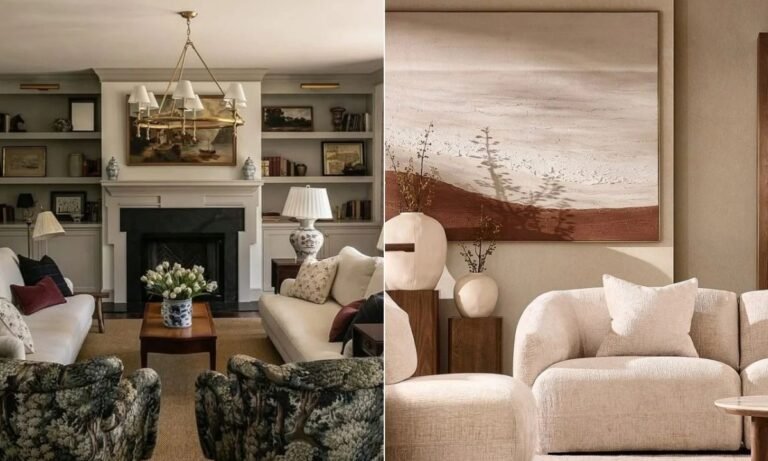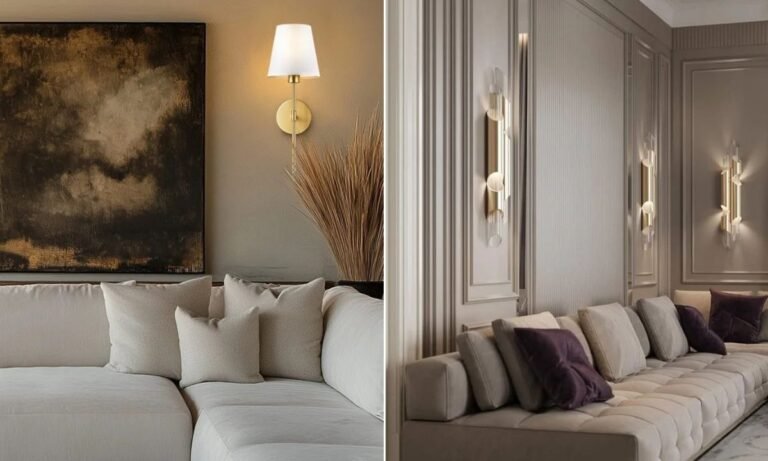
Wood paneling can warm up a living room fast, but the wrong wood tone or too much coverage can make the whole space feel dark and dated.
You may also struggle with where to use it, what colors should sit beside it, or how to stop the room from turning into one big brown box.
In this article, you’ll see how to make wood paneling work beautifully in a living room.
Let’s jump in!
Which Wall Panelling Is Best for a Living Room?
The best wall panelling depends on your room size, natural light, ceiling height, and how much wood you actually want to see.
Light oak or wide vertical panels work well in smaller rooms because they add warmth without making the space feel visually heavy.
For a richer look, walnut works better on one main wall, especially behind the sofa, TV, or another natural focal point.
Vertical slats can make low ceilings feel taller, while wider flat panels create a cleaner look when you want something less busy.
If your living room already has plenty of wood furniture or flooring, use paneling more selectively so everything does not blend together.
Choose the wall and wood tone first, then build your sofa, rug, lighting, and accent colors around that decision.
Moody Layers
Deep wood walls and a charcoal sectional give smaller living rooms a cocooning mood, especially when natural daylight is limited or controlled.
Keep the palette grounded with rust and brown cushions, then use one oversized abstract artwork to prevent the darker finishes feeling visually heavy.
Choose a low black coffee table with sculptural character, allowing the furniture, textured upholstery, and warm artwork tones to feel intentionally connected.

Ivory Warmth
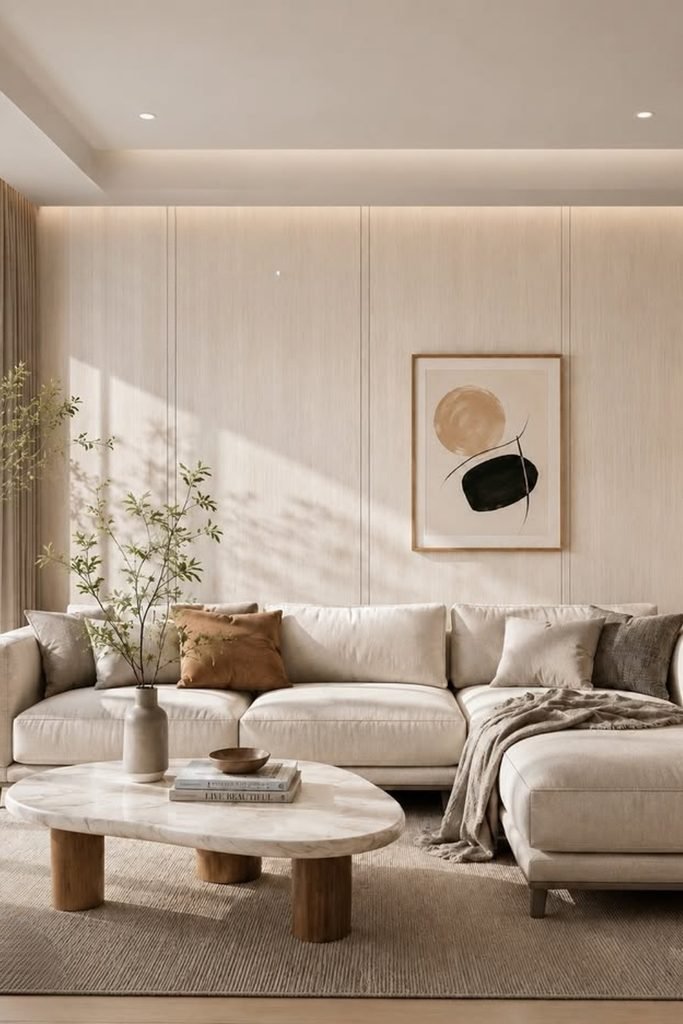
Soft ivory finishes work beautifully in bright living rooms where large windows can highlight subtle textures without needing stronger colors for visual interest.
Pair a generous cream sectional with pale wood wall panels, then bring gentle contrast through taupe cushions, woven textiles, and natural greenery.
Finish with a rounded stone coffee table and restrained artwork, keeping decorative pieces minimal so the room maintains its calm, spacious character.
Media Comfort
Long narrow living rooms become easier to furnish when seating follows one wall, leaving a comfortable walkway beside the main entertainment zone.
Build the television into warm wood paneling for a cleaner focal point, while an extended sectional provides plenty of seating without scattered furniture.
Add soft curtains, sculptural pendant lighting, and compact artwork along the opposite wall to balance practical entertainment features with warmer decorative detail.

Rustic Contrast
Exposed timber ceilings can guide the entire living room palette, making rich upholstery and traditional patterns feel naturally connected rather than overly decorated.
Place a deep blue sectional near large windows, letting outdoor greenery brighten the darker furniture while preserving the room’s warm, intimate atmosphere.
Ground the seating with a patterned vintage rug, then repeat nearby wood tones through a simple cabinet, lamp base, and coffee table.

Grand Gathering
Soaring ceilings and symmetrical seating make expansive living rooms feel welcoming, especially when a tall fireplace needs furniture with enough visual presence.
Arrange deep sofas around one substantial coffee table, then add slimmer armchairs near the hearth to create conversation without blocking circulation paths.
Warm wood paneling, olive upholstery, and clustered pendant lights soften the architectural scale, helping an impressive room feel comfortable rather than overly formal.

Slatted Focus
Vertical wood slats give a television wall stronger definition, making them useful when an open living room needs one clear entertainment focal point.
Frame the slatted center with darker panels and slim lighting strips, creating contrast while keeping the fireplace and mounted television visually connected.
Balance those strong lines with a cream sectional and round coffee table, bringing softer shapes into the room without weakening its modern character.

Quiet Curves
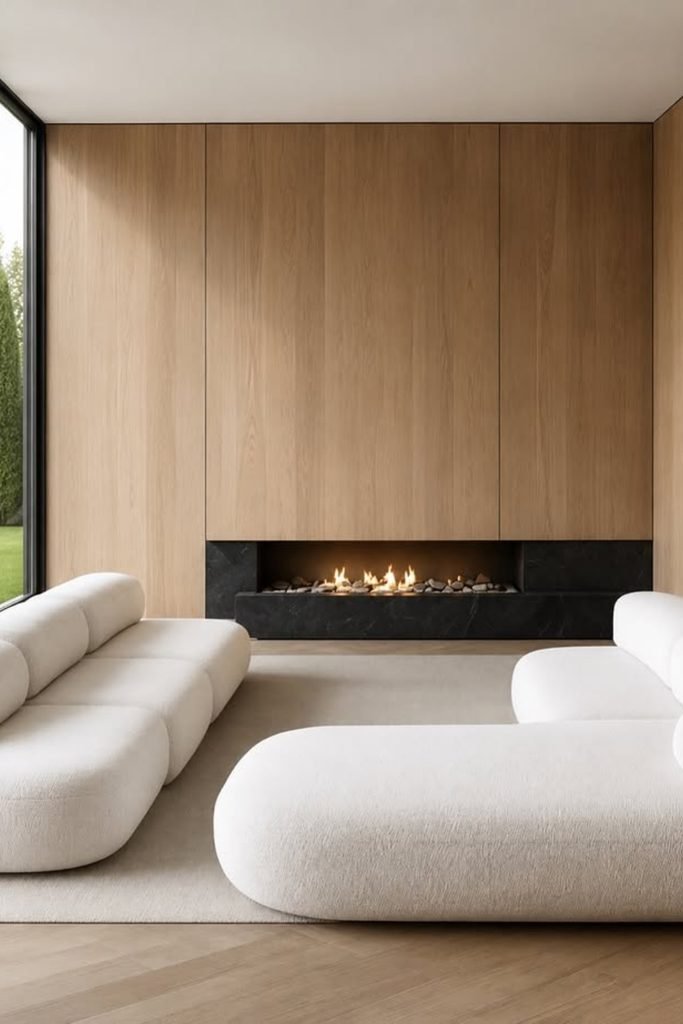
Curved furniture can soften a minimalist living room without adding decoration, making it especially effective in bright spaces with clean architectural finishes.
Position rounded white sofas opposite each other to encourage conversation, while leaving generous open space around them for an airy, uncluttered layout.
Extend pale wood paneling around the fireplace wall, then use a dark stone firebox as the single strong contrast within the neutral palette.
Scenic Warmth
Wide landscape views deserve breathing room, so keep tall furniture away from windows and let a low sectional define the main seating zone.
Wrap warm wood paneling around nearby walls to echo the outdoor scenery, then introduce cream upholstery for contrast without making the space cold.
Anchor the arrangement with a substantial stone coffee table and large neutral rug, giving the spacious living room a grounded, finished center.

Library Cocoon
Built-in bookshelves can turn a living room into a quiet retreat, especially when dark walnut surrounds the seating from wall to ceiling.
Break up all that wood with creamy upholstered furniture and a plush rug, giving the room enough softness to stay relaxed and inviting.
Keep accessories restrained across the shelves, allowing books, warm timber grain, and curved seating to provide most of the room’s visual character.

Timber Lounge
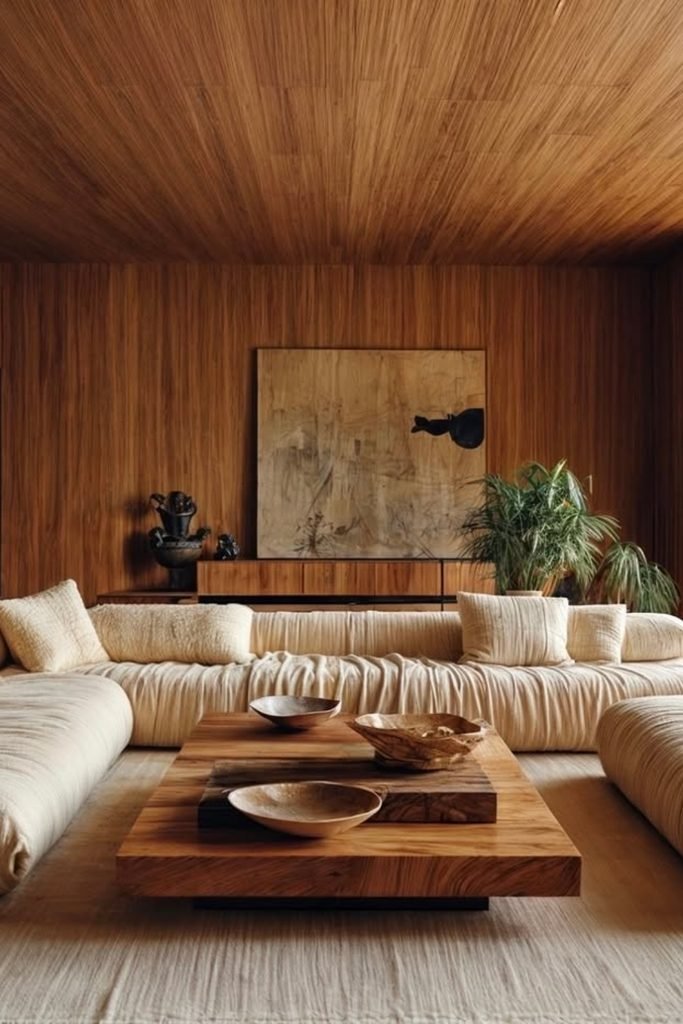
Full wood wrapping creates an immersive living room atmosphere, working especially well in spacious interiors where daylight prevents the finish from becoming oppressive.
Sink low cream seating around a chunky wooden coffee table, using generous cushions and relaxed upholstery to soften every hard architectural surface nearby.
Introduce leafy plants and oversized neutral artwork sparingly, giving the natural materials extra depth while preserving the room’s calm, earthy direction.
Slatted Display
Floating shelves make a slatted living room wall more useful, giving smaller spaces storage and personality without introducing bulky cabinets or floor furniture.
Install shelves at different heights and add lighting beneath them, creating warm pools of light that emphasize the vertical timber texture after dark.
Keep furniture straightforward with a compact gray sofa, then use plants and small collected objects to make the wall feel personal, not staged.

Sculpted Paneling
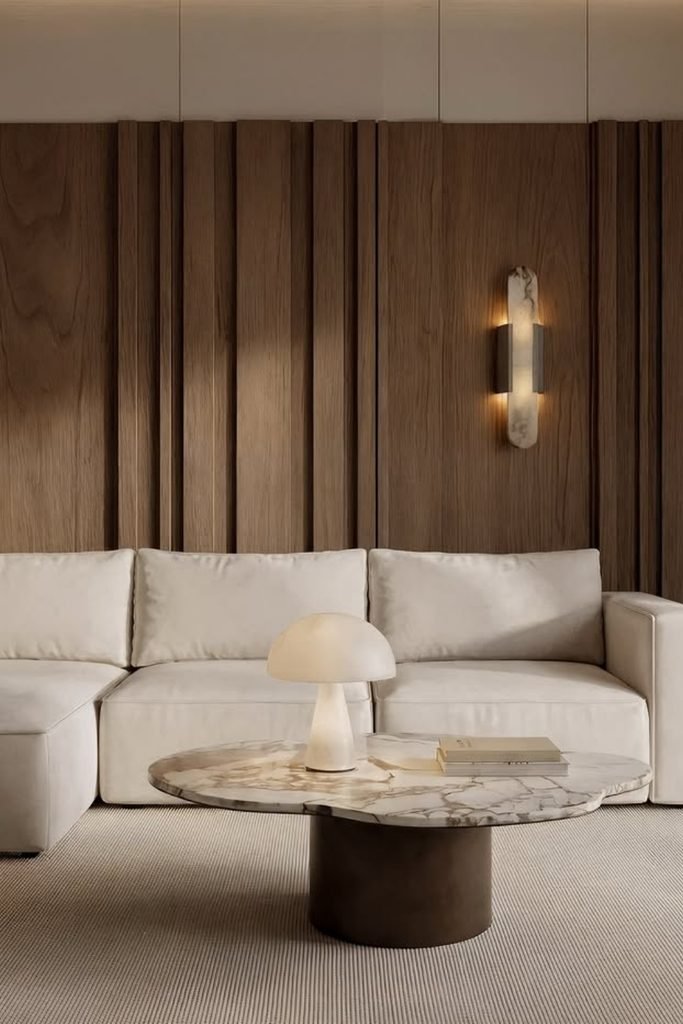
Wide timber panels gain more dimension when raised vertical details interrupt the surface, giving a neutral living room subtle architecture without busy decoration.
Set a simple cream sectional against the feature wall, allowing its clean shape to contrast gently with the deeper grooves and warm wood.
Bring in marble through a low organic coffee table, then choose minimal lighting so texture remains the strongest decorative element in the space.
Flowing Slats
Wavy timber slats bring movement into a quiet living room, making a plain feature wall feel artistic without relying on framed decoration.
Pair the sculptural wall with a cream sectional and slim armchair, allowing simple furniture shapes to keep attention on the flowing woodwork.
Use warm daylight, earthy cushions, and a dark round coffee table to strengthen the cozy palette while keeping the overall arrangement visually balanced.

Chocolate Retreat
Deep brown upholstery works beautifully in intimate living rooms, especially when surrounding wood paneling creates a warm, enclosed atmosphere for evening relaxation.
Choose low cushioned seating with generous proportions, then separate the pieces with a pale stone side table to break up the darker tones.
Finish with a substantial stone coffee table and softly glowing lamp, letting texture provide interest instead of filling the room with extra accessories.

Retro Greenery
Vintage-inspired living rooms gain personality through collected pieces, making them ideal for anyone who prefers layered character over perfectly coordinated modern furniture.
Start with an olive sofa and leather lounge chair, then surround them with trailing plants, colorful artwork, records, and open display shelving.
Ground the busier details with a patterned neutral rug and warm wooden coffee table, creating one comfortable center for the room’s varied elements.

Walnut Calm
Uninterrupted walnut paneling gives a living room instant warmth, working particularly well when pale furniture can provide enough contrast against the darker backdrop.
Place a curved cream sofa along the wall and repeat its softness through textured cushions and a thick rug for a relaxed balance.
Keep the center grounded with a dark round coffee table, while simple lamps and leafy branches add height without competing with the wood.

Layered Geometry
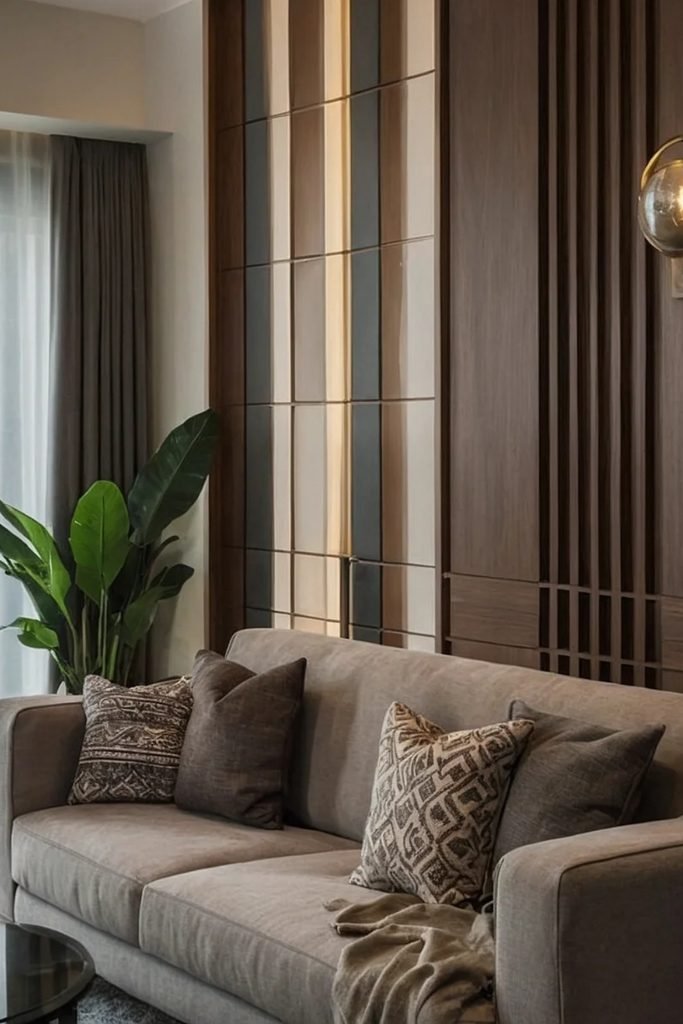
Geometric wall detailing can make a compact living room feel custom, especially when dark wood panels are broken with slim illuminated sections.
Keep the sofa in a soft taupe finish and repeat deeper brown through patterned cushions, creating contrast without competing with the detailed backdrop.
Add sheer curtains and one leafy floor plant near the window, letting daylight soften the darker wood while keeping the seating area inviting.
Heritage Contrast
Traditional wood paneling feels surprisingly fresh when paired with streamlined furniture, making older living rooms easier to update without removing their original character.
Choose a pale curved sectional to brighten the darker walls, then introduce playful cushions and contemporary artwork for small bursts of personality.
Finish with a sculptural glass coffee table and textured white rug, allowing modern shapes to stand apart while respecting the room’s historic architecture.

Collected Elegance
Rich paneled walls create the perfect setting for layered furnishings, especially when you want a living room to feel established rather than newly decorated.
Center a muted green velvet sofa between tall lamps, then mix patterned cushions and framed artwork to build character without overcrowding the seating.
Use an aged rug and chunky carved coffee table below, letting their imperfect textures complement the polished wood and more formal surrounding details.

Ambient Nook
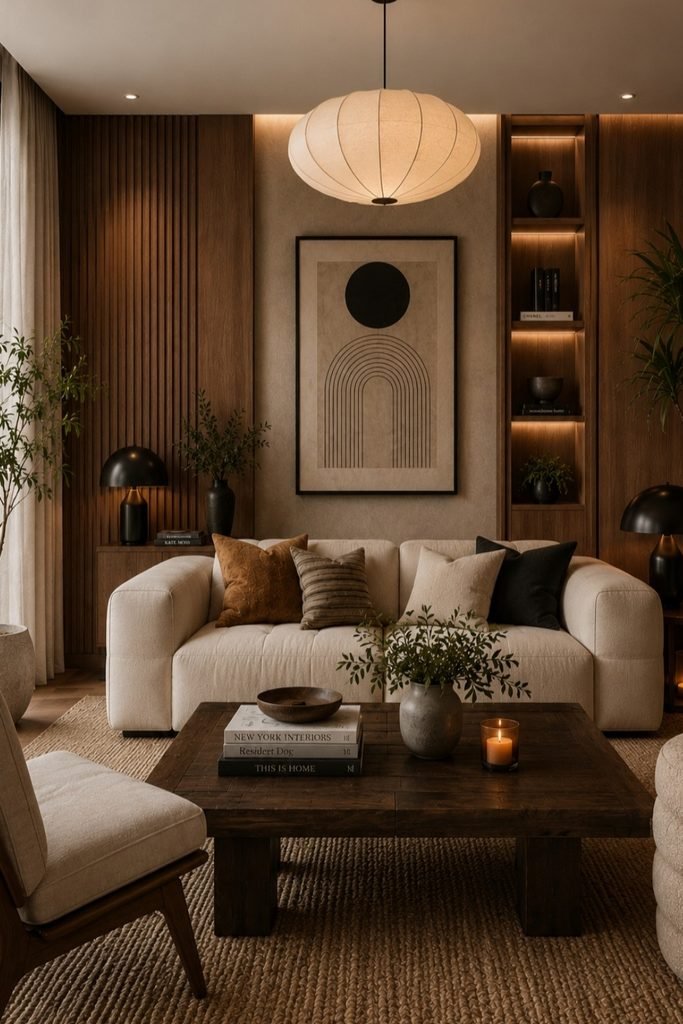
Layered lighting can transform a wood-heavy living room after sunset, giving every wall texture and display niche a warmer, more dimensional appearance.
Place a cream sofa beneath one oversized graphic artwork, then flank the seating with dark lamps to create a comfortable evening conversation zone.
Use illuminated shelving, indoor trees, and a large paper pendant sparingly, spreading light across different heights instead of relying on ceiling spots alone.
Fireside Depth
Dark timber ceilings create a cocooning living room, especially when generous windows bring enough daylight to keep the deeper finishes from feeling enclosed.
Build the seating around a long stone fireplace, pairing a deep brown sofa with leather armchairs for comfortable conversation and balanced visual weight.
Use illuminated shelving and a substantial square coffee table to reinforce the architecture, while a muted rug softens the room’s many hard surfaces.

FAQs
Can Wood Paneling Work in a Small Living Room?
Yes, wood paneling can work in a small living room when you keep the wood tone light and limit coverage.
Use one focal wall, vertical boards, and pale furniture so the room gains warmth without feeling visually closed in or cramped.
A large light rug and simple lighting also help separate the wood from other surfaces and keep everything feeling balanced.
Should You Paint Old Wood Paneling?
Painting old wood paneling makes sense when the finish feels too dark, damaged, or difficult to match with your decor.
If the wood is solid and attractive, try changing the rug, lighting, furniture, or finish before covering the grain completely.
For cheap faux panels or badly worn veneer, paint can be the easiest way to keep texture while giving the room a cleaner look.