You can remove half the decor from your living room and still wonder why the space does not feel calm.
Sometimes the real problem is the layout, harsh lighting, busy colors, or too many things competing for your attention.
A Zen living room should feel simple and peaceful, but it should still be warm, comfortable, and practical for everyday life.
In this article, you will see how to create that balance with better colors, natural materials, and softer lighting.
Let’s jump in!
What Does a Zen Living Room Mean?
A Zen living room is a space that feels calm, simple, and easy to live in rather than empty or overly styled.
If you want that feeling, start by removing visual clutter and giving your furniture enough space instead of filling every corner.
Use soft neutral colors, natural wood, stone, linen, and woven textures so the room feels warm without looking busy.
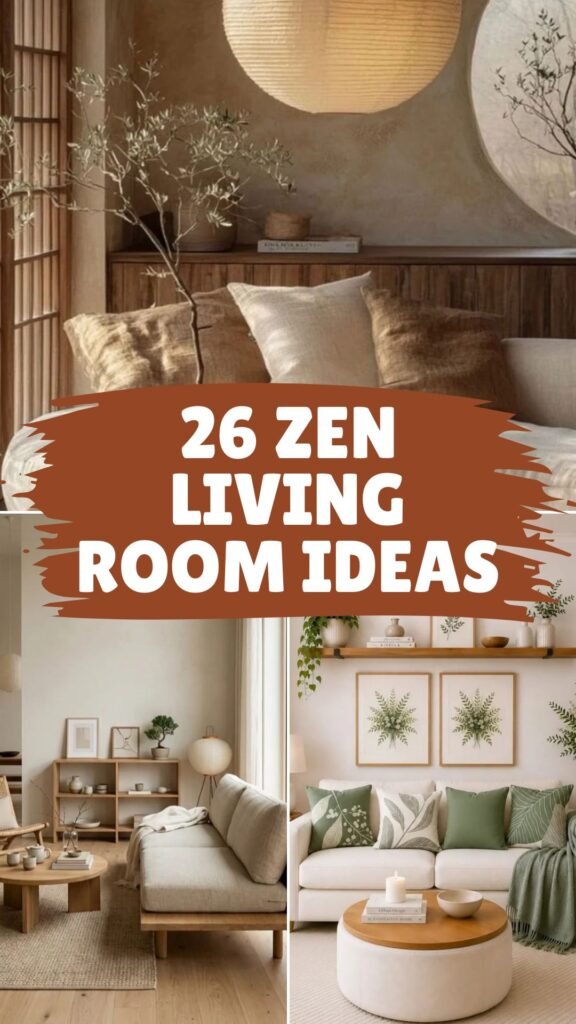
Good lighting matters too, so bring in daylight during the day and use softer lamps instead of relying only on harsh ceiling lights.
You can still keep a TV, books, plants, and personal decor, but choose fewer pieces and give each one a clear place.
The goal is not perfection; it is creating a living room where everything feels useful, balanced, comfortable, and easier on your eyes.
Earthy Curves
If your living room feels too sharp, soften it with rounded furniture, warm plaster walls, and a low wooden coffee table.
Keep the palette close to cream, tan, and brown, then let natural light bring out the texture instead of adding more decor.
A paper pendant, simple branches, and one sculptural table are enough to make a small or medium room feel grounded.

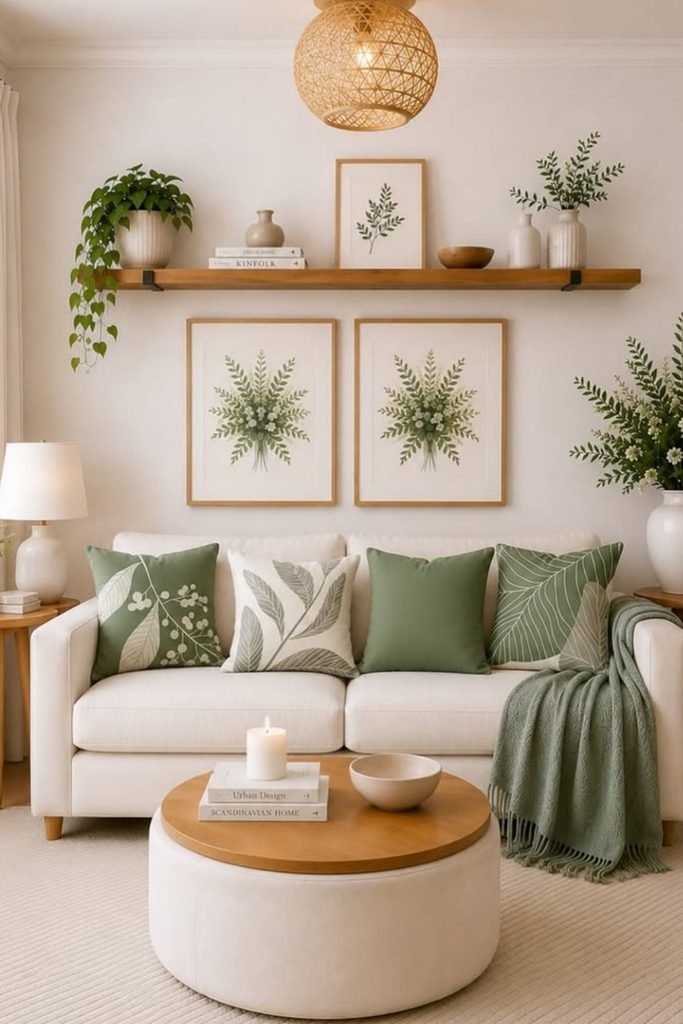
Sage Balance
Green works best in a Zen room when you repeat it gently through pillows, art, plants, and one soft throw.
Pair those accents with a white sofa and light wood so the room stays fresh rather than turning visually heavy.
If your space is compact, keep the wall decor simple and use one floating shelf to add personality without crowding the seating area.
Quiet Minimalism
An open room feels calmer when the furniture stays low, the colors stay pale, and every piece has enough space around it.
Choose a slim wood sofa, woven chair, simple shelving, and a round table instead of filling the room with bulky pieces.
Sheer curtains and one paper lamp soften the daylight, while a few ceramics keep the room personal without disturbing the clean layout.

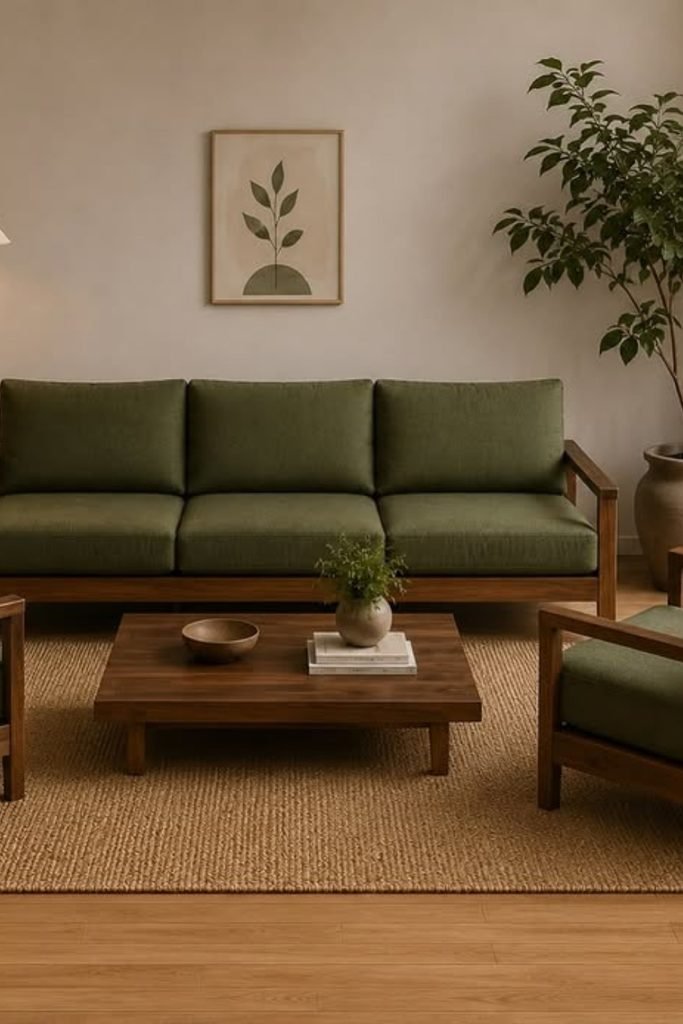
Olive Seating
If beige feels too plain, deep olive seating can bring calm color into the room without losing the natural Zen mood.
Use warm walnut frames, a low square table, and a woven rug so the green feels earthy rather than bold or decorative.
This setup suits a medium living room especially well because the matching chairs create order while the open frames keep everything visually light.
Forest View
Let the view do most of the decorating when your living room opens toward trees, gardens, or another calm outdoor scene.
Keep the sofa low and neutral, then use chunky wood pieces so the room feels grounded without competing with the scenery.
This works best in bright spaces, where simple pottery, bare branches, and one soft rug can finish the look naturally.

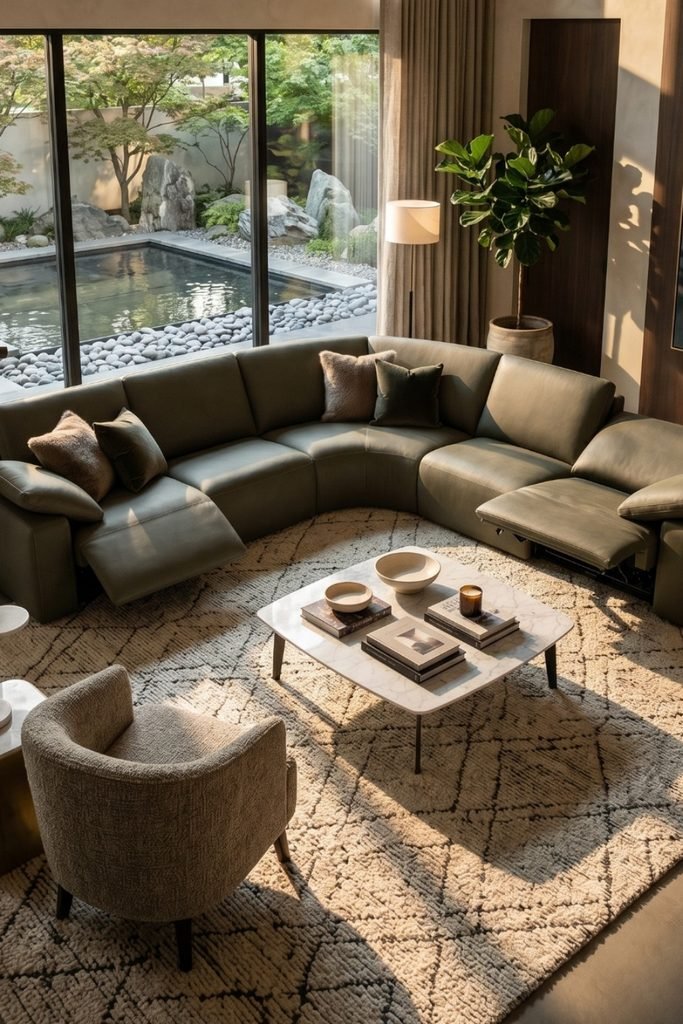
Garden Focus
If your room faces a garden, use the outdoor view as the main focal point instead of covering walls with decor.
An olive or moss sectional ties indoor colors to the greenery outside, while a textured rug keeps the seating area soft.
Choose one large plant and restrained artwork nearby, because repeating too many natural accents can quickly make this calm setup feel crowded.
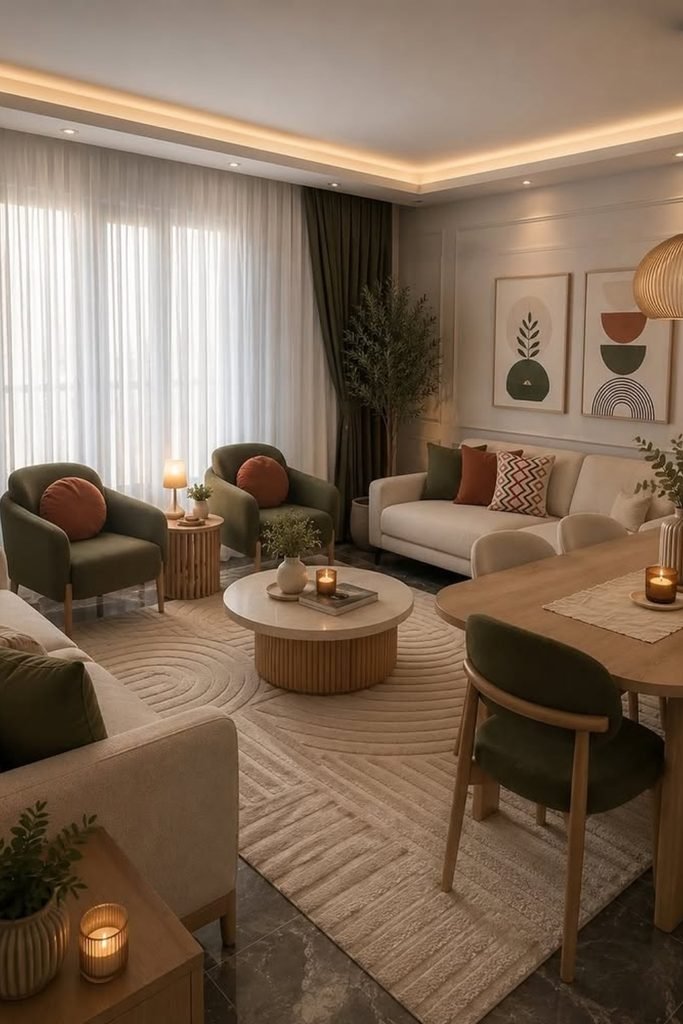
Soft Zoning
Open-plan rooms feel calmer when you repeat the same few colors across seating, dining chairs, artwork, and small decorative pieces.
Use cream as the base, then bring in olive and rust accents so each zone connects without looking overly matched.
Layer lamps and soft ceiling light instead of one bright fixture, especially when the living and dining areas share the same room.
Sunwashed Texture
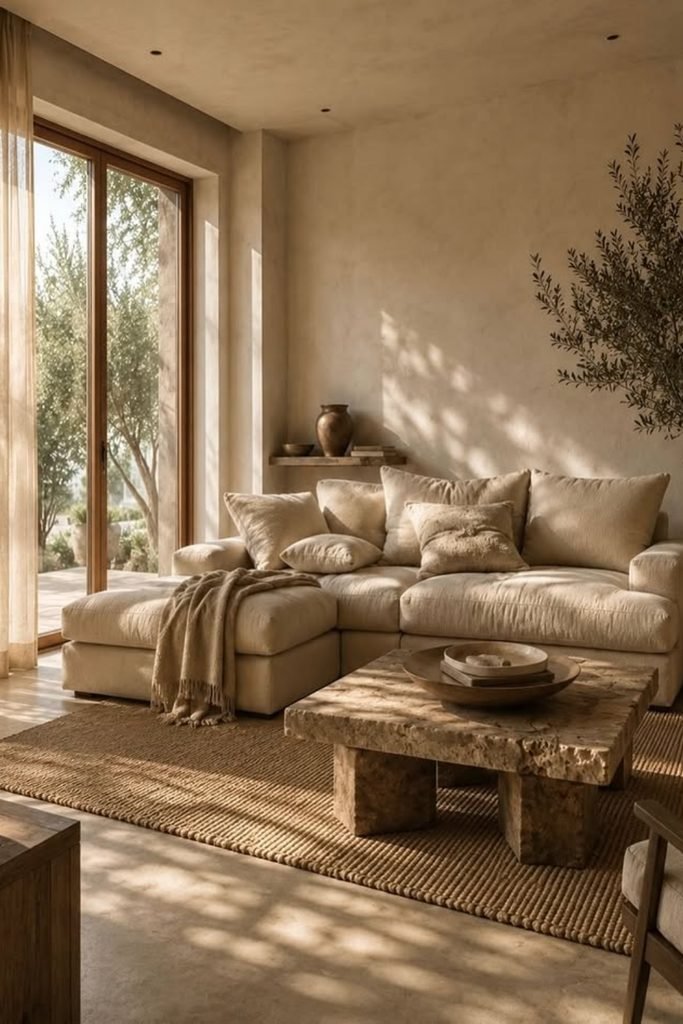
A beige room stays interesting when sunlight can catch rough stone, woven rugs, soft linen, and gently uneven wall finishes.
Keep the furniture relaxed and slightly oversized, then add one heavy coffee table to give all those pale materials some visual weight.
This approach suits rooms with strong daylight, because the changing shadows create depth without needing bold colors or lots of accessories.
Quiet Layers
When a neutral room feels too plain, use ceiling slats, pale wood, and soft fabric to add depth without extra clutter.
Keep the sofa low and simple, then leave the wall mostly bare so the room has enough visual breathing space.
A paper floor lamp and one thin branch arrangement bring warmth at night without adding unnecessary decoration or visual noise.

Sculpted Calm
Curved furniture works well when you want a Zen room to feel softer, especially in spaces with strong architectural lines.
Pair a rounded cream sofa with a low wood table, then repeat warm brown tones through pottery and simple artwork.
If the room already has arches, let those shapes stay visible instead of crowding them with tall shelves or heavy decor.

Crafted Warmth
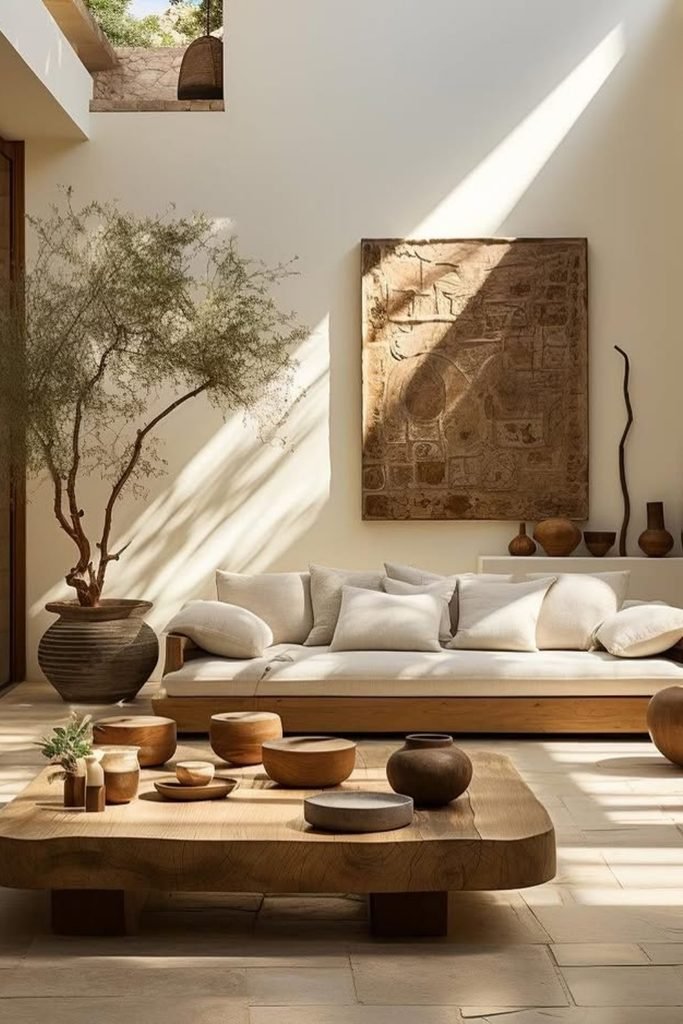
A large room can still feel grounded when you bring its furniture closer to the floor and keep the main pieces simple.
Use one broad wood table to anchor the seating, then group handmade bowls in different sizes for controlled visual interest.
This approach suits bright rooms with high ceilings, where one indoor tree and oversized artwork can fill space without creating clutter.
Coastal Stillness
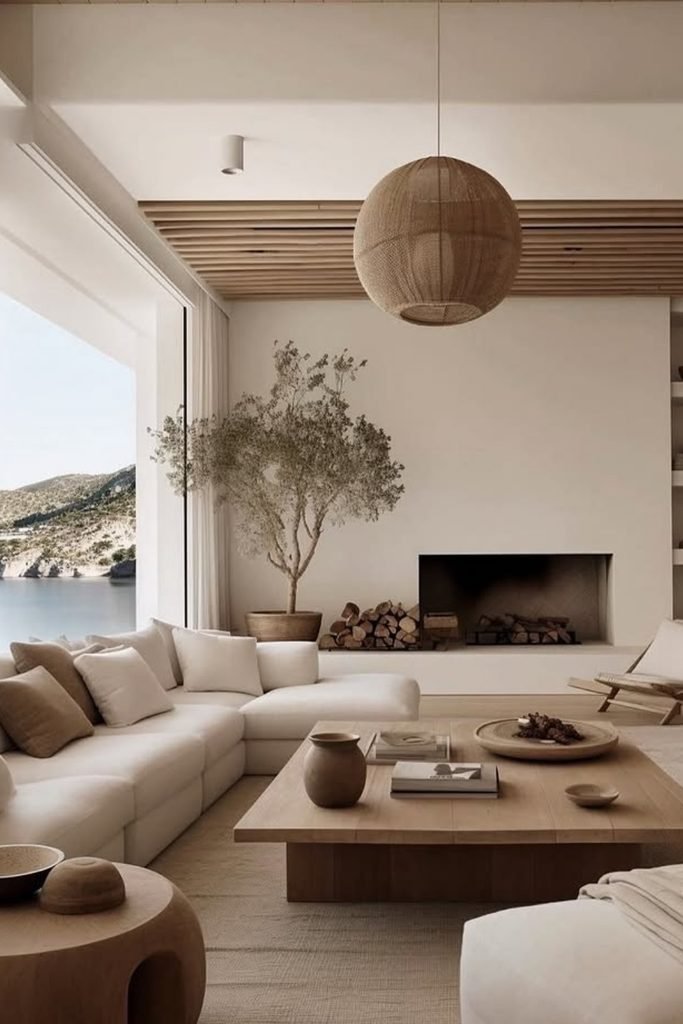
If your living room opens to a beautiful view, keep the interior quiet so the landscape stays part of the experience.
Choose low cream seating and a wide wood table, then use the fireplace as a second focal point during evenings.
Woven lighting, stacked firewood, and a single potted tree add texture here without fighting the open water and clean architecture.
Woven Warmth
If your Zen room feels too plain, layer woven lighting, textured cushions, and rough wood instead of adding stronger colors.
Keep the sofa and walls creamy, then repeat warm tan tones through the rug, chair, mirror, and simple pottery nearby.
This mix works especially well in sunny rooms, where natural texture creates depth without making the space feel crowded or busy.

Olive Contrast
A deep olive wall can calm a modern living room when you balance it with cream seating and warm wood.
Bring the green forward again through one chair and a few pillows, then add rust accents for controlled warmth nearby.
Keep artwork large and simple, because one clear focal piece will make the room feel calmer than several smaller frames.

Glass Retreat
When your living room has strong garden views, let the glass and greenery lead instead of covering every surface with decor.
Use low cream seating around a simple wood table, then keep black framing visible to give the pale room definition.
A fireplace and a few large plants add enough warmth, so you do not need many small accessories competing for attention.

Soft Symmetry
Curved sofas can make a formal living room feel more relaxed, especially when you keep the palette soft and nearly monochrome.
Arrange the seating inward around two low tables so conversation feels natural and the center stays open rather than packed.
Choose one tall tree and one statement light fixture to add height, then keep the remaining decor quiet and useful.

Earthy Contrast
When a beige room starts feeling flat, add one or two dark pieces so the softer materials have something to push against.
Keep the sofa relaxed and textured, then bring in rough pottery, aged wood, and one oversized artwork for a grounded look.
This works especially well in modern spaces where you want warmth and depth without filling the room with extra color or decor.

Shoji Calm
If you want a stronger Japanese feel, start with shoji-style screens, warm wood, and low furniture before adding decorative accessories.
Keep the palette close to cream and brown, then let one paper lantern and a small tree soften the structured lines.
This setup suits quiet sitting rooms best, especially when you can frame a garden view and keep the center comfortably open.

Colorful Zen
Zen does not have to mean beige, so use a few bold accents when your room needs more personality and energy.
Keep the sofa and walls neutral, then add rust, olive, black, and deep blue through art, pillows, and one chair.
The trick is leaving enough open space around those colors, which keeps the room lively without letting the stronger tones take over.

Low Living
A low seating plan can make the whole room feel calmer because it keeps the sightlines open and the furniture visually grounded.
Pair platform sofas with a dark wood table, tatami-style flooring, and shoji panels if you want a cleaner Japanese-inspired look.
Use one bonsai or small tree as the focal point, then keep shelves and wall decor minimal so the architecture stays noticeable.

Moody Warmth
If your Zen room feels too bright, deepen it with dark wood, olive accents, and warm candlelight around the main seating area.
Keep the sofa light enough to balance the darker fireplace wall, then add aged pottery and greenery for a softer finish.
This setup works best in cozy rooms where layered lighting can make the space feel calm without pushing everything toward beige.

Garden Seating
Traditional Japanese details work best when you let the structure lead, using shoji screens, exposed wood, and low seating together.
Add moss green cushions to echo the garden outside, then keep the table simple so the room still feels open and grounded.
This approach suits rooms with strong natural views, especially when you want the inside and outside to feel visually connected.

Modular Comfort
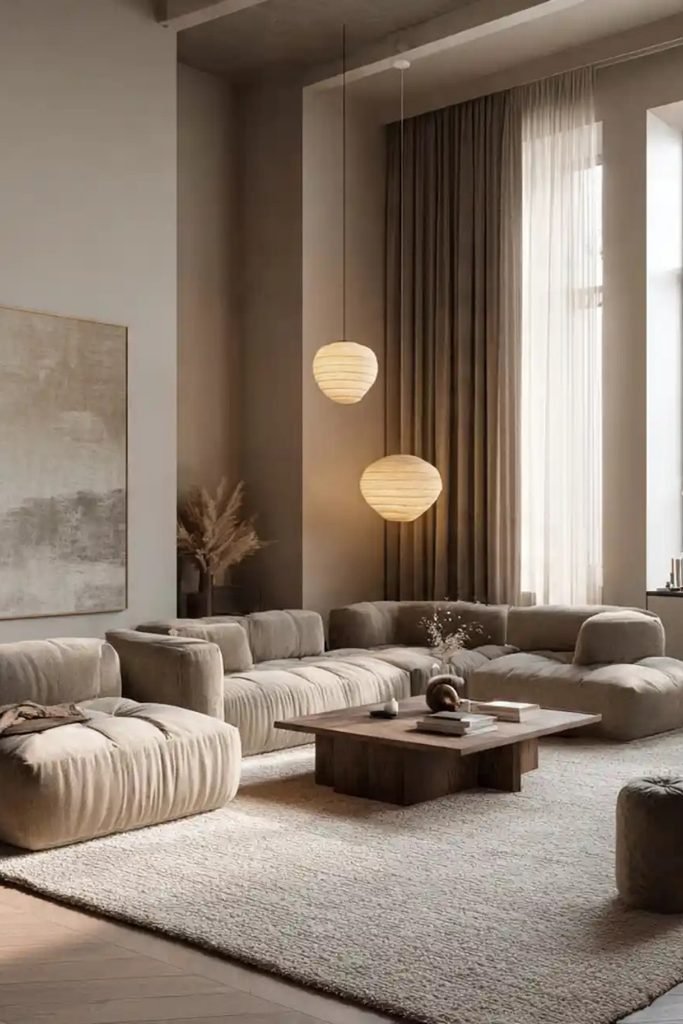
Large neutral rooms need shape more than extra decor, so use deep modular seating to define the lounge without cluttering it.
Balance the bulky sofa with a low wood table, soft rug, and paper pendants that spread light gently across the room.
This layout works well in open spaces where you want comfort first but still need clean lines and plenty of breathing room.
Curved Nook
Small Zen rooms benefit from built-in curves because they soften tight corners and make the entire layout feel more intentional.
Use one rounded sofa, a circular rug, and a low stone table, then let hidden lighting warm the walls around them.
Keep decor limited to one tree, a few ceramics, and simple art so the compact room never feels visually overfilled.

Hidden Media
A TV can still work in a Zen living room when you surround it with dark wood and keep everything else visually restrained.
Use a long floating console and low furniture so the screen feels integrated instead of becoming the only thing you notice.
Soft plants, warm lighting, and one textured rug will stop the darker media wall from making the room feel too heavy.

Sage Media
Soft sage walls can calm a small TV room without making it feel cold, especially when paired with pale wood and cream.
Keep the media unit low, use one large plant, and repeat green through cushions instead of adding lots of small decor.
This is a practical setup for apartments because the room feels styled and relaxed without needing custom storage or major changes.
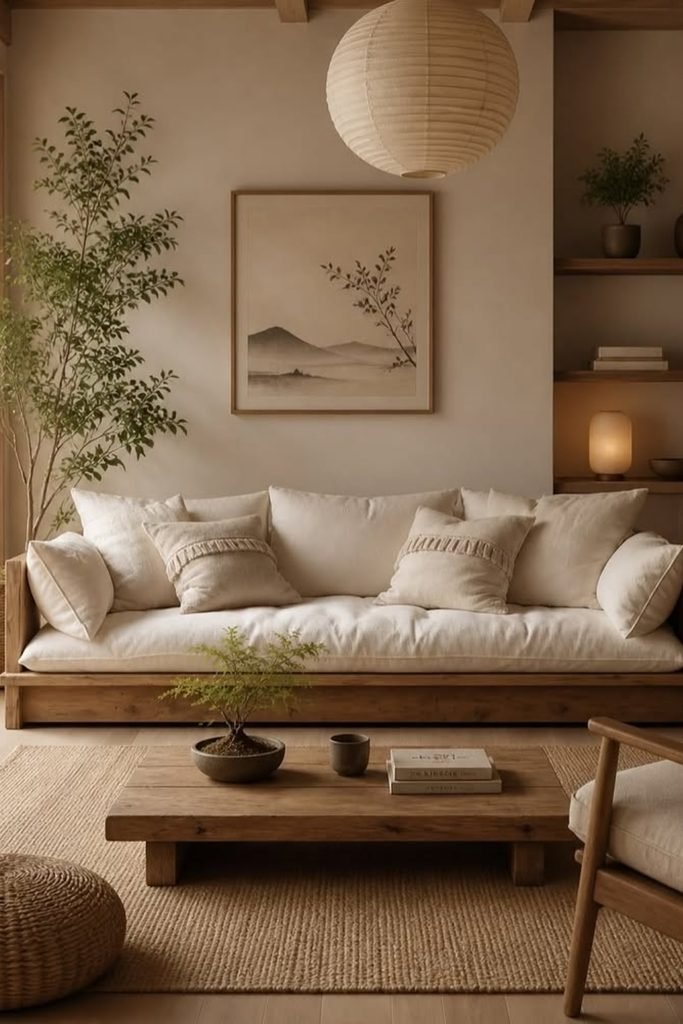
FAQs
Can a Zen Living Room Have a TV?
Yes, a TV can fit into a Zen living room if you keep the media wall simple and hide visible cables.
Choose a low console, soft wood tones, and limited decor so the screen does not become the only focal point.
If possible, balance the TV with plants, artwork, or warm lighting so the room still feels calm and comfortable.
How Do You Keep a Zen Living Room Cozy?
Start with soft textures like linen, wool, woven rugs, and cushions so the room feels relaxed instead of empty or cold.
Warm wood, layered lighting, and a few earthy colors can add comfort without bringing too much visual noise into the space.
Keep fewer pieces, but choose ones that feel useful and inviting, because a Zen room should still feel lived-in and comfortable.