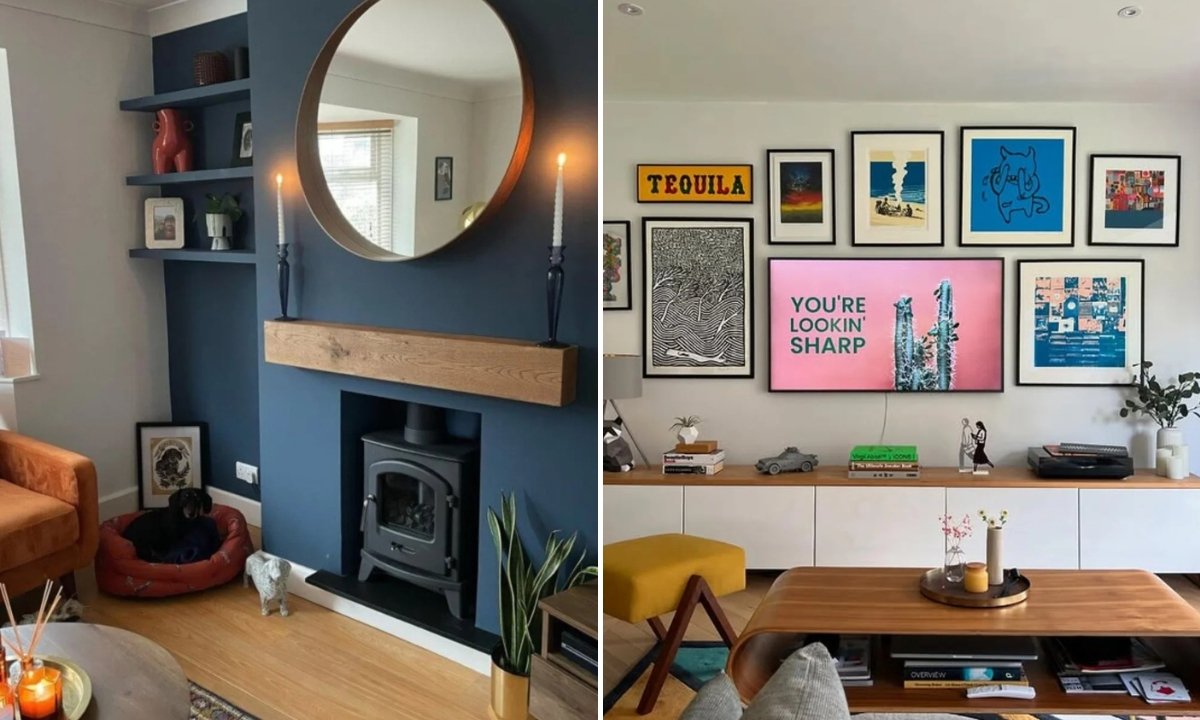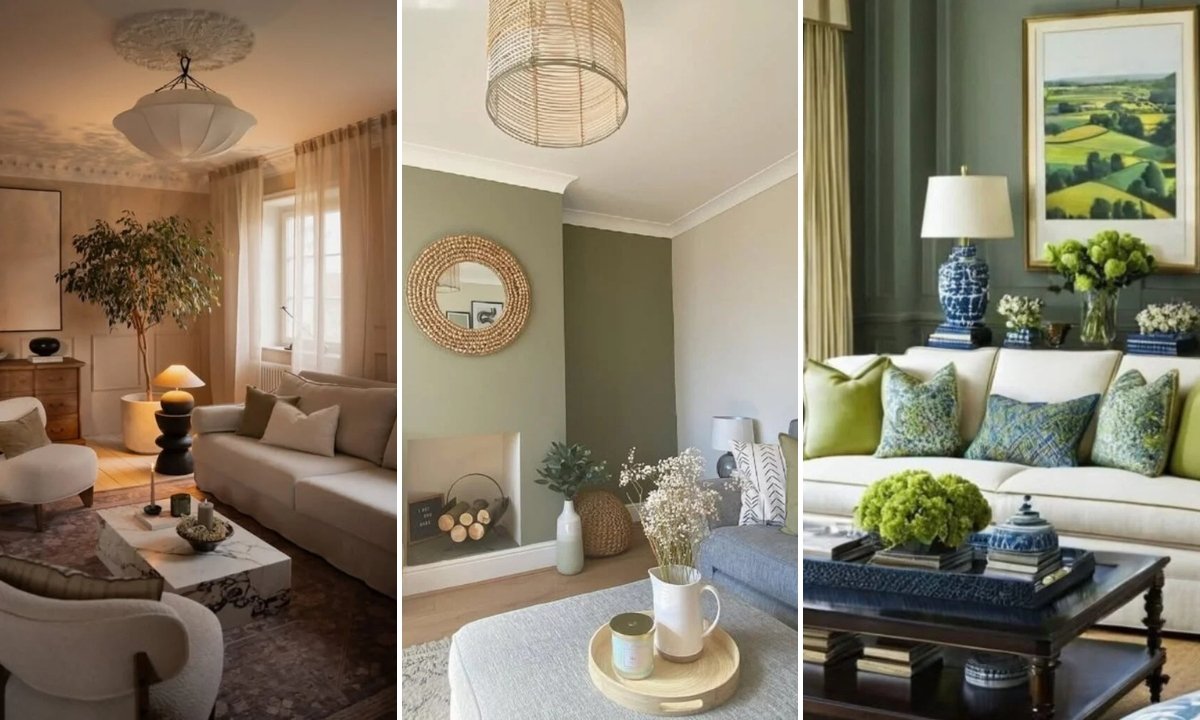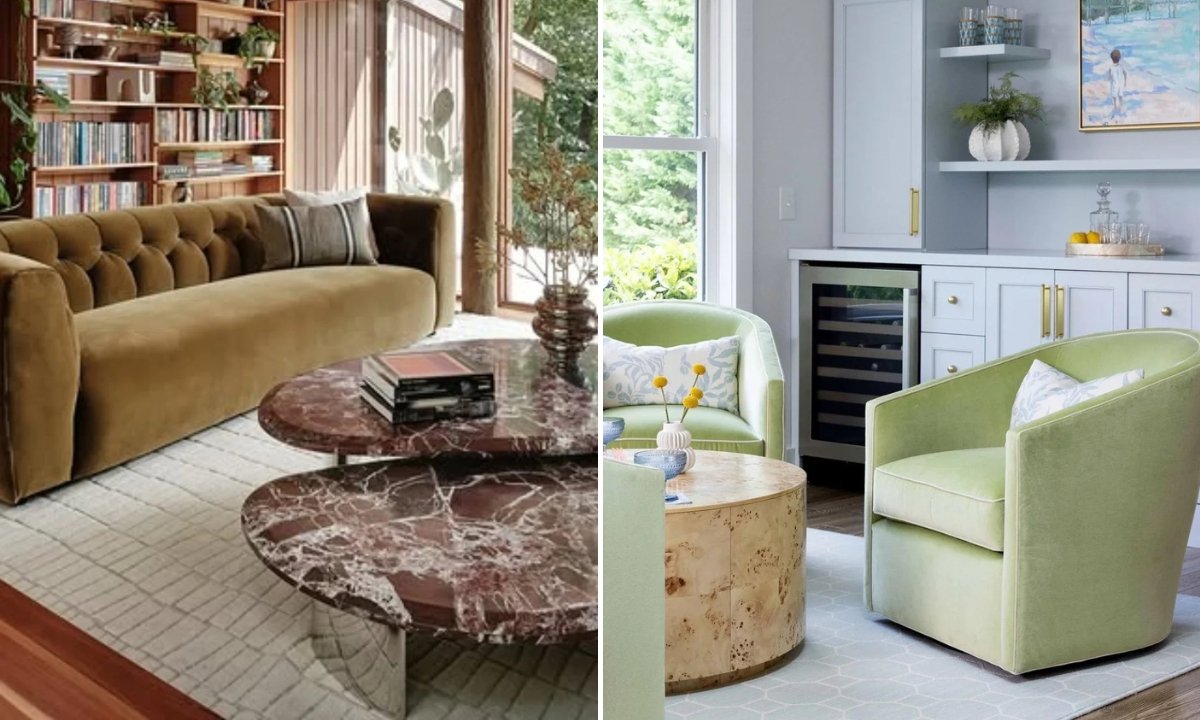

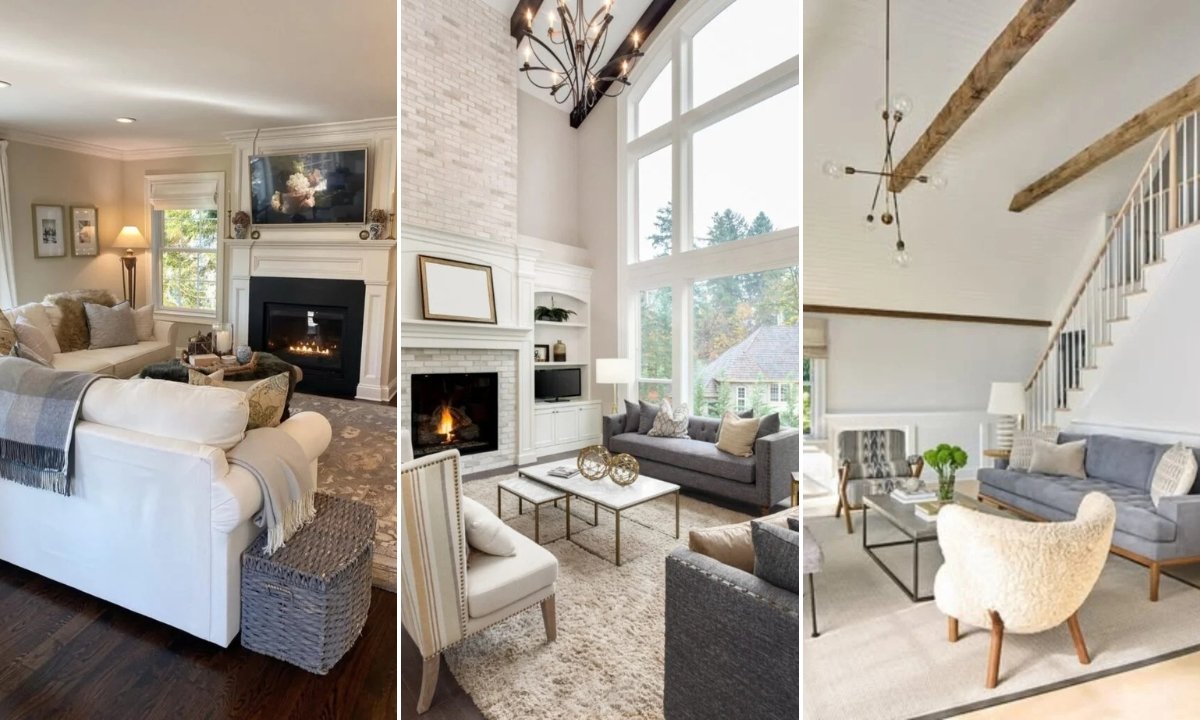
If you feel like your long living room is more like a hallway than a place where you can really relax, you’re not imagining it.
You might move the sofa, and you’ll notice something still looks off. You feel one end is empty while you feel the other end is cramped.
When you push everything against the walls, you’ll see it somehow looks even longer. You can try copying Pinterest layouts, but you’ll find they never quite work in your space.
In this article, you can’t treat long rooms like normal rooms, you will need to arrange your space in a way that makes you feel it’s wider, balanced, and truly comfortable for you to live in.
Let’s jump in!
Table of Contents
- How To Make A Long Living Room Look Wider?
- Float, Don’t Line
- Anchor With Fireplace
- Use Height Strategically
- Wrap Around Corners
- Zone the Open Plan
- Let the Windows Lead
- Create a Central Core
- Soften With Sectional
- Divide With Placement
- Curve the Corners
- Center With Symmetry
- Embrace Wall Seating
- Square Off Seating
- Close the Conversation
- Create a Front Zone
- Anchor One End
- Frame the Focal Wall
- Balance Both Ends
- Soften With Curves
- Face Each Other
- Keep One Side Open
- Float With a Console
- Tighten the Layout
- FAQs
- Should you push furniture against the walls in a long living room?
- How do you arrange a long living room with a TV and fireplace?
How To Make A Long Living Room Look Wider?
If you feel like your living room is long and narrow, you might think it’s the size but you’ll see the real problem is the layout.
When you put everything against the walls, your eye runs straight down the length, and you’ll feel that “hallway” effect.
The first thing you need to do is break that straight line. You can start by pulling at least one large piece of furniture away from the wall.
You might float your sofa a few inches forward and place a console table behind it, you’ll notice it instantly shortens the visual length and makes you feel the room is more intentional.
Next, you can create zones. Instead of treating the room like one long strip, you’ll divide it into two clear areas.
You might set up a main seating area in the center, and you could add a reading nook or small desk at the far end.
When you split the space like this, you’ll see your brain reads it as wider because it stops focusing on the length.
You can also use rugs to make a big difference. You should pick a large rug that anchors your seating area, you’ll see a small rug only makes the room feel stretched.
A bigger rug pulls everything together and creates a visual boundary you can actually appreciate.
Pay attention to furniture scale too. You’ll want to avoid bulky, deep sofas in narrow rooms. You can go for slim arms and exposed legs, they help the room breathe and make you feel less cramped.
And finally, you need to balance both sides. If one wall feels heavy with furniture, you can add visual weight to the other side with art, lighting, or a console.
When you do this, you’ll see the room feels wider, not longer and you’ll feel instantly more comfortable in the space.
Float, Don’t Line
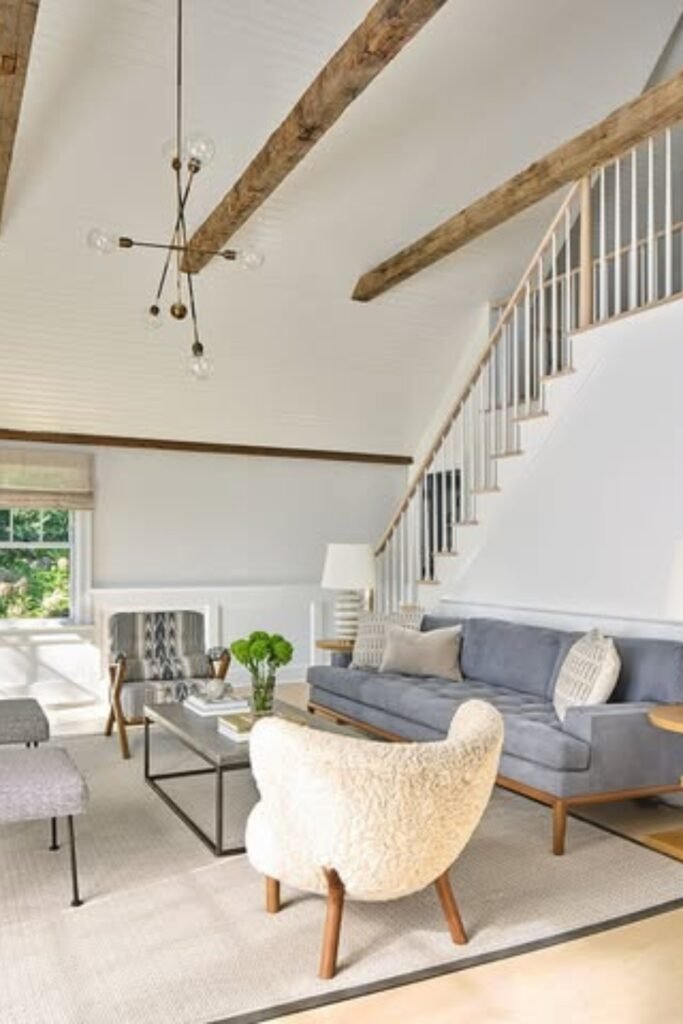
If you push everything against the walls in your long living room, you’ll stretch the space even more and you’ll feel like you’re living in a hallway. Instead, you can anchor your seating in the center.
You might float your sofa off the wall, add two chairs facing in, and let the rug define the zone. You’ll see this setup works especially well if you have high ceilings or open staircases.
You’ll create a strong conversation area and you’ll feel the room is balanced, not like a corridor.
Anchor With Fireplace
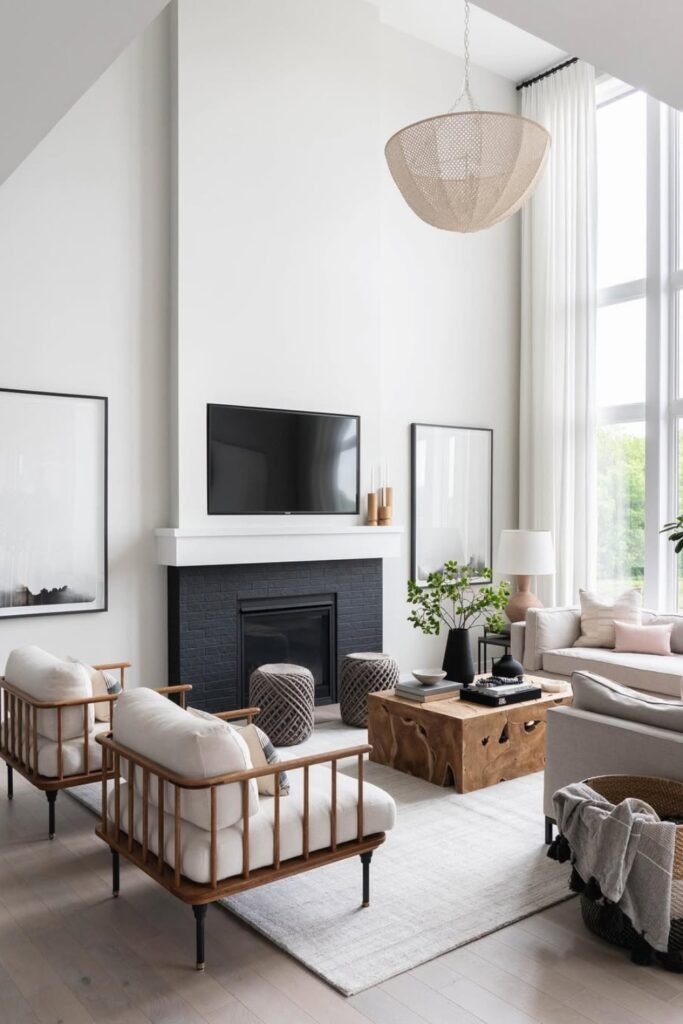
When your long living room has a fireplace, you should use it as your center of gravity. You can arrange your seating around it instead of lining furniture along the walls.
You might place two chairs facing the sofa to keep the space compact and conversational.
You can mount the TV above only if you really need it, but make sure you keep the seating distance comfortable.
You’ll notice this works best in tall rooms where you need to ground the vertical space.
Use Height Strategically
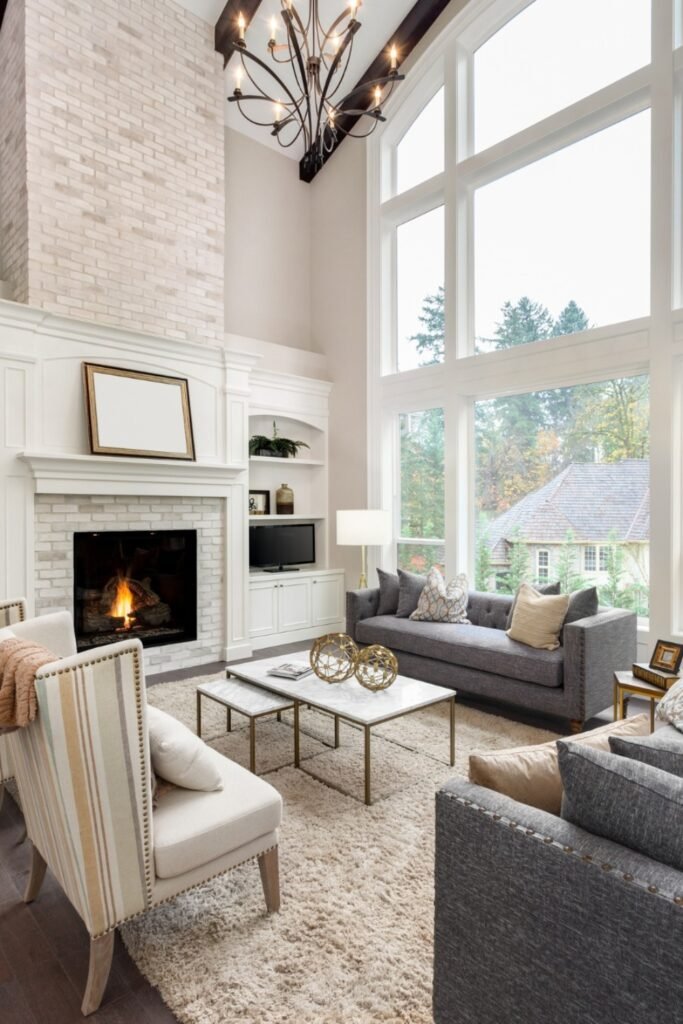
When your room is long, you can draw your eye up instead of across. You might add tall windows, a strong fireplace wall, or vertical built-ins to shift attention to height, not length.
You should keep your seating tight around the fireplace to create a square conversation zone.
You’ll see this works beautifully in living rooms with high ceilings, where you want the space to feel grand but not stretched. You can let vertical elements do the widening for you.
Wrap Around Corners
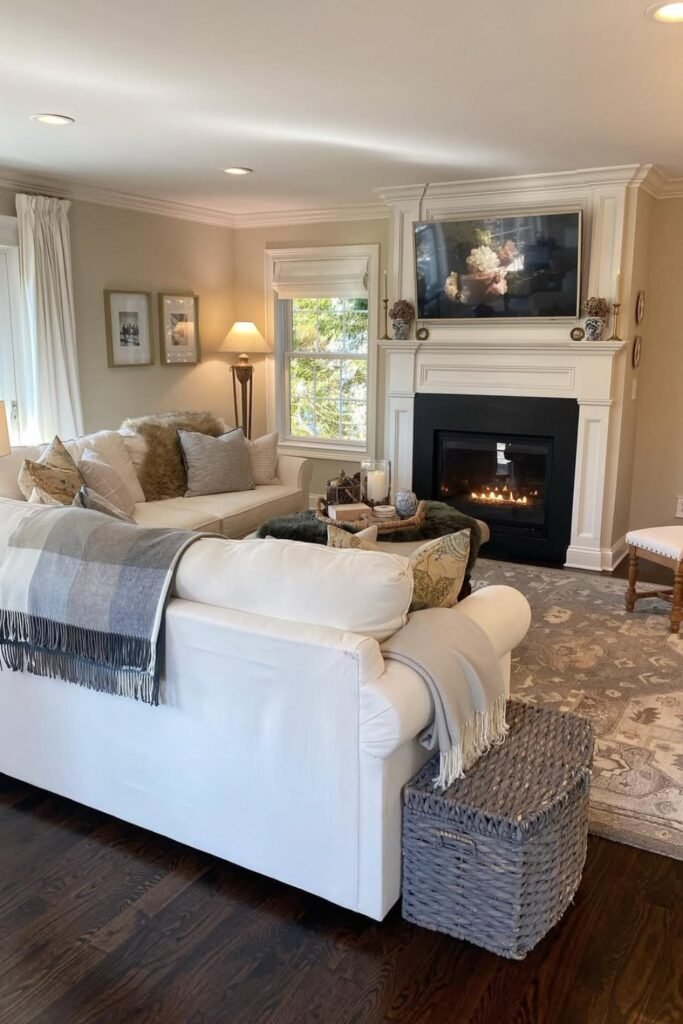
Stop lining your furniture in a straight row. You can turn your seating inward and wrap it around the fireplace to create a tight, cozy square.
You might place a sofa facing the focal wall and a loveseat or chair closing the side, you’ll keep the layout compact.
You’ll find this works well in long rooms with a corner fireplace or multiple windows. By bending the arrangement, you’ll instantly break the tunnel effect.
Zone the Open Plan
In a long open living room, you shouldn’t let the space run straight from one end to the other.
You can use a large sectional to carve out a clear living zone, even if the kitchen or dining area sits behind it.
You’ll want to anchor everything with an oversized rug and a solid coffee table.
You’ll see this works best in open-concept homes where you need definition without walls.
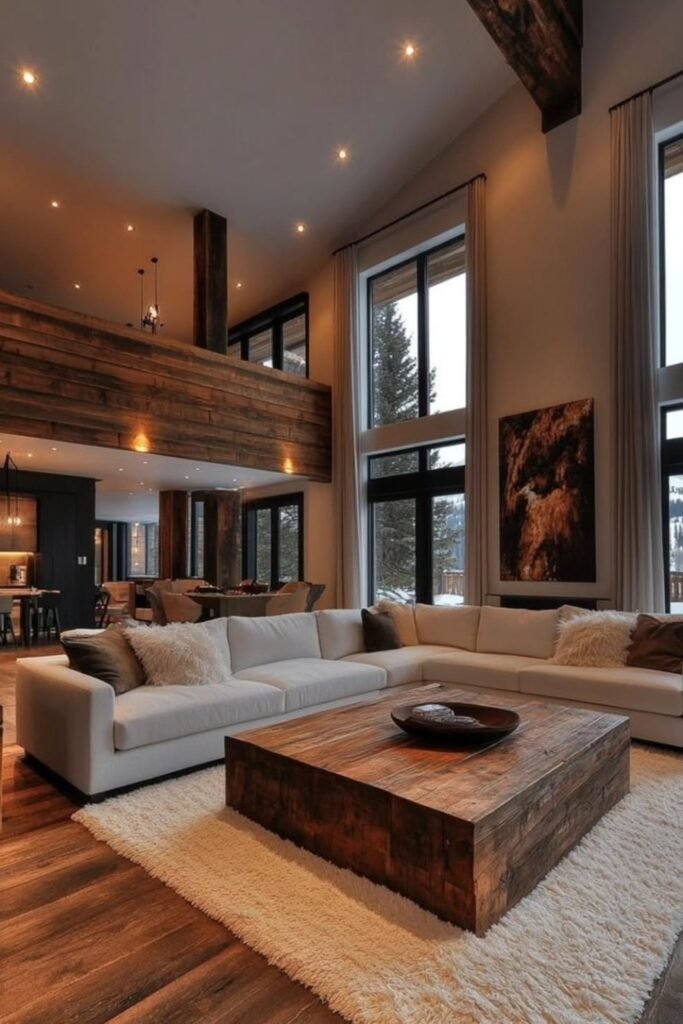
Let the Windows Lead
When one wall is filled with windows, you can stop fighting it. You should place your main seating directly facing or framing that view instead of turning everything sideways.
You might center a large sectional on a full rug, you’ll keep the layout grounded and prevent the room from feeling stretched.
You’ll find this works best in long rooms where natural light can act as your focal point.
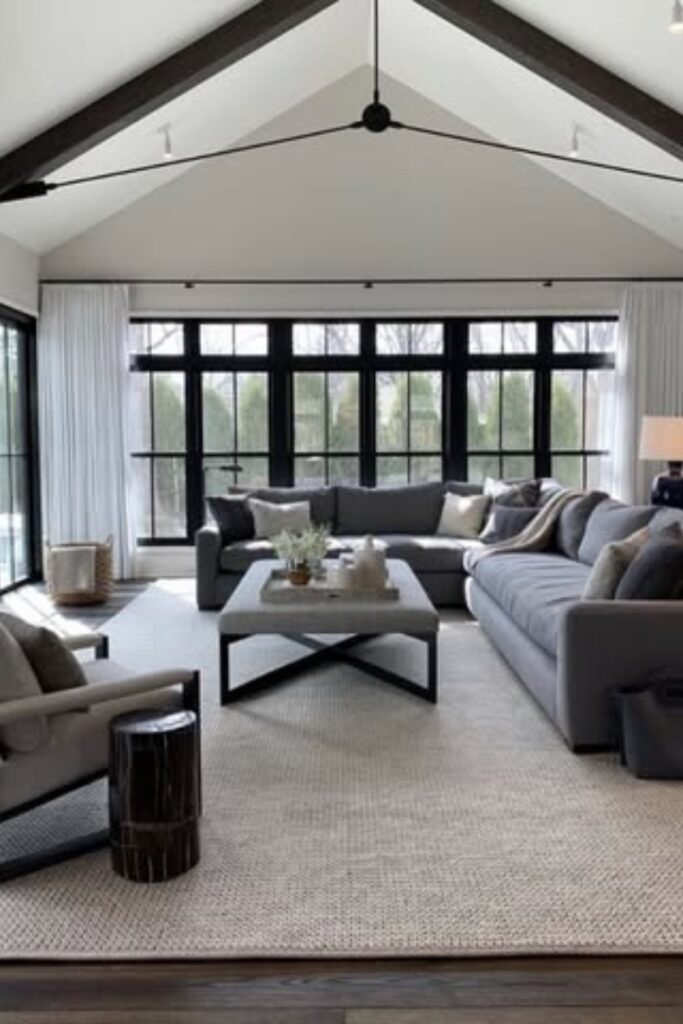
Create a Central Core
When your long living room feels oversized, you can pull everything inward.
You might place two sofas facing each other and anchor them with a large square coffee table to form a tight central block.
You’ll want to keep the fireplace as the backdrop, but let the seating define the shape.
You’ll see this works beautifully in tall, formal spaces where you want symmetry and balance instead of length dominating the room.
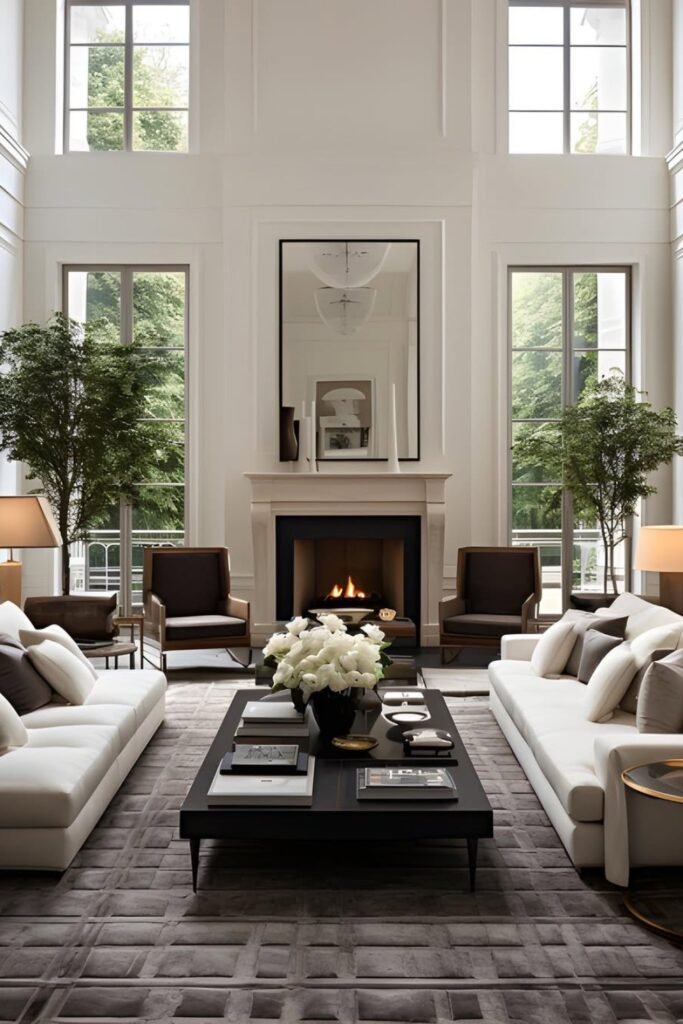
Soften With Sectional
If your long living room opens into the kitchen, you might use a deep sectional to quietly divide the space.
You can position it so the back faces the dining or bar area, creating a natural boundary without walls.
You’ll add a large square coffee table to keep the seating compact. You’ll notice this works best in cozy, open-concept homes where you want separation but still need flow between zones.
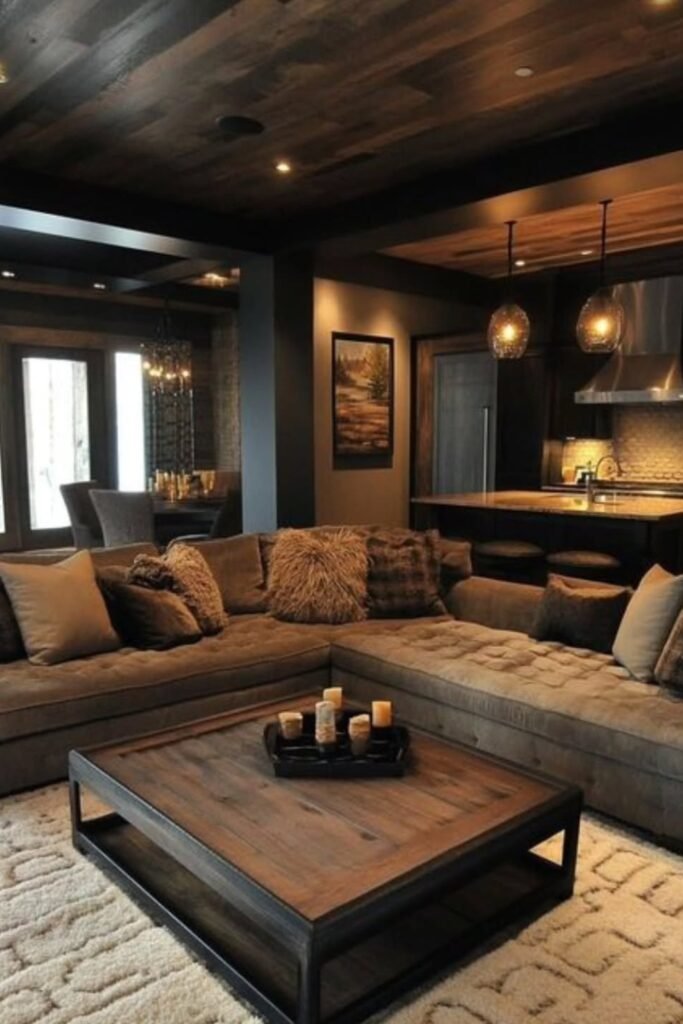
Divide With Placement
When your long living room connects directly to dining, you shouldn’t let the furniture drift. You can turn one sofa inward and use it as a soft divider between zones.
You’ll want to keep both sofas close enough to form a tight seating area, and you can let the dining space breathe behind it.
You’ll find this setup works best in extended open layouts where you need separation without blocking light or movement.
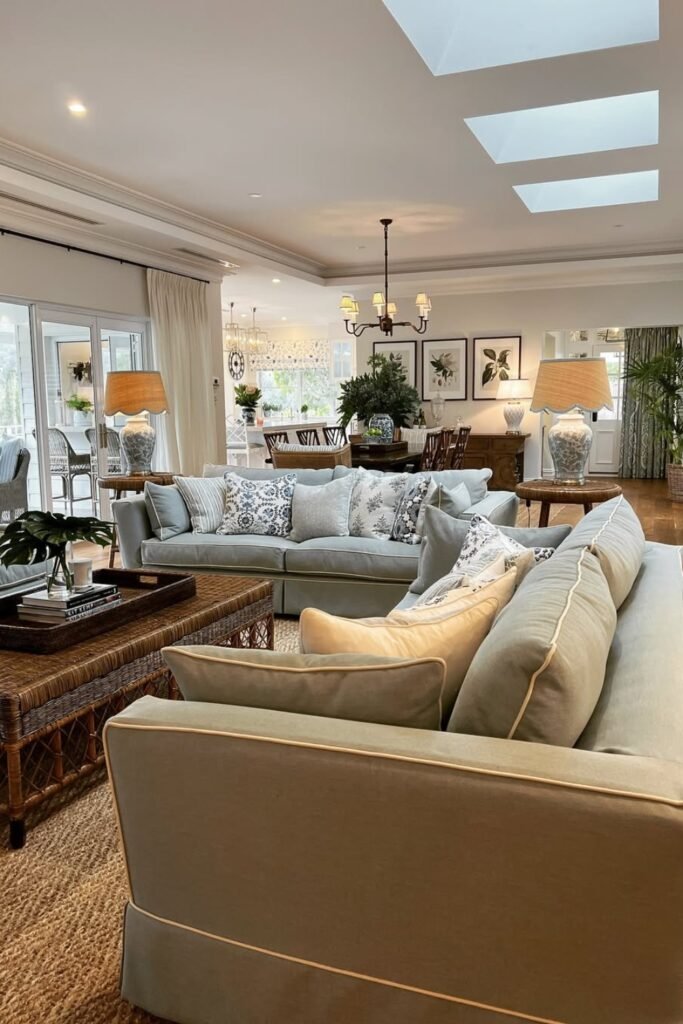
Curve the Corners
Straight lines make a long living room feel even longer. You might break that pattern with a curved ottoman or round coffee table in the center of a sectional.
You’ll see the soft shape shifts attention inward and makes the seating area feel more compact.
You’ll notice this works especially well in open layouts where the living space blends into dining or kitchen areas and needs a clear, cozy focal point.
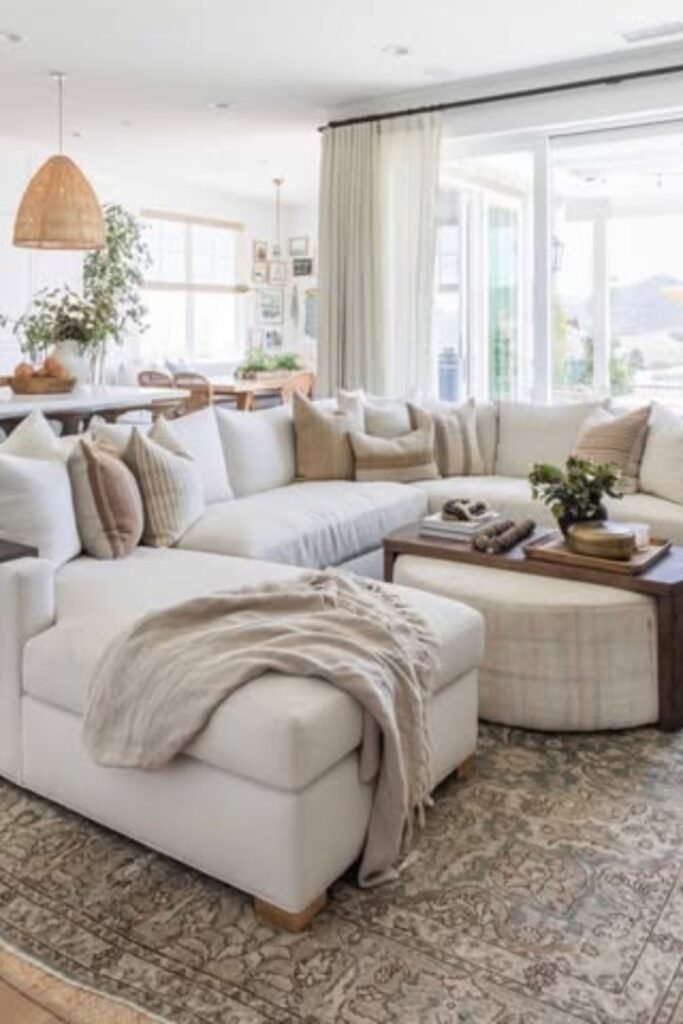
Center With Symmetry
If your long living room feels uneven, you can use symmetry to calm it down.
You might place the sofa directly between two windows and anchor it with a round coffee table, you’ll instantly keep the layout balanced.
You can add matching side tables or lamps on each side to help square off the space.
You’ll see this works beautifully in narrower rooms where you want your seating area to feel intentional, not stretched from end to end.
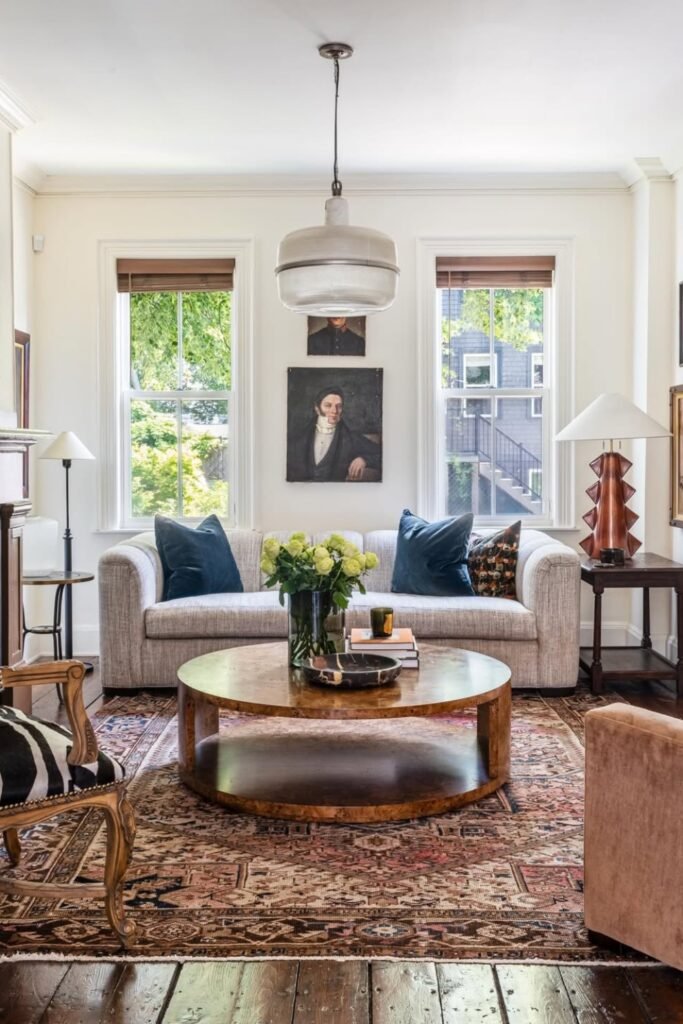
Embrace Wall Seating
If your long living room runs along a full wall of windows, you should lean into it instead of fighting it.
You might use a built-in or low-profile sectional that hugs the perimeter, you’ll keep the center open and make the space feel wider.
You can add a large rug to pull the seating inward so you won’t feel like you’re sitting on one long bench. You’ll notice this works best in modern homes with strong views and lots of natural light.
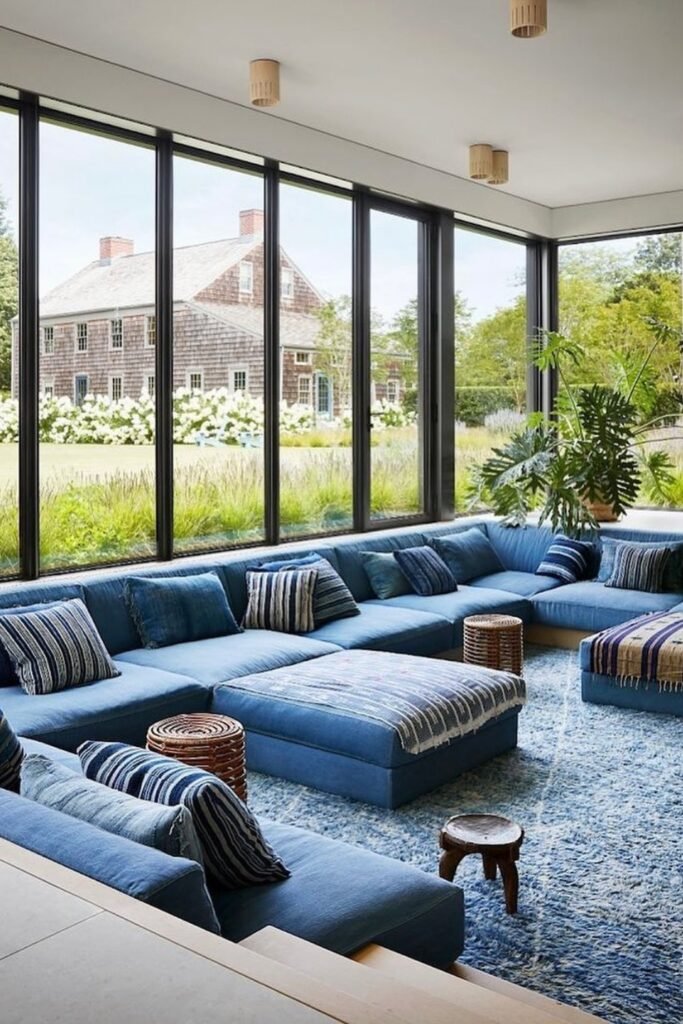
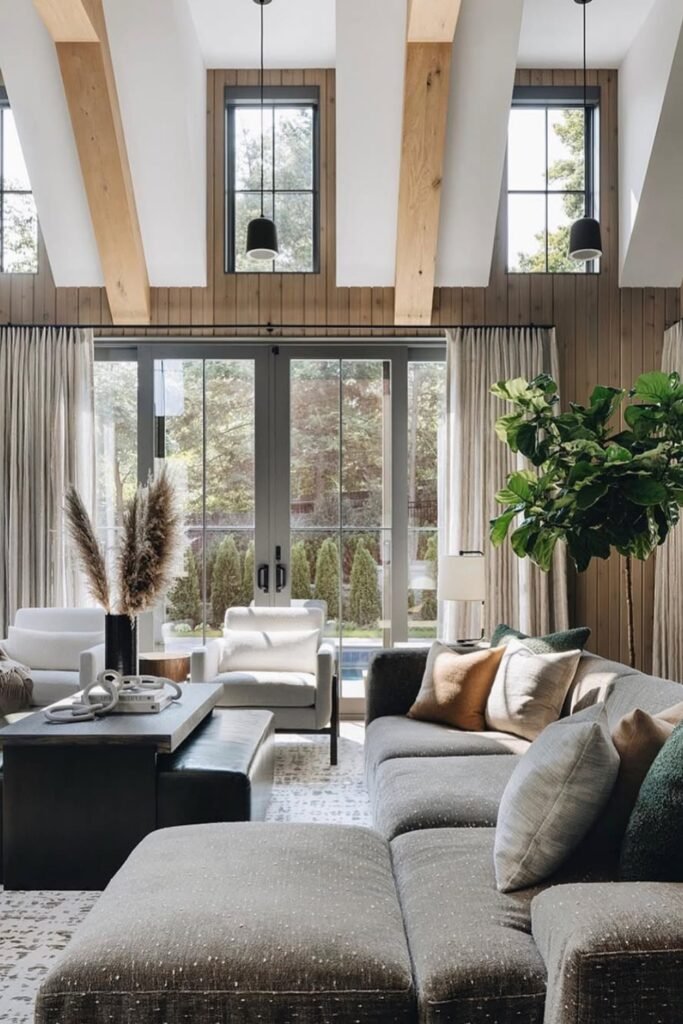
Square Off Seating
When your long living room has strong vertical lines like beams and tall doors, you can counter it with a compact seating block.
You might push the sectional inward and place two chairs directly opposite to form a near-square arrangement.
You’ll want a large ottoman or coffee table in the middle, it tightens everything up. You’ll find this approach works best in vaulted spaces where you want the layout to feel grounded, not stretched.
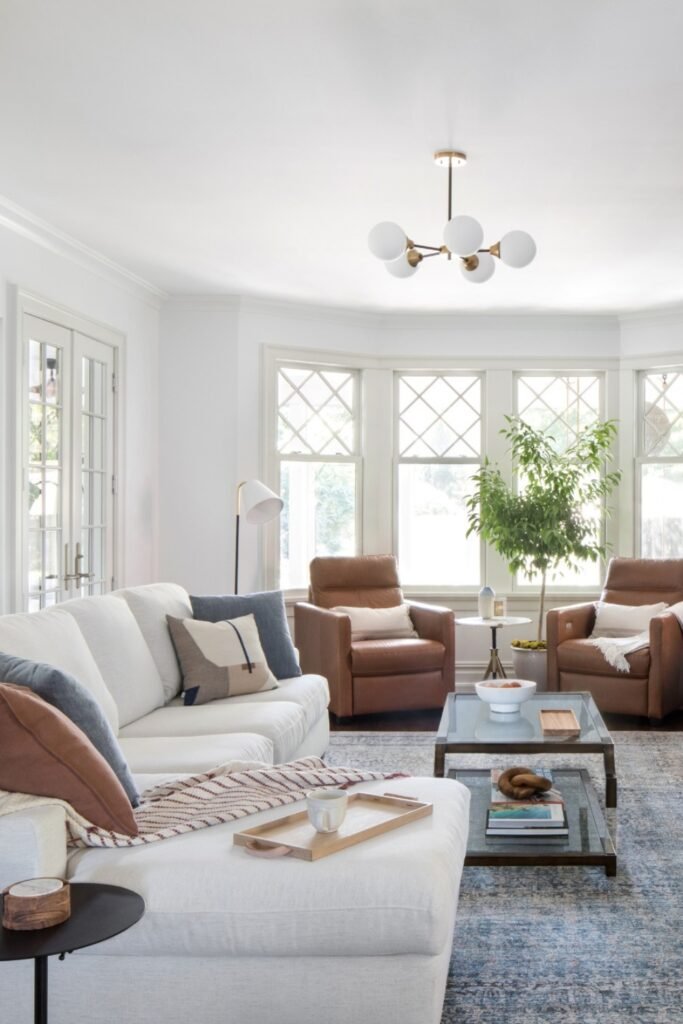
Close the Conversation
If your long living room feels disconnected, you should pull the seating closer and let the chairs face inward.
You might place a sofa along one wall paired with two armchairs near the windows, you’ll create a compact conversation zone instead of a stretched line.
You can keep the coffee table centered and the rug large enough to hold all front legs. You’ll see this works beautifully in narrow rooms where you want intimacy without crowding.
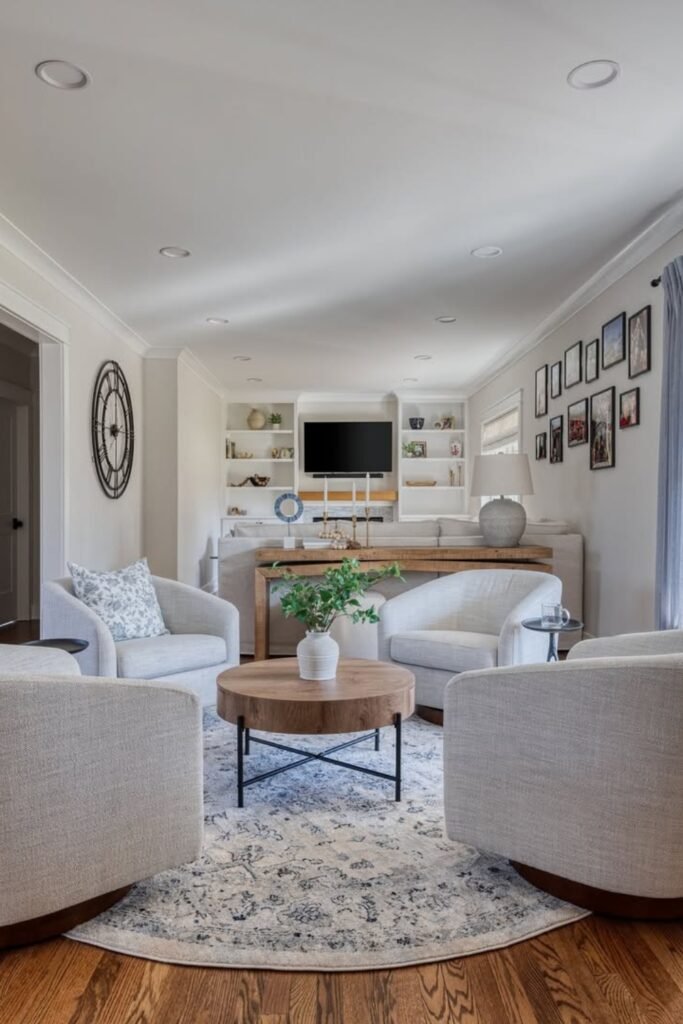
Create a Front Zone
If your long living room stretches far back, you can stop using the entire length as one space.
You might carve out a smaller seating zone near the front with four chairs and a round rug.
You can let the sofa sit further back near the TV, you’ll notice this layered layout works perfectly in narrow rooms because it breaks the tunnel effect and makes the space feel wider and more intentional.
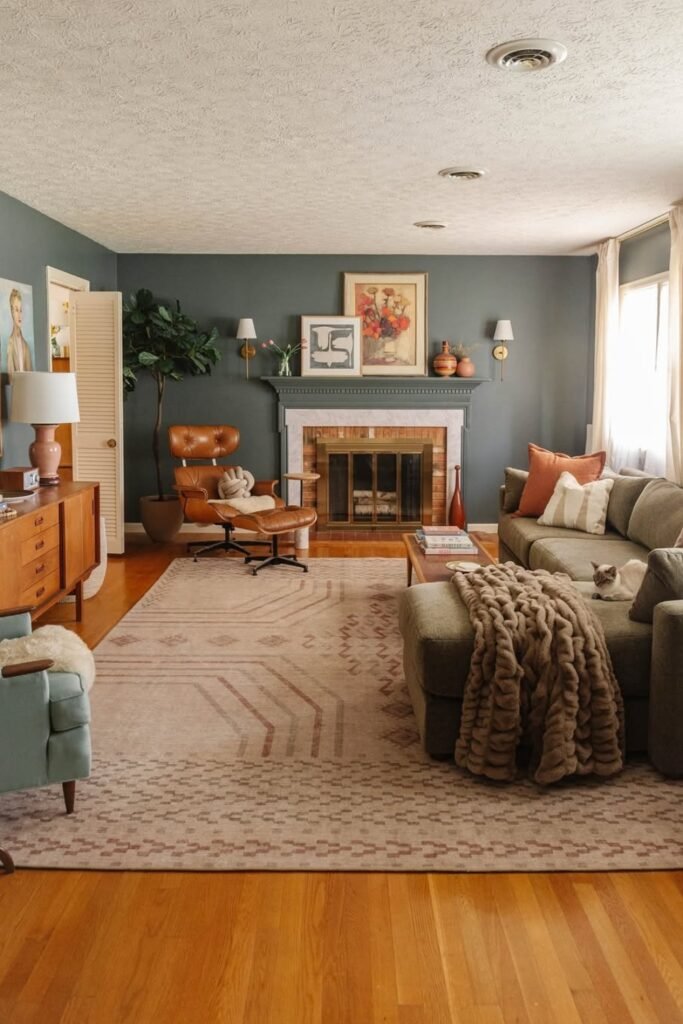
Anchor One End
When your long living room feels empty on one side, you should commit to a strong focal wall.
You can let the fireplace anchor that end, then arrange the sofa and chairs around it instead of spreading furniture across the room.
You’ll want the rug large enough to hold the full seating area together. You’ll see this works best in classic rectangular rooms where one end naturally wants to be the center of attention.
Frame the Focal Wall
If your long living room feels scattered, you can choose one wall and build everything around it.
You might center the sofa under artwork, add matching lamps on both sides, and keep the seating facing inward.
You can place a bench or ottoman in front, you’ll shorten the visual length.
You’ll notice this setup works best in narrow rooms where you need a clear focal point to stop your eye from running straight through.
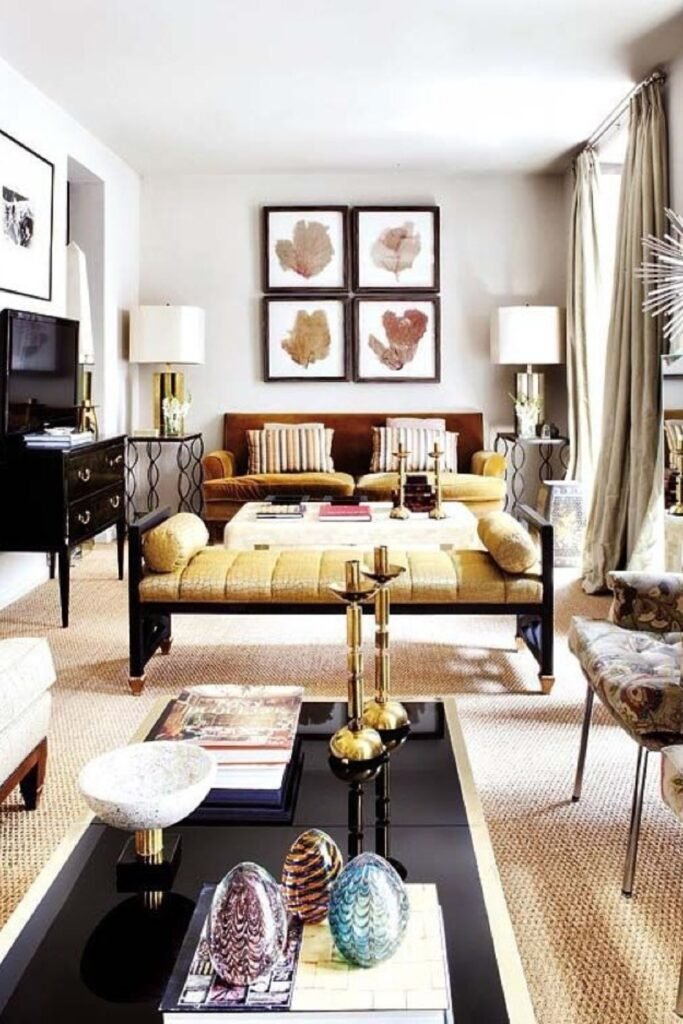
Balance Both Ends
In a long living room, you shouldn’t let one side carry all the weight. You can place seating at both ends and connect them with a strong central piece like a large coffee table.
You’ll want to keep the middle clear enough to move through, but grounded with a rug.
You’ll see this works especially well in dramatic, gallery-style spaces where symmetry keeps the room from feeling like a tunnel.
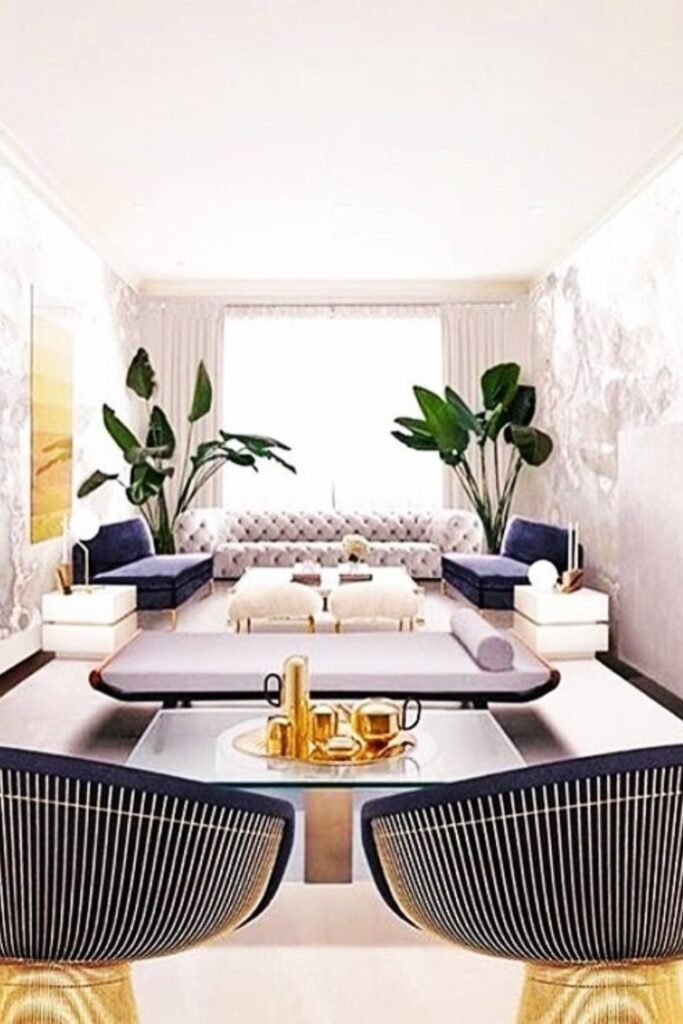
Soften With Curves
Sharp lines can exaggerate the length of a rectangular room. You can use a round coffee table and gently angled chairs to pull the seating inward.
You’ll want to keep the sofa and chairs close enough to form a square around the rug.
You’ll notice this approach works best in long living rooms with a fireplace on one wall, where you want the space to feel cozy instead of stretched.
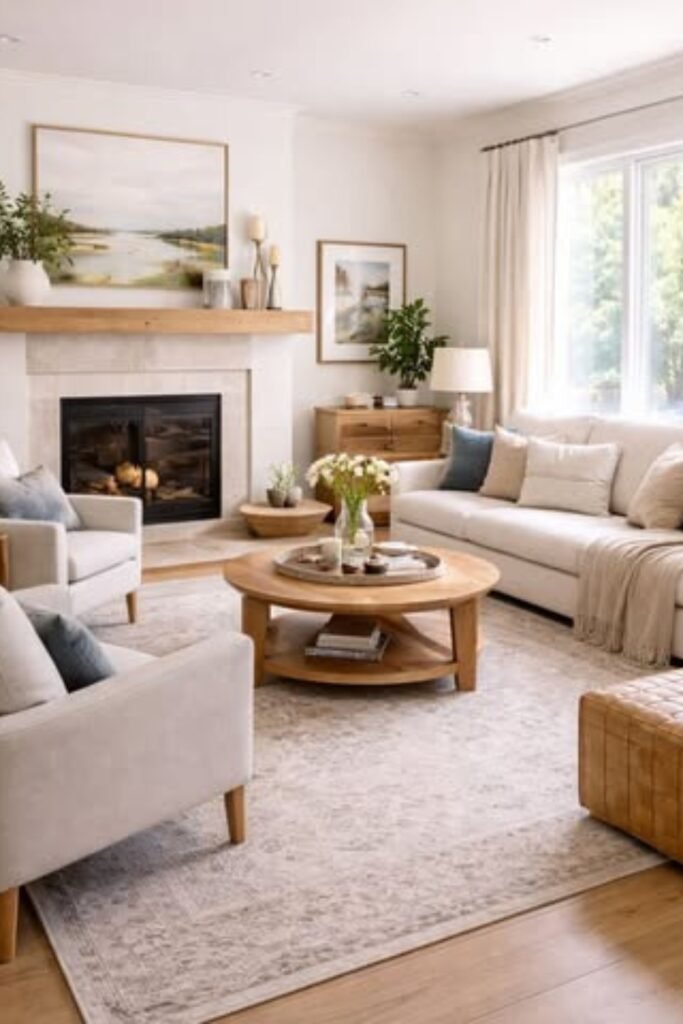
Face Each Other
If your long living room feels like two separate lanes, you should turn the sofas toward each other instead of lining them along opposite walls.
You can keep the TV on the short wall so it doesn’t stretch the room visually. You might use a large rug that holds both sofas together, you’ll make the seating feel like one solid block.
You’ll notice this layout works especially well in narrow rooms with windows along the sides.
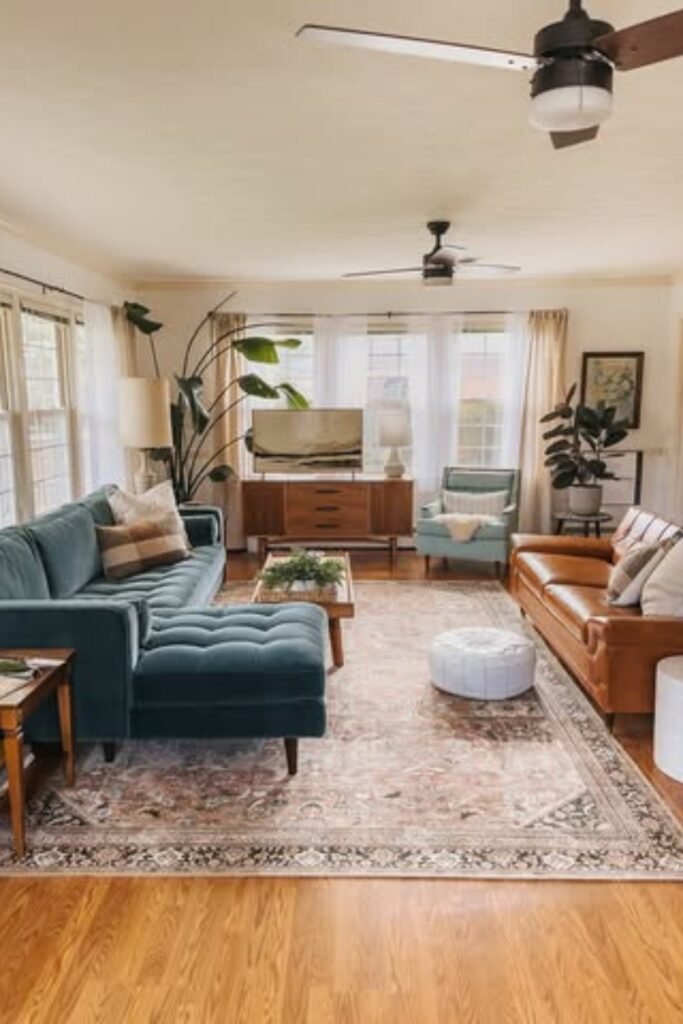
Keep One Side Open
In a narrow living room, you can resist filling every wall. You might place your main sofa along one side and keep the opposite side lighter with a single chair or chaise.
You’ll let the rug define the seating area while leaving a clear walkway along the edge.
You’ll find this layout works especially well in small apartments where you need flow and comfort without crowding the space.
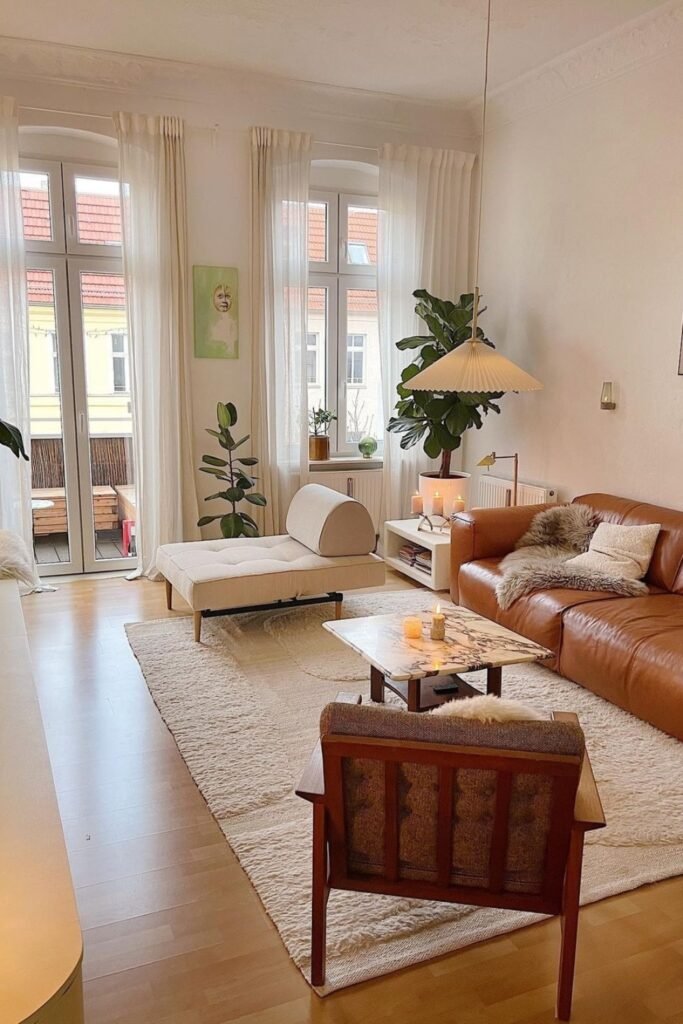
Float With a Console
Instead of pushing your sofa against the wall, you can pull it forward and place a slim console table behind it.
You’ll instantly break the long tunnel effect and create a defined living zone. You can keep the chairs facing inward near the windows to square off the seating.
You’ll see this layout works beautifully in open, elongated rooms where you need structure without adding walls.
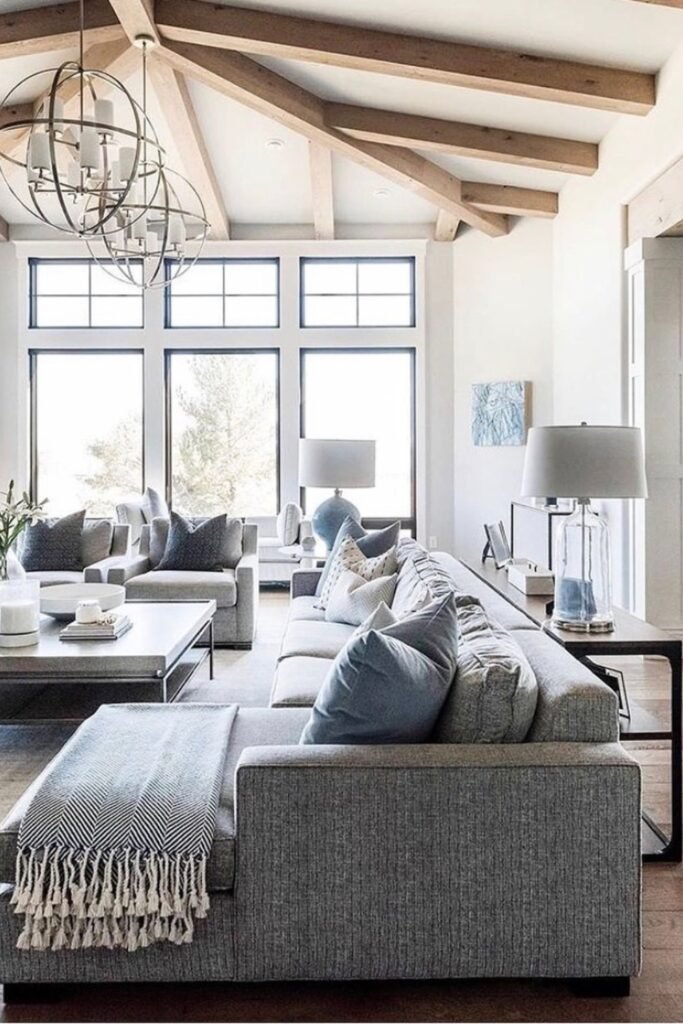
Tighten the Layout
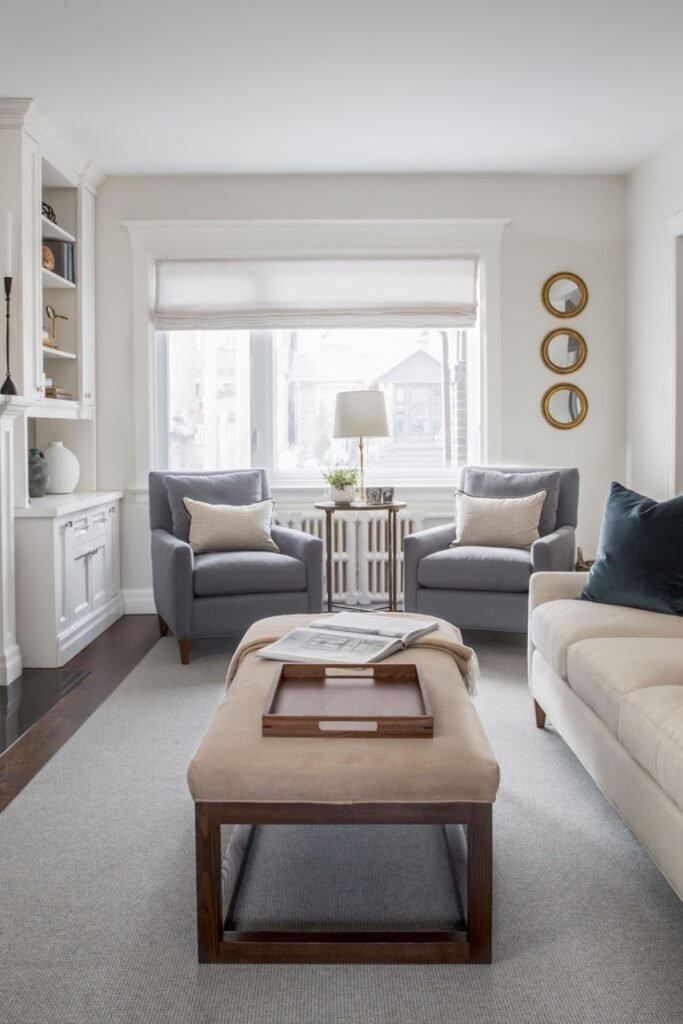
In a long living room, you shouldn’t spread furniture too far apart. You can keep the sofa and chairs close enough so conversation feels easy.
You might use a long ottoman instead of a bulky coffee table, you’ll maintain flow without blocking movement.
You’ll want to let the window act as your visual stop. You’ll notice this setup works best in narrow rooms where you need intimacy and clear walkways at the same time.
FAQs
Should you push furniture against the walls in a long living room?
You might think pushing everything against the walls will open up your room, but you’ll see it actually makes it feel longer and more like a hallway.
You can pull at least one major piece, usually your sofa, slightly inward. You should create a defined seating zone with a rug and place chairs facing in.
When you float your furniture this way, you’ll break the tunnel effect and you’ll feel the room is wider and more balanced.
How do you arrange a long living room with a TV and fireplace?
You should pick one main focal point for your room. If your fireplace sits in the center, you can build your seating around it and mount the TV above only if the viewing height works for you.
If the TV placement works better on another wall, you can keep your seating square and angle it toward both.
You’ll see the key is forming a tight conversation area, you don’t want to just line furniture along the length.
You may interested to read!