Light blue looks perfect in pictures. You see it in bedrooms and think, “Yes, I want that calm, soft, relaxing vibe.” But then you actually try it in your own room and things don’t turn out the same.
The room starts feeling a bit cold. Or too plain. Or somehow it looks unfinished, even though you followed what you saw online.
That’s where most people get stuck with light blue. The problem is not the color itself. Light blue is actually one of the best choices for a bedroom when you want a peaceful and fresh feel.
The real issue is how you use it , how much you use, what you pair it with, and where you actually place it in the room.
If you get these things wrong, the room feels off. If you get them right, even a simple bedroom can start looking clean, balanced, and comfortable without spending a lot of money.
In this artiele, you’re not going to get random decor ideas. You’ll get a clear and simple way to actually use light blue in your bedroom so it looks modern, warm, and well put together.
Let’s jump in!
Why Light Blue Actually Works in a Bedroom?
Light blue works in a bedroom because it naturally creates a calm and relaxing feeling. When you see this color, your mind instantly connects it with peace, freshness, and rest.
That’s why it is so popular in bedroom design. But even though the color itself is good, many people still end up with rooms that don’t look right.
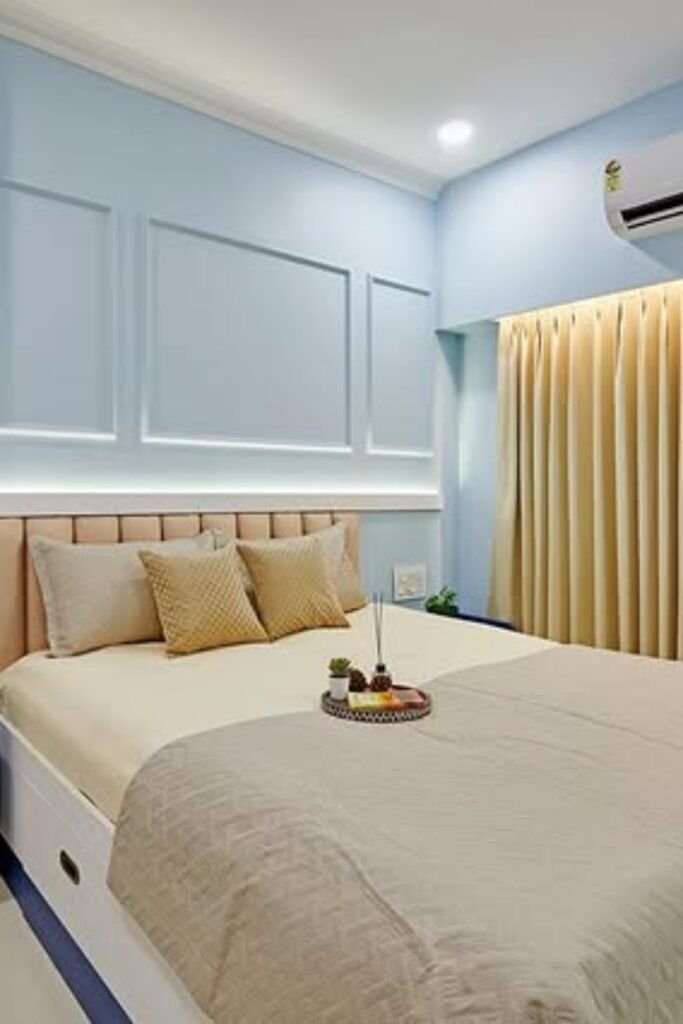
The reason is simple , they assume the color alone will do the job. In reality, light blue only works when everything around it is balanced.
If the room feels cold or flat, it usually means there is no warmth or contrast in the space. So the problem is not the color, it is how it is used in the room.
How Much Light Blue Should You Use So Your Room Doesn’t Feel Overdone?
One of the most common mistakes people make is using too much light blue everywhere. They paint all walls blue, use blue bedding, and even add blue decor.
Instead of creating a relaxing space, this makes the room feel heavy or dull. The better approach is to control how much blue you use.
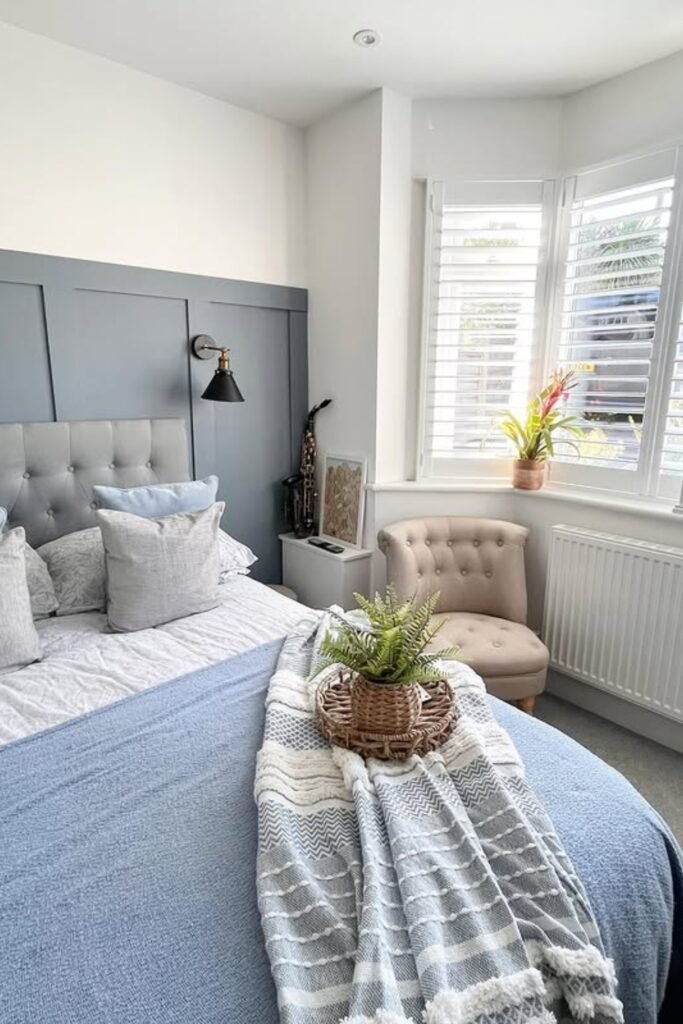
If your walls are light blue, keep your bedding and furniture neutral. If your walls are white or beige, then bring light blue through soft elements like cushions, curtains, or bedding.
Think of light blue as a supporting color instead of the main focus. When you keep this balance, the room automatically feels more natural and comfortable.
Colors That Go Well With Light Blue So Your Bedroom Looks Put Together
Light blue looks best when it is paired with simple and soft colors. White is the safest option because it keeps the room clean and bright.
Beige adds warmth and makes the space feel more comfortable. Grey gives a modern and calm look, especially in minimal setups.
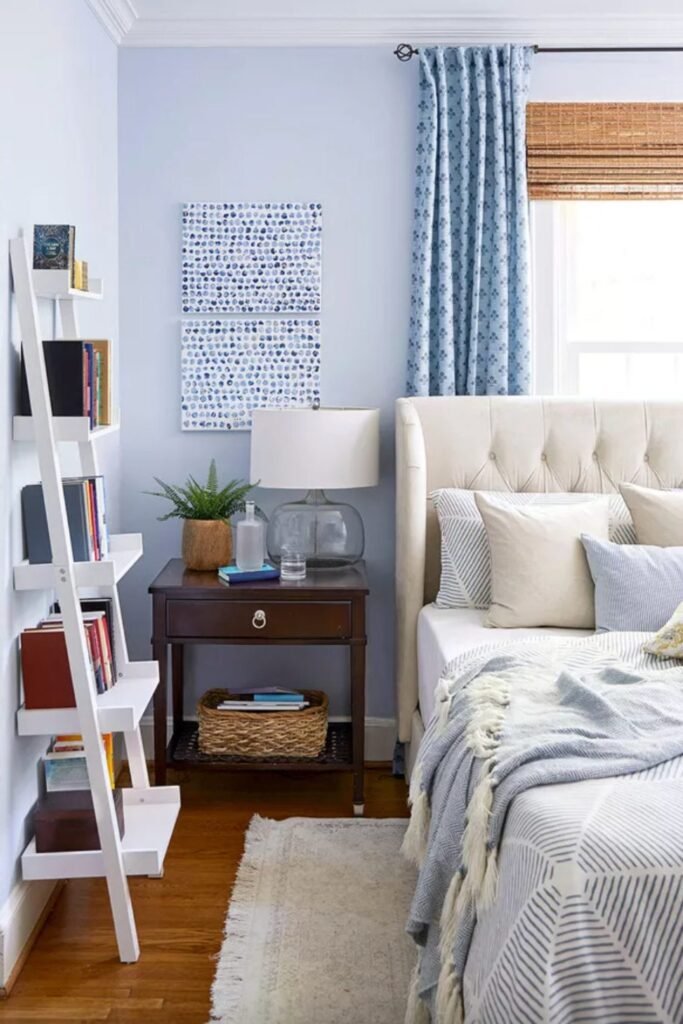
Wooden tones are also very important because they bring natural warmth into the room and balance the coolness of blue.
The key here is to avoid mixing too many strong colors. Light blue works best when it has space to breathe and is supported by neutral tones.
Where You Should Use Light Blue in the Bedroom for the Best Result
You don’t need to use light blue everywhere in the bedroom. In fact, that often makes the design weaker.
A better approach is to use it in specific areas. If you want a bold look, you can paint one wall in light blue and keep the rest neutral.
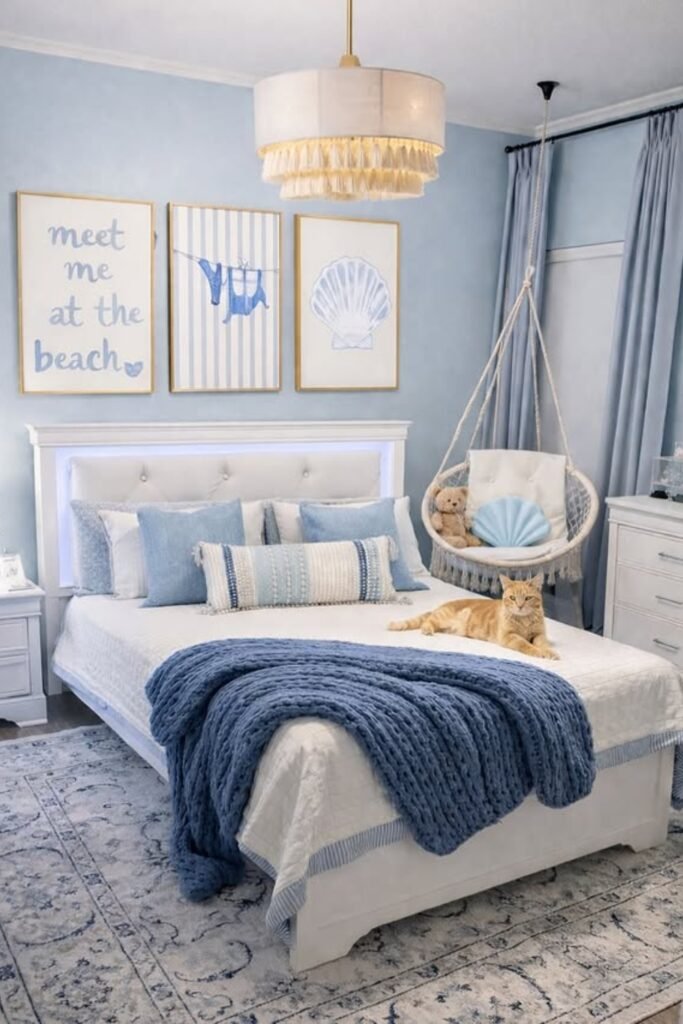
If you prefer a softer style, then use light blue in bedding, cushions, or curtains instead of paint. Furniture is usually better in neutral or wooden tones so the room stays balanced.
The idea is to guide attention, not overload the entire space with one color.
How to Keep a Light Blue Bedroom Warm Instead of Cold or Empty
Since light blue is a cool color, it can sometimes make a room feel cold if not balanced properly.
The easiest way to fix this is by adding warmth through materials and lighting. Warm white lighting works much better than bright white light.
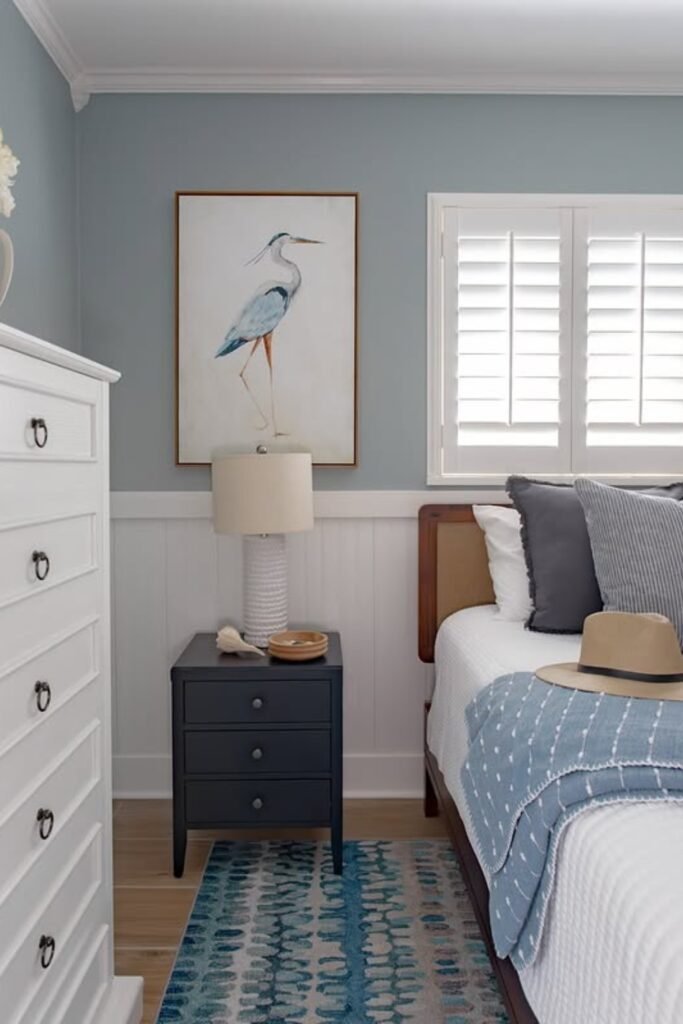
Wooden furniture also helps a lot because it adds natural warmth to the room.
Soft textures like linen bedding, cotton throws, and rugs make the space feel more comfortable.
These small changes completely change how the color feels and turn a cold-looking room into a cozy and relaxing space.
A Simple Step-by-Step Way to Design Your Light Blue Bedroom Without Confusion
If you feel confused, follow a simple order. First, decide where light blue will go , either on the wall or in soft items like bedding.
Don’t use it everywhere equally. Second, choose two supporting colors like white, beige, or wood tones.
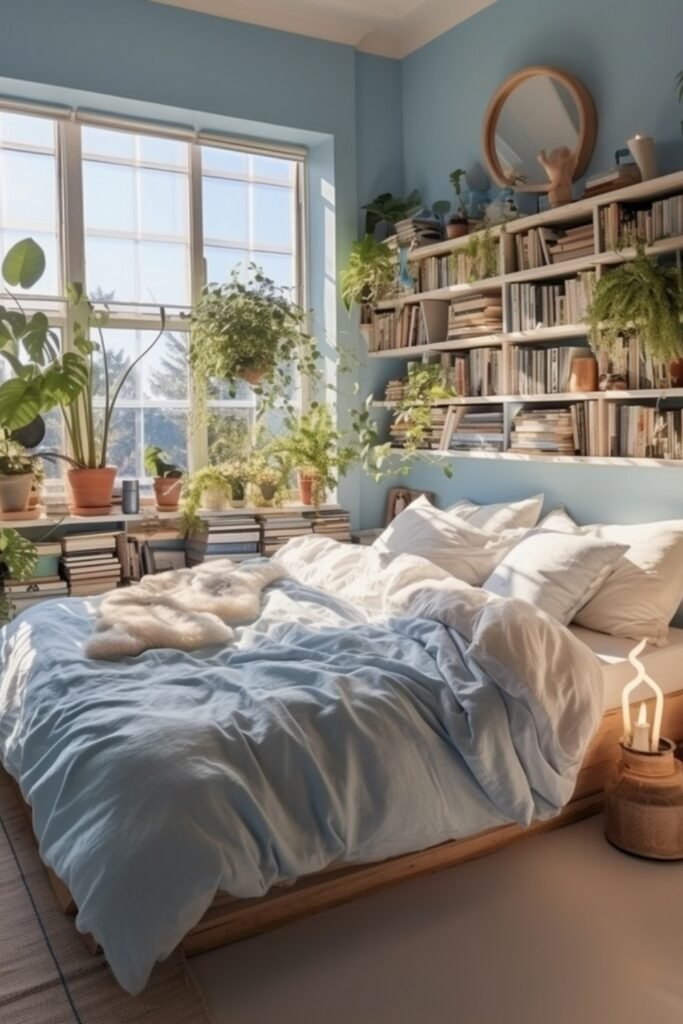
Third, pick furniture that matches this base and keep it simple. Fourth, add soft layers like cushions, curtains, and rugs to bring comfort and depth.
Finally, adjust lighting to warm tones so the room feels balanced. When you follow this order, the design becomes much easier and more controlled.
Common Mistakes People Make That Ruin the Look of a Light Blue Bedroom
Many people make small mistakes that completely change the look of the room.
One common mistake is using too many shades of blue together, which creates confusion instead of harmony.
Another issue is poor lighting. Even a well-decorated room can look dull if the light is too harsh or too cold.
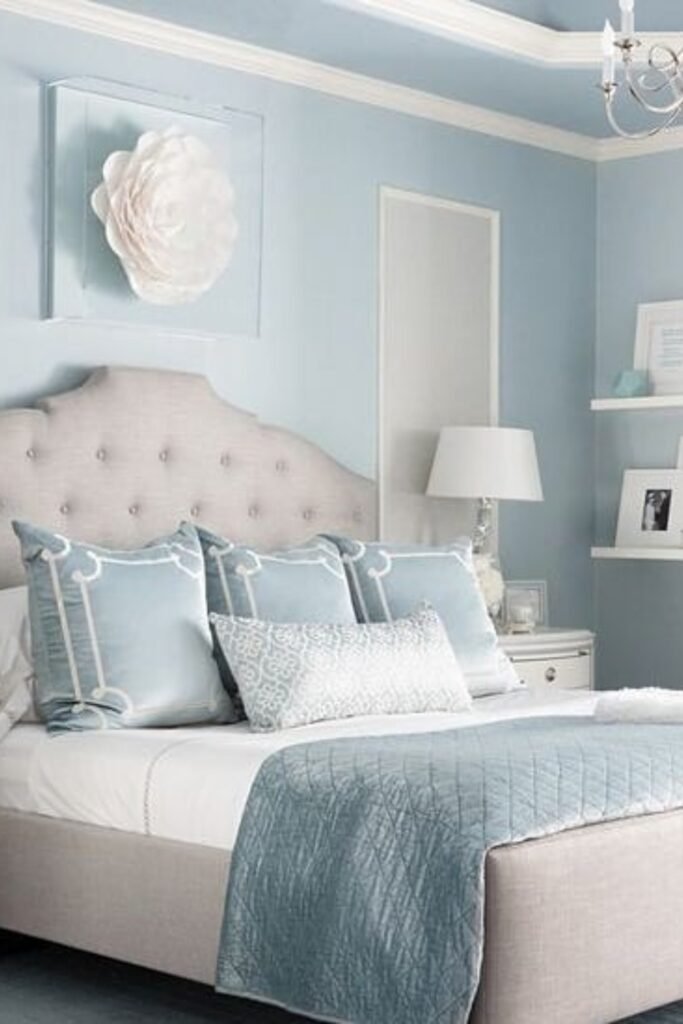
Overdecorating is another problem where people try to fill every empty space, but this removes the calm feeling that bedrooms should have.
Lastly, many people ignore texture. Without different textures like fabric, wood, or soft materials, the room looks flat even if the color is perfect.
Easy Finishing Touches That Make the Room Feel Complete and Comfortable
Once the main setup is done, small details help complete the look. Simple cushions with soft textures can make the bed feel more inviting.
Wall art should be minimal and not too busy so it doesn’t distract from the calm theme. A small plant can add life and freshness to the room.
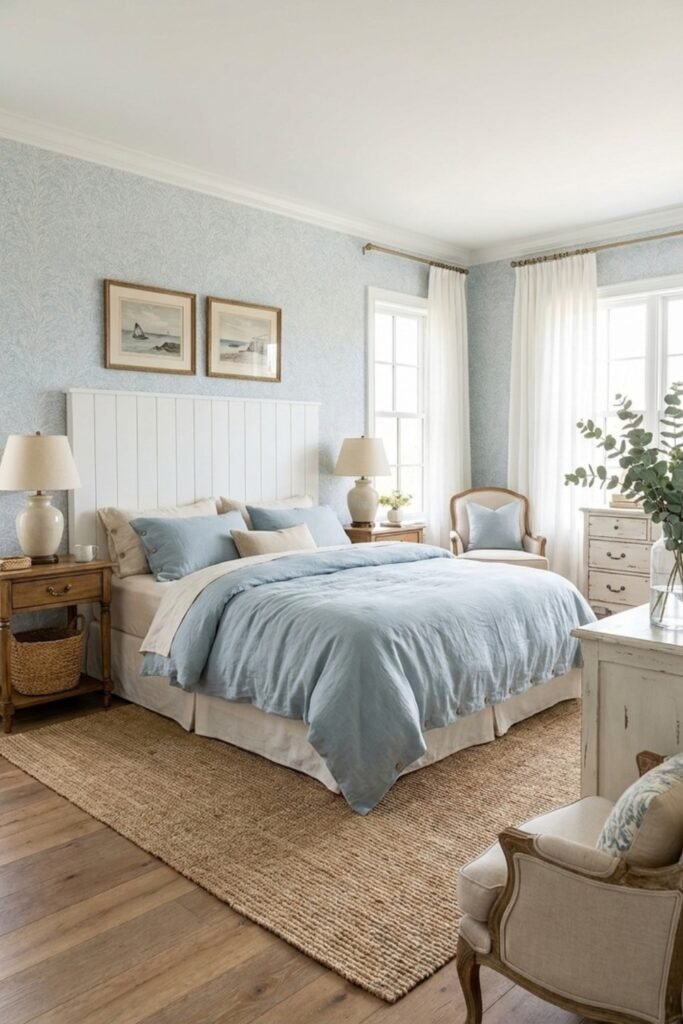
Curtains should be light and flowy instead of heavy and dark.
The goal of these finishing touches is not to add more things, but to make the room feel complete, comfortable, and naturally balanced.
Conclusion
Decorating a bedroom with light blue is not about just picking a pretty color and applying it everywhere.
The real result depends on how you balance it with other colors, how much you use, and where you place it in the room.
If you overuse it, the space can feel cold or flat. If you underuse it, you lose the calming effect it is known for.
The key is simple balance. Keep light blue as a soft base, not the only focus. Pair it with warm neutrals like beige, white, or wood tones so the room stays cozy instead of cold.
Pay attention to lighting and texture because these two things completely change how the color feels in real life.
If you follow a simple step-by-step approach and avoid common mistakes like overdecorating or ignoring warmth.
You can easily turn a basic bedroom into a calm, modern, and comfortable space. Light blue works best when it feels natural, not forced.
You may interested to read!