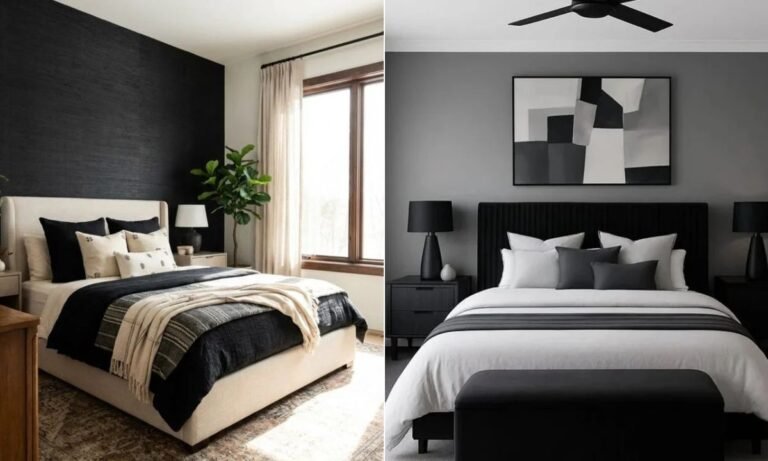
A bedroom rug can make your room feel soft, warm, and finished, but only when you place it the right way.
If the rug is too small, too hidden under the bed, or placed in the wrong spot, the whole room can feel awkward even when the bed, curtains, and furniture look good.
That is why bedroom rug styling is not only about choosing a pretty design. You also need to think about rug size, bed placement, walking space, nightstands, color, texture, and room balance.
The right rug should make your feet land on something soft, frame the bed nicely, and pull the whole bedroom together without making the space feel crowded.
In this article, you will learn how to style a bedroom rug in a simple and practical way, so your room feels cozy, balanced, and intentional.
Let’s jump in!
What Rug Size Works Best for Your Bed?
The rug size should depend on your bed size first, not only the room size. A small rug can make the bed look like it is floating, while a larger rug helps anchor the whole sleeping area.
For a twin bed, a 5×8 rug can work well. For a full bed, a 6×9 or 8×10 rug usually feels more balanced.
For a queen bed, an 8×10 rug is often the safest choice. For a king bed, a 9×12 rug usually gives better coverage.
The goal is simple: when you step out of bed, your feet should land on the rug, not the cold floor. That is why the rug should extend beyond both sides of the bed.
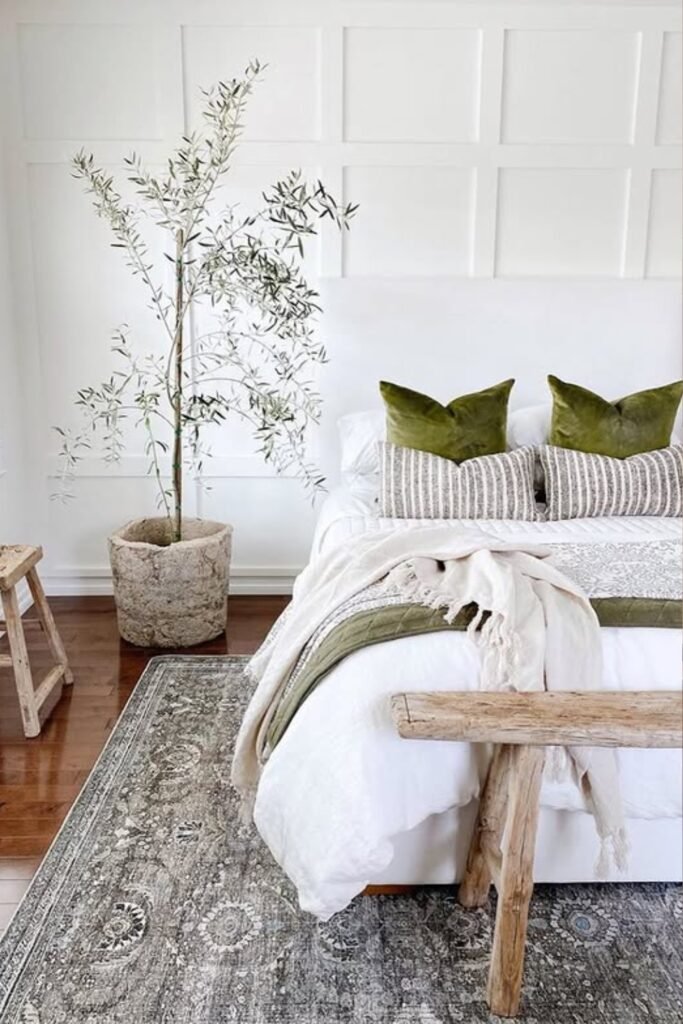
If the rug only sits under the center of the bed and barely shows on the sides, it will not add comfort or visual balance.Also think about your nightstands.
A larger rug can go under the bed and nightstands, while a medium rug can start slightly in front of the nightstands and sit under the lower two-thirds of the bed.
Both can look good, but the rug should never look squeezed. Leave some floor space around the rug so the bedroom still feels open.
Where Should You Place a Rug Under the Bed?
The easiest and most popular placement is the bottom two-thirds rule. This means the rug starts a little below the nightstands and sits under the lower part of the bed.
It should extend past the foot of the bed and show on both sides.
This layout works because it gives softness where you actually walk, while keeping the nightstand area cleaner and easier to manage.
You can also place a large rug fully under the bed and nightstands. This works best in bigger bedrooms because it creates one large grounded zone.

It makes the bed, side tables, and rug feel connected instead of separate. But if your room is small, this can make the rug feel too dominant.
Another option is placing a rug only at the foot of the bed. This works when you already have carpet, a small room, or a bench at the end of the bed. It adds texture without covering too much floor.
The main rule is to avoid placing the rug too far down. If the rug only appears at the very end of the bed, it can look disconnected. The bed should still feel like it belongs to the rug.
How Much Rug Should Show Around the Bed?
A bedroom rug should show enough around the bed to feel useful and intentional. A good rule is to leave about 18 to 24 inches of rug visible on each side of the bed.
This gives your feet a soft landing and makes the rug look like part of the bedroom design, not a small piece hidden under furniture.
At the foot of the bed, the rug should also extend beyond the mattress. This matters even more if you have a bench, storage trunk, or small seating area at the end of the bed.

The rug should support that area visually instead of stopping too soon.
If your room is small, you may not have space for 24 inches on each side. In that case, focus on balance.
Even 12 to 18 inches can work if the rug looks centered and does not touch the wall. A rug pushed tightly against the wall can make the layout feel cramped.
You also need to leave visible floor around the rug. Do not cover every inch unless you want a carpeted look.
Some open floor around the rug creates a cleaner frame and helps the room breathe.
Should Nightstands Sit on the Rug or Off the Rug?
Nightstands can sit either on the rug or off the rug, but the choice depends on the rug size and bedroom layout.
If you use a large rug, it can sit under the bed, nightstands, and even a bench at the foot of the bed.
This creates a polished and hotel-style look because all the main furniture pieces feel connected.
If you use a medium rug, keep the nightstands off the rug. Start the rug slightly in front of them and let it run under the lower two-thirds of the bed.
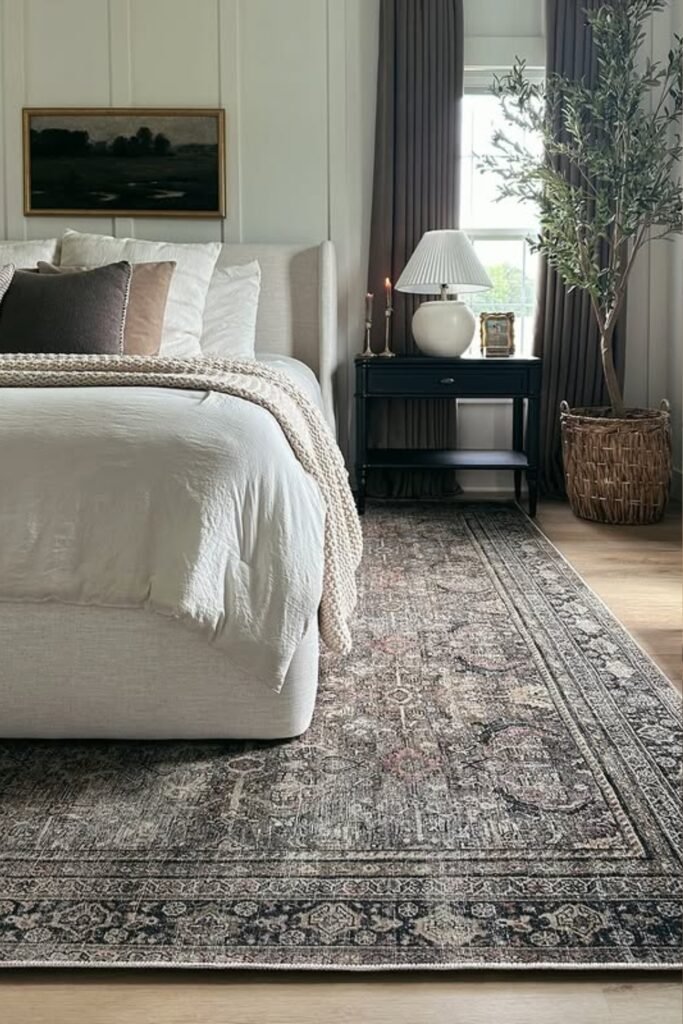
This is one of the most practical layouts because it gives you comfort around the bed without forcing you to buy an oversized rug.
The mistake happens when only the front legs of the nightstands barely touch the rug.
That can make the layout look accidental. Either place the nightstands fully on the rug or fully off the rug.
Also think about stability. If a nightstand sits half on and half off a thick rug, it may wobble. This looks messy and feels annoying in daily use.
For thicker rugs, it is often better to keep nightstands off the rug unless the rug is large enough to support them fully.
How Do You Style a Rug in a Small Bedroom?
A small bedroom does not always need a large rug. In fact, a huge rug can sometimes make the room feel tight if it covers too much floor.
The better choice is to use the rug in a way that adds comfort without blocking movement.
One smart option is to place a medium rug under the lower half of the bed. This gives you softness on both sides and at the foot of the bed, while keeping the nightstand area clear.
Another option is to use two runners on each side of the bed. This works well when the bed sits close to the wall or when a full area rug will not fit.
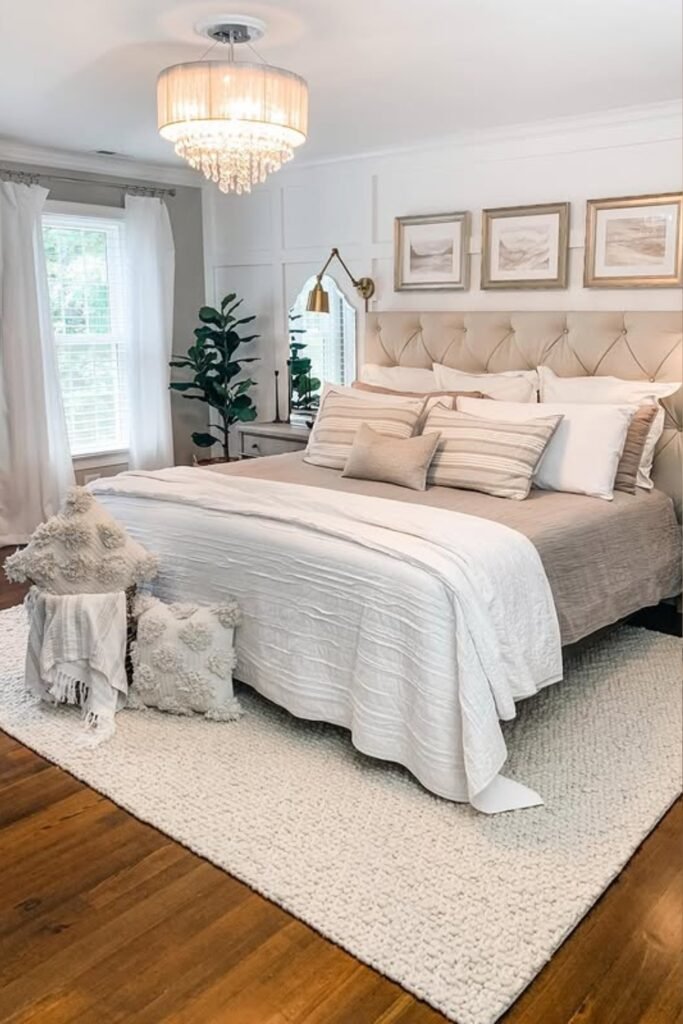
You can also place one runner at the foot of the bed, especially if you have a narrow room. This adds warmth and texture without making the layout feel crowded.
In a small bedroom, avoid heavy patterns if the room already has busy bedding, curtains, or wall decor. A simple rug in a soft neutral color can make the room feel calmer and more open.
Low-pile rugs also work better because they do not make the floor feel bulky.
The goal is not to fill the room. The goal is to make the bed area feel softer, warmer, and more finished.
What Rug Color and Pattern Works Best in a Bedroom?
The best rug color depends on the mood you want in the bedroom. If you want a calm and restful space, choose soft neutral colors like beige, cream, gray, taupe, or warm brown.
These shades work well because they do not fight with bedding, curtains, or wall color.
If your bedroom feels too plain, a patterned rug can add character. A vintage-style rug, soft geometric pattern, or faded floral design can make the room feel more layered.
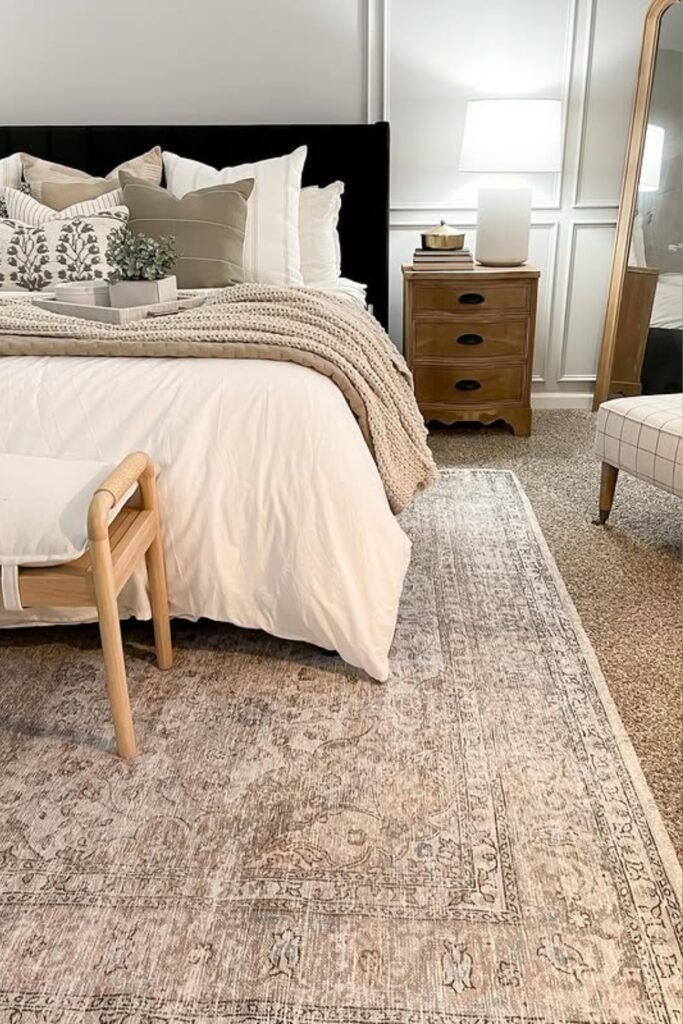
But the pattern should connect with at least one color already in the room. For example, if your bedding has soft blue accents, a rug with a small blue detail can pull everything together.
Texture matters too. A wool rug feels warm and classic. A jute rug adds natural texture but may feel rough under bare feet.
A shag or plush rug feels cozy, but it can trap dust and may not work for everyone. A low-pile rug is usually easier to clean and works well in everyday bedrooms.
If your bedding already has bold prints, keep the rug simple. If your bedding is plain, the rug can carry more pattern. Balance is the key.
How Can You Layer Rugs Without Making the Room Look Messy?
Layering rugs can make a bedroom feel cozy and designed, but it needs control. The easiest way is to use a large neutral base rug first, then add a smaller patterned rug on top.
For example, a jute rug under a vintage rug can add texture, warmth, and color without making the room feel too busy.
The bottom rug should be simple. It can be jute, sisal, flatweave, or a plain neutral rug.

The top rug can have more personality, but it should not be too small. If the top rug looks like a random mat, the whole setup can feel messy.
Layering works best at the foot of the bed or under the lower part of the bed. It can also work beside the bed if you want a soft landing spot without using one huge rug.
Do not mix too many strong patterns. If one rug has a bold design, keep the other quiet.
Also make sure the rug edges sit flat. Curled or uneven layers can look untidy and become a tripping problem.
Layered rugs work especially well when the bedroom feels flat. They add depth, softness, and a more collected look.
What Common Bedroom Rug Mistakes Should You Avoid?
The biggest mistake is choosing a rug that is too small. A small rug may look fine in the store, but once you place it under a bed, it can disappear.
The rug should be large enough to show on the sides and at the foot of the bed.
Another mistake is placing the rug too far away from the headboard. If the rug only sits near the foot of the bed, it can look disconnected. The bed and rug should feel like one planned area.
Do not ignore walking space. A rug should make the room feel comfortable, not hard to move through. If it blocks doors, closet paths, or drawers, it is not the right size or placement.
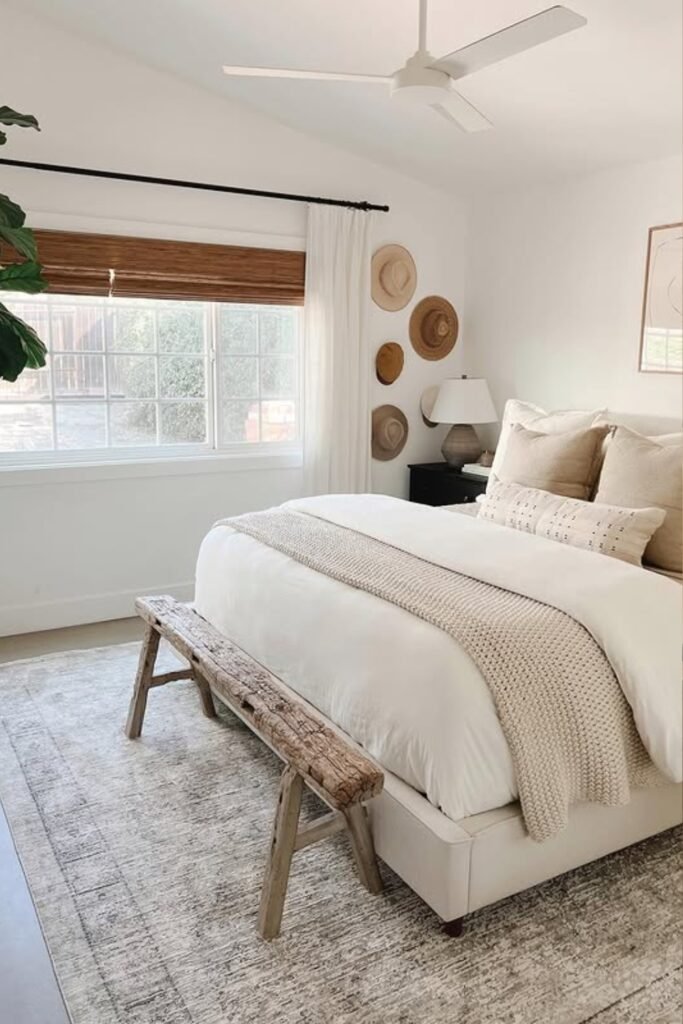
Skipping a rug pad is another common problem. A rug pad helps keep the rug in place, adds comfort, and protects the floor. This is especially important if you use a runner or smaller rug.
Also avoid choosing a pattern without thinking about the rest of the room. A busy rug with busy bedding can make the bedroom feel chaotic.
A good bedroom rug should support the room, not compete with everything else.
Conclusion
Styling a bedroom rug becomes much easier when you stop choosing it only by design and start thinking about size, placement, comfort, and balance.
The right rug should make the bed feel grounded, give your feet a soft place to land, and connect the furniture without making the room feel crowded.
Start with your bed size, then decide how much rug you want to show around the bed. If your room is large, use a bigger rug to anchor the whole sleeping area.
If your room is small, try runners, a lower-bed placement, or a simple rug at the foot of the bed.
A bedroom rug does not need to be complicated. It just needs to feel intentional, comfortable, and connected to the rest of the room.
You may interested to read!