
Your bedroom can have nice furniture, soft bedding, and a good color palette, but if the curtains feel wrong, the whole room can still look unfinished.
Maybe they look too short, too flat, too heavy, or they don’t give you enough privacy and light control.
Bedroom curtains are not only decoration. They help your room feel softer, calmer, taller, and more complete.
The right curtains can make a small window look bigger, help you sleep better, and pull the whole bedroom together without changing everything else in the room.
In this article, we are going to discuss how to style bedroom curtains in a way that feels beautiful, practical, and right for your space.
Let’s jump in!
Table of Contents
- Why Bedroom Curtains Should Solve More Than Style?
- How High & Wide Should You Hang Bedroom Curtains?
- What Curtain Length Looks Best in a Bedroom?
- Which Curtain Fabric Works Best for Your Bedroom?
- How to Choose the Right Curtain Color for Your Bedroom?
- Should You Layer Sheer and Blackout Curtains?
- How to Style Curtains in a Small Bedroom?
- What Bedroom Curtain Mistakes Should You Avoid?
- Conclusion
Why Bedroom Curtains Should Solve More Than Style?
Bedroom curtains should look beautiful, but style is only one part of the decision. In a bedroom, curtains also control light, privacy, comfort, and the overall mood of the space.
That is why you should not choose curtains only because the color looks nice in a picture. You have to ask what problem your bedroom window needs to solve first.
If your room gets strong morning sunlight, you may need blackout curtains or lined panels. If your window faces the street or another house, privacy should come first.
If your bedroom feels cold or empty, thicker fabric can add softness and warmth. If the room feels small, light-colored curtains hung high can make the space feel taller and more open.
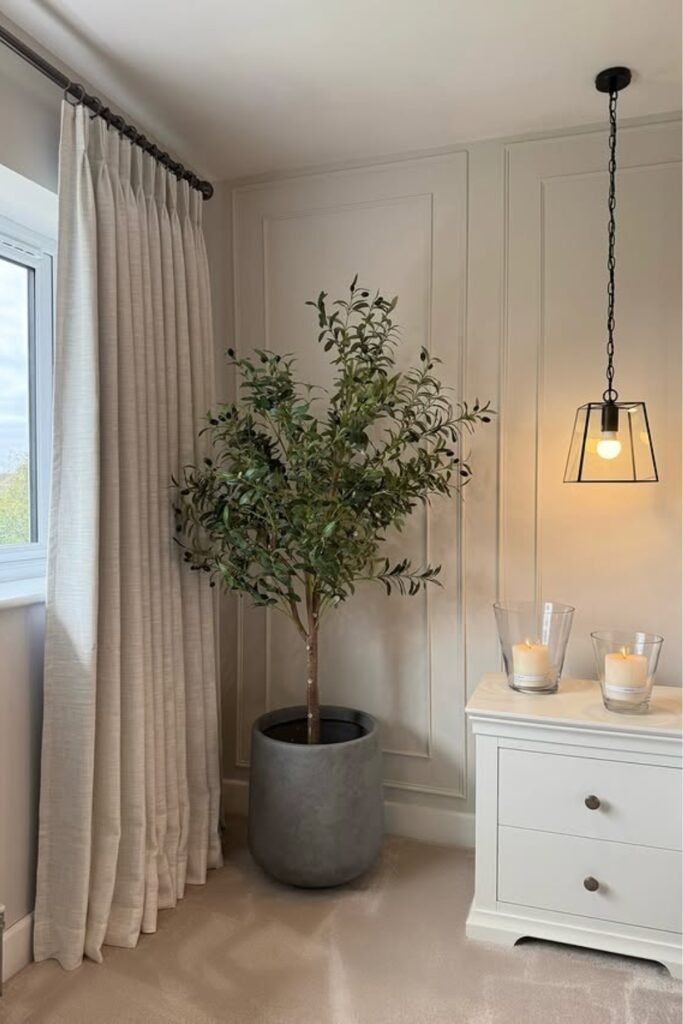
Curtains also affect how finished the bedroom feels. A plain window can make even a well-decorated room look incomplete.
But the right curtains can frame the bed, soften hard edges, and connect the wall color, bedding, rug, and furniture together.
So before you think about trends, start with function. Ask yourself: do I need more privacy, better sleep, softer light, warmth, or visual height?
Once you know the answer, it becomes easier to choose the right fabric, color, length, and hanging style. This is what makes bedroom curtains feel intentional instead of random.
How High & Wide Should You Hang Bedroom Curtains?
One of the easiest ways to make bedroom curtains look more expensive is to hang them higher and wider than the window frame.
Many people make the mistake of placing the curtain rod directly above the window. This can make the window look smaller and the ceiling feel lower, especially in a small bedroom.
A better rule is to hang the rod several inches above the window frame, or closer to the ceiling if the room allows it. This creates the illusion of height.
Your eyes follow the curtain panels upward, so the wall feels taller and the room feels more open. This works especially well in bedrooms with low ceilings or small windows.
You should also extend the curtain rod wider than the window on both sides. This gives the curtain panels space to sit when they are open.
If the rod is too narrow, the curtains cover part of the glass and block natural light. When the rod is wider, the full window stays visible, and the bedroom feels brighter during the day.
This small detail can completely change the look of the room. High and wide curtains make the window look larger, help the fabric fall better, and create a more polished frame around the wall.
Even simple curtain panels can look custom when the rod placement is right.
What Curtain Length Looks Best in a Bedroom?
Curtain length can make or break the whole bedroom look. If the curtains are too short, the room can feel awkward and unfinished.
Short curtains often stop the eye in the middle of the wall, which can make the window look smaller and the ceiling feel lower. That is why full-length curtains usually work best in bedrooms.
For a clean and modern look, let the curtains lightly touch the floor or float just slightly above it. This keeps the fabric neat and easy to maintain.
If you want a softer and more relaxed look, you can let the fabric kiss the floor with a gentle break.
For a more dramatic or romantic bedroom, a slight puddle can work, but only if you like a more styled look and don’t mind extra dust or maintenance.
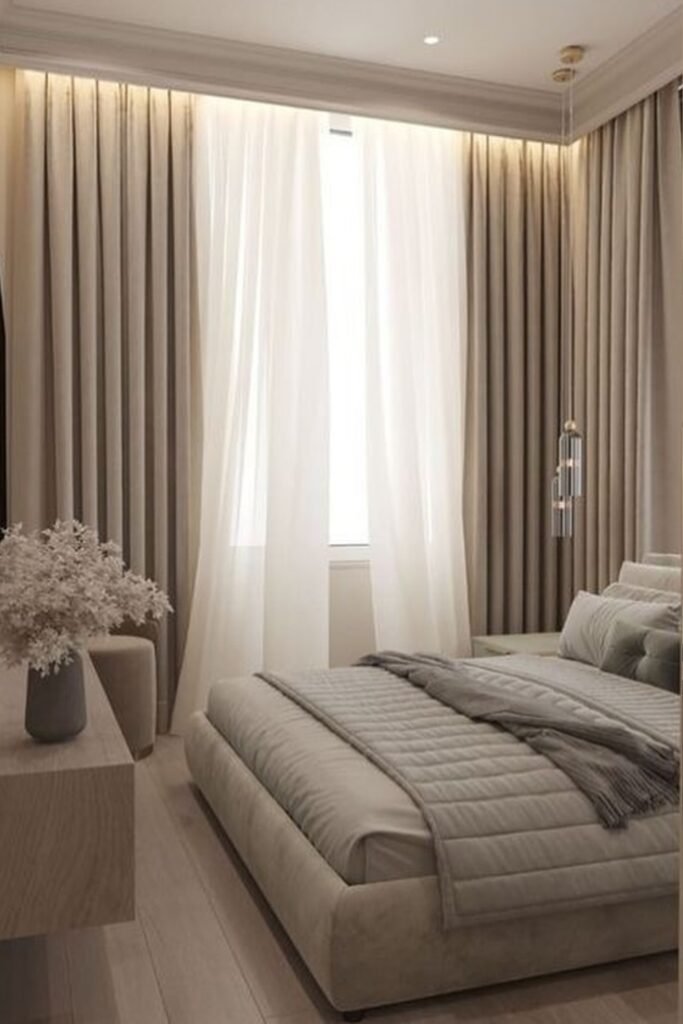
The key is to avoid curtains that end too high above the floor. They can make the bedroom feel less intentional, even if the fabric itself is beautiful.
Before you buy curtains, measure from the curtain rod to the floor, not from the window frame. This matters because your rod should usually sit higher than the window.
If your curtain panels are almost right but slightly short, raise the hem instead of forcing the look.
Good curtain length should feel calm, balanced, and finished. It should make the bedroom window feel like part of the design, not like an afterthought.
Which Curtain Fabric Works Best for Your Bedroom?
Curtain fabric should match both the look and the purpose of your bedroom. A fabric may look beautiful, but if it does not solve your real problem, it may not work well in daily life.
For example, sheer curtains look soft and airy, but they may not give enough privacy at night. Heavy velvet panels look rich and cozy, but they may feel too dark in a small bedroom.
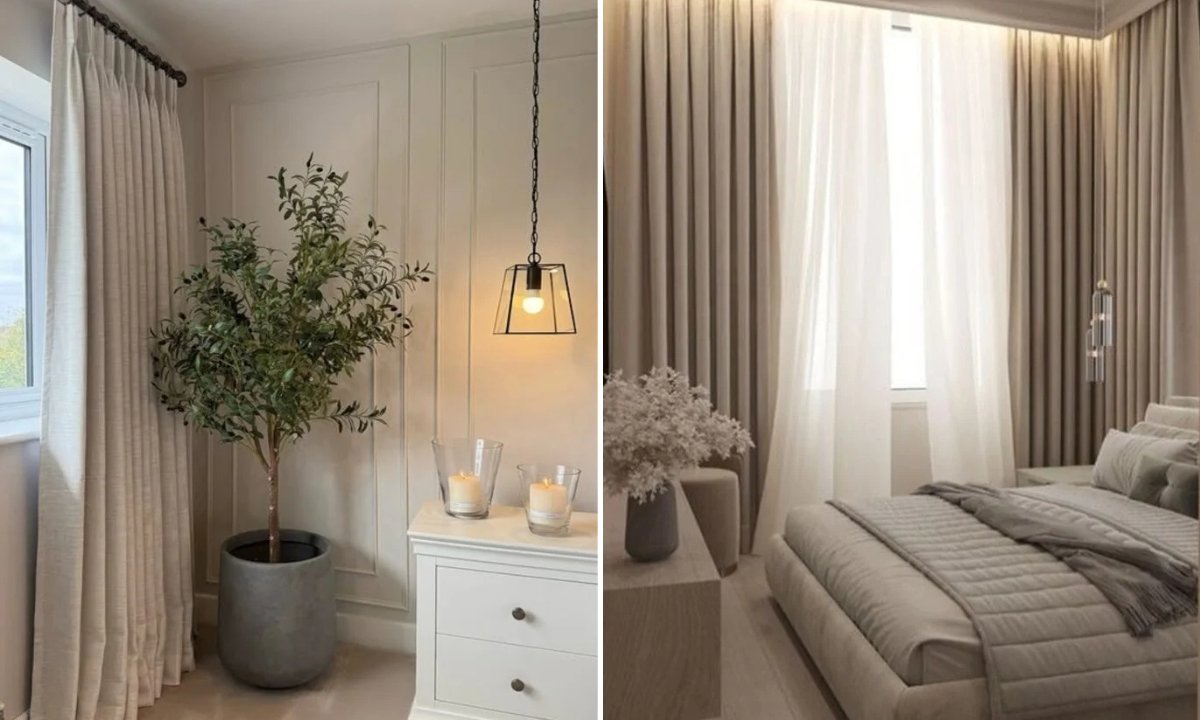
Linen is a great choice if you want a relaxed, soft, natural look. It filters light beautifully and works well in calm bedrooms with neutral colors.
Cotton gives a cleaner and simpler look, so it works well if you want something easy and classic.
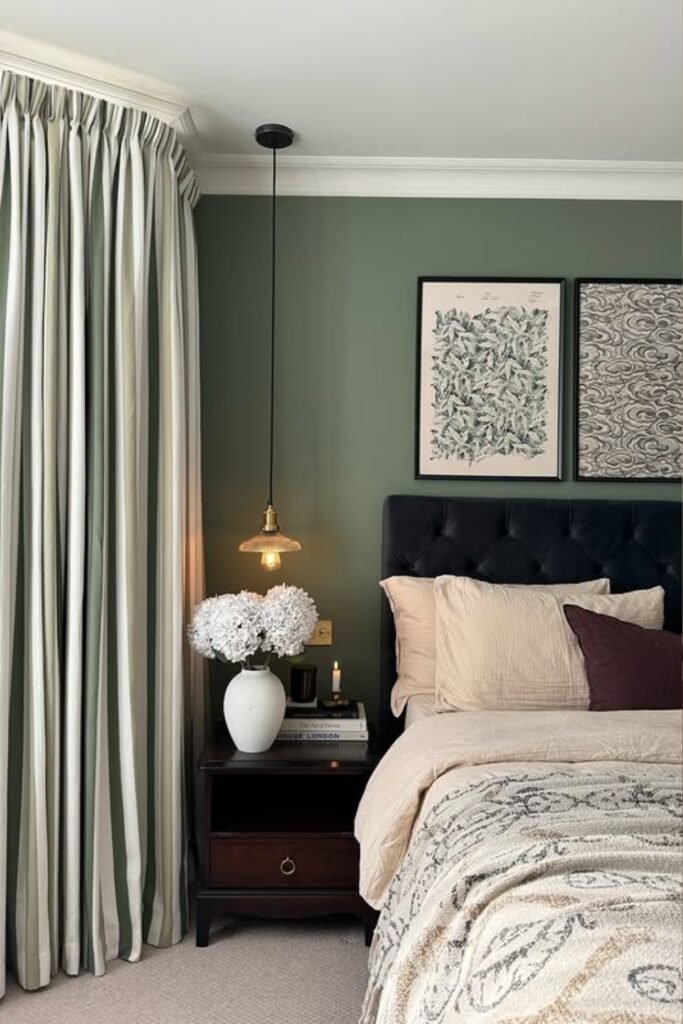
Velvet adds warmth, depth, and a more luxurious feeling, especially in colder rooms or dramatic bedroom designs.
If sleep is your main concern, blackout curtains or lined curtains are more practical. They help block outside light and can make the room feel more restful.
This is useful if your bedroom faces streetlights, morning sun, or bright outdoor areas.
You can also mix fabrics through layering. For example, sheer curtains can stay closed during the day for soft light, while blackout panels can close at night for privacy and sleep.
The best bedroom curtain fabric is not always the prettiest one. It is the one that fits your light, privacy, mood, and maintenance needs.
How to Choose the Right Curtain Color for Your Bedroom?
Curtain color should connect with the bedroom instead of fighting against it.
Many people feel stuck because they don’t know whether curtains should match the walls, bedding, rug, or furniture.
The simple answer is that curtains should feel related to something already in the room.
If you want a calm and seamless look, choose curtains close to your wall color. This creates a soft, tone-on-tone effect and works especially well in small bedrooms.
It keeps the room from feeling busy and helps the curtains blend into the space. Cream, beige, white, soft gray, and warm taupe are easy choices for this style.
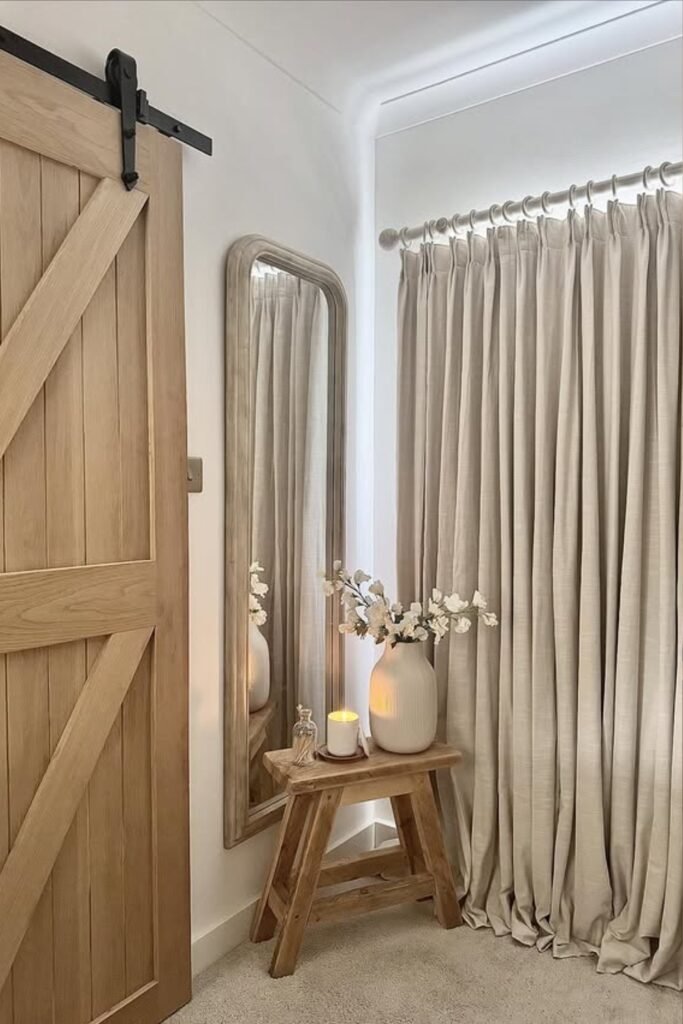
If you want the curtains to stand out more, choose a color that connects with the bedding, pillows, artwork, or rug.
For example, if your bed has olive green accents, soft green curtains can make the room feel pulled together.
If your bedroom has warm wood furniture, beige, clay, or warm ivory curtains can support that natural tone.
Dark curtains can look beautiful, but use them carefully. They can add drama and coziness, but they may also make a small bedroom feel heavier.
Light curtains usually make the room feel brighter and more open. The best curtain color should support the mood you want. For a peaceful bedroom, stay soft and balanced.
For a bold bedroom, let the curtains become a feature, but make sure the color appears somewhere else in the room.
Should You Layer Sheer and Blackout Curtains?
Layering sheer and blackout curtains is one of the best ways to make bedroom curtains both beautiful and practical.
A single curtain layer often creates a problem. Sheer curtains look soft during the day, but they may not give enough privacy at night.
Blackout curtains are great for sleep, but they can feel heavy or too closed off during the day.
When you layer both, you get more control. The sheer layer can stay closed during the daytime, letting soft light enter the room while still adding a little privacy.
At night, the blackout or heavier curtain layer can close fully to block light and protect privacy. This makes the bedroom feel flexible instead of limited.
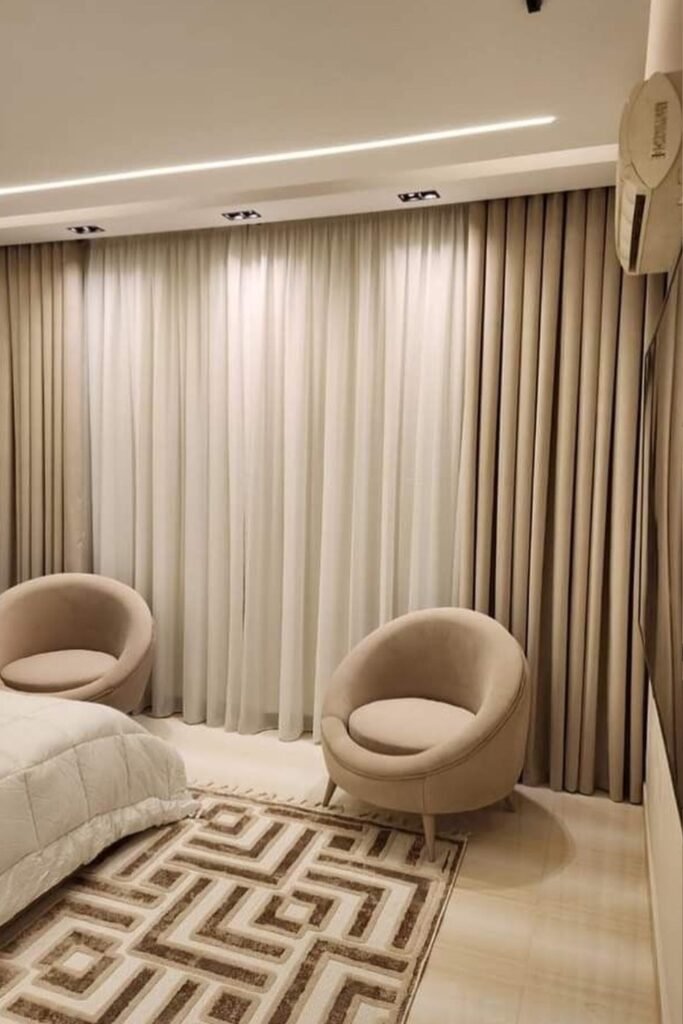
Layering also gives the window more depth. Instead of one flat panel, the curtains look fuller and more designed. This can make even a simple bedroom feel more polished.
You can use white or ivory sheers with neutral blackout panels for a calm look, or pair soft sheers with deeper curtains for a cozy, hotel-style effect.
To make layering work, you may need a double curtain rod or ceiling track. Keep the sheer layer light and simple, then choose the outer panel based on your bedroom style.
This setup works especially well in bedrooms because it balances beauty, comfort, privacy, and better sleep in one window treatment.
How to Style Curtains in a Small Bedroom?
In a small bedroom, curtains should make the room feel taller, lighter, and less crowded.
The wrong curtains can make a small space feel heavy, dark, and boxed in. That is why small bedrooms need a little more planning.
Start by hanging the curtain rod high and wide. This draws the eye upward and makes the window look larger.
It also lets more natural light enter when the curtains are open. Natural light is important in a small bedroom because it helps the space feel more open.

Choose lighter fabrics if the room already feels tight. Linen, cotton blends, or light-filtering panels can soften the window without adding too much visual weight.
If you need blackout curtains, choose a lighter color with blackout lining instead of very dark heavy fabric. This gives you sleep support without making the room feel smaller.
Color also matters. Curtains close to the wall color can make the space feel smoother and less broken up.
Strong contrast can work, but it may make the wall feel busier. Simple panels usually look better than loud patterns in a small bedroom.
Avoid bulky curtain styles, extra-thick rods, or too much puddling fabric on the floor. Clean vertical lines work best.
When styled well, curtains can actually make a small bedroom feel bigger, softer, and more finished instead of cramped.
What Bedroom Curtain Mistakes Should You Avoid?
Bedroom curtains can look wrong even when the color and fabric are nice. Most curtain mistakes happen because people focus only on the panel design and ignore size, placement, and function.
The first mistake is buying curtains that are too short. Short curtains can make the bedroom feel unfinished. Floor-length curtains usually create a cleaner and more polished look.
The second mistake is using panels that are too narrow. If the curtains look flat when closed, the window can feel cheap and under-styled. Curtains need enough fullness to create soft folds.
Another common mistake is hanging the rod too low or too close to the window frame.
This can make the ceiling feel lower and the window look smaller. A higher and wider rod usually gives a more expensive and balanced result.
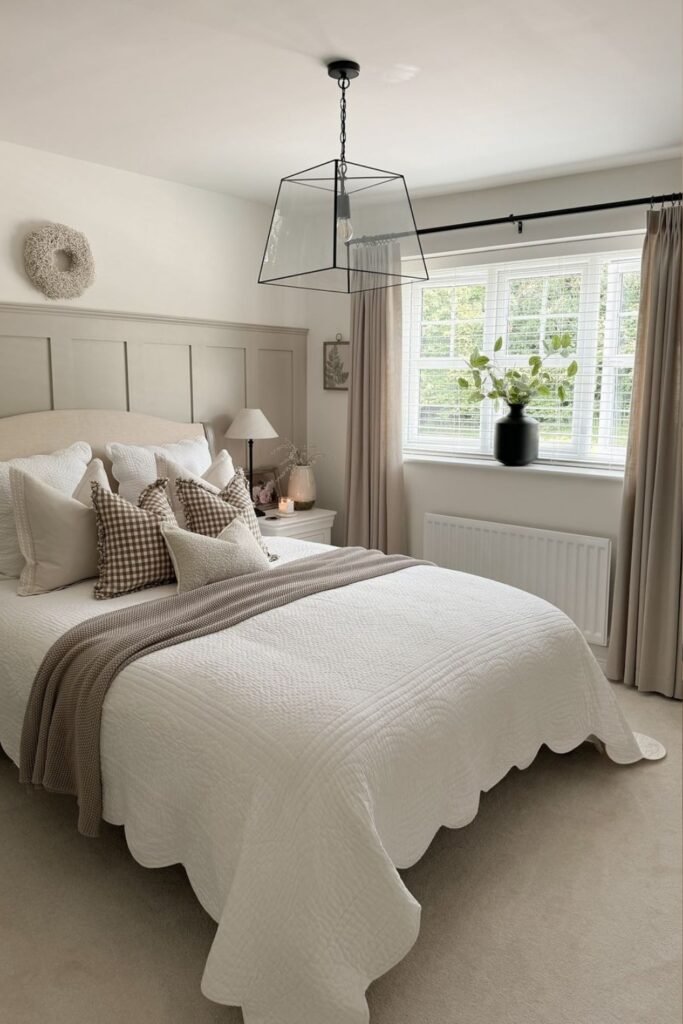
Many people also choose curtains without thinking about privacy or sleep. A pretty sheer curtain may look nice during the day, but it may not work at night.
A bedroom needs curtains that support real life, not just photos.
You should also avoid matching everything too perfectly. Curtains do not have to be the exact same color as the bedding.
They only need to connect with the room in a natural way. When you avoid these mistakes, your curtains look more intentional, and your bedroom feels softer, calmer, and complete.
Conclusion
Bedroom curtains can change the whole mood of your room when you style them with purpose. They do more than cover a window.
They help control light, add privacy, soften the space, and make the bedroom feel more finished.
The best approach is to start with what your room needs first. Maybe you need blackout curtains for better sleep, sheer layers for soft daylight, or full-length panels to make the window look taller.
Once you understand the problem, it becomes much easier to choose the right fabric, color, length, and rod placement.
When your curtains work with the room instead of against it, your bedroom feels calmer, cozier, and more pulled together without a full makeover.
You may interested to read!