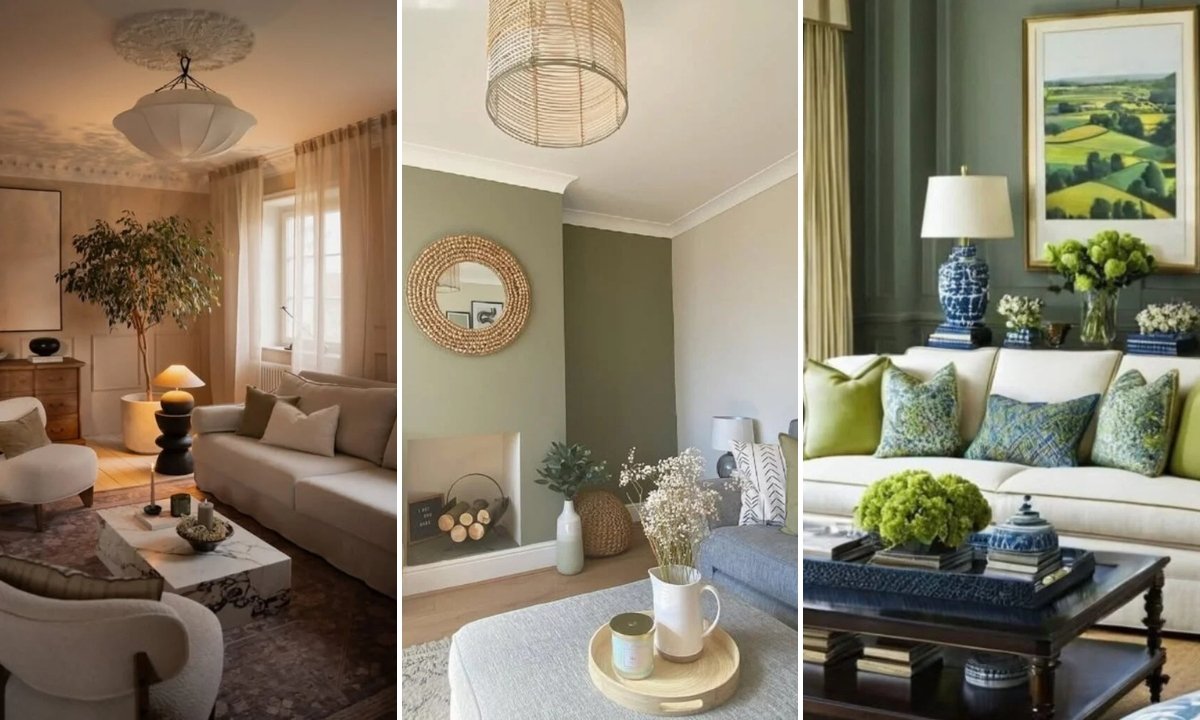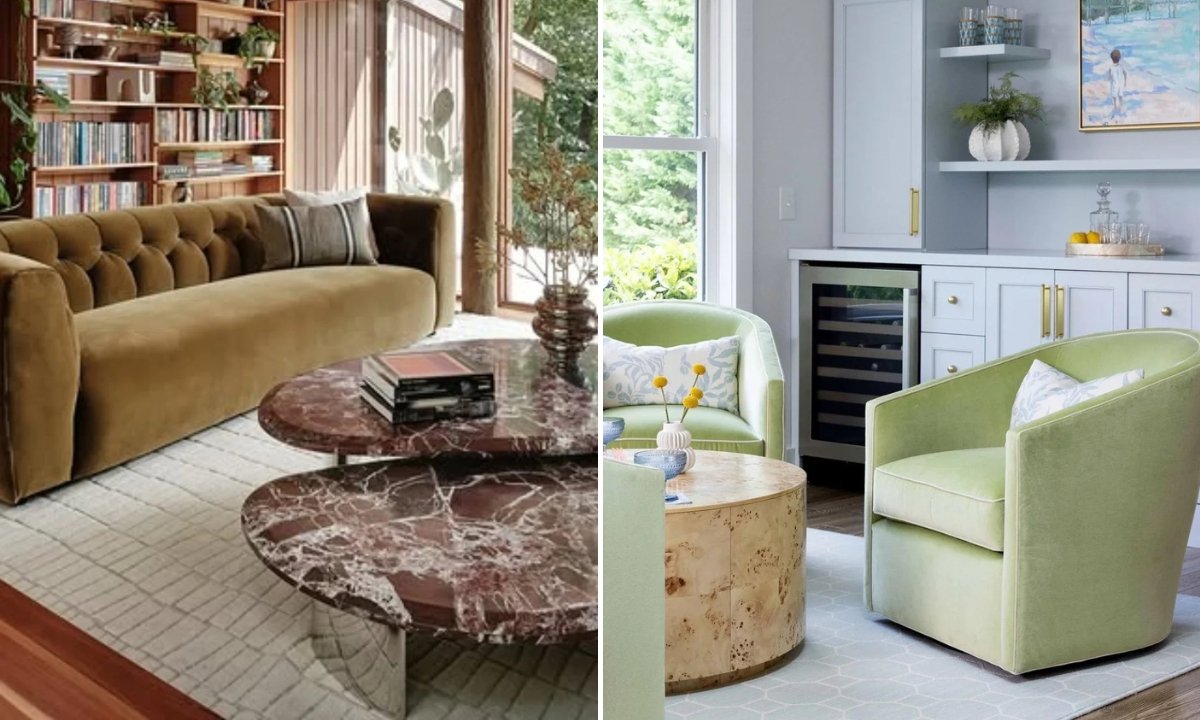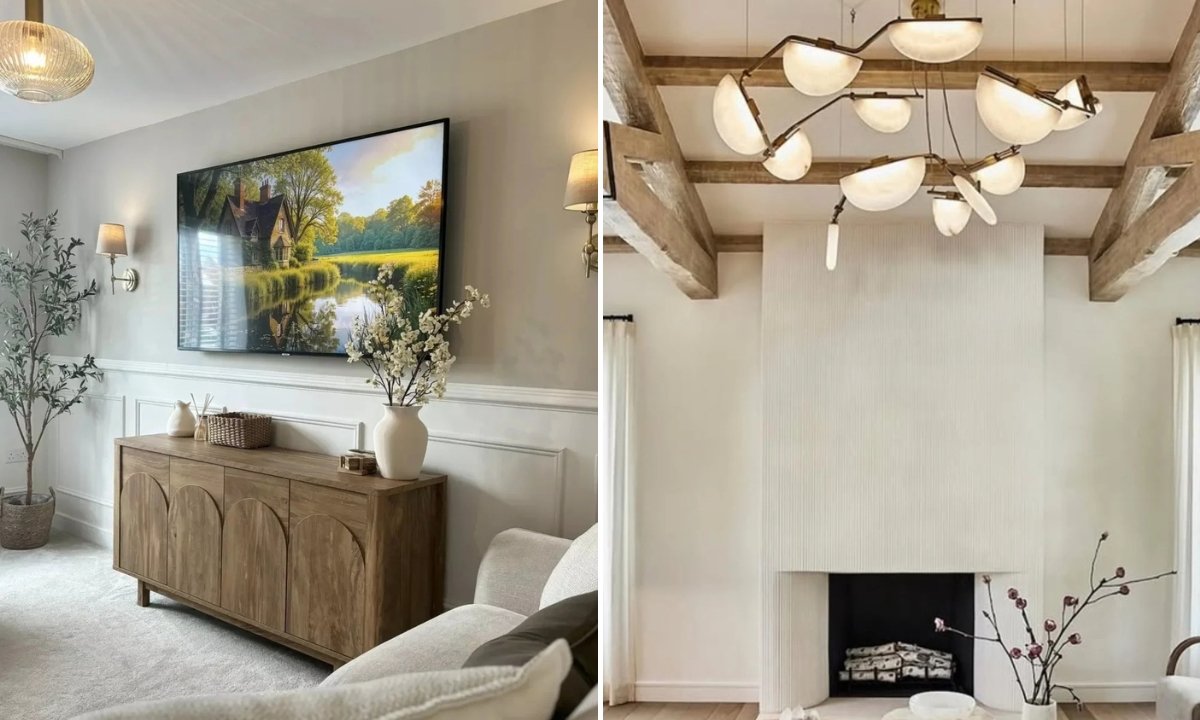

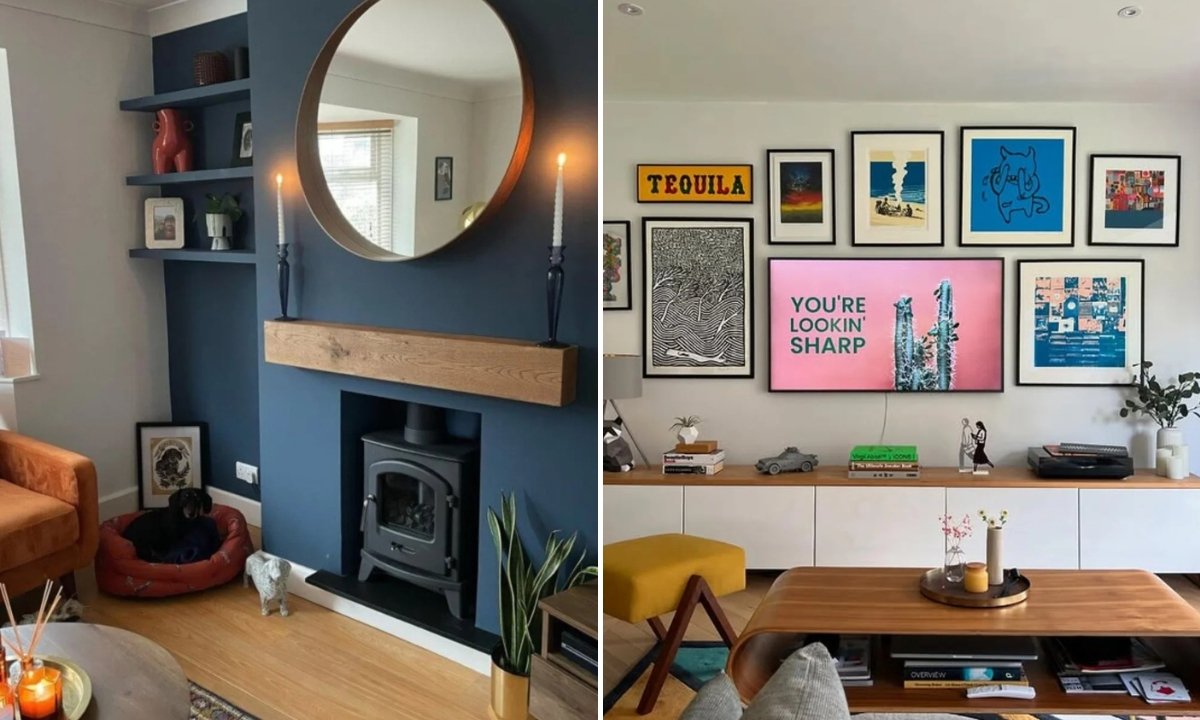
Have you ever finished decorating your living room, stepped back, and still felt like something was missing? Most of the time, the problem is not your furniture.
It is the empty wall staring back at you. A blank wall can make the whole room feel unfinished, but filling it with random decor often creates a cluttered look.
The good news is that you do not need expensive artwork or a complete makeover.
In this article, you will find simple living room wall decor ideas that help your space feel balanced, personal, and fully put together.
Let’s jump in!
Table of Contents
- How Do I Decorate My Walls In My Living Room?
- Mix Frame Sizes
- Frame Around TV
- Layer Vintage Frames
- Break The Grid
- Light Up A Corner
- Anchor With A Mirror
- Go Bold With Art
- Add Wall Molding
- Keep It Tonal
- Paint The Wall First
- Frame A Dark Accent Wall
- Try Sculptural Wall Art
- Hang Wall Planters
- Make The Wall The Feature
- Use Architectural Wall Panels
- Create A Photo Grid
- Reflect More Light
- Build A Collected Gallery
- Mix Frames Over Time
- Layer Different Textures
- Turn Panels Into Art
- FAQs
- How Do I Choose The Right Size Wall Decor For My Living Room?
- Can I Decorate My Living Room Walls Without Using Traditional Artwork?
How Do I Decorate My Walls In My Living Room?
The best way to decorate your living room walls is to start with the wall itself. A small wall needs a different approach than a large empty wall behind a sofa.
Many people make the mistake of buying wall decor first and figuring out where it goes later. That often leads to a cluttered look.
If you have a large blank wall, use one oversized piece of art, a gallery wall, or a large mirror. These options fill the space without making it feel busy.
If your wall is smaller, a few well-placed pieces usually look better than trying to cover every inch.
Before you hang anything, look at the furniture below it. Your wall decor should feel connected to the sofa, console table, or TV stand underneath.
When the decor is too small or too high, the wall and furniture look disconnected.
You should also think about what your room needs. If it feels dark, add a mirror to reflect light. If it feels plain, add texture with baskets, shelves, wood panels, or framed fabric.
If it feels too empty, create layers with artwork and decorative objects. Most importantly, choose pieces that mean something to you.
A living room feels more inviting when the wall decor reflects your style instead of looking like it came straight from a showroom.
Mix Frame Sizes
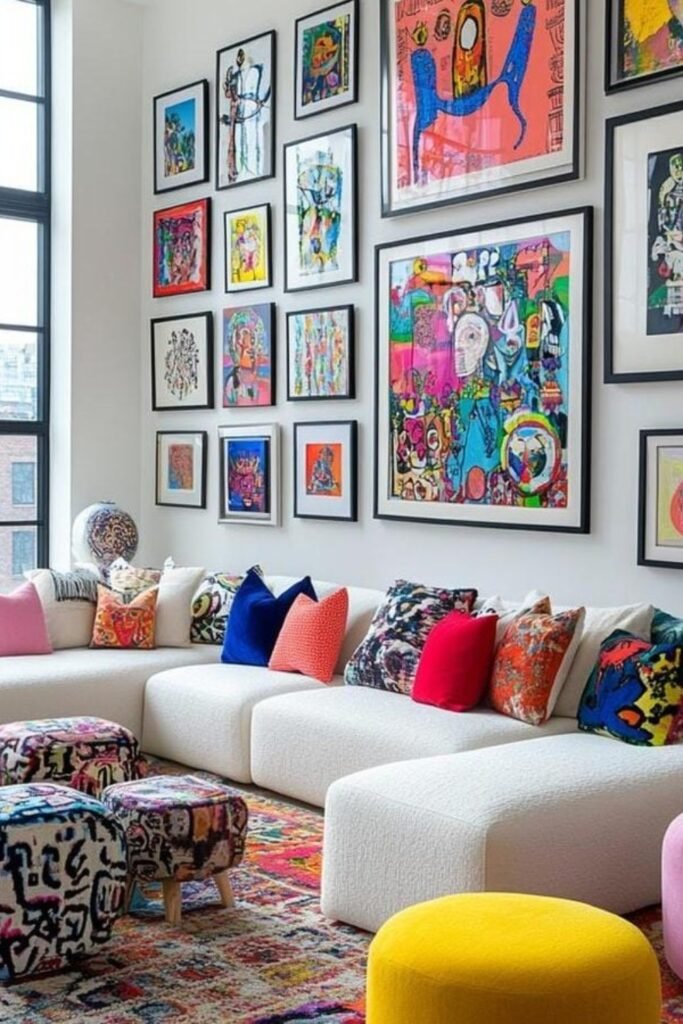
Nothing fills a large living room wall quite like a gallery wall that mixes different frame sizes.
Instead of hanging identical artwork, combine a few oversized pieces with smaller prints to create a collected look.
Pull colors from the artwork into your pillows, rug, or accent furniture so the wall feels connected to the rest of the room.
This approach works especially well behind a long sectional where a single frame would feel too small.
Frame Around TV
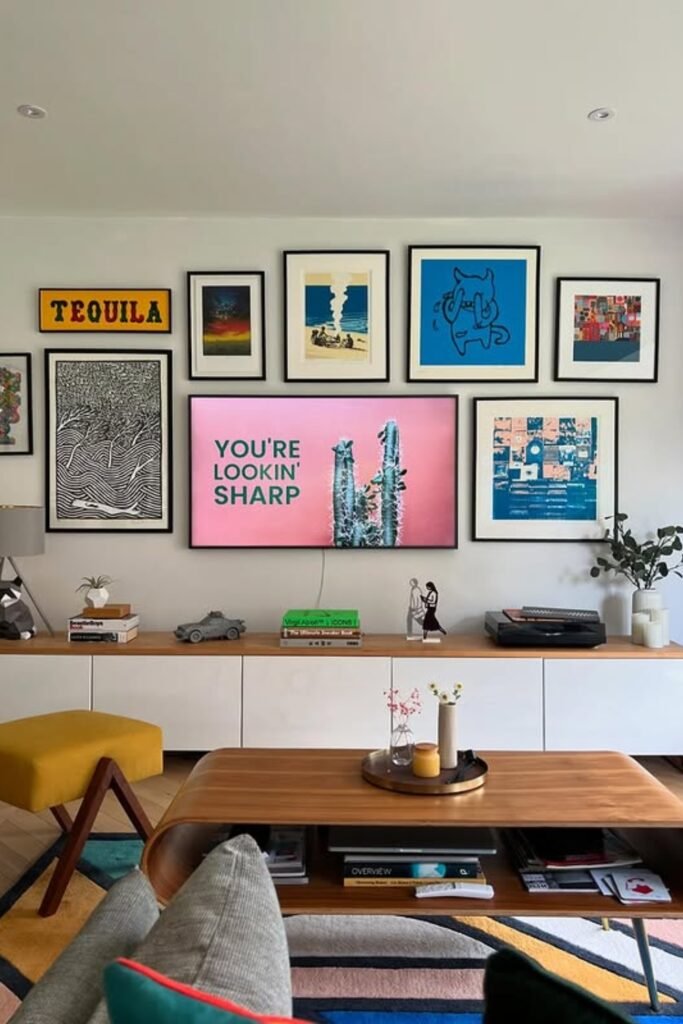
A TV does not have to sit alone on a blank wall. Surrounding it with artwork helps it blend into the room instead of becoming the only thing you notice.
Keep the frames close enough to feel connected, but leave a little breathing room around the screen.
This trick works especially well in living rooms where the TV wall doubles as the main focal point.
Layer Vintage Frames
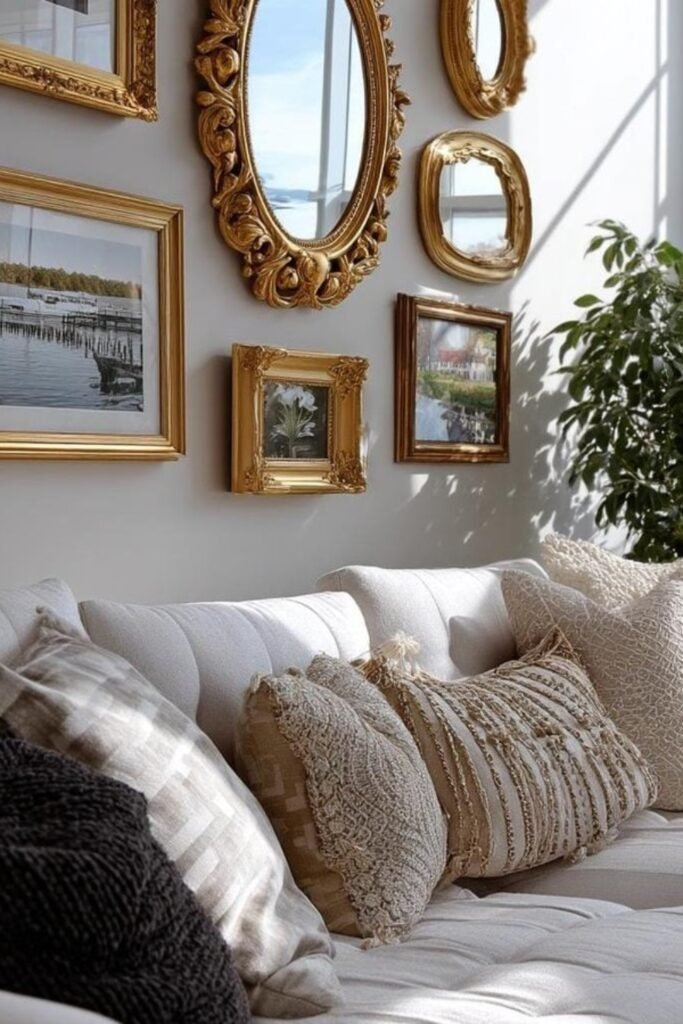
Sometimes the easiest way to make a living room wall feel warm is to stop matching everything perfectly.
A mix of vintage-style mirrors and framed artwork adds character without needing bold colors or large pieces.
Keep the frames within a similar finish, like antique gold, so the collection feels intentional.
This approach works beautifully above a neutral sofa where the wall needs texture and visual interest.
Break The Grid
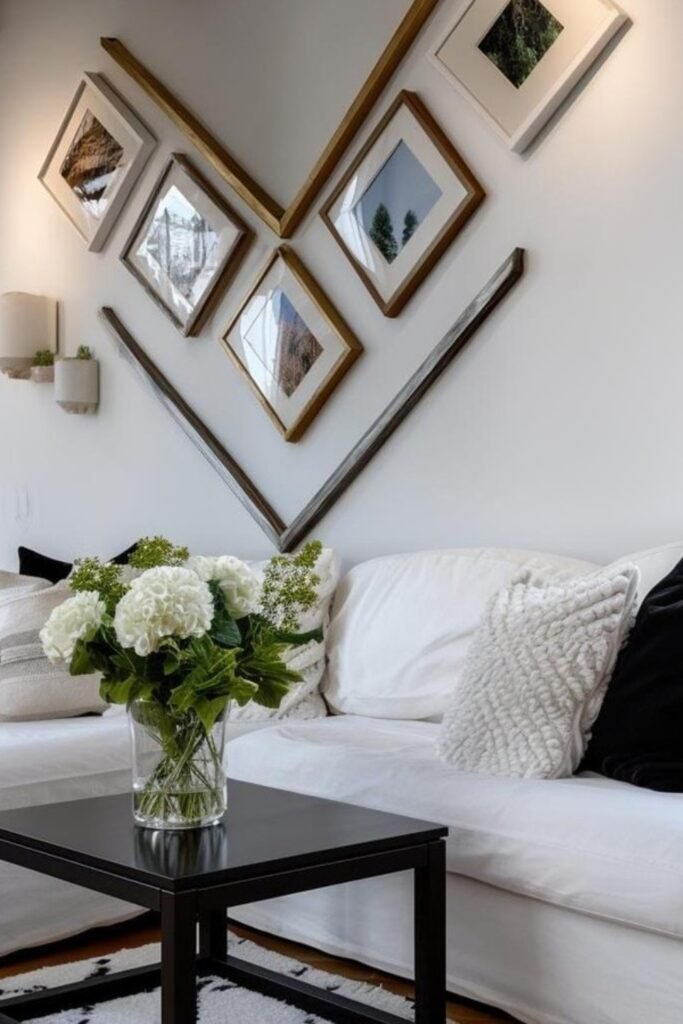
Perfectly straight gallery walls are not your only option.
Turning frames on an angle and connecting them with decorative trim creates a custom look that feels more creative than a standard layout.
This works well on a living room wall where you want artwork to become a conversation piece.
Start with a center frame, then build outward so the arrangement stays balanced instead of looking random.
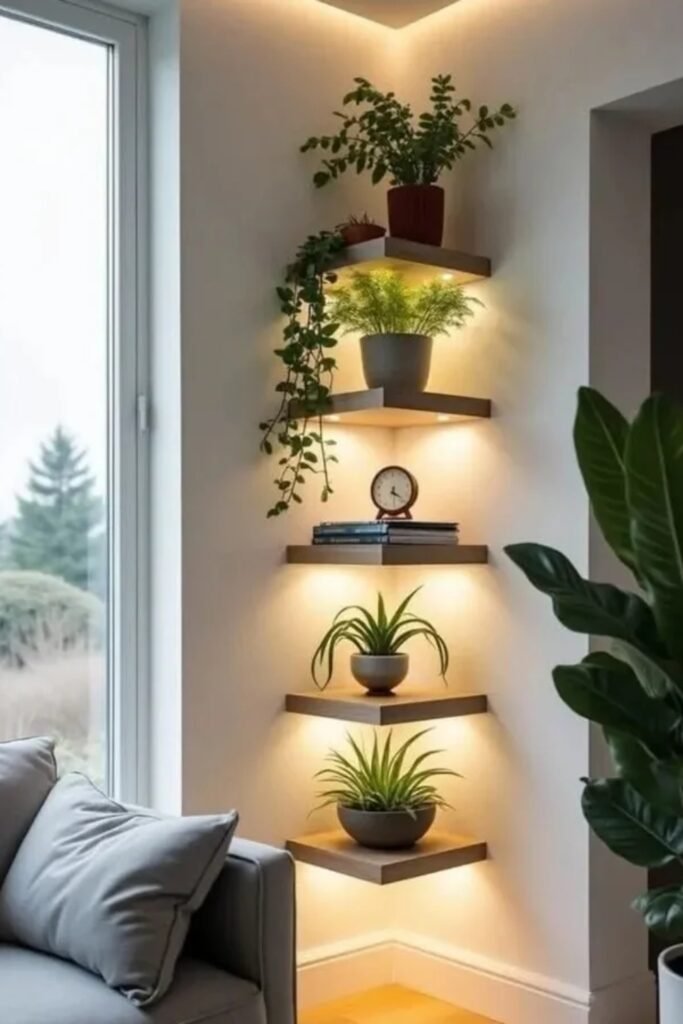
Light Up A Corner
An empty corner often feels like wasted space until you give it a purpose.
Floating corner shelves with built-in lighting turn that overlooked wall into a feature without taking up floor space.
Use a mix of trailing plants, small decor pieces, and books to keep the shelves from looking crowded.
This works especially well beside a sofa or window where you want extra warmth and visual interest.
Anchor With A Mirror
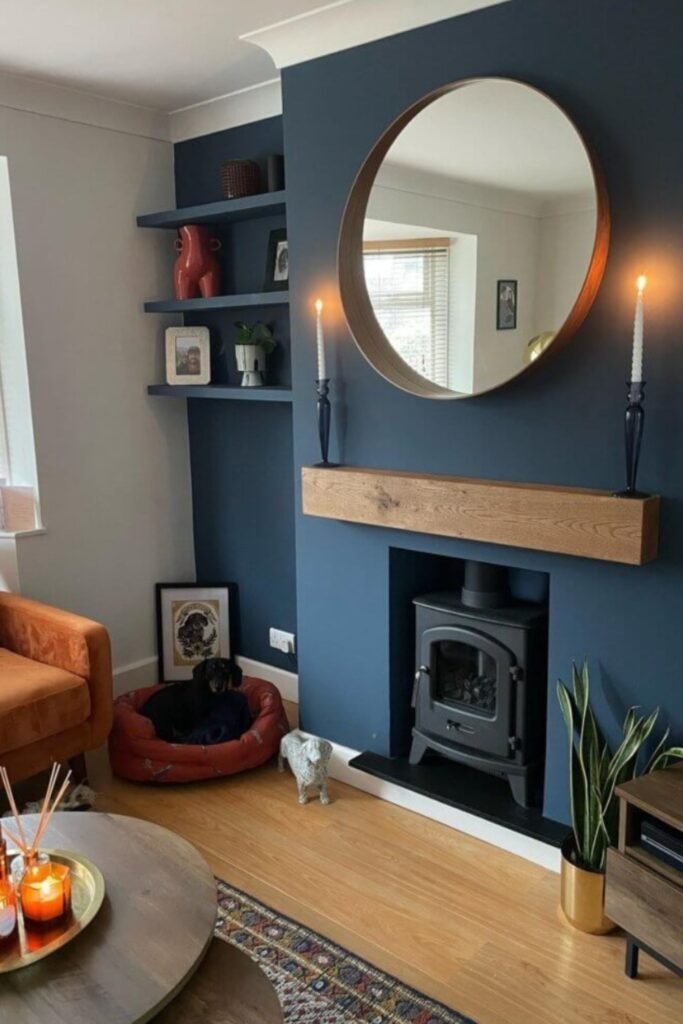
A large round mirror can solve two problems at once. It fills a blank living room wall while helping the room feel brighter by reflecting natural light.
Pair it with a darker accent wall to make the mirror stand out even more.
If you already have a fireplace, mantel, or media unit, center the mirror above it to create a strong focal point without adding lots of extra decor.
Go Bold With Art
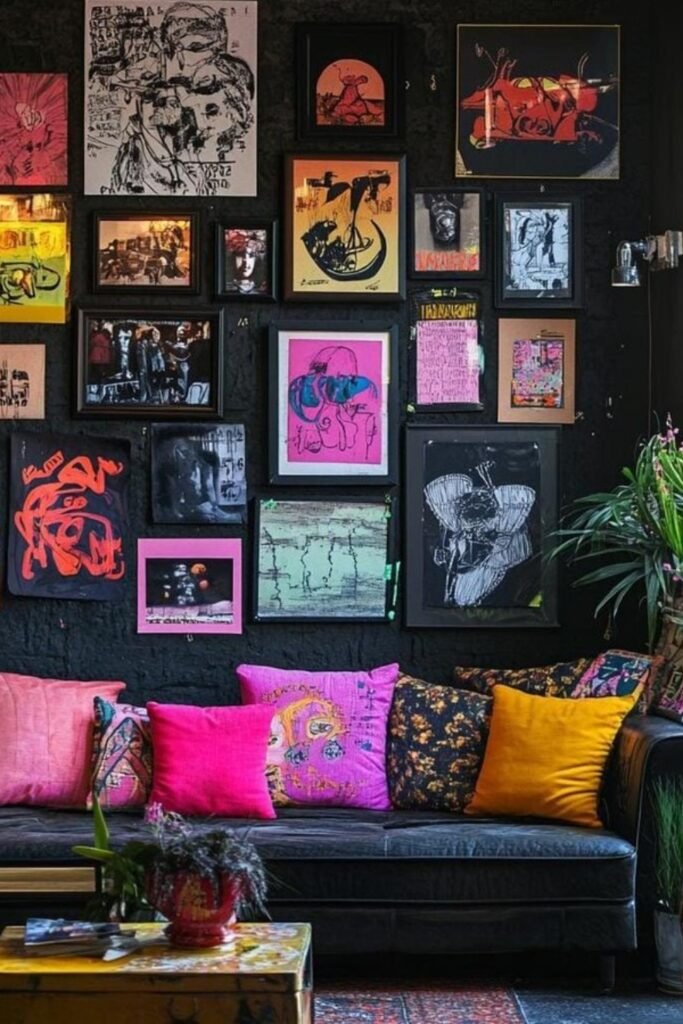
A gallery wall does not always need white walls and matching frames. Dark walls can make colorful artwork stand out and turn the entire living room into a focal point.
If you love collecting prints, posters, or personal artwork, group them closely together instead of spreading them across the room.
The mix feels intentional and works especially well in living rooms that lean eclectic, creative, or moody.
Add Wall Molding
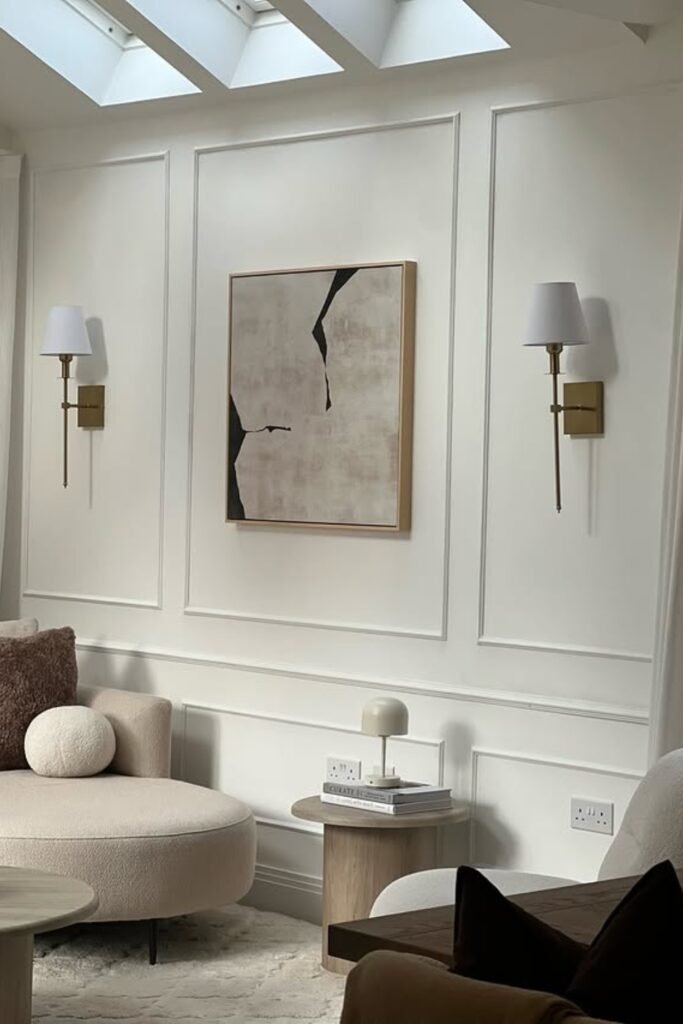
Sometimes the wall itself can become the decor. Simple wall molding creates structure and makes a living room feel more finished before you hang a single piece of artwork.
A centered abstract print and matching sconces keep the look clean without leaving the wall empty.
This approach works especially well in modern, minimalist, or luxury-inspired living rooms where you want impact without visual clutter.
Keep It Tonal
A living room wall does not need bright colors to make an impact.
Sticking to soft, similar shades creates a calm look while still giving the wall enough detail to feel finished.
Mix large artwork with smaller framed pieces to avoid empty gaps, then repeat those light tones through pillows and decor.
This approach works beautifully in living rooms where you want the space to feel bright, relaxed, and easy to live in.
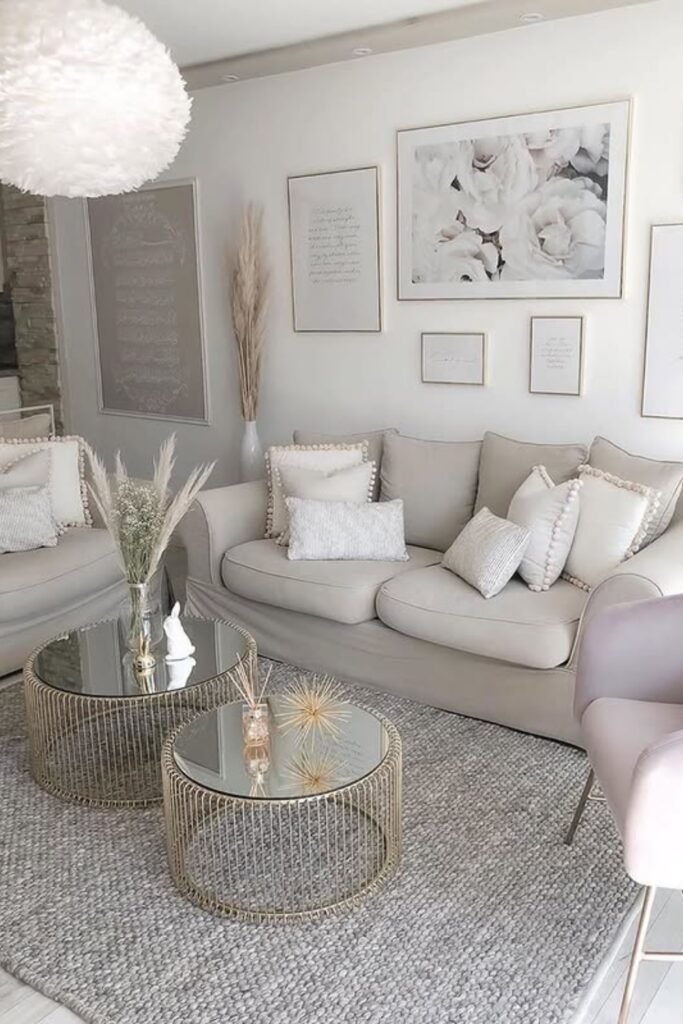
Paint The Wall First
Wall decor does not always have to be artwork. A rich paint color can do most of the work before you add a single decorative piece.
Here, the green accent wall creates a natural backdrop that makes the living room feel warmer and more inviting.
If your walls feel flat, start with color, then layer in a small shelf, woven wall decor, or a few plants to give the space more personality without overcrowding it.
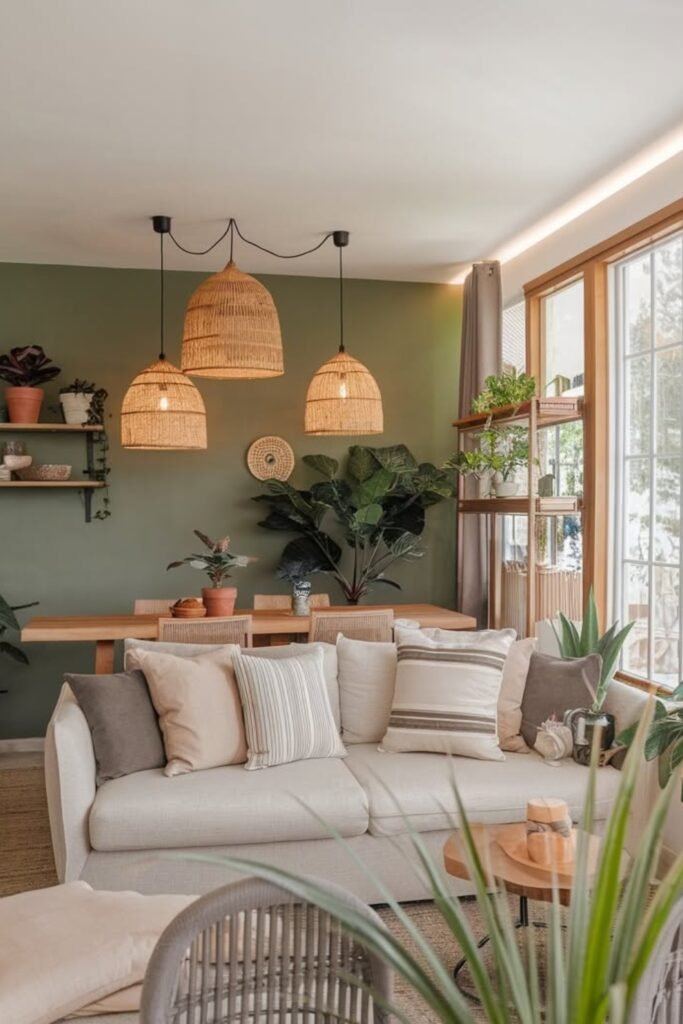
Frame A Dark Accent Wall
When a living room wall feels flat, a dark accent color can instantly give it more presence.
Instead of filling the space with lots of artwork, let one mirror become the focal point and balance it with matching sconces.
The contrast between the dark wall and light furniture keeps the room from feeling heavy.
This approach works especially well in living rooms that need a touch of drama without adding visual clutter.
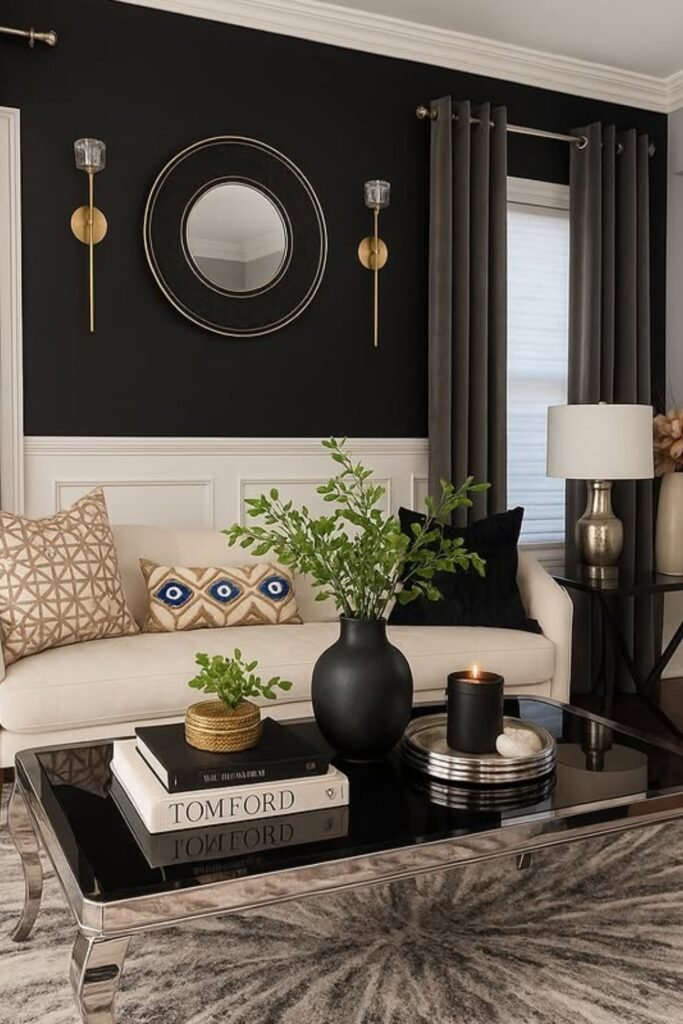
Try Sculptural Wall Art
Not every living room wall needs framed artwork.
Sculptural wall decor adds texture and dimension, which makes the space feel more interesting even when you keep the color palette simple.
Choose a piece that repeats colors already found in your pillows or accessories so everything feels connected.
This works especially well above a sofa where you want a focal point but prefer something softer and more modern than a traditional gallery wall.
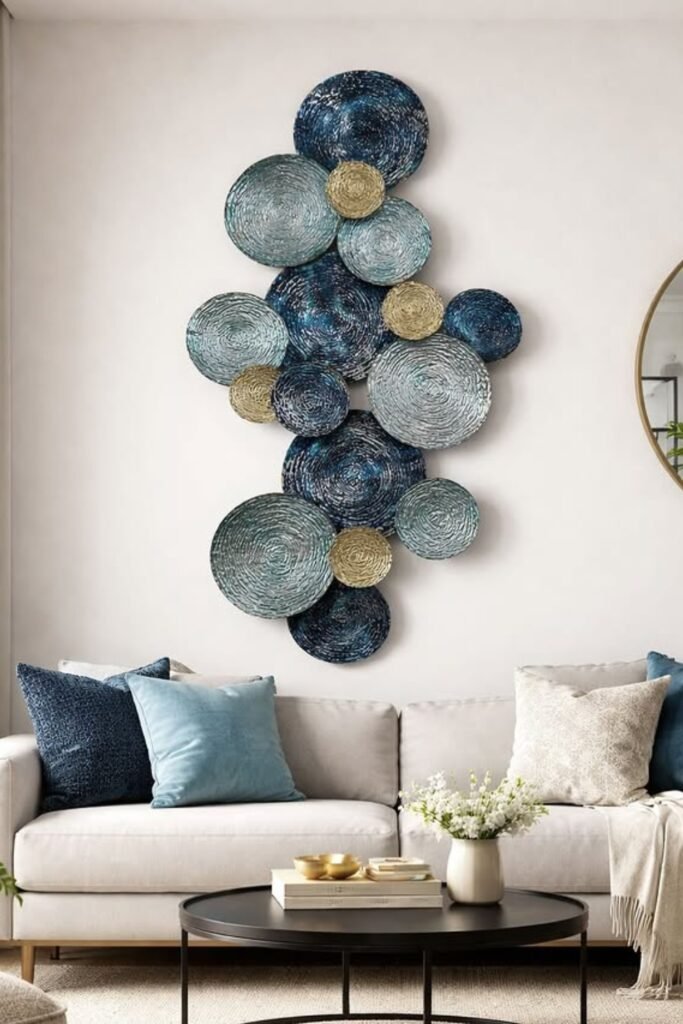
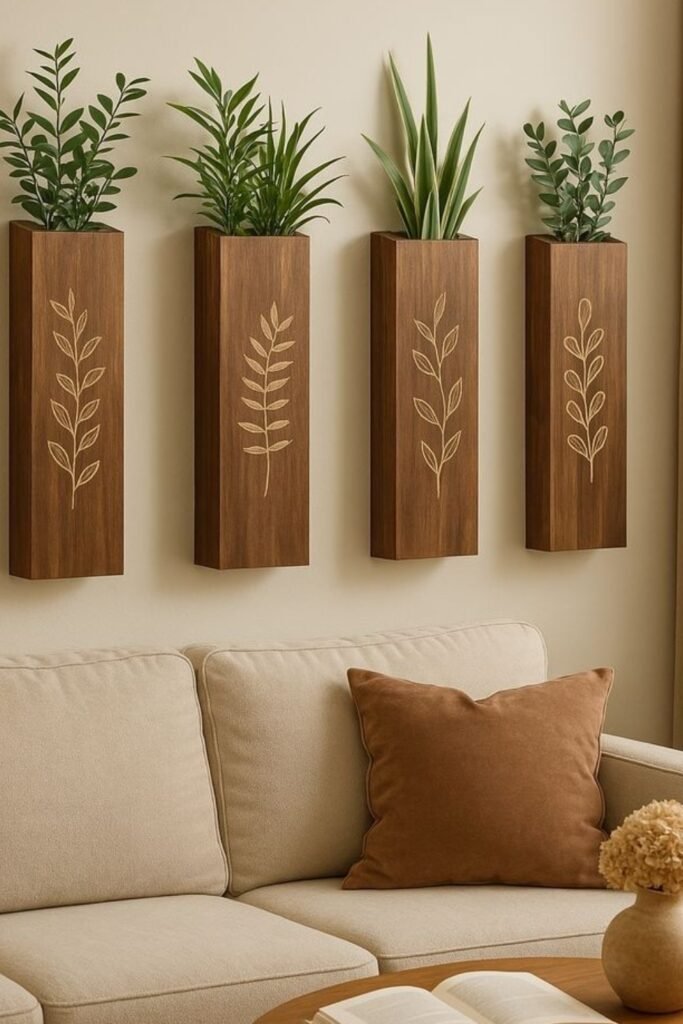
Hang Wall Planters
Fresh greenery can become your wall decor when floor space is limited.
Vertical wall planters add height, texture, and color without making the living room feel crowded.
Keeping the planters in matching finishes helps the arrangement look organized rather than busy.
This idea works especially well above a sofa or along a narrow wall where traditional artwork might feel too flat and predictable.
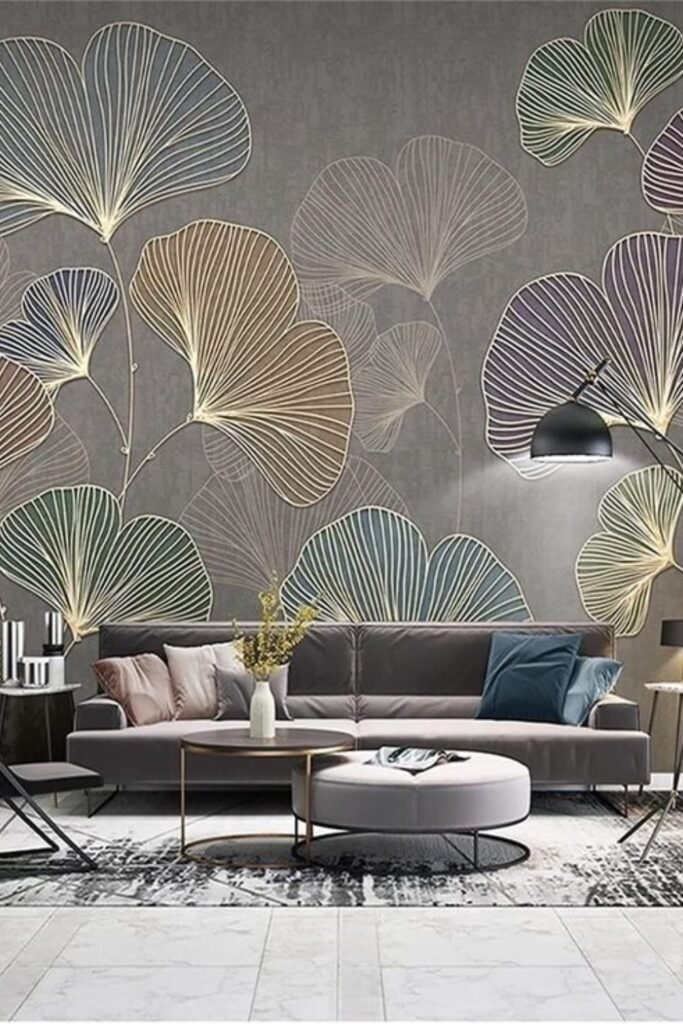
Make The Wall The Feature
When you have a large living room wall, a mural-style wallpaper can do the decorating for you.
Instead of filling the space with multiple frames and shelves, let one oversized pattern become the focal point behind the sofa.
Large botanical designs work especially well in modern living rooms because they add texture and movement without creating clutter.
Keep the surrounding furniture simple so the wall remains the star of the room.
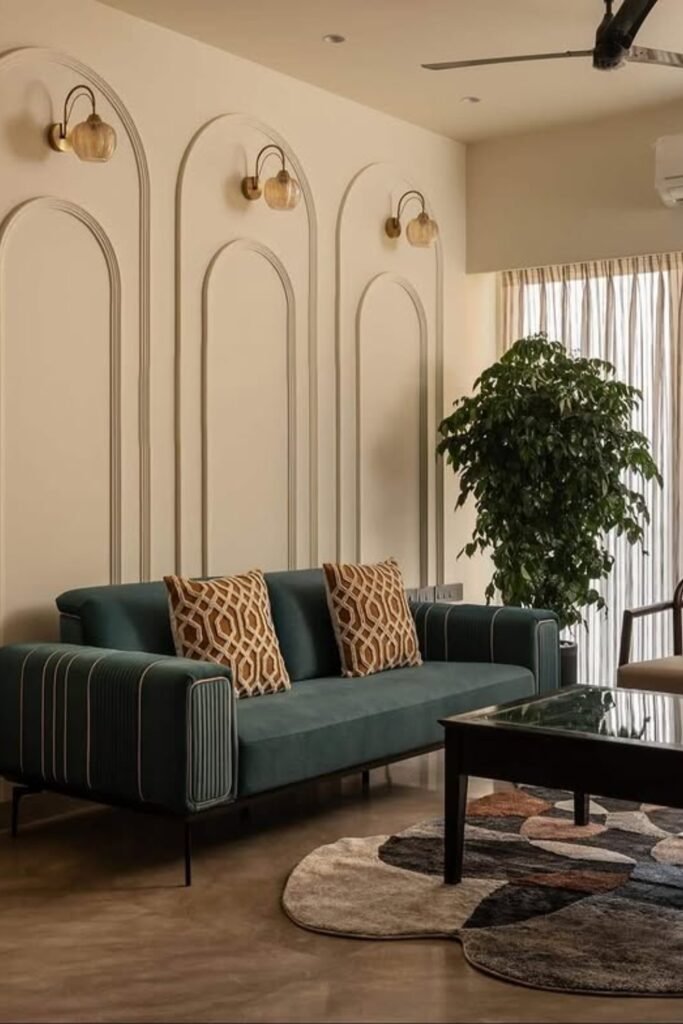
Use Architectural Wall Panels
Artwork is not the only way to decorate a living room wall. Decorative wall panels can add depth and character while keeping the space clean and uncluttered.
The arched molding design shown here creates a built-in look that feels custom without relying on large artwork.
If you want your living room to feel more polished, pair wall panels with sconces or warm lighting to highlight the details and make the wall stand out.
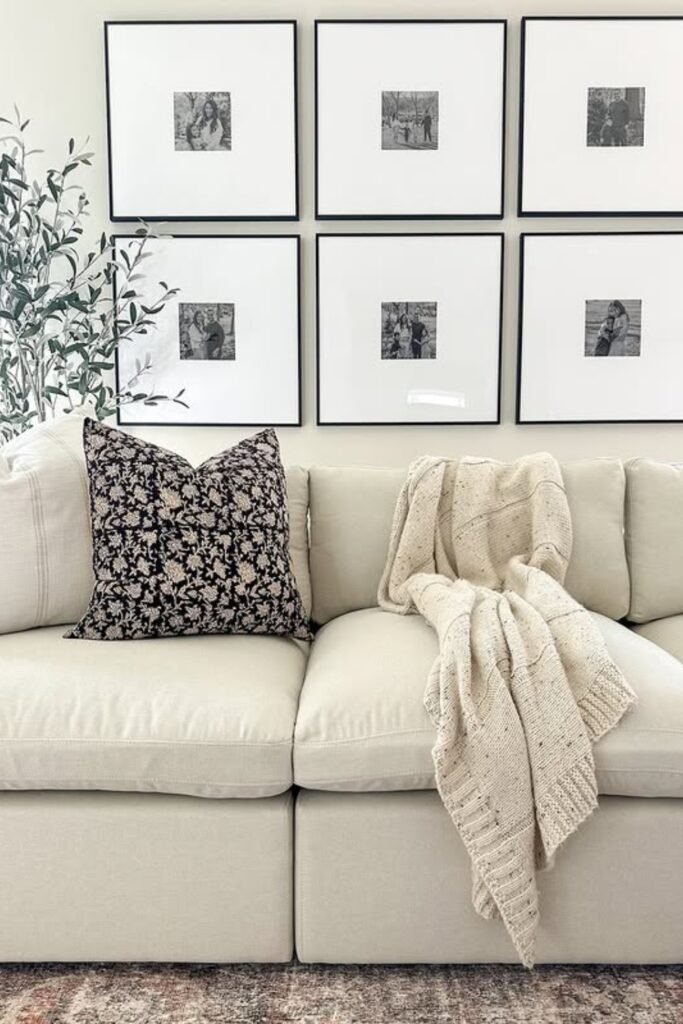
Create A Photo Grid
Family photos look much more intentional when they follow a clean grid layout.
Using matching frames and equal spacing keeps the living room wall organized, even when you display several pictures at once.
This approach works especially well above a sofa because it fills a wide wall without feeling busy.
Choose black-and-white photos or images with similar tones if you want the display to feel timeless and easy to match with future decor changes.
Reflect More Light
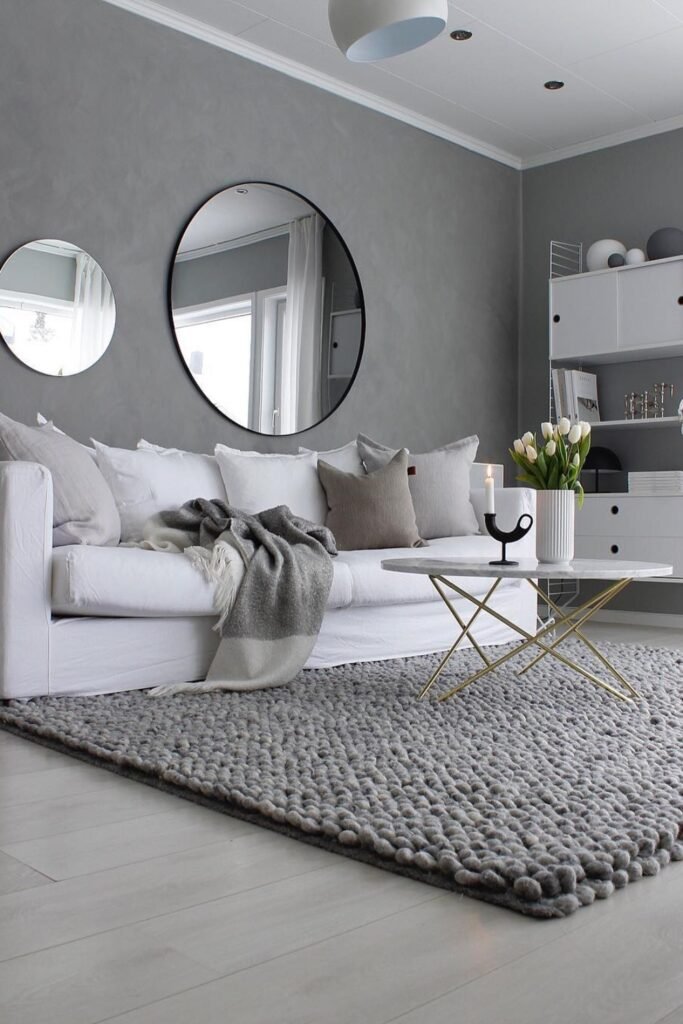
A pair of mirrors can do a lot of work on a simple living room wall.
The larger mirror becomes the focal point, while the smaller one adds balance without making the arrangement feel crowded.
This is a smart choice if your living room feels dark or smaller than you’d like because mirrors bounce natural light around the space.
Keep the frames simple and let the clean shapes do the decorating for you.
Build A Collected Gallery
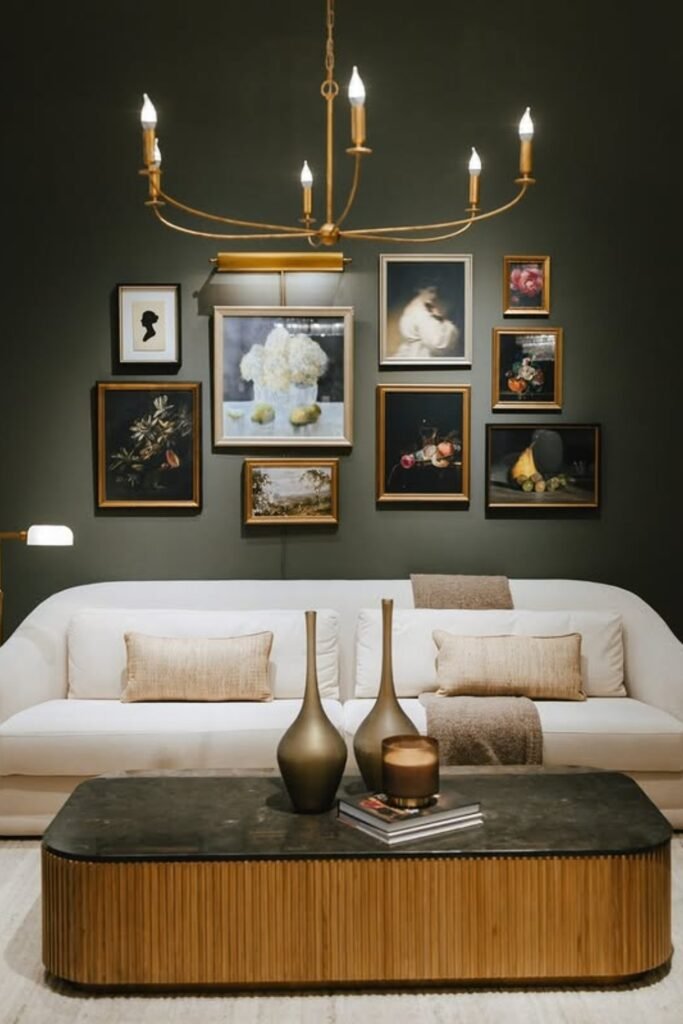
Rather than hanging one oversized piece, create a collection of artwork that feels like it has grown over time.
Mixing different frame sizes while keeping a similar color mood helps the living room wall look curated without feeling chaotic.
A dark wall makes the artwork stand out even more and gives the display extra depth.
This approach works beautifully above a sofa when you want the wall to feel rich, personal, and full of character.
Mix Frames Over Time
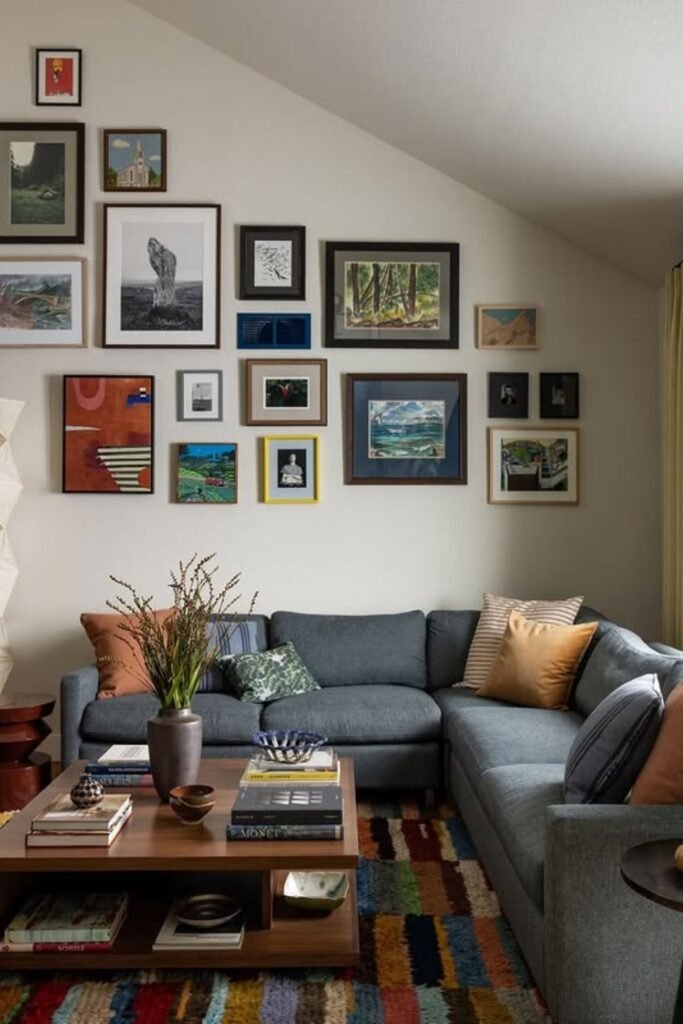
Gallery walls often look better when they grow naturally instead of being purchased all at once.
Mixing artwork, photos, and different frame sizes creates a collected look that feels personal to your living room.
Start with one larger piece near the center, then add smaller frames around it as you find items you love.
This approach works especially well on tall walls where a single artwork would leave too much empty space.
Layer Different Textures
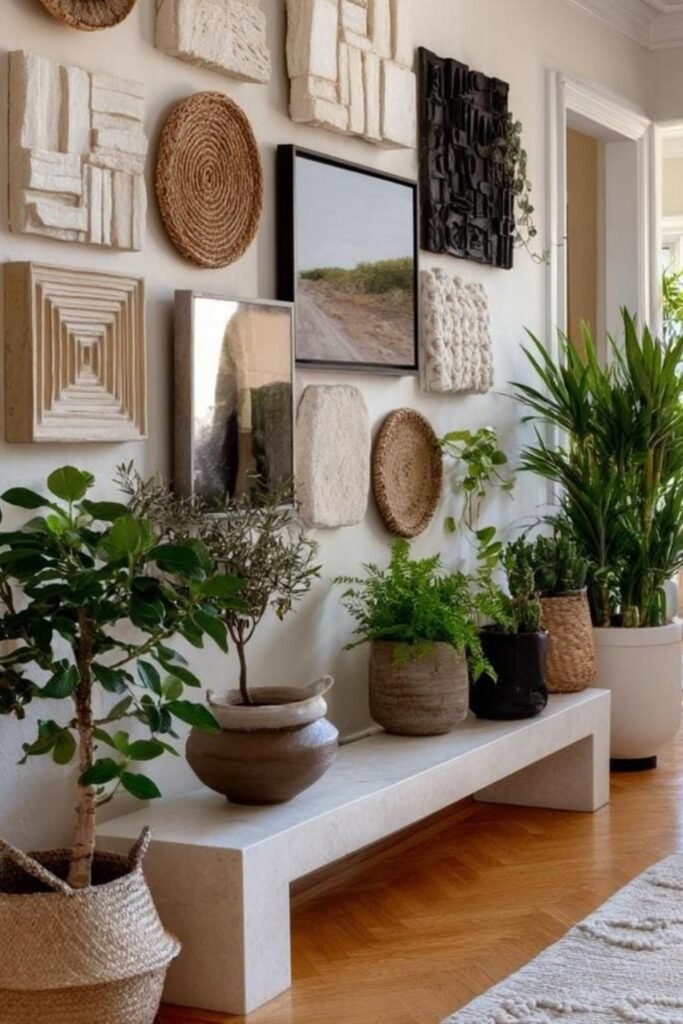
Artwork is only one way to decorate a living room wall.
Mixing woven pieces, textured panels, framed prints, and natural materials creates a gallery wall that feels warmer and more interesting.
Keeping everything within similar neutral tones prevents the display from looking busy, even with many pieces.
This idea works especially well in earthy, boho, or organic-style living rooms where you want the wall to add texture without relying on bold colors.
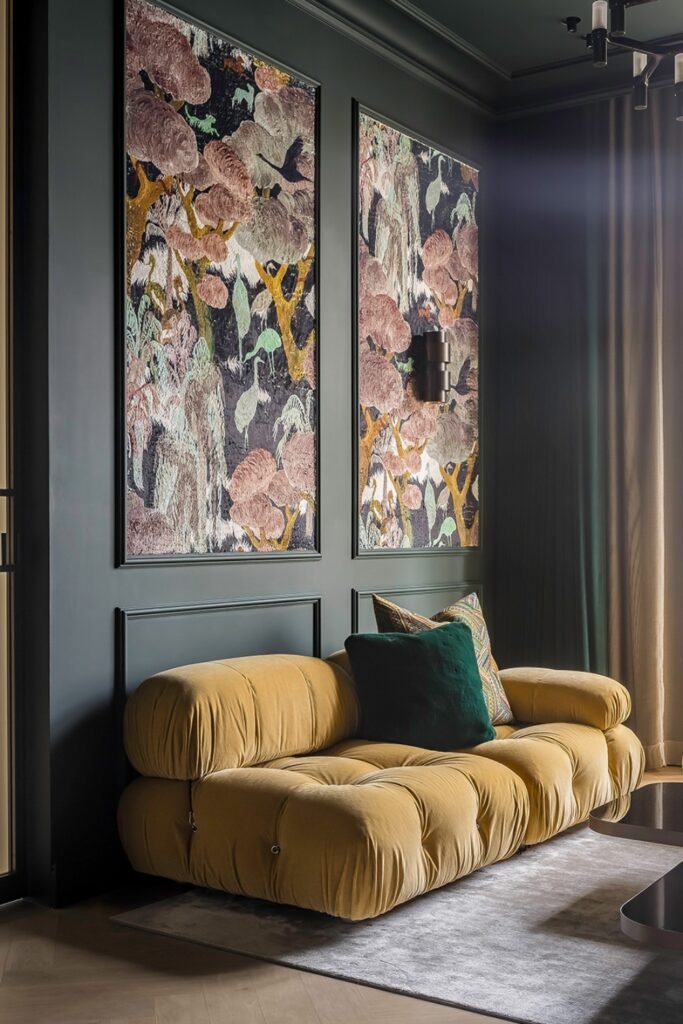
Turn Panels Into Art
Large living room walls do not always need traditional artwork when the wall itself can create the impact.
Framed wallpaper or decorative panels add color, pattern, and texture while keeping the design clean and structured.
This approach works especially well in modern or luxury-inspired living rooms where you want a statement wall without filling every section with separate decor pieces.
Let the panels carry the visual weight and keep the surrounding furnishings simple.
FAQs
How Do I Choose The Right Size Wall Decor For My Living Room?
One of the biggest decorating mistakes is choosing wall art that is too small for the space. As a general rule, your wall decor should feel connected to the furniture below it.
If you are decorating above a sofa, choose artwork, mirrors, or a gallery wall that fills a good portion of the wall instead of leaving large empty gaps.
Larger walls usually need larger decor to feel balanced.
Can I Decorate My Living Room Walls Without Using Traditional Artwork?
Absolutely. Artwork is only one option.
You can use mirrors, floating shelves, wall planters, decorative panels, woven baskets, textured wall hangings, wallpaper, or even architectural molding.
These alternatives add character and help fill blank walls while creating a more unique look.
Mixing different materials often makes a living room feel more personal than relying on framed prints alone.
You may interested to read!